
Even in 1542, Southern California's air quality was in question
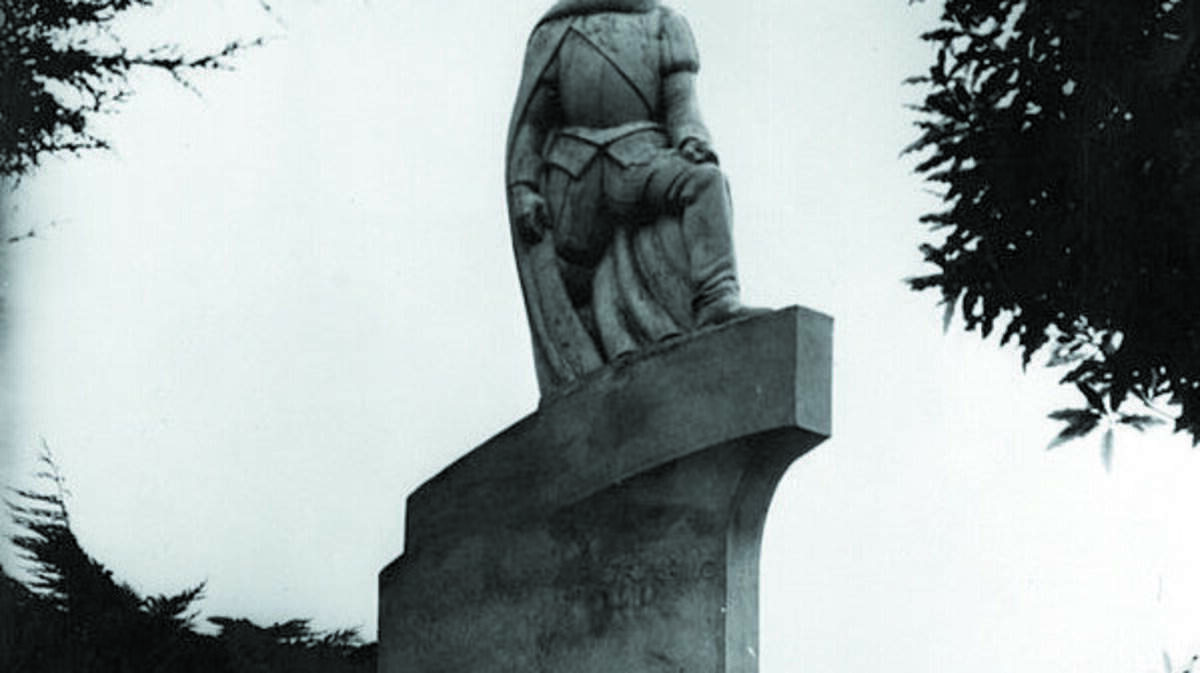
Was there smog in Los Angeles basin in 1542?
The log of Juan Rodríguez Cabrillo, the first European to sail along California’s coast, refers to San Pedro’s harbor as “la Baya de los Fumos,” or the Bay of the Smoke, “because of the many smokes which they saw on it. This bay is in 35 degrees and is a good port, and the country is good, with many valleys, plains, and groves.”
While some scholars argue that Baya de los Fumos might refer to Santa Monica Bay, the Southland’s famed inversion layer was filled with smoke.
Although the 1542 visit was made more than 60 years before the first telescope, Cabrillo’s crew anchored off what is now Point Fermín could observe plains and valleys with ample plant and animal life.
The abundance of living things gives us a clue to the origins of the smoke. Archaeological investigations indicate the basin was one of the most densely populated regions in North America. Could the smoke have been from thousands of cooking fires in the numerous Tongva villages in the basin and surrounding hills?
Or was it the result of hot Santa Ana winds from the east that fed raging wildfires? The winds arise most frequently during the autumn and winter and Cabrillo’s visit was on Oct. 8.
I think of this as fire crews deal with the effects of a record drought and heat, contributing to destructive wildfires such as this past week’s Cuesta Fire. Could lightning have sparked so high a number of conflagrations throughout the valleys and foothills in 1542? Modern records of the number of lightning strikes in the Santa Monica Mountains suggest otherwise.
During the 19th century, many recent arrivals from the East and Midwest thought the fires were deliberately started by Native Americans to facilitate their killing of wild game. They surmised that younger members of a family group would climb to the rims of the canyons and start the fires. The blaze would drive the game to the mouth of the canyon where the rest of the family would wait with clubs and lances to kill the fleeing animals.
Such a view was described in the racially charged writings of Frank Norris, the author of the anti-Semitic McTeague and his unfinished 1901 novel, "The Octopus."
Norris and others intended such stories to picture the cruelty of Native Americans. The view favoring manmade fires may be the most likely. Studies by archaeologists, supported by historical documents, indicate that Native Americans employed extensive burning of chaparral and shrub lands as a means of land management. They sought to turn the former into native grasslands to promote the proliferation of deer, antelope and small game.
We can understand their desire to protect themselves from dangerous predators such as California grizzly bear, whose favorite habitat was chaparral.
The removal of the chaparral led to the extinction of many species of plants and animals. That may have been as great a factor as over hunting in making the grizzly bear extinct.
This practice may have in turn contributed to the frequency and intensity of even today’s wildfires according to Jon Keeley, an ecologist based in Three Rivers, Cal., with the U.S. Geological Survey's Western Ecological Research Center.
**
At 7 p.m. Aug. 26 at St. Rose of Lima Church, 820 Creston Road, Paso Robles, Father Jim Nisbet who is himself Native American will speak on Saint Kateri Tekakwitha, the most recently canonized Native American saint.
Father Jim is a Native American and worked in the cause of Kateri's canonization. Father Jim will address issues of Native American spirituality and ecology.
This story was originally published August 22, 2015 at 2:45 PM with the headline "Even in 1542, Southern California's air quality was in question."