
The man who built the Anderson Hotel recalls SLO's early days
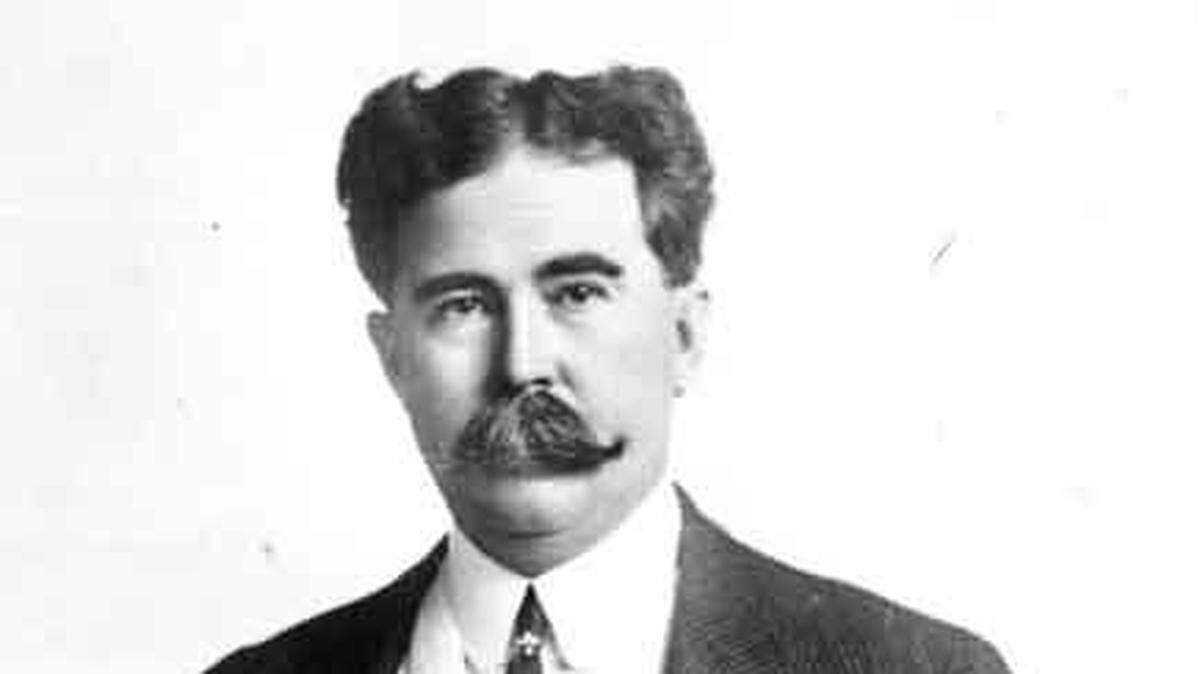
Horses jumping off piers, mustache insults and bullfights were part of the storied early days of San Luis Obispo County.
Jeff Anderson arrived with his family at the age of 3, before the first newspaper, railroad, pier or electric power line.
By the time J.L. “Jeff” Anderson celebrated his 90th birthday, he was older than the Tribune or the Telegram, and the newspaper devoted a whole page to the longtime business man’s recollections.
Anderson grew up south of San Luis Obispo in the East Santa Fe school district.
He attended classes at the home of Mrs. Jeff Townsend with six other students until he was 8 and the Avila school was built.
After his mother died, the family moved to Fresno Flats, now Oakhurst. The trip took nine days by horseback.
He learned the mercantile trade in Sanger, got married and started a family. He returned to San Luis Obispo to visit siblings in 1891 after he sold his Sanger store.
His first job in San Luis was in the grocery department of Quintana’s department store. In 1897 he opened a clothing store in San Luis Obispo at the corner of Monterey and Morro and remained in that business until he built the Anderson Hotel, across the street diagonally, for his son Harold. The son died of polio at age 30, a few years after the hotel was completed in 1922.
Jeff had childhood memories of a bullfighting ring on the spot he built his hotel.
Much of the July 2, 1954, story by Kathrine Hunter is a detailed history of early downtown businesses on Monterey Street.
A second unbylined story collected the most colorful of Anderson’s tales.
Early-Day Happenings in San Luis Obispo
OLD STAGE DRIVERS
Among some of Jeff Anderson’s favorite people were the old stage drivers who made the run back and forth between San Luis Obispo and the end of the railroad line at Soledad.
The route followed Pleyto, Jolon, Paso Robles and over Cuesta to San Luis Obispo.
Passengers would eat at Soledad at 6 p.m. when the train arrived, and they would have a midnight lunch at Pleyto, arriving in San Luis Obispo at 3:30 the next afternoon.
The stages had no springs, the body was suspended on leather braces which provided a swinging motion, and the road was beset by bandits.
“The stories those drivers could tell,” Mr. Anderson still marvels.
RAILROAD FRIENDS
Jeff Anderson is proud to recount his many friends among the railroad men made during his early days in the “gents furnishings” business. One of the more colorful of the railroad men of yesterday, according to Jeff, was “Hard-luck Harris,” father of attorney Dick Harris and an engineer.
“We called him ‘Hard-luck Harris’ because whenever a railroad man would get in bad with the company, Harris would go do the talking for him. He could sure do a lot of talking!”
DE-MUSTACHED
Jeff Anderson wore a full, luxuriant mustache for many years. One day he settled back in the chair of his favorite barber, Emery Armstrong, and told him to take it off. After some little argument and considerable clipping on the barber’s part, the upper lip was bared to public eye.
He sauntered back into the store in a casual manner, and there he met George Lewis and Frank Page, two of his customers and friends.
“Well, if you don’t look like a damn fool!” exclaimed Lewis.
Anderson looked him over coolly and replied:
“Well, isn’t that strange? When I got out of the barber’s chair a few minutes ago he told me that with my mustache shaved off I bore a remarkable resemblance to a fellow by the name of George Lewis!”
The story was repeated verbatim in the newspaper next day.
THE ARRIVAL
The steamer Orizaba, on which the Anderson family arrived here in 1867, cast anchor about half a mile out from land. When she was ready to discharge her passengers, a cannon was fired and the passengers were lowered into small lifeboats for the short and sometimes damp trip into shore.
When they reached the wharf, they climbed up a narrow, steep ladder to the top where they were met by the sight of Capt. David Mallagh, grandfather of the present county clerk, careening down the bank in the old stage. The firing of the ship’s canon was the signal for Capt. Mallagh, who lived on a ranch just north of the landing, to hitch up his team and to pick up the passengers for San Luis Obispo.
“Capt. Mallagh never took his horses anywhere at a walk,” Anderson remarked as he recalled that first ride into San Luis Obispo. “He always went everywhere at a full gallop.”
WHARF DEDICATION
One of Jeff Anderson’s most vivid memories concerns the dedication of the county wharf at Avila when Martin Lowe raced his horse the full length of the new pier and off the end into the water.
Jeff was standing at the end of the pier during the solemn speech making when suddenly Paul O’Donnell, master of ceremonies, shouted “Clear the track for Lowe.”
Through the crowd gathered to celebrate the opening of the new wharf came Lowe and his horse came at a swift gallop. The horse leaped off the pier without so much as a pause, with Lowe sitting straight in the saddle.
When the two regained the surface Lowe was still astride the horse. He slid out of the saddle, took hold of the bridle and calmly swam ashore to the plaudits of the crowd.
FIRST SALE
Jeff Anderson likes to recall the first sale made in his new men’s store back in 1897.
A “price war” in overalls was being waged vigorously by two other merchants in town, and the badge of the workingman had reached an all-time low of 50 cents on the morning Jeff opened.
He was able to meet the competition, however. Every time a customer came in for a pair of overalls, he sent his little errand boy down to one of the other stores to purchase the overalls at 50 cents and then turned them over to his customer for the same price.
The battle of the overalls was over when the other two merchants discovered who the little boy was buying the garments for.
This story was originally published November 21, 2014 at 2:47 PM with the headline "The man who built the Anderson Hotel recalls SLO's early days."