
Diablo Canyon's odd cousin in the mountains
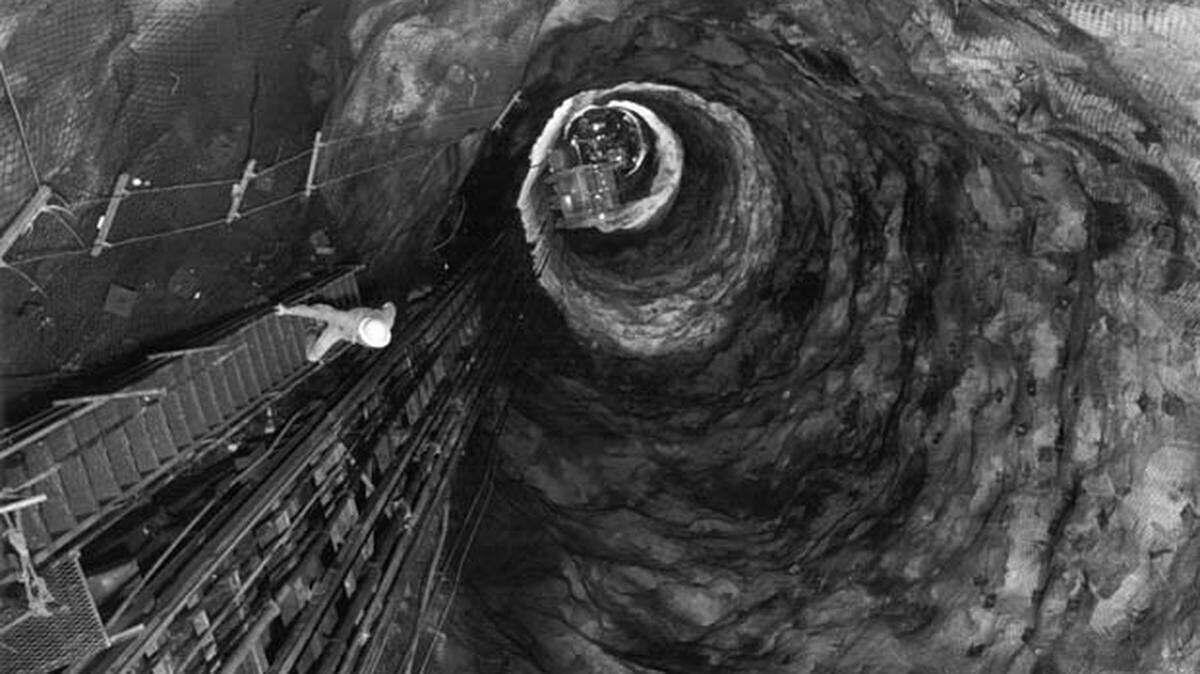
The construction project was worthy of a James Bond movie.
A 1,212 megawatt power plant built under a mountain and strong enough to power Oakland and Fresno. It can go from idle to full generation in eight minutes.
The Helms Pumped Storage Project is at the opposite end of power lines strung from Diablo Canyon nuclear power plant.
In July 2014 PG&E celebrated 30 years of operation of the world’s largest electric storage battery.
At the time the following article was written, operational approvals for Diablo Canyon were still pending. The nuclear plant went online in the mid-1980s.
Telegram-Tribune city editor Jeanne Huber took a media tour of the Helms Project for a story published Aug. 27, 1980.
Mountain power plant Diablo’s cousin
San Luis Obispo County’s Diablo Canyon nuclear power plant has an odd cousin, the Helms Pumped Storage Project high in the Sierra.
The projects were conceived in tandem about 15 years ago by the advanced planning staff of the company that owns them, Pacific Gas and Electric Co.
Diablo, a nuclear plant, was designed to operate at a steady rate round the clock. Helms, a hydroelectric project, was intended to provide spurts of power when it is needed most: hot summer evenings when people flock home from work, turn on air conditioners and run pumps to water gardens.
Helms has a feature most hydroelectric plants don’t have, however, and therein lies its Diablo connection.
Helms is a pumped storage project: It consists of two mountain lakes — one 1,600 feet higher than the other — with tunnels connecting them to a power generating plant 1,000 feet deep in a huge granite cavern.
Water is run from the high lake to the low one to spin turbines that generate electricity.
Then late at night, when power demand throughout PG&E’s 47-county territory is lowest, Helms’ pumps can be reversed to pump water back up the mountain so the water can rush downhill again when a burst of power is needed.
PG&E hasn’t invented a perpetual motion machine, however. Because of friction, it takes more electricity to pump water uphill than the same amount of water can generate when it flows downhill.
Helms will use four units of electricity to make three units — a setup that company officials say would make no sense if it were not for the cheap nuclear power they expect to get from Diablo.
But because Helms will be like a huge storage battery for Diablo’s slack-time power, it will be worth its $400 million cost, company representatives told about 25 reporters last week during a wine-and-dine tour of the plant 50 miles east of Fresno.
“Helms will be the largest electrical storage battery in the world,” explained Bud Johnson, special representative for the company’s San Joaquin Division.
The project had no opposition when it was proposed in the early 1970s and it has had none since, said Fritz Draeger, PG&E’s public relations supervisor. Helms used existing reservoirs — Courtright Lake and Lake Wishon, both built in the late 1950s.
Features added because of Helms — an underground generating plant and a tunnel through the mountains — can’t be seen by boaters on either lake or hikers in the adjoining John Muir Wilderness and Sierra National Forest, except for the end of an access tunnel on Lake
Wishon’s shoreline and a glimpse of a pipeline that runs above ground for 194 feet.
Draeger said the $400 million investment in Helms was never opposed on economic grounds either.
Increases in PG&E’s power use have slowed dramatically from 7 percent increases in years before 1973 to about 2 percent this year. But peak power demand is as high as ever. People have stopped using air conditioners early in the morning, but they still turn them on when it’s 110 degrees and muggy at 5 p.m.
To provide peak power, PG&E has had to buy capacity in power plants owned by other utilities, because all its existing plants are being used at capacity, company representatives said.
Helms can supply 1.1 million kilowatts. The plant is intended to run only a few hours a day, but it could run about two days before the higher lake, Courtright, would be as low as government rules allow.
Diablo, by comparison, would supply 2 million kilowatts if it were allowed to operate. But Diablo, intended to open in 1968, sits idle despite PG&E’s $1.9 billion investment— a cost company officials say increases $20,000 an hour in interest alone.
The Helms project, meanwhile, is only about nine months behind schedule. Delays at Helms were due to a couple of extremely snowy winters and unforeseen construction problems, including an old riverbed engineers didn’t expect to find when they tunneled through the mountains.
Robert V. Farley, project superintendent at Helms, was in charge of construction at Diablo when work was in full swing there. He said the headaches of running a job like Helms are nothing to those of working on a project like Diablo.
“At Diablo they were constantly changing the game plan; we were always shoring it up,” he explained, referring to the safety features the Nuclear Regulatory Commission required because an earthquake fault was discovered 3 miles from the plant after construction had begun.
Helms lacked the political tangles of Diablo and at Helms decisions like whether to move a bolt hole a few inches to make parts fit could be made by engineers at the site. At Diablo, any changes required approval by a committee and a raft of paperwork, Farley said.
He said he detected no difference in quality of work, but there was some bad effect on worker morale at Diablo.
“It’s basically human for people to dislike paperwork,” he said. “Construction workers generally are people in it because they enjoy the work, and they prefer to be out doing and not shuffling paper.”
This story was originally published October 12, 2015 at 1:53 PM with the headline "Diablo Canyon's odd cousin in the mountains."