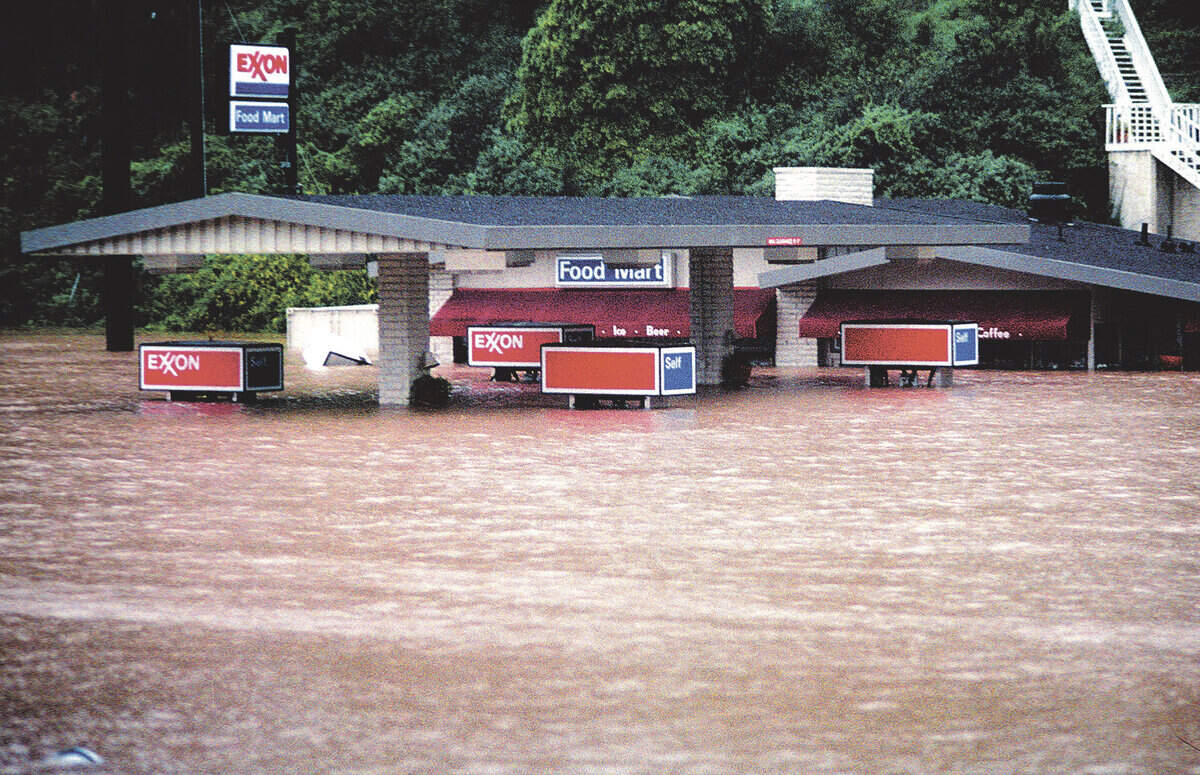
Destructive storm just pounded SLO County. How does it compare to major storms of the past?
It’s tempting to compare weather events.
Which storm was the worst? How many inches of rain fell?
What’s impossible to quantify is the tragic loss of a human life.
We can measure things such as rainfall but chance variances of topography can control where the water goes.
In one short series of ridge lines in the Santa Lucia Range, water flows to either San Luis Obispo Creek, Lopez Lake or the Salinas River.
Where a cloudburst pauses determines downstream impact.
Other factors, such as how fast the water falls, how saturated the ground is and what has been built since the last flood, can also change results.
Studies around climate change suggest that weather events will likely be more extreme. Dry seasons will be dryer and when atmospheric rivers form they will carry more water in warm air.
Since we as a society don’t value land with standing ephemeral water, we build drains and levees to channel water away, and groundwater does not recharge at pre-settlement rates.
If bigger storms are part of the future, our infrastructure needs to be upgraded to our new normal.
The most recent storm to batter San Luis Obispo County broke roads from Highway 166 to Chimney Rock Road and caused damage that could take days or months to repair.
This storm had a relentless quality to it, and never let up.
The storm broke the daily record for rainfall in San Luis Obispo. Cal Poly saw 6.41 inches on Monday compared to the Jan. 25, 1969, mark of 5.9 inches.
So why did the 1969 event lead to a more widespread flood?
The short answer is rain fell hard for two consecutive days with a major deluge at the back end of that 48-hour period.
In less than 48 hours, the San Luis Obispo watershed was drenched with over half an average year’s rainfall.
Saturday was big but Sunday was bigger. In one incredible stretch on Sunday, one inch of rain fell in a 25-minutes.
The already saturated ground gave way. Mudslides drove water and debris down canyons into town.
In two days, 10.53 inches fell, Sunday had 4.93 inches and Monday was 5.60.
A normal rainfall year was calculated at 20.61 inches in 1969.
Rain fell throughout the week and damage was widespread from a house falling in Lopez Canyon to the Salinas River flooding the Paso Robles sewer plant. The virtually empty and new Lopez Dam filled that year.
In 1973, another 100-year flood hit San Luis Obispo, compounded by debris from destroyed mobile homes blocking the creek..
In 1995, there were big storms in January and March, including a flood that hit Cambria and blocked Highway 41 and Highway 46 at the intersection near the James Dean memorial.
Please take care. Our rain season is not over.