Punch cards and phone lines: How SLO County election procedures changed over a century
Election integrity has been a hot topic recently.
This summer, the San Luis Obispo County Clerk-Recorder’s Office conducted a complete recount of the San Luis Obispo County Board of Supervisors’ District 4 race — only to end up with a tally that was identical to the original ballot count.
It took county employees 18 days to re-tally ballots from 23 precincts and five mail ballot precincts.
Paso Robles resident Darcia Stebbens told The Tribune that she requested the recount — and agreed to foot the $50,000-plus bill — to motivate the county to improve its election process.
It is tempting to embrace conspiracy theories about voter fraud, especially if that is the dominant narrative being circulated in certain corners.
But is there really a shadowy cabal in charge of elections? Various organizations make endorsements but no one ever seems to run the table with their picks.
San Luis Obispo County voters have often chosen candidates from different parties for different seats in the same election.
The county has also changed direction as political moods have shifted.
In each election, candidates must successfully make their cases with the voters — arguing why they are the best people to manage our tax dollars and government services.
Hopefully the voters get it right the first time but there is always a chance for course correction the next election.
In advance of Election Day, Nov. 8, here’s how SLO County election procedures have evolved over the past century or so, as covered by The Tribune. The following are excerpts from Tribune articles.
Nov. 6, 1900
Having folded his ballot, the voter shall keep it folded, step out of the booth, and deliver the ballot, still folded to the inspector, and give the inspector his name.
The inspector shall then announce the name of the voter and the number of the ballot he holds in his hand.
The ballot clerk having the register in charge, if he finds the number announced by the inspector to correspond with the number marked opposite the voter’s name on the register, shall in like manner repeat the name and number and shall mark opposite the name of the voter, “voted.”
Oct. 29, 1957
Voting machines will be given a trial by a few San Luis Obispo County citizens at the next primary, county supervisors decided.
A demonstration of the Shoup electric voting machine was made by Mervin Katz, vice president of the corporation from Los Angeles.
According to Katz, over 50% of the voting population in the U.S. today is using the foolproof machines.
One of the advantages noted is in totaling the count when the polls close. Immediate returns are available. Fewer judges and clerks would be necessary, plus savings effected through elimination of printing costs for ballots.
Dec. 30, 1999
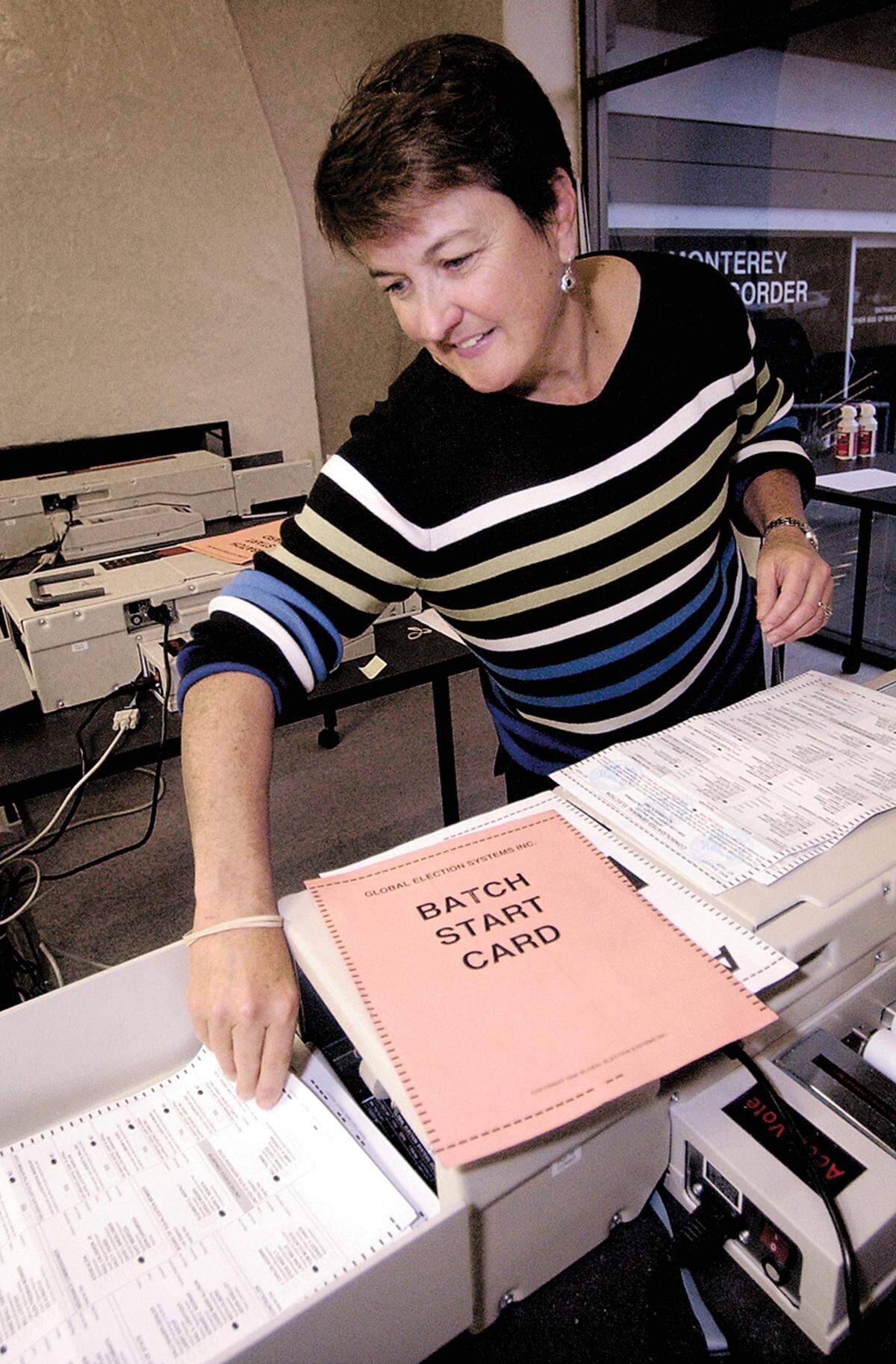
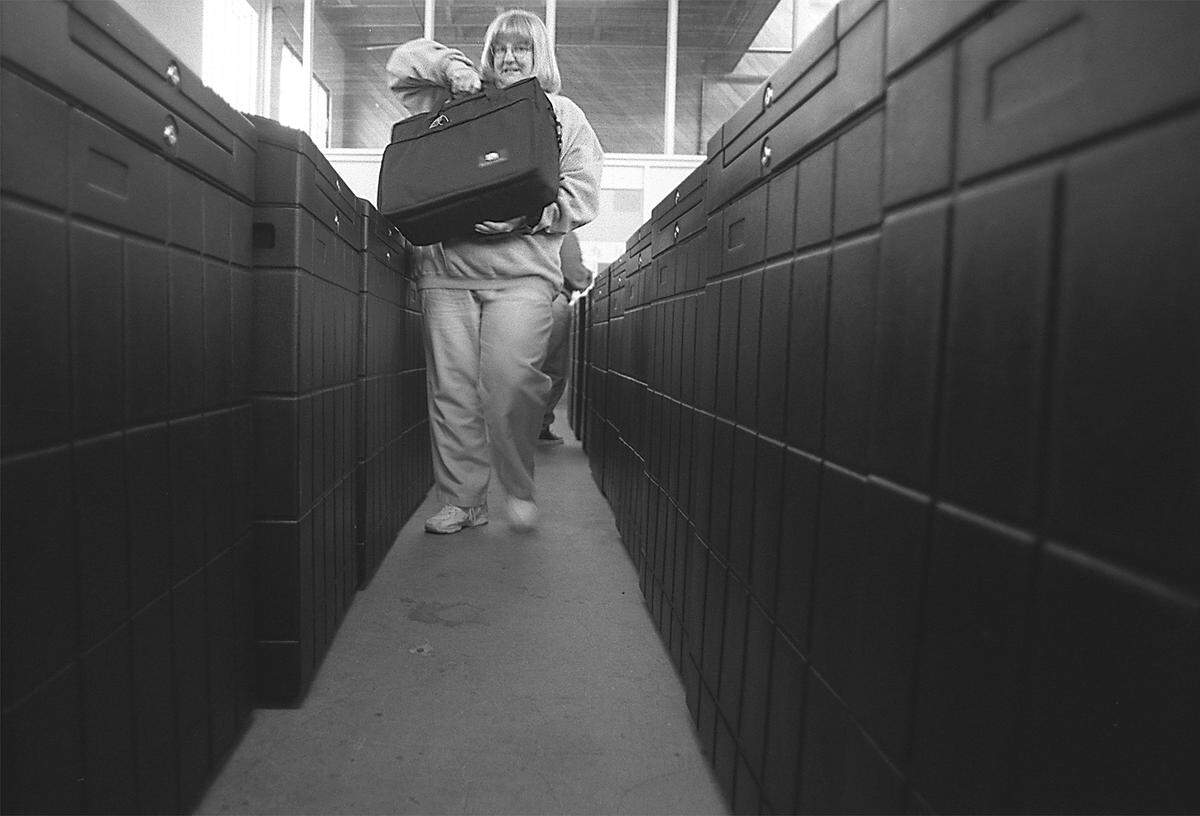
The Accu-Vote system will allow election workers throughout SLO County to plug each ballot box into a phone line and send the results to the County Government Center.
“You just hit the button,” deputy clerk Craig Driver said.
Results are expected by 9:30 p.m. — hours before the typical release of the final unofficial election night tallies.
Official results require the subsequent counting of absentee ballots that are turned in on Election Day and provisional ballots, which require confirmation of signatures or addresses before they can be counted.
Replacement of a 22-year-old system that required hauling thousands of punch card ballots to the County Government Center for tabulation on election nights was approved last month by county supervisors.
Editor’s note: Due to concerns about telephone software security, ballots are now gathered and tabulated in a secure location at the Clerk-Recorder’s Office.