Forget 5G — In 1947, SLO was gearing up for latest tech marvel: dial-up phones
Each era brings new technological wonders.
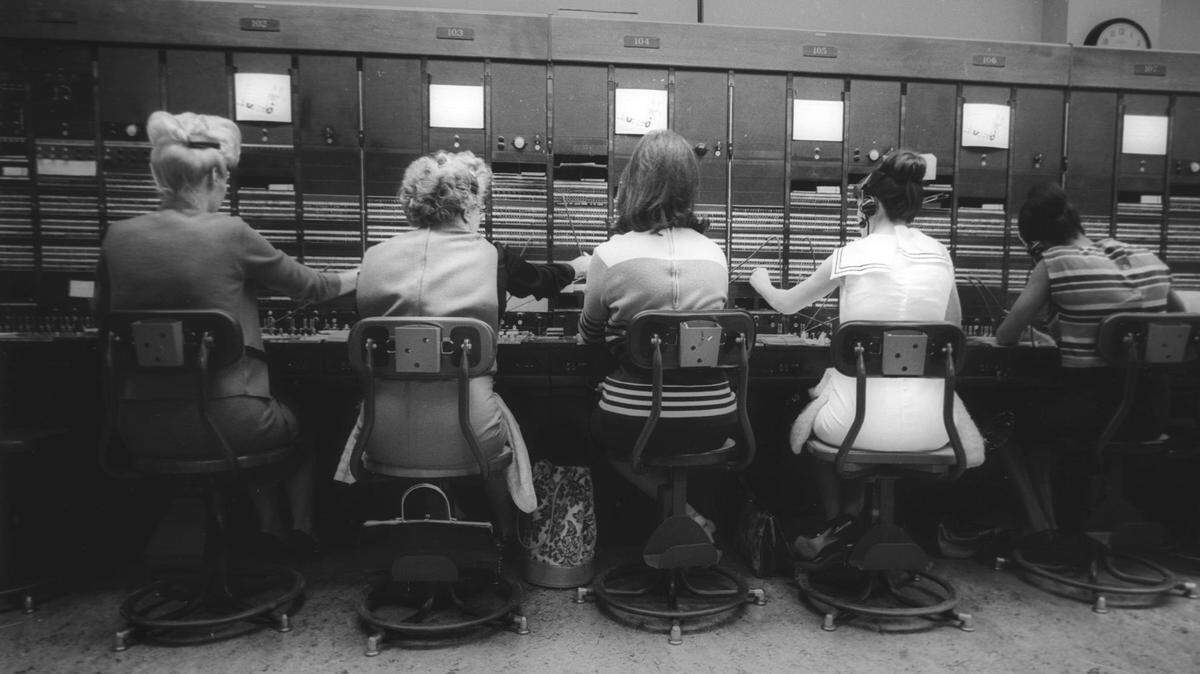
In 1947 a new building in San Luis Obispo promised the end of operator patched phone calls with an automated dial-up system. The phone company was one of the few places that offered careers to women in the early 20th century and though the new technology would reduce staffing, the Tribune still has photos of several operators lined up at the switchboard in the early 1960s.
Today pocket cell phones can access wireless signals and web pages without any pesky human interaction.
The tyranny of the cell phone signal invites subscribers to stay plugged in everywhere all the time, not just where a cable comes out of the wall.
And at the same time finding meaningful connection can be a struggle for some.
Sometimes technology outpaces our ability to integrate it into daily life: Airlines asked 5G implementation be delayed while they scrambled to catch up from weather, holiday and COVID-induced delays. For some reason the technology that cell phone providers have been touting in ads for the last few years seemed to catch the airlines by surprise.
I put my phone in automated sleep mode to keep the spammers from waking me up at 2 am.
Technology — not always an improvement.
Here is the story from the Nov. 28, 1947 Telegram-Tribune..
New telephone building work starts Monday
First step in $1.8 million expansion
The start of a $1.8 million telephone plant expansion program in San Luis Obispo was announced today by the Pacific Telephone and Telegraph company.
Construction of a new telephone building on property at the corner of Mill and Morro streets recently acquired by the PT&T, will be started Monday by the Maino Construction company, San Luis Obispo and completion is scheduled about November 1948.
The first step in the program according to J.E. Gooding, San Luis Obispo manager of the Pacific Telephone and Telegraph company, will be the erection of a new steel frame and concrete building consisting of two stories and a basement.
Nerve Center
The structure will contain quarters for a new telephone business office for San Luis Obispo, as well as adequate space for central office equipment.
First to be installed in the new building, according to Gooding, will be new toll switchboards and equipment installations associated with the new Los Angeles-Oakland coastal toll cable.
The installation of this toll equipment will make San Luis Obispo an important link in the coastal network which Bell System companies are steadily expanding over the United States.
Coaxial is a new type cable which will permit transmission of hundreds of conversations simultaneously over a single pair of connectors.
It will also ultimately be available for transmitting television programs.
Coast Link
Sections of this cable are now under construction in Southern California; also from San Jose to Oakland and from Marysville to Portland, Ore. One section of the cable has been completed between Sacramento and Marysville.
Engineering studies are underway for the Portland-Seattle section which is scheduled to start next year. Practically the entire length of the cable will be underground.
Equipment being engineered for the new office will be of the most modern design with the ultimate objective of converting the present Manuel system to full dial operation.
Gooding said the project is being planned to provide adequate margin for future growth and service requirements of San Luis Obispo.
This story was originally published January 8, 2022 at 5:00 AM.