SLO County’s biggest concrete dam was built in months. Why was it constructed so quickly?
The arched concrete Salinas Dam was built for an estimated cost of $2.5 million.
It was the first large-scale water project in San Luis Obispo County, and it was constructed on the Salinas River in an astonishingly short time.
The United States had not yet entered World War II in May 28, 1941, when the news of the dam’s contract was announced in the Telegram-Tribune, although the war had been raging for years in Asia and Europe.
The same edition mentioned that Bob Hope and Dorothy Lamour broadcast a radio show from Camp San Luis Obispo the night before, on May 27.
Within seven months, the war would arrive on American shores with Japan’s surprise attack on Pearl Harbor in Honolulu, Hawaii, on Dec. 7, 1941.
In 1940, San Luis Obispo had less than 9,000 residents.
The city’s population — and that of San Luis Obispo County in general — would grow, thanks to massive U.S. Army bases at Camp Roberts and Camp San Luis Obispo, an air base at Paso Robles and a naval facility in Morro Bay.
It wasn’t known back then whether wells could support the base at Camp San Luis Obispo.
At capacity, the Salinas Dam, also known as the Salinas Reservoir, holds 23,843 acre-feet of water. For many years, the biggest concrete dam in the county was also the primary water source for San Luis Obispo.
Now the city also gets water from two other reservoirs as well, Whale Rock and Nacimiento.
The Los Angeles District of the U.S. Army Corps of Engineers announced in October it is beginning to study disposing of the Salinas Dam as well as related structures — including the Cuesta Tunnel, which carries water from Santa Margarita Lake, Nacimento Lake and California State Water through the Santa Lucia mountain range to San Luis Obispo.
San Luis Obispo County and the city of San Luis Obispo are taking part in the process.
Written comments can be submitted via email to SalinasDamDS@usace.army.mil until Nov. 20.
Army veteran and Telegram-Tribune columnist Phil Dirkx wrote this story, published on Oct. 20, 2005, and edited here for length.
How the Army built a dam in less than a year
Seven months before Pearl Harbor, a general and an engineer stood in a canyon seven miles southeast of Santa Margarita. They discussed building a dam to hold back the Salinas River. It would create a reservoir to supply water to Camp San Luis Obispo.
The Army was taking over the camp from the National Guard and planning to enlarge it. The Army was preparing for the looming threat of war that came true at Pearl Harbor.
The engineer said the dam would take a year to build. The general said, “I’ll give you six months.”
The contract was signed May 21, 1941. The dam was designed by two engineers in their spare time. Their day jobs were with the Los Angeles County Flood Control District. They started designing in June, when the streambed was still being explored. The designs were finished in August, but construction had already started.
The Salinas Dam was completed that January, one month after Pearl Harbor. The 135-foot-high concrete dam created a reservoir now generally called Santa Margarita Lake.
It can hold almost 24,000 acre-feet of water. (An acre-foot equals 326,000 gallons, which can cover a football field to a depth of 10 inches.)
Army engineers worried the haste might have caused mistakes. Also, the dam leaked where its abutments met the canyon’s walls. So the Army decided to leave out the dam’s planned spillway gate.
The spillway is a huge concrete trough at the north end of the dam. The spillway lip is 19 feet lower than the rest of the dam. Surplus water spills over the lip when the reservoir is full.
The steel gate in the spillway would have prevented that spilling. Then the reservoir might have held 46,000 acre-feet. But in severe storms the gate could have been opened to let out regulated amounts of water. The spillway gate that was planned for the Salinas Dam ended up on the Friant Dam north of Fresno.
The leaking at the abutments was reduced by pumping concrete grout into the adjacent rock formations. Experts have pronounced the dam strong enough to withstand a magnitude-7.5 earthquake on a nearby fault.
The dam has stood almost 64 years, but the Army never used a drop from it. Camp San Luis Obispo’s wells produced enough water. So the reservoir became the major water supply for the city of San Luis Obispo.
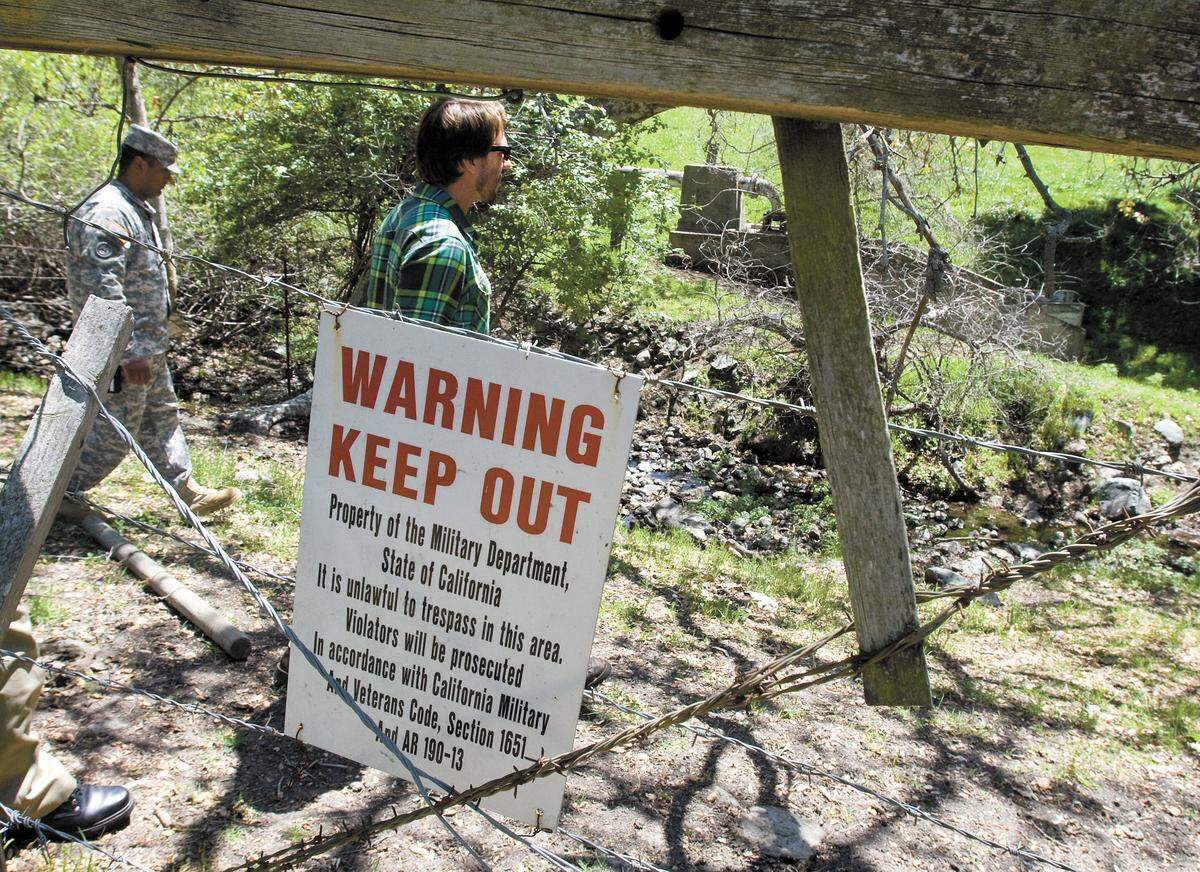
That city filed for the rights to the reservoir’s water June 4, 1941. That was one week after the Army filed for the same water rights. The Army didn’t need the water, so San Luis Obispo got it. The Army still owns the dam, and the county operates it. The city pays the operation and maintenance costs — but none of the original construction.
So Pearl Harbor can also remind us that, at least once, the Army did give a dam.
This story was originally published November 6, 2021 at 5:05 AM.