60 years ago, Cal Poly football team’s plane crashed on takeoff in Ohio, killing 22
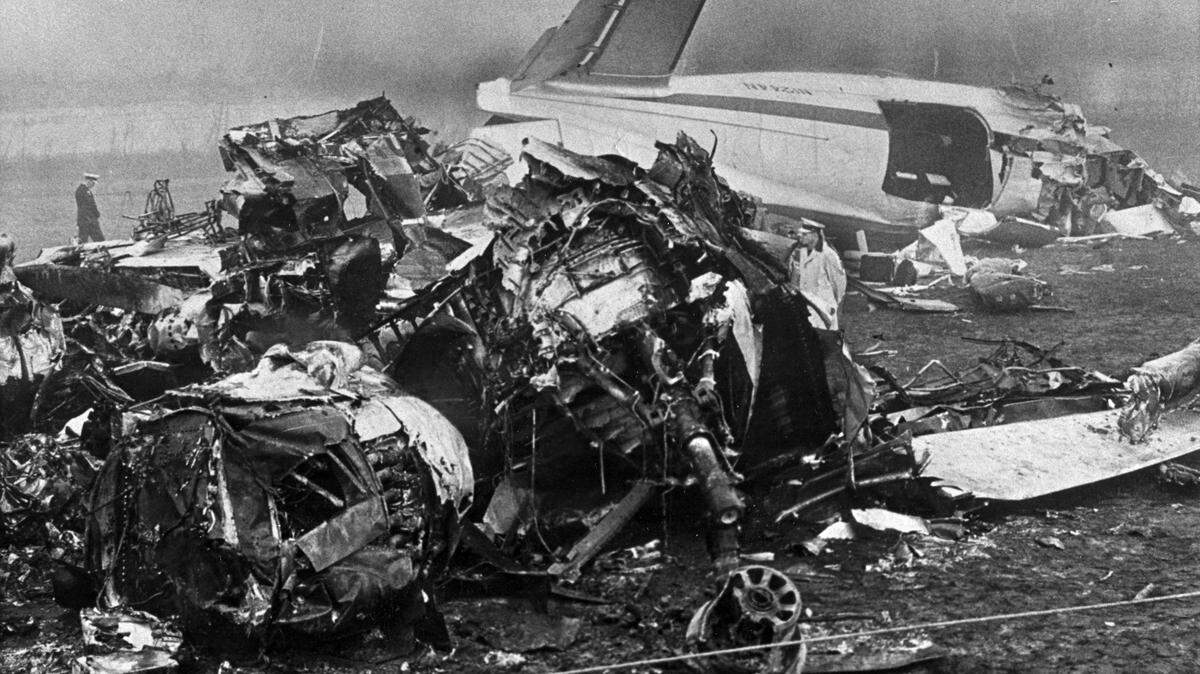
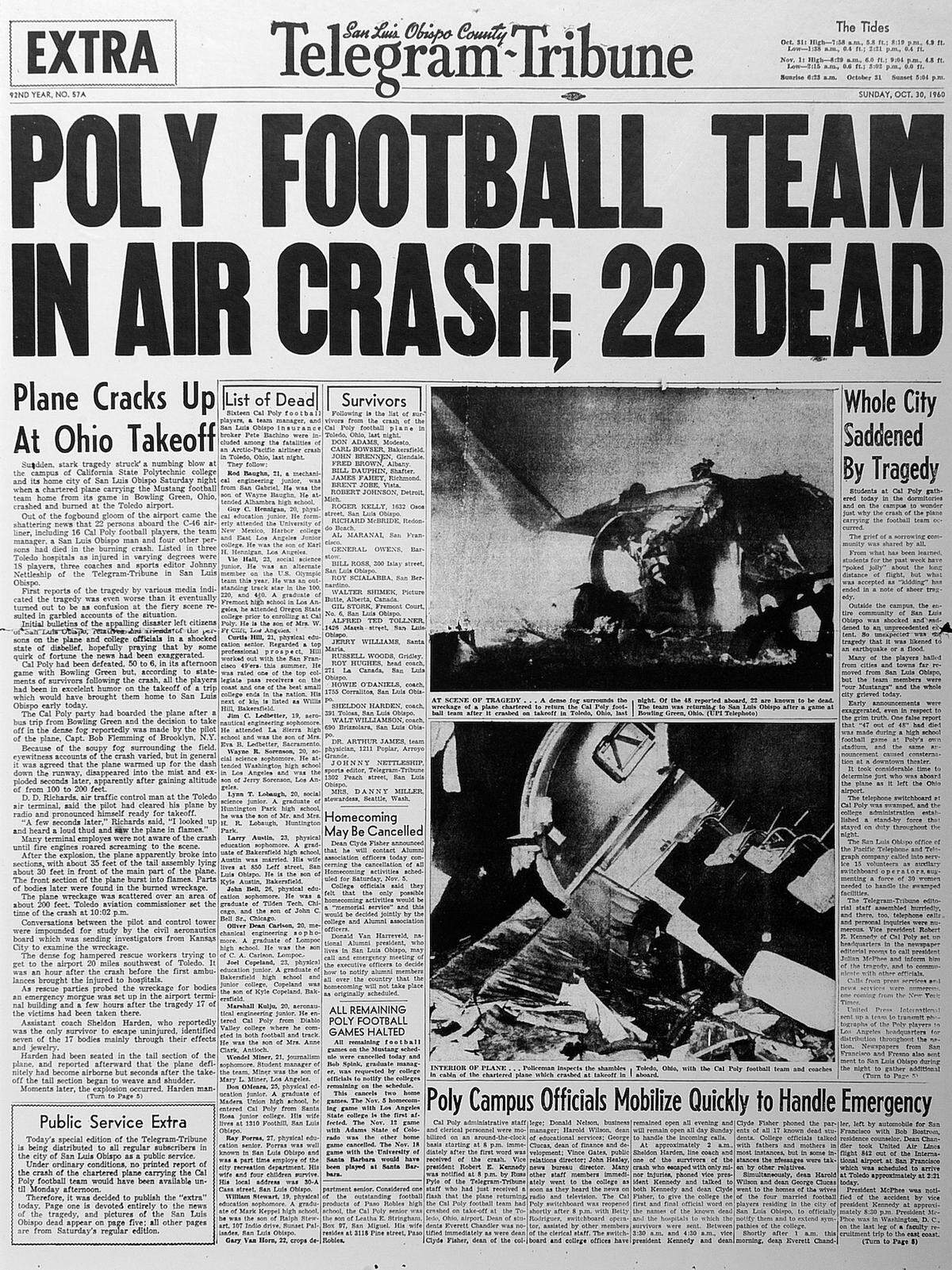
It has now been 60 years since the Cal Poly football team’s plane crashed in thick fog in Toledo, Ohio, killing 22 of the 46 passengers who were headed home after a game against Bowling Green.
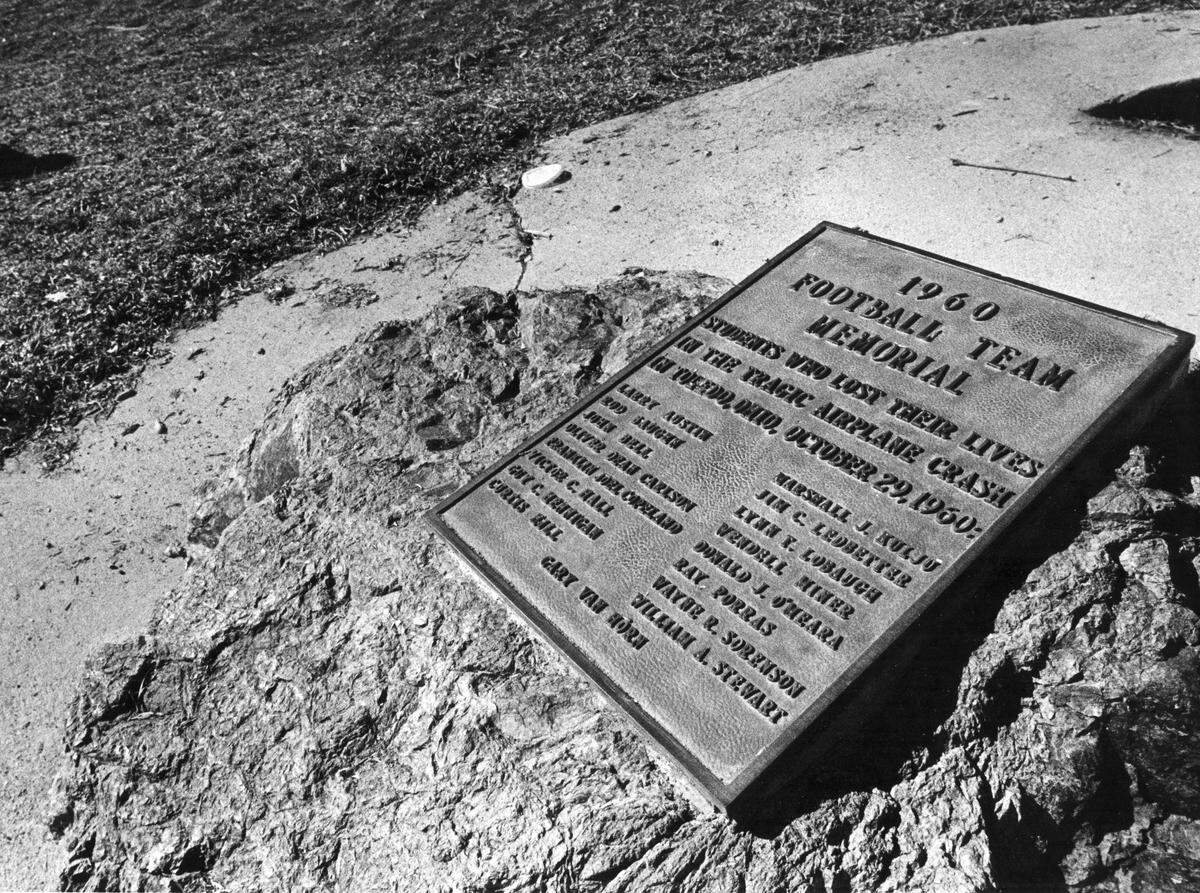
You may have seen the memorial south of Mustang Stadium. Here are some of the stories.
Sports reporter Pete Wallner wrote this story on Oct. 29, 2000, the 40th anniversary of the crash:
The strongest bond: Four survivors of the 1960 plane crash
On a fog-shrouded night in Toledo, Ohio, 40 years ago today, a plane carrying the Cal Poly football team home crashed moments after takeoff.
Despite losing to Bowling Green 50-6, the Cal Poly players were upbeat as they readied to return home.
But as the twin-engine C-46 dashed down the runway and climbed 100 feet, the plane suddenly jerked to the side, slammed into the concrete runway and split into two, the sections ending up 50 yards apart. The front burst into flames. The rear, breaking off at the wings, didn’t burn. Later investigations found the plane was overloaded by 2,009 pounds, and an engine failed as well.
Of 46 passengers, 22 died, including 16 members of the team. Most of those killed were seated in front. Most survivors were in back.
For survivors, living has meant dealing with the nightmare. They tell stories of last-minute decisions to sit in back with one teammate instead of with another in the front. A small choice with a lasting effect.
All the whys that followed never will be answered, survivors know. Moving on with life has been easier for some than for others.
Today, most are nearing the end of their careers. Many of their children are married. A few are even grandfathers. Beyond being workers, husbands, fathers and grandfathers, they carry the historical baggage of their recollections. “Lucky” is a distasteful contradiction to them. Today, they are “crash survivors.”
The Tribune spoke with four of them whose stories have never been told. Each has survived in a different way.
Brent Jobe
Played: Left end
Occupation: Underground construction and general engineering
Residence: Bonsall, San Diego County
Jobe remembers the football team was gung-ho to take off despite miserable weather conditions.
“I remember we were waiting quite a while (on the runway),” said Jobe. “I remember when the engine revved up, someone said, ‘Let’s give it the old college try.’ To this day I wince whenever I hear that.
“I was looking out my left window and could feel the plane climb a bit, but then it backed off and it felt like it stalled. Then there was dead quiet, and it was pitch black.”
He was seated next to Johnny Nettleship, then the sports editor of The Tribune. Moments earlier Jobe had declined an invitation from Bill Stewart to sit up front with him and Curtis Hill, players who were both killed.
“When the plane hit, I remember flying through the air, seeing the outline of the moon, and I could feel the cold mist,” he said.
Remarkably, Jobe said, he landed upright in a field, still buckled in his seat.
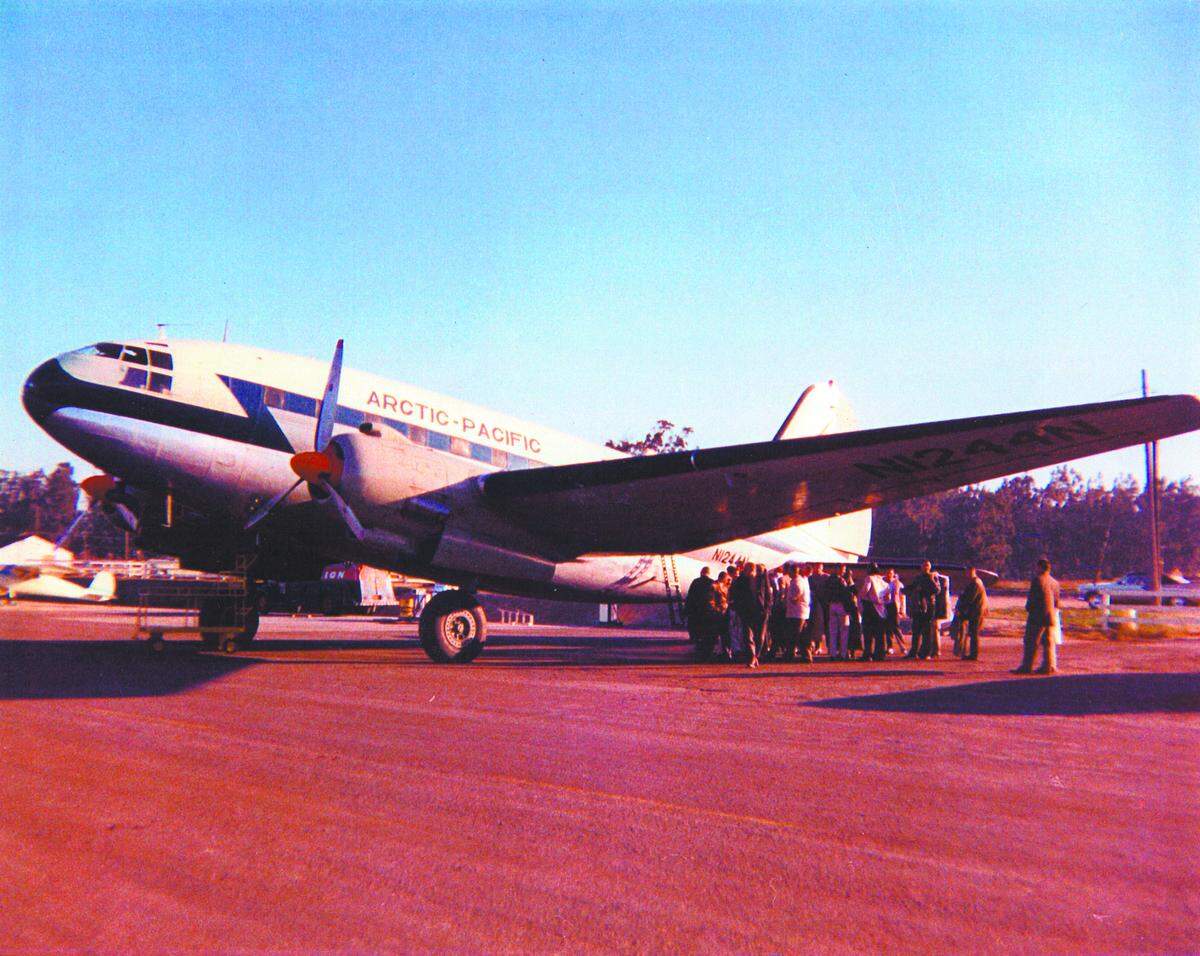
“There was the heavy smell (of jet fuel) and flames, but there was no movement. I remember thinking, ‘Where is everybody?’ “
He unbuckled his seat belt, managed to snap a photo with his camera, which amazingly lay nearby, and then went to aid those he could. Jobe then passed out from a heavy gash in his head.
A week later, as he and teammate Gerald Williams prepared to fly home, their plane departed down the same runway and there, off to the side, sat the wreckage.
“I said, ‘Oh man, this plane had better take off,’ “ said Jobe.
What effect did the tragedy have on him?
Very little, Jobe said.
He loved to fly beforehand — he even briefly piloted a team charter the year before — and Jobe went on to fly missions for the Marine Corps in Vietnam. His wife became a flight attendant.
“I don’t know, it just never bothered me,” he said. “Of course, you feel lucky to be a survivor, but I just went on with my life.”
Al Marinai
Played: Lineman
Occupation: Land management
Residence: San Francisco
For years — no, make that decades — Marinai seldom said a peep about the crash, refused to visit Cal Poly and wanted nothing to do with sharing his story.
“I have things that remind me of it every day,” he said. “I was really close to people on that football team. That was life. And to have it taken away was very difficult for me.”
But Marinai has begun to heal from the emotional pain. In July, he returned to Cal Poly for the first time since 1960 to attend a sports reunion. Next month, he will be back as an inductee into the Cal Poly Hall of Fame. Teammate Curtis Hill will also be inducted — posthumously.
“It’s been difficult for me more than some of the others. I know that,” he said.
Marinai remembers being among the last to board the flight, joining teammate General Owens in a seat directly in front of Jobe.
Whereas Jobe was ejected well beyond the wreckage, Marinai had his legs tucked under the seat in front of him. He suffered multiple fractures to his legs, back and arms. He spent nine months in hospitals and five years in a wheelchair. Today, he walks with a cane.
“I remember coming to and thinking, ‘I’m alive, it’s unbelievable.’ Then it hit me: ‘Why me? What’s the difference that I’m alive but others aren’t?’ “
Marinai admitted that a combination of guilt and anger at the loss of a promising professional football career, not to mention the limited use of his legs, caused him to keep his past bottled up.
“They say you should just put it in the past, but that’s a lot of B.S.,” he said. “It’s a part of me. It will always be a part of me.”
Marinai also has not flown since.
“They got me once,” he said. “I may get killed in some way, but no one’s going to get me that way.”
Don Adams
Played: Halfback-linebacker
Occupation: Retired high school teacher and coach
Residence: Modesto
Adams knew the crash affected him, even though he wouldn’t learn the extent for nearly 20 years.
“Every year on the 29th, I remember,” Adams said. “I always know, and that day is always miserable.”
Adams had played football at Cal Poly from 1957-59, then had a stint in the U.S. Army in 1959 before returning to campus and the team.
On that fateful night, Adams, for reasons he can’t explain, decided not to play cards with friend Vic Hall, who was located in the front of the plane. Instead, he sat with teammate Jim Fahey. Hall was among those who died.
But that’s where the memories fade. The crash left Adams hospitalized with head trauma and neck injuries.
“Fahey has told me I helped pull some guys out, but I don’t know,” said Adams. “I guess I’ve put all that out of my subconscious.
“But even still, you feel bad for all those killed. There were guys who left behind wives. Some had kids, and you just wonder what ever happened to them.”
Eventually Adams became a teacher and coach. He was head wrestling coach at Modesto High School from 1963-80.
“I re-enrolled a number of times (at Cal Poly), but it took a while to get my balance back,” he said.
In 1980 recurring headaches and blackouts suddenly accelerated his problems, and Adams lapsed into a coma. He said he was “basically out of it” for a year.
“I knew there was something wrong prior (to the incident), but I couldn’t pinpoint it,” Adams said. “I was having these mini-strokes.”
Adams said doctors eventually found that he had rigid blood vessels leading to his brain, a condition caused by his crash injuries. Medication helped bring him around, but he was forced to retire.
Today, Adams is a staunch supporter of Cal Poly sports and has been touched by the way the Athletic Department has embraced survivors. When he looks back, he’s disappointed the 1960 Mustangs never got to achieve a different destiny.
“We all thought we’d be remembered for having a phenomenal team and not for a plane crash,” he said.
Bill Dauphin
Played: Tackle
Occupation: Math teacher and former wrestling coach, Prospect High School
Residence: Scotts Valley
The crash has been sent to the bottom drawer of Dauphin’s life. Yes, he said, there are memories, but he was able to successfully file those away and move on.
“Even today there are aches and pains from it (in his left shoulder and knee) but contrast that to guys who paid with their lives; it’s really nothing.”
Dauphin was a reserve on the 1960 team, a sophomore making his first plane trip, and he didn’t play against Bowling Green. When he boarded the plane, he was just about in the center — almost middle seat in the middle of the plane. The eight teammates on either side of him were killed, he said.
“It was very foggy, and I remember they had stopped the (taxi) cabs from running,” Dauphin recalled. “But what did I know. I was a country kid. I figured if they said it could fly, it could fly.”
Dauphin was found some 30 feet north of the tail section, torn out of his seat and suffering from a dislocated hip, a shoulder injury and burns. He was unconscious nine to 11 days, he was told. Dauphin was hospitalized two weeks in Toledo and two weeks in Bakersfield. But to get to Bakersfield, he had to fly out of Toledo.
“I remember we wept as we went by it when we took off,” Dauphin said of the wreckage.
Dauphin’s physical injuries healed relatively quickly, but in the aftermath he struggled emotionally, like many others.
What returned a sense of normalcy to his life was playing football the next year.
“That was such a huge healing thing for me. Just to have the team and be out there on the field. I think of someone like Ted Tollner (the quarterback and later a college head coach), limping back to the huddle because of (crash injuries). That was awful to see, but he was a hero to me and a lot of those guys.”
When he returned to Cal Poly, Dauphin also discovered a love of wrestling and went on to finish fifth nationally as a senior. That, in turn, led to a high school coaching career, including 18 years at Leigh High School in San Jose.
In the years that followed the crash, Dauphin hasn’t been close to teammates nor spent time with alumni or the university.
“I guess I was always chasing a buck,” he said.
Still, when he looks back at that era and the traditional college atmosphere, Dauphin grows sad at the youth stolen from the 1960 team.
“You know, when guys get a little older and they talk about life, it’s the times when you compete athletically, when you’re bonded as a team, when you really felt most alive. It’s something special.
“Then to wake up one morning and find out half of them have been killed, it’s a huge trauma. It doesn’t matter what you want to think. It’s a huge trauma.”