
From stagecoach robberies to railroads, SLO’s new train tracks signaled end of an era
In the photo, a dozen people pose next to a six-horse stagecoach outside an ornate hotel. Etched into the negative in capital letters are the words, “THE LAST TRIP MAY 5.”
The coach waiting outside San Luis Obispo’s Ramona Hotel, the grand but short-lived destination near the corner of Johnson Avenue covering the block between Higuera and Marsh streets, represented the end of an era.
It was the last stagecoach to head over the Cuesta Grade as the Southern Pacific Railroad arrived in town on May 5, 1894.
Whistles and sirens were going off all over town but San Luis Obispo city’s engineer was afraid to ring the City Hall bell. He had to be reassured that it was indeed a historic day.
Steam whistles at the Electric Light Works, Waite & Ryans and the big siren at the narrow gauge Pacific Coast Railway depot all sounded.
The excitement began when the steam engine of the Southern Pacific construction train passed over the Monterey Street bridge for the first time and the engineer pulled the train whistle. That day, The Tribune reported, J.C. Castro brought up a wagonload of beer for the thirsty tracklayers near the bridge.
San Luis Obispo was finally connected to the larger world by rail.
The Santa Lucia Range had terminated the line five years earlier in Santa Margarita.
The 17 miles of track Southern Pacific built over the Cuesta Grade would be the highest elevation and most expensive 17 miles on the Coast Line between San Francisco and Los Angeles.
Estimates vary but the track cost the railroad between $1.5 and $3 million to build.
The original tunnels removed 1,100,000 cubic yards of rock from under the Santa Lucia Range. A later expansion removed more rock, making the amount of earth moved similar to the amount removed for the footing of the Hoover Dam.
The Sept. 21, 1950, edition of Engineering News-Record called the work “a world’s record for hand-drilled tunnels that may well still be unbeaten today.”
It required seven tunnels, a large and small horseshoe curve and the longest bridge on the Coast Line, the 931-foot-long Stenner Creek Trestle.
Two of the tunnels have since been bypassed or daylighted, but the remaining five span more than a mile underground. The longest tunnel, No. 6, is 3,610 feet long.
Why work so hard? The original wagon road was a fright.
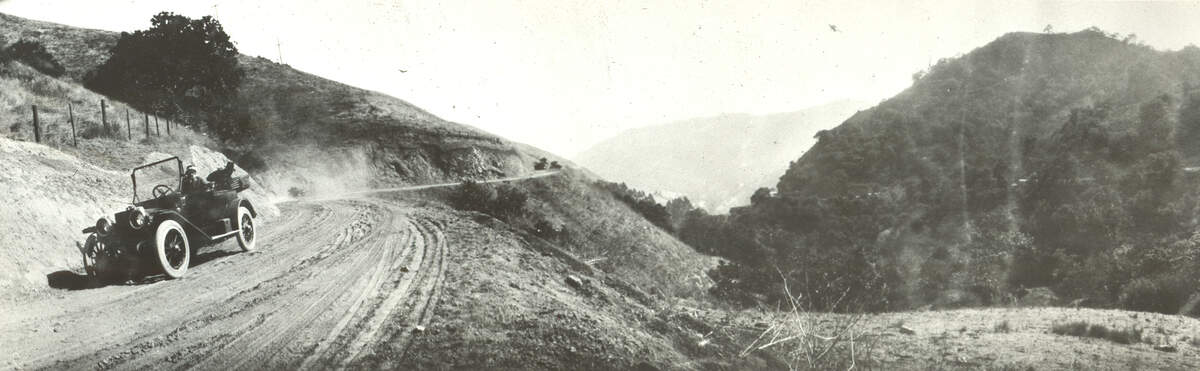
Travelers crossed the Cuesta Grade via Old Stage Coach Road, which even today it is an adventure. The dirt track hugs the canyon above San Luis Creek up the west side, below the rails, as Highway 101 sails up the other side on a bed of concrete and asphalt.
Freight wagons, which required six or eight horses, could take eight hours to cross the grade with the teamster jamming his foot on the brake on the road down.
Old Stage Coach Road was built with Chinese labor and a $20,000 county bond in 1876. It was an improvement over the bottom-of-the-canyon padre’s trail between the Mission and Santa Margarita.
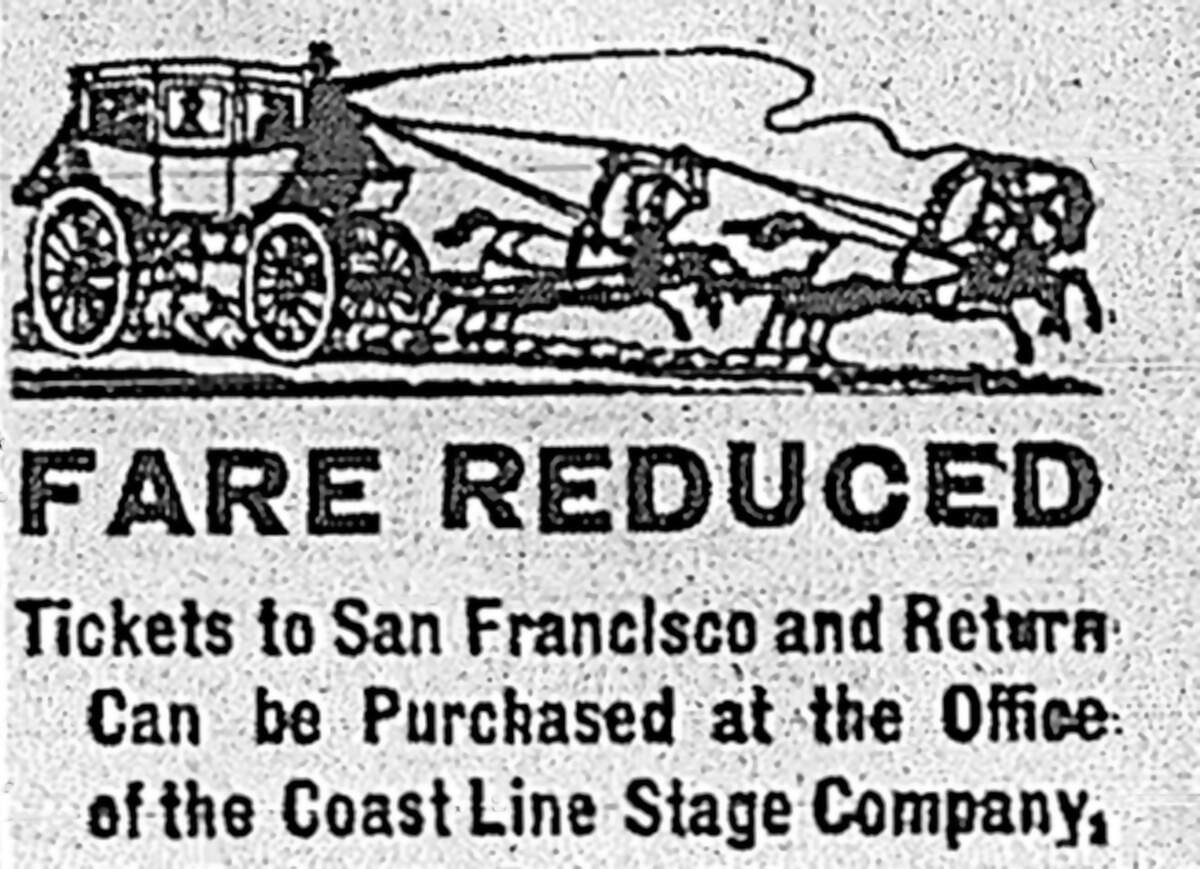
Stagecoaches were attractive targets for robbers.
Stagemaster Tom Johnson’s recollections were published in the May 7, 1956, Telegram-Tribune:
“It was during the years I was driving the stage over the 60-mile route from San Luis Obispo to Pleyto (near present day Lake San Antonio) that Dick Fellows, the notorious bandit was on the job. For awhile he kept up a sort of game of hide and seek with the stage drivers. One night he attempted to rob George Richmond, the driver on the line from San Luis Obispo to Santa Maria.
However, he was on foot so Richmond whipped up his horses and drove on. This made Fellows so furious that the next night he stole a horse and stopped Richmond, relieving him of the express box, and for his extra trouble he said he would take Richmond’s gold watch.
One night Mike Livingston, a shoe drummer, rode north with me. He said, ‘You know Jim Myers was robbed last night, but I’m ready for any robber who stops us tonight and I’ll shoot him too.’
Whereupon he displayed a tiny, little pistol, nothing more than a toy.
About 15 minutes later as we started up a mountain we were held up and had to hand over the express box. Mike was scared stiff, to put it mildly. As soon as he could stop shaking sufficiently to speak he said, ‘Johnson, Johnson, what vil ve do if ve are robbed again and ve ain’t got no box to give ‘em?’ ”
Ed Hecox, a well-known stage driver in the 1890s, saw that change was coming and got a job on the railroad as fireman stoking engines for Southern Pacific. He was later promoted to engineer.
Commercial stagecoaches ran from San Luis Obispo to Santa Barbara and to Cambria for many years, but the only coaches that went over the Grade were nostalgia excursions.
The Coast Line connected to Los Angeles in 1901.
Improvements to the Cuesta road would wait for the 20th century and the era of the automobile. And even those improvements could not prevent runaway trucks.
Want to learn more about San Luis Obispo County’s railroads? The Central Coast Railroad Festival will take place Oct. 4 through 6; for more information, visit www.ccrrf.com.