
Body cameras: Which SLO County police agencies are using them
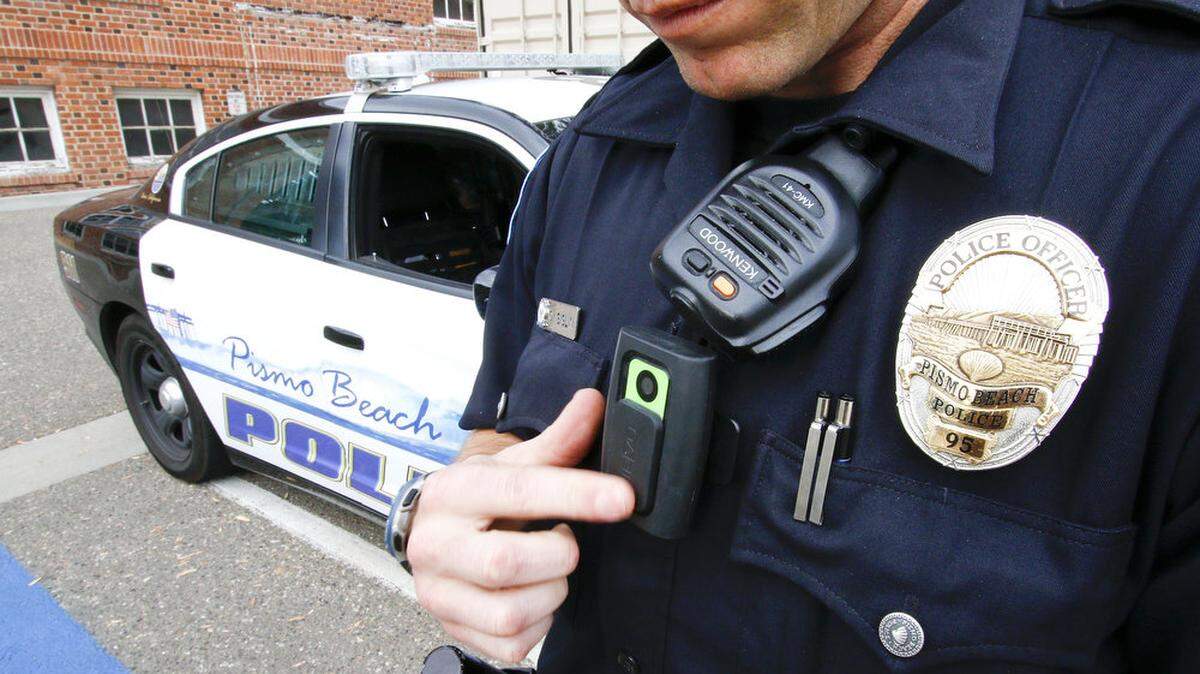
Law enforcement agencies across San Luis Obispo County are beginning to experiment with body-worn cameras, an idea that’s gaining nationwide attention amid recent high-profile officer-involved deaths.
In the wake of deadly incidents in Ferguson, Mo., and New York City, the trend is on the rise as police departments in places like Los Angeles and Monterey counties work to fit all patrol officers with the technology.
While most local officers still rely solely on years-old in-car video systems, that may change with at least one local agency considering outfitting all its patrol officers with body cams.
However, as many police departments are discovering, deploying body cameras and creating strict policies for how they’re used — as well as determining how to balance privacy concerns with public records disclosure laws — have proved to be difficult and expensive.
Though experts predict the cameras will likely soon be as commonplace as dashboard cameras — which also once inspired similar concerns — putting them to use remains a work in progress.
Who has them?
The Pismo Beach Police Department is the largest user, with 17 cameras for its two dozen patrol officers.
Chief Jake Miller said the department purchased a pair in the mid-2000s to fit motorcycle officers who patrol without dash cams. They proved useful, and in 2012 the department upgraded its systems and purchased 15 more.
The Grover Beach Police Department has six body cameras for its dozen patrol officers, as well as three in-car cameras for its six patrol vehicles.
Chief Jim Copsey said that at any given time, between two and four officers on the street are wearing cameras assigned to them by a supervisor. Copsey said the department is considering acquiring more cameras in the future but so far he hasn’t seen a need to make it a mandatory policy.
The San Luis Obispo County Sheriff’s Office uses the cameras sparingly, mostly by correctional deputies in the County Jail for certain tense situations in which documentation may protect officers’ safety and inmates’ rights, Sheriff Ian Parkinson said.
Of the department’s 23 cameras, 19 are worn in the jail while the other four are shared by the department’s five civil deputies for nonemergency situations such as serving an eviction notice.
Parkinson said the agency is testing a few models to see how they integrate with existing car systems but has no immediate plans to expand their use mainly due to the cost of maintaining equipment and storing data for its roughly 130 patrol deputies.
Parkinson noted that deputies do have microphones attached to their belts, which may be activated in a law enforcement situation, as well as cameras affixed to tasers. All recordings can be viewed, but not altered,by a deputy at any time, as well as by the department’s Professional Standards Unit.
“I think for the most part we understand the value in (body cameras), but they’re not the answer to everything,” Parkinson said. “Storage aside, they don’t always capture everything the officer sees, and at the end of the day it’s one more piece of equipment they have to wear and maintain when they have to do a tremendous amount of work already just to start a shift.”
Atascadero Police Sgt. Caleb Davis said his department has no plans to acquire body cameras but is in the process of fitting motorcycle officers with helmet cameras for traffic enforcement.
Paso Robles Police Chief Robert Burton said his department doesn’t use body cameras either but is exploring options to possibly test some in the next few years.
The hurdle, he said, is funding. Burton said he would prefer to see how other agencies fare before spending money.
“Sometimes it’s great to be on the cutting edge, but sometimes it’s better to hold back while others work out the bugs,” Burton said. “But we recognize (body cams) are kind of the wave of the future.”
The Morro Bay Police Department also has no body cameras but is considering using a portion of an upcoming $100,000 grant to buy some. Cmdr. Bryan Millard said Police Chief Amy Christie is researching that possibility, but, like Burton, wants to see how other departments do it.
“The one thing we’re really hesitant on is being the guinea pig,” Millard said. “We don’t have a lot of money to try out stuff.”
Arroyo Grande police do not use body cameras either, though Police Chief Steve Annibali said he is in favor of body cameras, which he called a logical extension of the in-car systems.
As a member of the Ethics and Professional Standards Committee of the International Association of Chiefs of Police, Annibali has attended several conferences regarding body cameras.
“We were talking about (cameras) two years ago, well before Ferguson,” Annibali said, referring to recent civil unrest in Missouri following the shooting death of unarmed teen Michael Brown by a police officer. “But now they’ve really exploded onto the horizon.”
SLO has plans
“We’ve instituted a number of initiatives in the past years to increase transparency with the public,” Gesell said. “And this is yet another we intend to launch to show we are a transparent organization.”
Gesell, a member of the California Police Chiefs Association, said public perception of police legitimacy is a major concern across the state, and body cameras are one way to protect officers from false allegations and protect civilians from rogue behavior.
The department has formed a community work group consisting of department management and staff as well as the city attorney, community members and defense attorneys that will meet monthly through June to give input on best practices for body cameras.
That group will hold its first meeting later this month.
Capt. Keith Storton, who is spearheading the effort, said the group will work through June to evaluate policies and retention issues. In July, the department plans to request roughly $15,000 in surplus funds from its 2013-15 Financial Plan to buy 10 body cameras for field testing and then compare officers’ experiences with the work group’s recommendations.
By July 2016, the department plans to request budgetary funds to purchase cameras for every patrol officer, based on the field tests.
So far, the Police Officers Association is on board. Union President Aaron Schafer said his members fully support the cameras and are looking forward to participating in the work group and field testing.
He said in an email that video footage is in the best interests of the officers when involved in an incident or when defending against a citizen complaint. However, like Parkinson, he also said body camera footage will not capture everything an officer sees or perceives.
“As more and more videos are released, it will be important for the public and the news media to remember that we cannot always judge the officer’s actions based solely on what is seen on the video,” Schafer wrote.
Brave new concerns
A September 2014 report by the U.S. Department of Justice surveyed about 40 police departments that use body cameras and published a list of recommendations for best practices.
Among its findings, the DOJ suggested that officers should activate the cameras during all law enforcement-related contacts with the public but should ask for consent before interviewing witnesses and victims of crime. The report found that officers should be required to articulate on camera or in writing their reasoning should they turn off their camera during an incident. Specific measures should also be taken to prevent data tampering, the report reads, and policies should clearly describe when supervisors are permitted to review the footage.
The footage should be retained from at least 60 to 90 days, the DOJ suggests, to allow time for a complaint to be filed or an investigation to determine if the video is useful.
The American Civil Liberties Union has also weighed in to support the use of body cams. However, the group prefers a stricter approach, said Peter Bibring, ACLU senior staff attorney and director of police practices, including limiting officers’ discretion as to when to activate the cameras when contacting the public.
Conversely, Bibring said policies should dictate what can be released to the public to protect citizen privacy expectations.
“When people come into contact with police, it’s usually not their best day and they’re not in a situation they would want publicized,” Bibring said. “Police already have a large amount of discretion in what to release to the public. For that video then getting posted to YouTube, that can be a significant violation of privacy.”
However, being overly conservative in releasing footage will undermine public faith, Bibring said.
Lastly, Bibring said officers should be able to review their own footage but should write a preliminary report beforehand. The DOJ recommends allowing officers to review the footage at any time.
“Will there be discrepancies? Absolutely, but it will help you get to the truth,” Bibring said. “Otherwise, they’re essentially making their memory look more accurate than what it is.”
San Luis Obispo County Chief Deputy District Attorney Jerret Gran said that his office places a lot of value in video footage to secure convictions but added that police departments should have the leeway to draft their own individual policies.
Promising results
In the past year, the police department in Rialto, for example, has become the poster child for successfully using body cameras. In 2012, it partnered with a researcher from the University of Cambridge Institute of Criminology for a study on whether body-worn cameras had any effect on the number of complaints against officers or their use of force.
Within a year, citizen complaints dropped by 88 percent and use-of-force incidents dropped 60 percent compared to the previous 12 months.
“Initially I had to go back and check the numbers a couple times because they were quite overwhelming,” Rialto Chief William Farrar said.
Those low numbers remained steady in 2014 at the same time the department doubled the number of cameras so that all 115 patrol officers now use them.
Farrar said the keys to his department’s success was participation by the officer’s union and the community, testing equipment to make sure it has a good shelf life, and deploying it incrementally so officers have time to learn about the technology.
Farrar said he was not sure how to explain his department’s results, but noted that in the age of social media and cell phone technology, people tend to behave themselves when facing a camera lens.
“If you’re an officer, you definitely become a little more patient; mind your P’s and Q’s. On the other hand, if you’re a citizen and you knew you were being filmed, we’ve seen you’ll also be more cooperative,” Farrar said. “And people on both sides caught on very quick.”
This story was originally published January 9, 2015 at 4:45 PM with the headline "Body cameras: Which SLO County police agencies are using them."