
The price taxpayers pay for security alarms
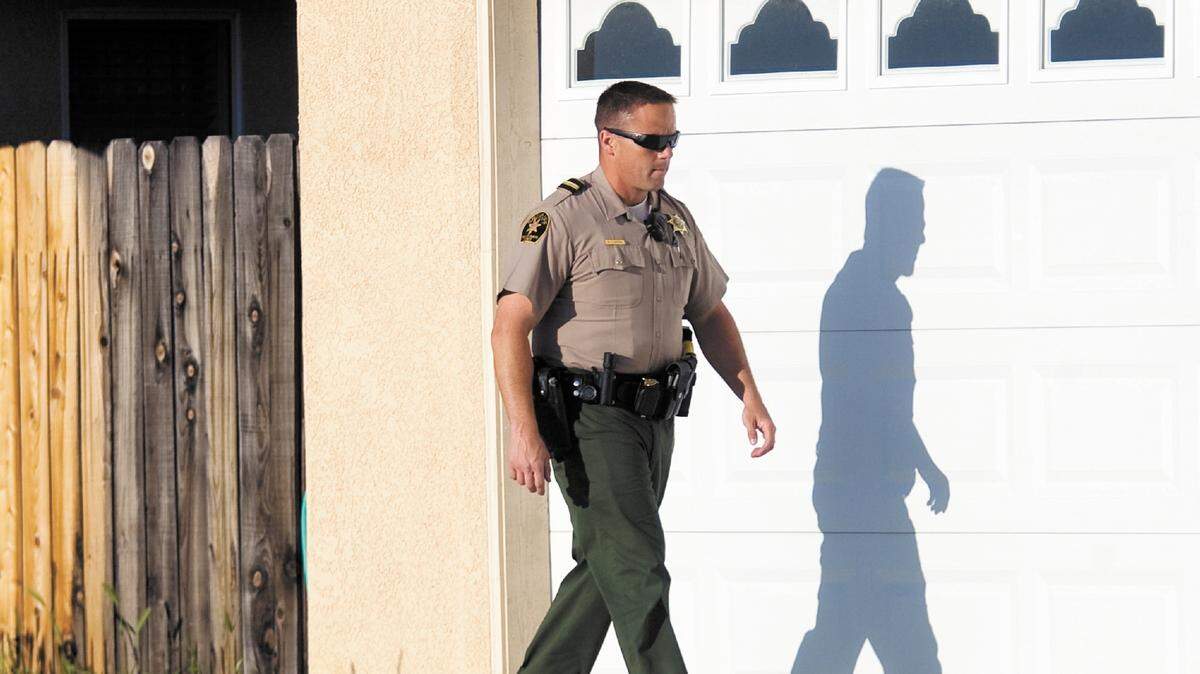
In the late morning of April 27, Grover Beach police Sgt. Tim Miller responded to an all-too-common call — a burglary alarm. He arrived at a home with another officer. They checked the doors and windows, then called dispatch to relate that this was just another false alarm.
Grover Beach is not alone in handling such calls.
San Luis Obispo County’s eight local law enforcement agencies responded to 8,314 alarm calls from homes and businesses last year, and most of them — more than 5,000 — were false, according to an analysis of data collected from the agencies by The Tribune. Yet law enforcement spent hundreds of hours and countless dollars responding to the alarms.
“In my 15-plus years of doing this job in three different cities — two different counties — the majority of alarms are false,” Atascadero police Sgt. Gregg Meyer said.
The San Luis Obispo County Sheriff’s Department spent more than 300 hours last year responding to 2,706 alarm calls in unincorporated areas, according to data provided by the department. Only 329 of them involved a possible crime. About 85 percent were false alarms.
Police contend that it is part of their duty to respond to all alarms, no matter the cost to taxpayers or the wasted effort responding to false alarms.
Critics argue, however, that the majority of the county’s taxpayers without alarms are paying for security for the minority with alarms. Michael S. Scott, a professor at the University of Wisconsin’s Law School and a former police chief, believes that private alarm companies should either provide their own response teams or pay for local police services.
Alarm industry representatives dispute that they’re being subsidized, noting that everyone benefits when law-enforcement responds to private alarms.
While working to reduce false alarms through technological fixes and local police forces, the industry acknowledged that false alarms are increasing because of alarm systems’ lower costs and rising popularity.
Different approaches
Fees charged by local law enforcement agencies vary. Some cities levy an annual permitting fee to businesses and homeowners for having alarms — plus a fee when false alarms go off more than once in a year. Other jurisdictions have no permitting fees and don’t charge for responses.
Still others don’t collect fees for false alarms despite local ordinances (Arroyo Grande, Morro Bay), don’t have permitting fees (the county, Morro Bay) or fail to thoroughly track false alarms (Paso Robles, Morro Bay).
Consider the approaches of Grover Beach and San Luis Obispo.
San Luis Obispo has the most comprehensive policy in the county, according to a review of law enforcement records by The Tribune.
The city — which responded to 1,800 calls in 2010, including 1,100 that were false — charges a $34 annual permit fee for each of the approximate 1,600 alarms in the community. It also charges a homeowner or business after the third false alarm in a year. Typically these fees total more than $100,000 annually.
San Luis Obispo enacted its ordinance in 1998, said police Capt. Chris Staley, after realizing how much time and money was being wasted on responding to false alarms. As a result, those using the service of police response pay for it, at least in part, he said.
Grover Beach, on the other hand, doesn’t levy an annual permit fee and charges homes or businesses after the third false call in a year.
Of 310 alarm calls it fielded last year, nearly all were false alarms, and no customer had more than one false call, so Grover Beach didn’t collect any fees.
As a result, instead of the 75 homes and businesses with alarms in the city footing the bill for their police response, it fell to taxpayers.
Still, “I think it’s a good use of police time, and it’s a public service,” said Grover Beach police Lt. John Bewick. His department considers false alarms a call for service just like any other, he said.
City officials considered charging businesses and homes that had more than one alarm in a 12-month period but decided against it because they didn’t want to hurt businesses by tacking on such a fee, Bewick said.
The Sheriff’s Department has been considering a policy to deal with false alarms for years, according to spokesman Rob Bryn. But enacting one would be problematic because of the department’s wide coverage area and the variety of issues it could raise, he said. Among other things, the department would have to determine whether to charge local governments and who would oversee collection and monitoring, Bryn said.
“I’ve created some false alarms,” acknowledged Nipomo homeowner James Pelkey. While the authorities have never responded to a false alarm at his house — his alarm company calls him whenever the signal goes off to see whether it was false — he likes knowing that deputies will go to his house if a real alarm goes off.
Pelkey said he wants deputies to keep responding — even if the majority of alarms are false — but thinks the people who cause false alarms should pay their share, including himself. “Hit them in the pocketbook if they are abusing it.”
A nationwide debate
The issue is not limited to San Luis Obispo County. Taxpayers pay millions each year and authorities waste precious hours on false alarms, according to the Center for Problem-Oriented Policing, a nonprofit aimed at encouraging problem-oriented thinking among law enforcement.
“Alarm systems are not cost-free to the community, especially if up to 98 percent of alarms are false but still require the time and resources of a police response,’’ the center said.
Scott, the University of Wisconsin professor and the center’s director, said police assume it is their legal obligation to respond to alarms. But when officers respond, those in neighborhoods with fewer alarms (usually less affluent areas) have less of a police presence, Scott said.
It is not unusual for 10 to 15 percent of all police calls to be alarms. So not only are the taxpayers without alarms getting less service, Scott said, they are also paying for that reduction in policing.
Jon Sargent, former president of the California Alarm Association and spokesman for ADT Security Services in the West, argues that even people without alarms benefit from them.
When a business is robbed, prices go up, he said. When there are alarms in a community, a thief doesn’t know which houses are alarmed and which ones aren’t. Furthermore, he said, alarms aren’t intended to catch burglars, but rather to deter crime.
Alarm calls and fees throughout the county
| Total Alarms | False Alarms | Alarm Fee | False Charges | Fees Collected | |
|---|---|---|---|---|---|
| SLO County | 2,706 | 2,377 | none | none | none |
| San Luis Obispo | 1,800 | 1,100 | $34 annual | $74 after 3rd | $118,000 |
| Arroyo Grande | 504 | 502 | $30 annual | $60 after 3rd | none |
| Grover Beach | 310 | 303 | none | none | none |
| Morro Bay | 338 | 338 | none | fine varies | none |
| Pismo Beach | 627 | 621 | none | $135 after 2nd | none |
| Atascadero* | 709 | 437 | none | $105 after 3rd | $4,935 |
| Paso Robles | 1,320 | NA | $50 once | $29 after 3rd | $8,347 |
| * Totals for Atascadero are for 2009–2010. All other cities’ totals are for 2010. A breakdown of alarms in homes vs. those in businesses was not available. Source: Local police departments. | |||||
This story was originally published May 27, 2011 at 11:42 PM with the headline "The price taxpayers pay for security alarms."