Humpback whales spotted near shore on SLO County coast. ‘It’s spectacular’
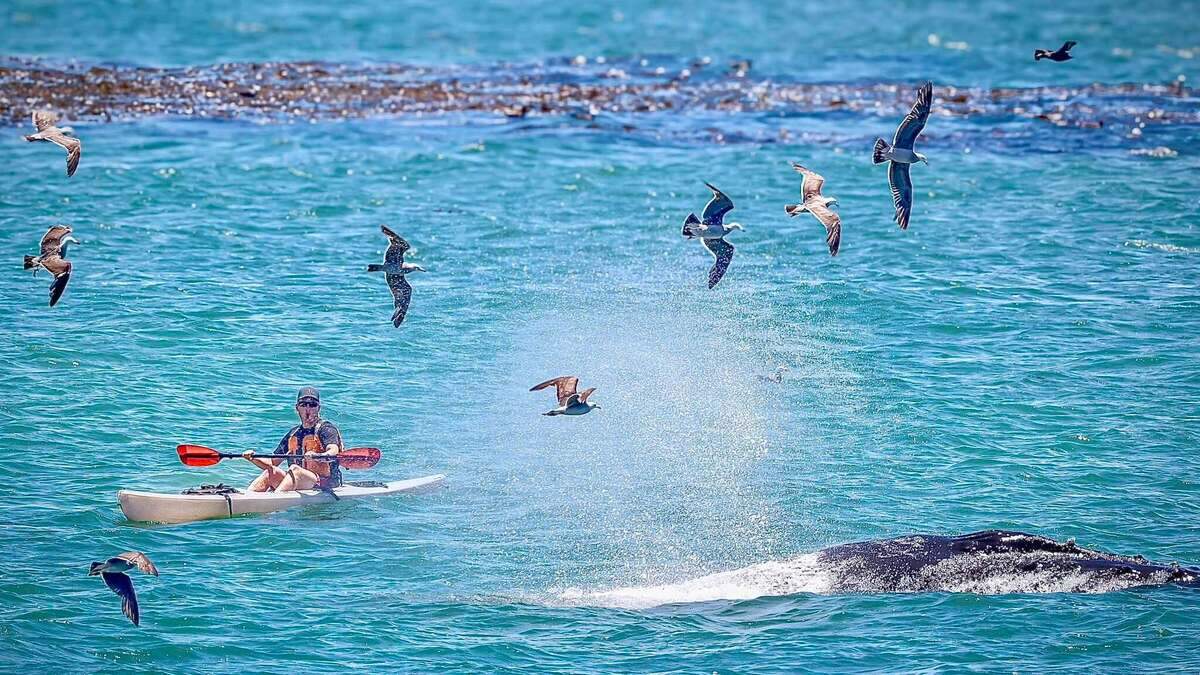
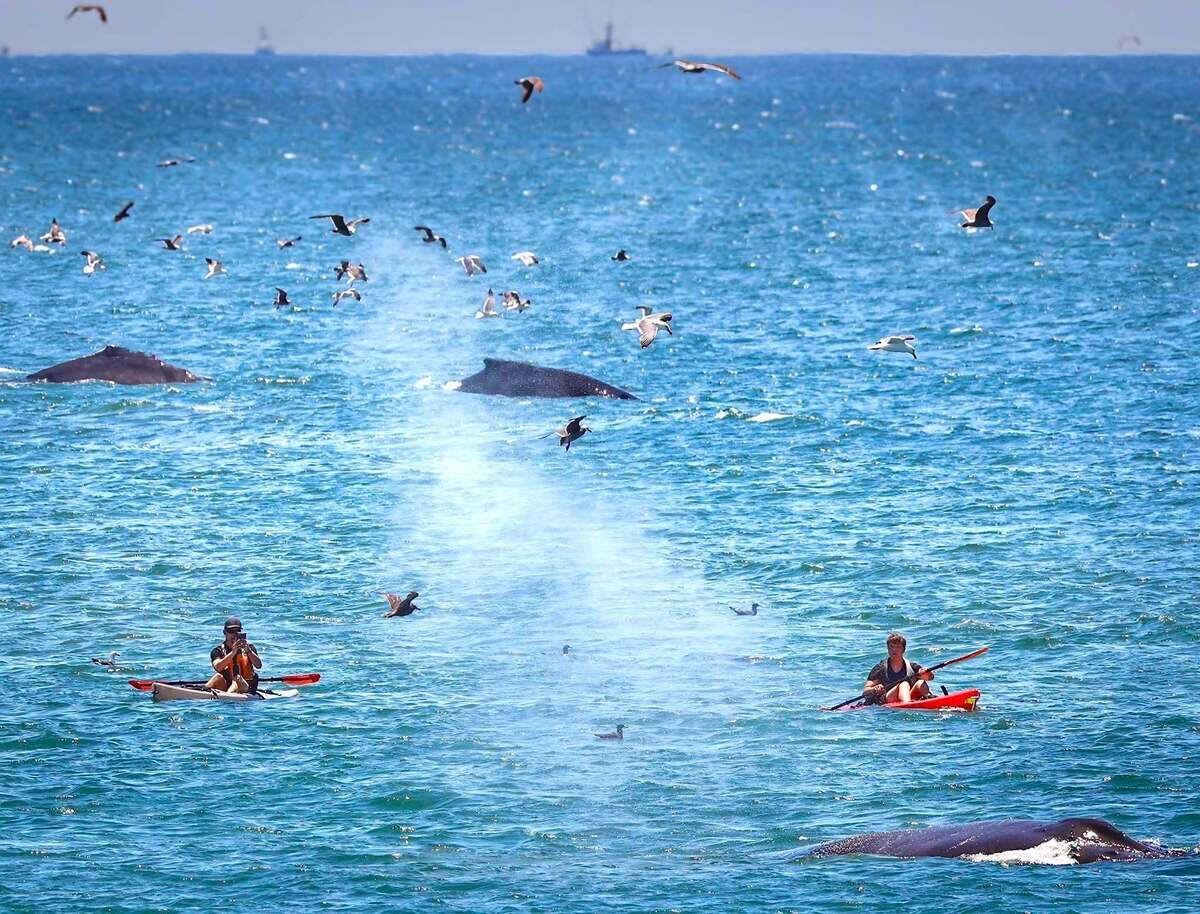
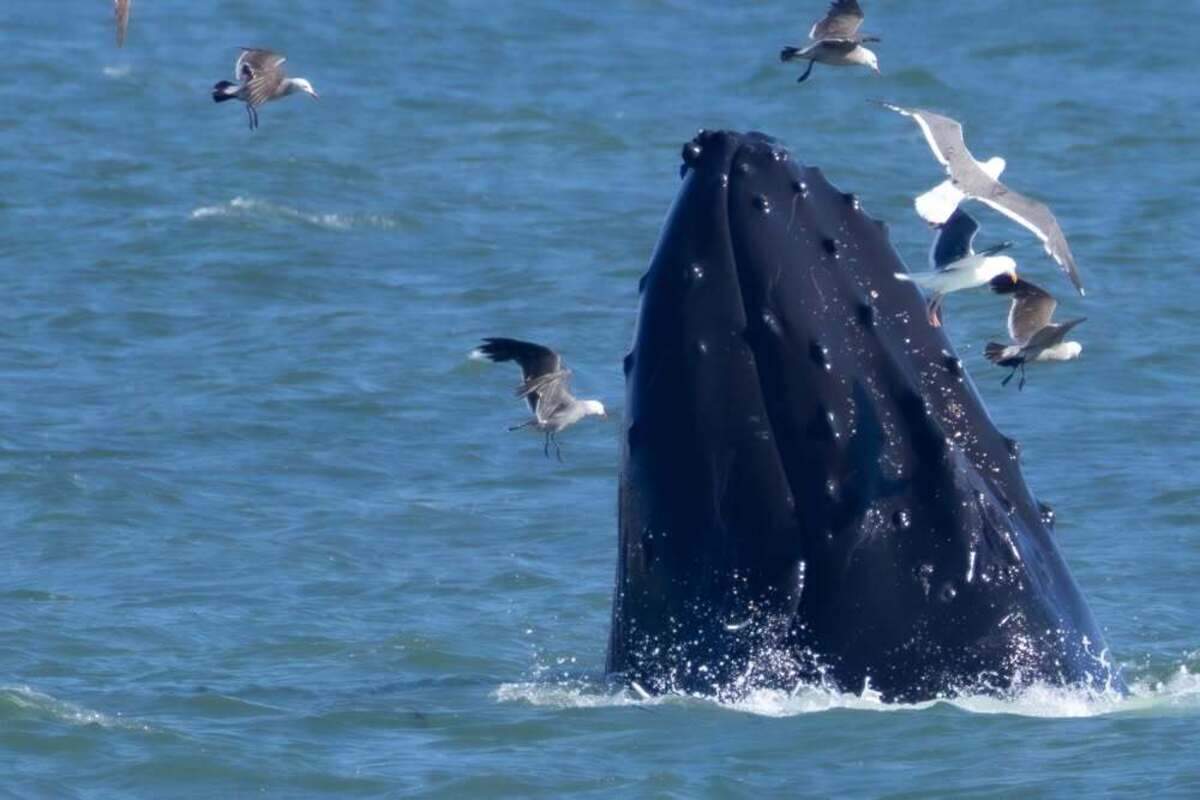
Sam McMillan was harvesting crabs with his grandchildren in Cayucos when a humpback whale burst out of the water — scattering a flock of seabirds and drawing gasps from people on the shore.
“When they come that close, it’s spectacular,” he said.
McMillan, a longtime Atascadero resident, saw the whales hunting for fish near the Cayucos Pier on June 24.
“There was a huge bait ball, and they were just feasting,” he said.
That evening, he returned to the beach and counted about 13 whales swimming near the pier. As of Monday, he heard the whales were still occasionally swimming near shore.
“It’s always exciting,” he said. “We’re just blessed to be able to see a variety of nature on the Central Coast,” he said.
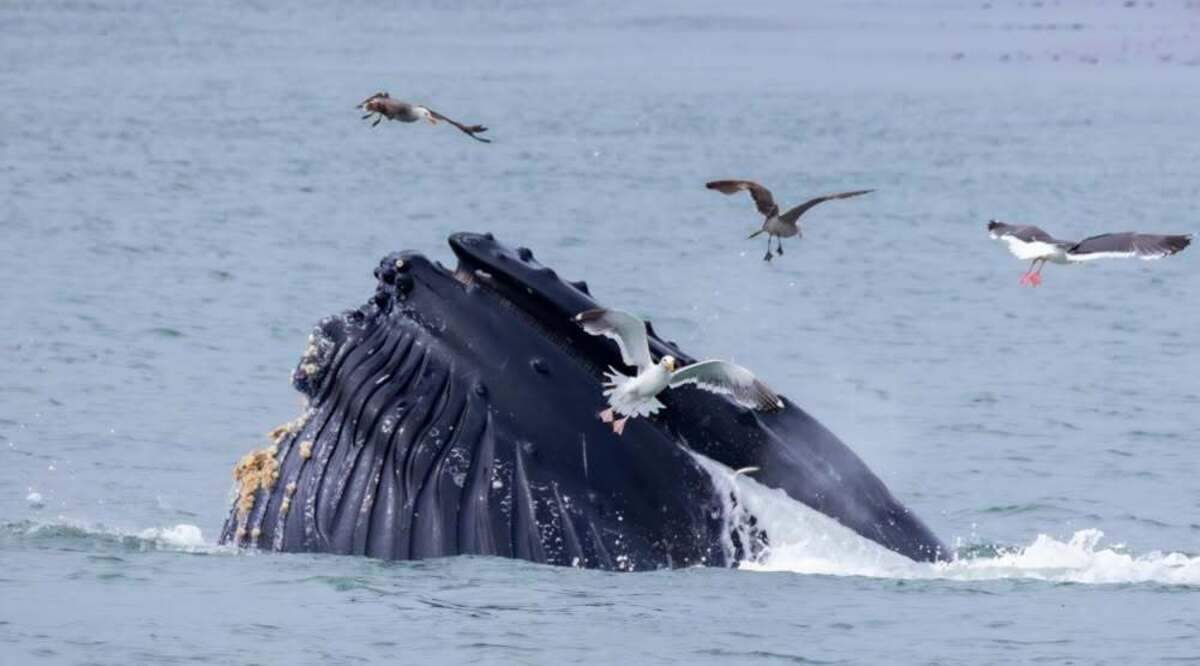
Eastern Pacific humpback whales migrate through the Central Coast from about April to November during their annual migration, according to the National Oceanic Atmospheric Administration.
Every year, the whales travel from feeding grounds near the Aleutian Islands in Alaska to the Pacific Coast of Mexico where they breed. On the Central Coast, the whales hunt for fish, shrimp, squid and anchovies during their migration.
Whales have been extremely active on the Central Coast lately, according to Captain Dax Theis with Morro Bay Whale Watching Subsea Tours.
On Monday morning, his boat spent 45 minutes alongside five humpback whales and about an hour with a pod of orcas that included multiple calves.
“It was incredible,” he said.
He’s also heard reports of whale sightings from the beach at Montaña de Oro and Cayucos.
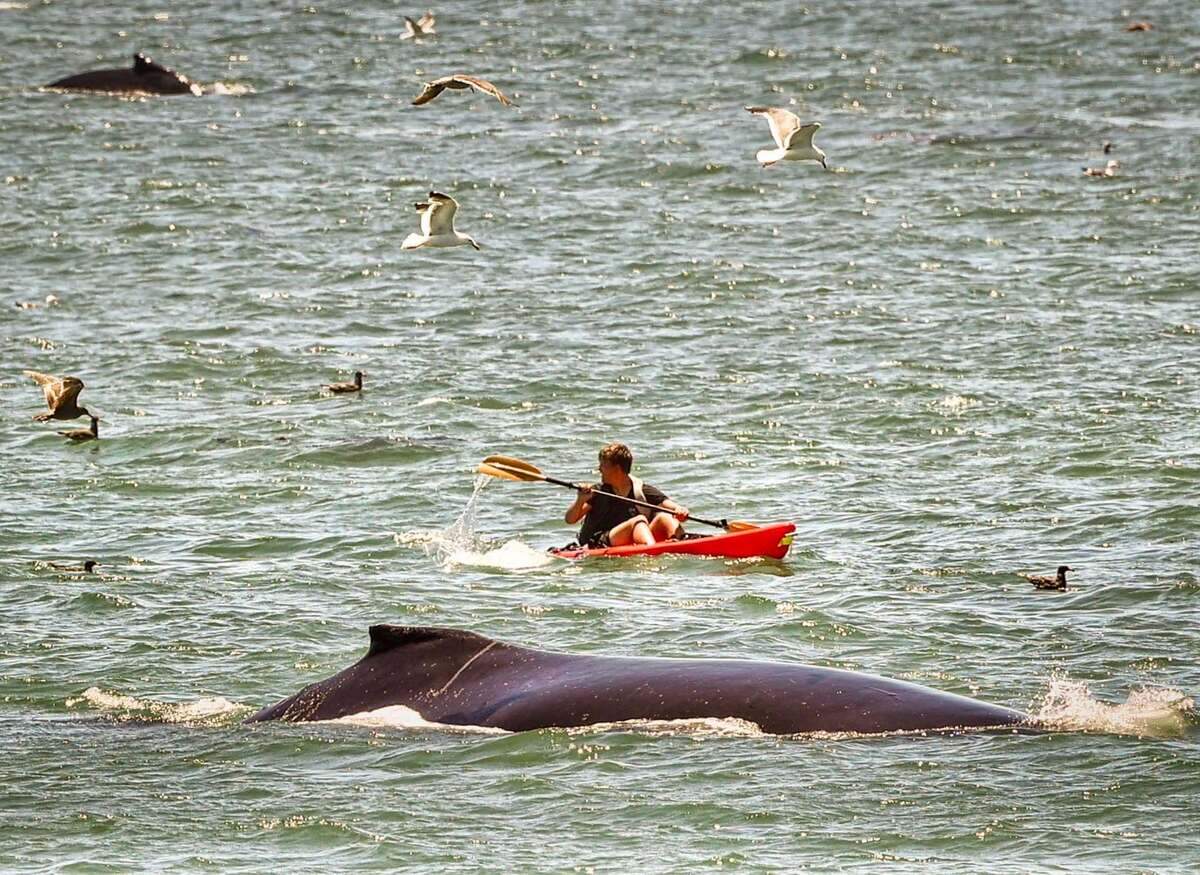
“The whales have been very active breaching lately, which obviously makes it a lot easier for folks on land to see the whales,” he said.
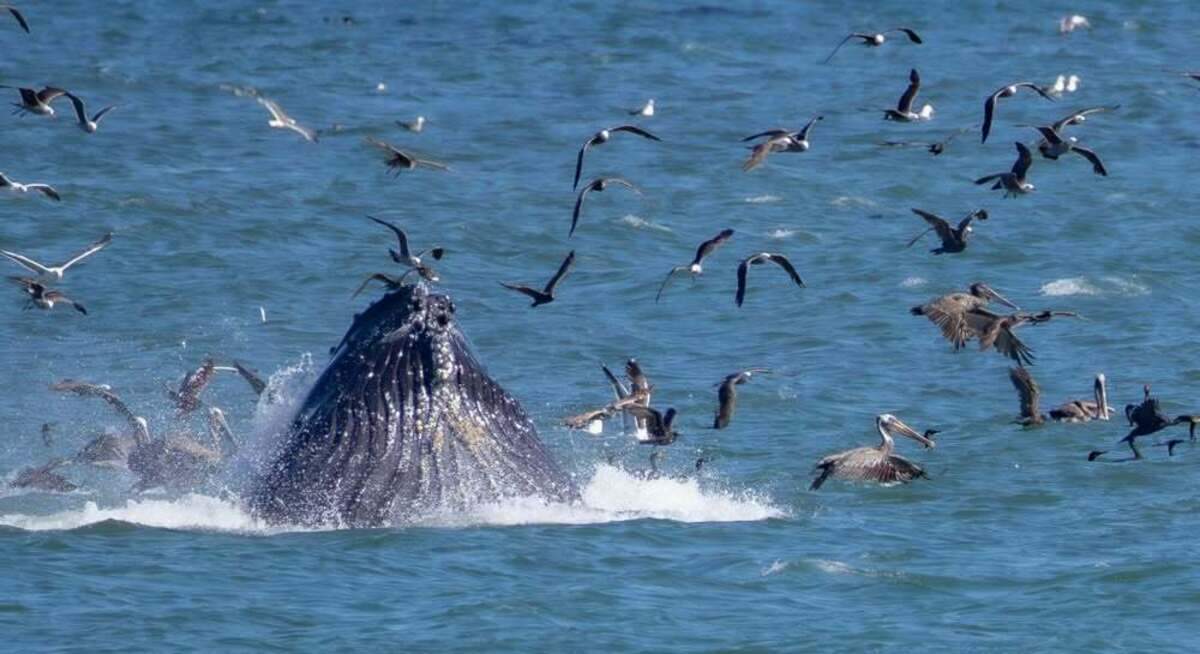
Avila Beach Whale Watching Captain Mark Kocina said the humpback whales follow schools of anchovies to shore. In San Luis Bay, squid moves into shallower waters around the full moon to spawn. Then, the anchovies follow the squid to eat their eggs, and the humpback whales follow the anchovies.
“It’s all about the movement of food and the movement of fish,” he said.
While humpback whales have been swimming near the coast in Cayucos for about two weeks, they stayed 6 to 8 miles offshore from Avila Beach, Kocina said. Then, about three days ago, the whales moved closer to shore near Pismo Beach, he said.
Every day, the whales go somewhere new — and it’s hard to predict where they will end up.
“Every single day is different,” he said. “I’ve been at this 15 years doing at least 250 days a year on the water, and it’s never the same.”
This story was originally published July 7, 2026 at 3:40 PM.