SLO County is considering desalination for water. Where could a plant be built?
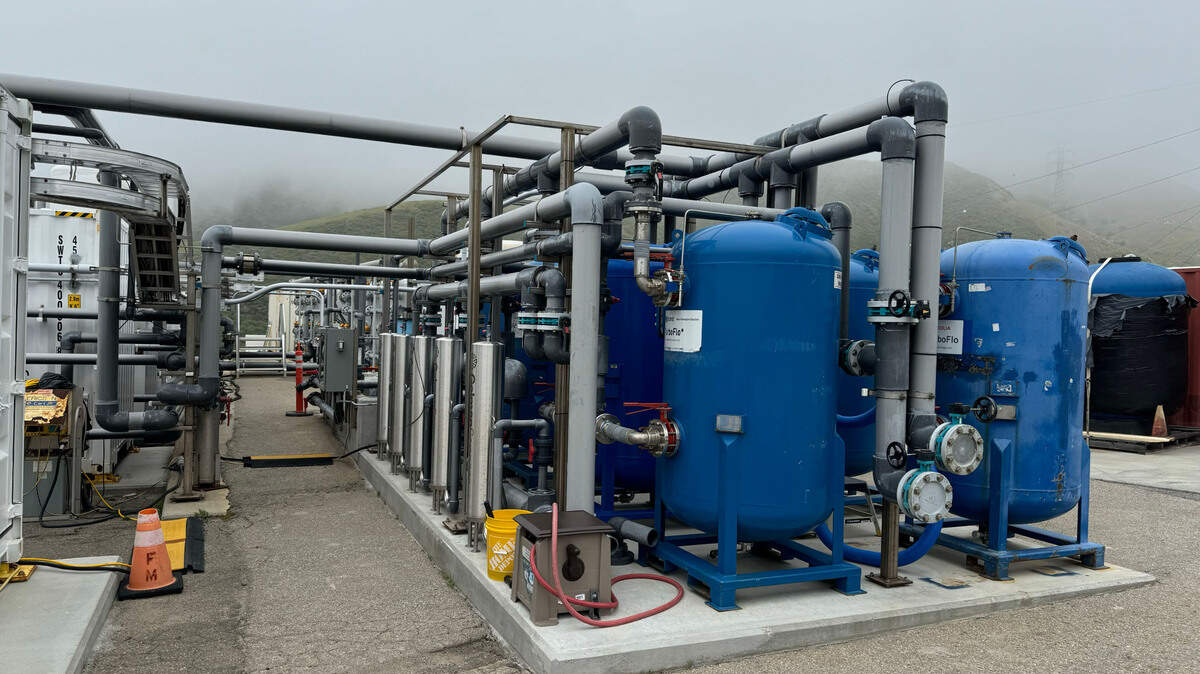
San Luis Obispo County is investigating the potential for building a desalination facility as a new drinking water source.
As weather patterns change and the length of droughts increase due to climate change, the county is interested in pursuing a drinking water source that doesn’t rely on rainfall.
The county’s current water portfolio includes groundwater, reservoirs, recycled water and state water — all of which rely on rain.
Desalination, however, produces drinking water regardless of the weather, according to the county’s consultant, Carollo Engineers project manager Lydia Holmes.
“It is drought resilient,” she said at a community meeting about the project on April 20. “It doesn’t have to be raining. You don’t have to have surface water flows or wastewater flows, and so it can provide a safeguard against unpredictable water shortages.”
The San Luis Obispo County Flood Control and Water Conservation District launched an almost $1.2 million feasibility study to evaluate where a desalination facility could be located, how it could be funded and what communities could use the water, San Luis Obispo Public Works Department resource management group deputy director Courtney Howard said.
About half of the study was funded by a grant from the U.S. Bureau of Reclamation, and the other half was funded by the county, she said.
The district pursued the study in partnership with 16 other communities whose governing bodies expressed interest in the project, which includes, Arroyo Grande, the Atascadero Mutual Water Co., the Avila Beach Community Services District, the Cambria Community Services District, the Golden State Water Co., Grover Beach, the Los Osos Community Services District, Morro Bay, the Nipomo Community Services District, the Oceano Community Services District, Paso Robles, Pismo Beach, the San Miguel Community Services District, Santa Barbara County, San Luis Obispo and the Templeton Community Services District.
When the study is completed, each community can decide if they would like to fund and build a desalination facility.
“As the county, we’re trying to present this menu of options,” Howard said of the study.
Staff from the county and Carollo Engineers presented early findings from the feasibility study to the public at a meeting in Morro Bay on April 20.
So far, the team working on the study has identified five geographic areas that could host a desalination plant.
Where could a desalination plant be located?
Desalination uses reverse osmosis to transform ocean water into drinking water. The plant would require a submerged pipe to suck seawater into the facility, and an outfall to discharge brine, or salty water, into the ocean, Holmes said.
A plant could be built in Cambria with the potential to serve 300 to 600 acre-feet of water annually to Cambria and San Simeon. This would require the construction of a new outfall, Holmes said.
In Cayucos, a plant could serve 900 to 1,100 acre-feet of water annually to Cambria, San Simeon, Los Osos and potentially other inland communities, she said. This plant would use the existing Estero Marine Terminal outfall.
In Morro Bay, a plant could serve 5,800 to 8,000 acre-feet of water annually to Cambria, San Simeon, Los Osos, San Luis Obispo and Cal Poly, with the potential for exchanges with Nacimiento water users and Paso Basin Groundwater Sustainability Agencies, and even potential delivery to southern San Luis Obispo County through the state water pipeline, she said. This plant would use the city’s existing wastewater treatment plant outfall.
Morro Bay is not currently listed as a potential user because the city is interested in pursuing a recycled water project before considering desalination, Howard told The Tribune.
In South County, a desalination plant could be built near the South SLO Wastewater Treatment plant, using its outfall, Holmes said. This plant could serve 5,000 to 6,800 acre-feet of water annually to Nipomo, Arroyo Grande, Grover Beach, Oceano, Avila Beach, San Luis Obispo, Cal Poly, Los Osos and Groundwater Sustainability Agencies with the potential for exchanges with Lake Nacimiento users.
Finally, a desalination plant could be located at the former Nipomo Mesa Refinery, using its existing outfall. This plant could deliver 1,800 to 2,000 acre-feet of water annually to Nipomo, Arroyo Grande, Grover Beach, Avila Beach, Pismo Beach, Oceano and potentially users in Santa Barbara County, she said.
Holmes said it’s ideal for desalination facilities to use outfalls affiliated with wastewater treatment plants. This way, the brine can be diluted in the wastewater effluent before it’s released into the ocean.
Either way, state and local permits would require the facility to mitigate any environmental impacts and use the best available technology. For example, desalination plant outfalls should have diffusers that spread the brine out as it is released, Holmes said.
When the feasibility study is completed, each community can decide if it wants to fund and build a desalination plant. Communities that use the water would need to fund the permit process, construction and operations of the facility, she said.
The community hosting the plant would have final say over whether it is built. For example, if a desalination plant was proposed for Morro Bay, the Morro Bay City Council would decide whether to issue a permit that allows the facility to be built.
The earliest construction would start is 2045, the county’s website said.
What does Morro Bay think?
The citizens of Morro Bay weren’t thrilled by the prospect of desalination.
About 60 people attended the meeting at the Morro Bay Community Center, and those who spoke to The Tribune were skeptical about the project.
Morro Bay Mayor Carla Wixom said she’s interested in reviewing the results of the feasibility study, but as of now, she doesn’t see how the project would benefit Morro Bay’s citizens.
The city gets most of its drinking water from the State Water Project, and it’s also pursuing recycled water — so the city doesn’t currently need a new water source, she said.
Meanwhile, residents are tired of industrial projects after hosting the Morro Bay Power Plant, she said.
“Morro Bay has had years of industrialization,” she told The Tribune. “The community has had a feeling that that’s run its course.”
Morro Bay resident Betsy Gaudette-Cross said she isn’t necessarily opposed to desalination, but she’s concerned that it could harm Morro Bay’s estuary and Marine Protected Area. She also thought that a desalination facility could clash with the community’s culture.
“We’re a small little town, we don’t want something industrial,” she said.
Morro Bay resident Jeanne Marie Colby strongly opposed the idea of desalination in Morro Bay. She worried that a plant would damage the marine environment — and she said the community won’t allow any such project.
“This is a community that has learned to fight: We want to protect our estuary,” Colby said.
What’s next?
The public will have the opportunity to attend presentations about desalination at the Water Resources Advisory Committee on May 6 and a San Luis Obispo County Board of Supervisors meeting in September.
Then, the feasibility study should be released later this year, according to the county’s website.
When the feasibility study is completed, communities can decide if they want to invest in building a desalination plant.
This story was originally published April 29, 2026 at 9:00 AM.