After 30 years of work, SLO finishes $13 million creek project to prevent flooding
After almost 30 years of work, the city of San Luis Obispo has completed a $13 million flood prevention project in San Luis Obispo Creek.
The project is designed to help the creek hold 40% more water during major storms, which will prevent future flooding along Higuera Street from Madonna Road to Marsh Street.
“Picture 2023: We’d be up to our knees in flood water right about now,” civil engineer and project leader Noah Maidrand said. “But with the improvements we’ve made here, you know, maybe not so much. I think that’s really something to be celebrated.”
The area notably flooded during the 2023 atmospheric river storms, damaging properties and homes in the area. The city built two bypass channels to divert water away from the main channel of the creek, which will reduce the likelihood of flooding in the future.
“This project did not solve flooding forever in this area,” Maidrand said. “It’s likely still to flood during major storm events, but what we did do is make it a whole a lot better.”
A long project history
San Luis Obispo Creek flooded the city during a series of severe storms from 1995 to 1997, which inspired the city and county to collaborate and create the San Luis Obispo Creek Waterway Management Program, San Luis Obispo County assistant chief executive officer Kate Ballantyne said.
The program was created in 2003, but the city couldn’t start construction until it secured numerous state and federal permits to remove vegetation and widen the creek.
Over the years, the county contributed $2.9 million of funding and staff time to the project, she said. The county completed the environmental impact report and secured the project permits.
“We’ve been working on this for about 30 years,” city biologist Freddy Otte said. “To see it finally completed with all the partnership and collaboration that’s happened over the years — it’s phenomenal.”
SLO completes 30-year flood prevention project
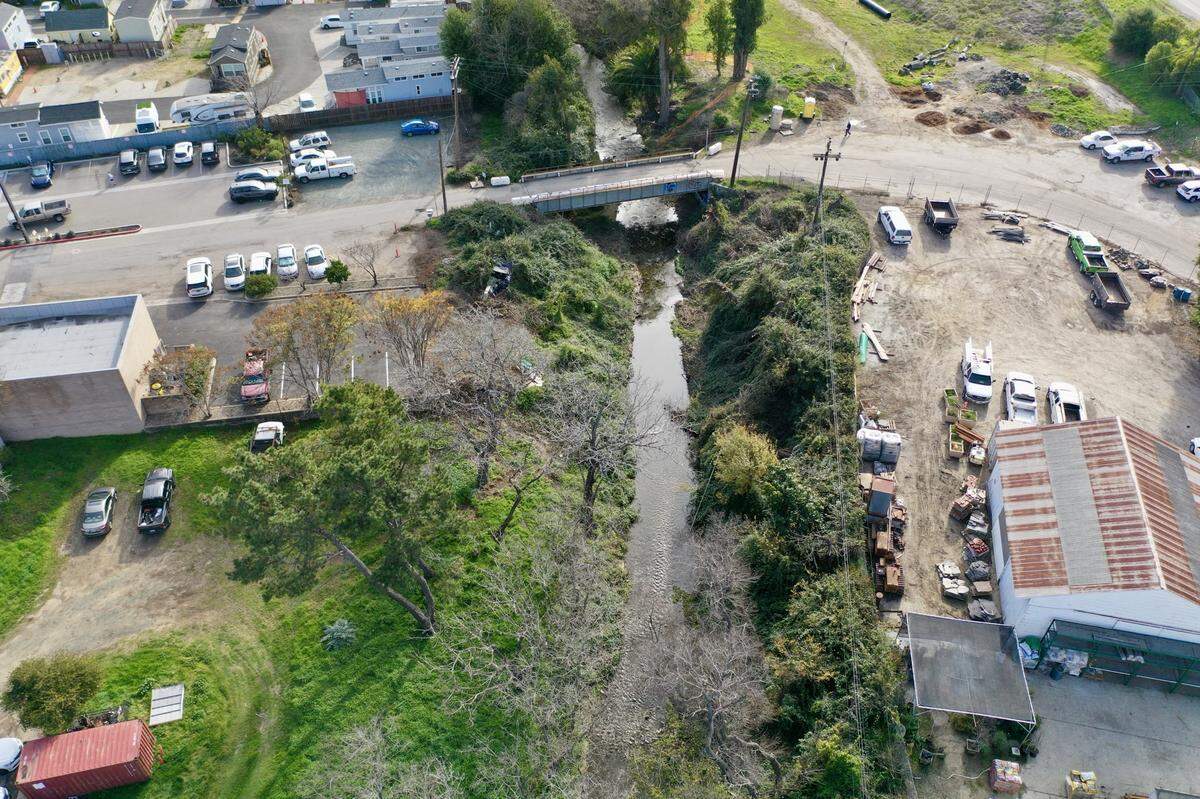
Before San Luis Obispo was developed, water meandered gently down a shallow San Luis Obispo Creek. When a storm hit, the creek widened to hold the extra water, then it shrunk again when the rainy season ended.
Over time, buildings and bridges built along the creek squeezed the waterway, while Arroyo Willow trees and invasive plants further choked the creek. With no room to widen, the creek sliced deeper and the water flowed faster — setting the stage for more severe flooding.
As part of this project, the city increased the amount of water the creek can hold by building bypass channels to divert the water.
“We’re increasing capacity, we’re increasing the area that water can flow,” Maidrand said.
The city demolished one building on Higuera Street near the Marsh Street bridge to give the creek more space.
The city also removed about 80 trees and shrubs and replaced them with healthier, native vegetation, Maidrand said. The city removed willow trees, because they clog the creek and create a flooding hazard. Invasive plants on the chopping block included castor bean, cape ivy, giant reed and Himalayan blackberry, he said.
The city then planted more than 275 native trees and 300 shrubs beside the creek. The oak and sycamore trees provide shade over the river, which supports steelhead trout swimming in the water, he said. Those trees also tend to grow in a single trunk with wide canopies.

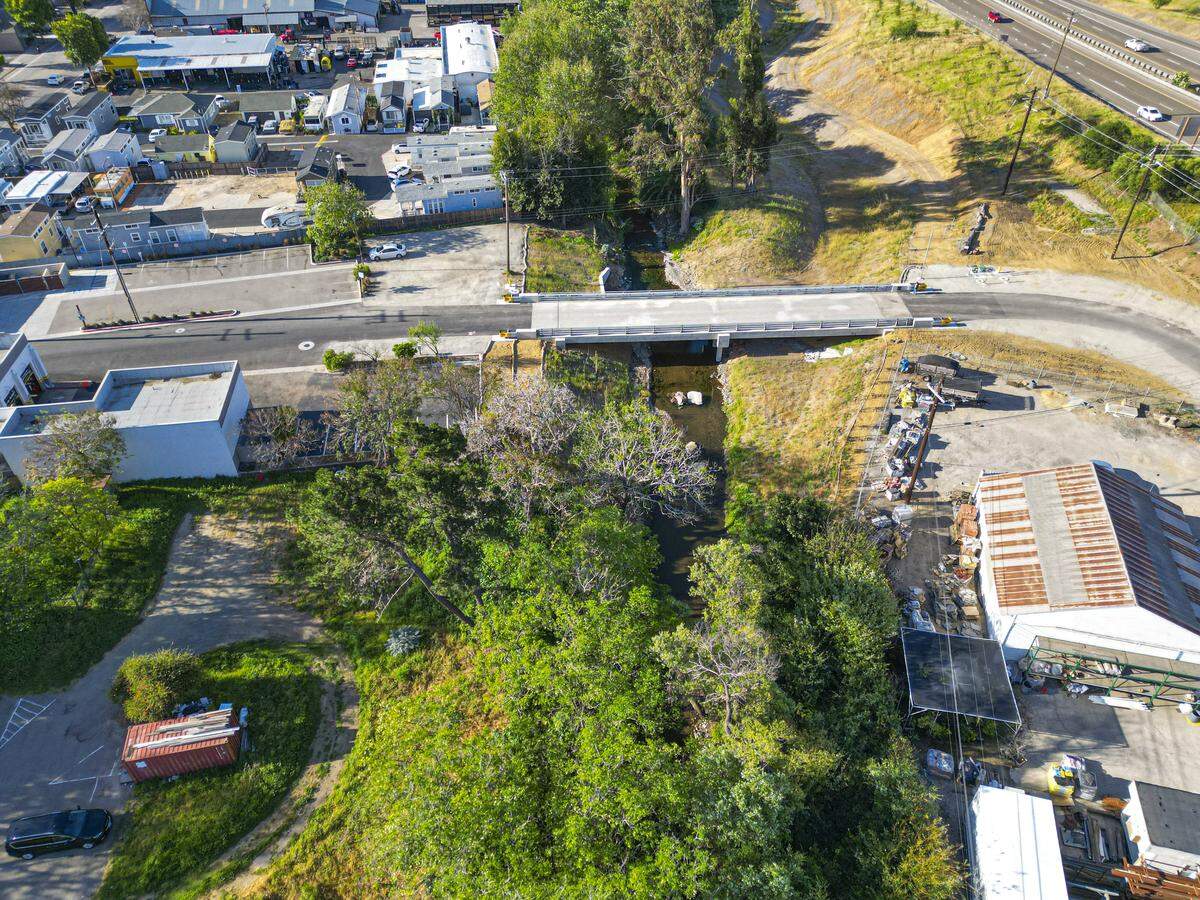
Additionally, the city carved two, 20-foot-long bypass channels able to catch rising water before the creek overflows. To make room for the channels, construction crews removed 22,000 cubic yards of sediment — which is enough to fill seven Olympic-sized pools.
One bypass channel stretches along Brooke Street from the dead end of South Street to the Madonna Road on-ramp for Highway 101. The other channel starts at Bianchi Lane and extends along South Higuera Street beside Highway 101. Both channels run parallel to the creek.
The good news, too, is that increasing the creek’s capacity reduces the speed of the water, which limits erosion. The city also planted poppies and native grasses on the banks on top of an erosion control blanket to anchor the soil.
Finally, the city replaced the century-old Bianchi Bridge at the end of Bianchi Lane.
The new bridge is 120 feet long, which doubles its length. This allows water to flow into the bypass channels instead of overflowing the creek, Maidrand said.
The $13 million project is partly funded by local revenue measure funds, city water funds, county Zone 9 funds, and State Department of Water Resources grant funding.
Now, the city will implement a 3-year landscape plan to maintain the newly planted vegetation. Otherwise, the city will clear debris as they accumulate in the creek and bypass channels to prevent flooding.
“In the long-term, it’s going to be a lot of monitoring and responding to things,” Noah said. “You don’t know exactly how the creek’s going to flow until you see how it flows.”
Otte said the project will prevent flooding during a 25-year flood event, but the creek could still overflow during more severe storms.
“As we’re seeing with the changing climate, there’s no predicting what a winter is going to be,” Otte said.
With this in mind, Otte and a team of city employees survey the creek after every storm to evaluate the impact and plan for the future, he said.
San Luis Obispo City Council member Michelle Shoresman celebrated the completion of the project.
“The next time we have a potential flooding event, it will really prevent the type of damage we saw on the south side of town in 2023,” she told The Tribune.