SLO County quarry is running out of rock. Here’s how it plans to expand
AI-generated summary reviewed by our newsroom.
- Owner of Cambria Quarry business seeks 75% footprint mine expansion onto adjacent 7 acres.
- Project would run 28.5 years; removal limit to stay at up to 100,000 tons annually.
- County and coastal planners will review habitat and reclamation impacts.
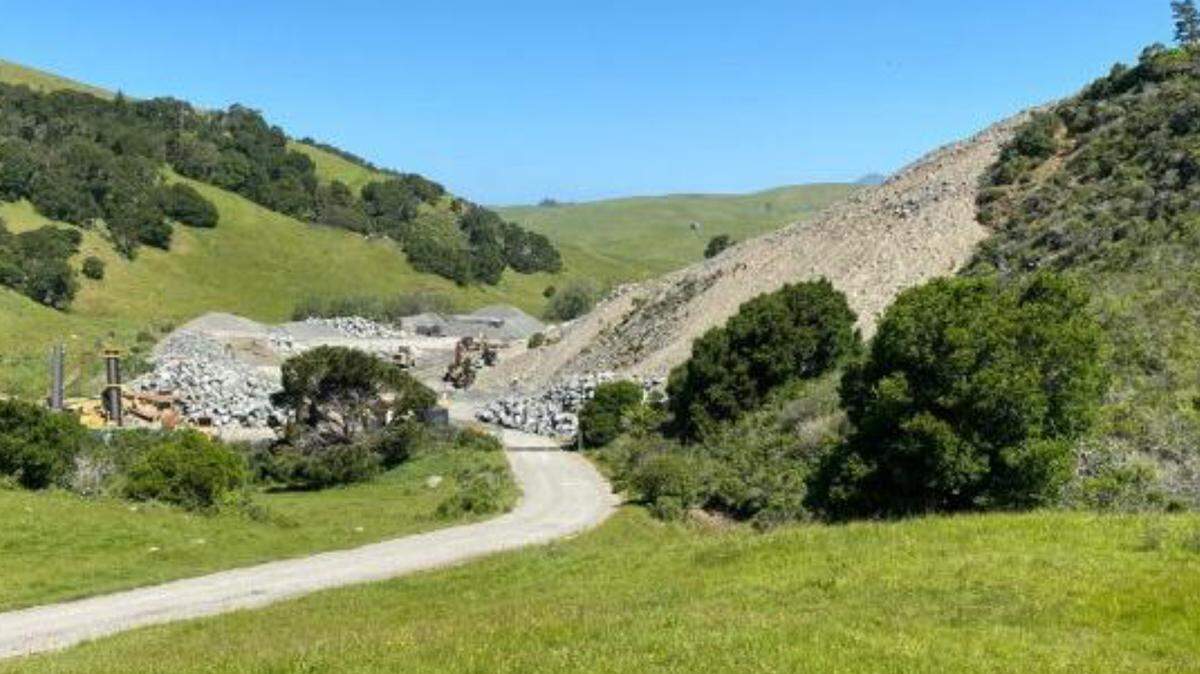
After decades just off Highway 1, the owner of a North Coast rock quarry is hoping to significantly expand the mining operation’s San Luis Obispo County footprint.
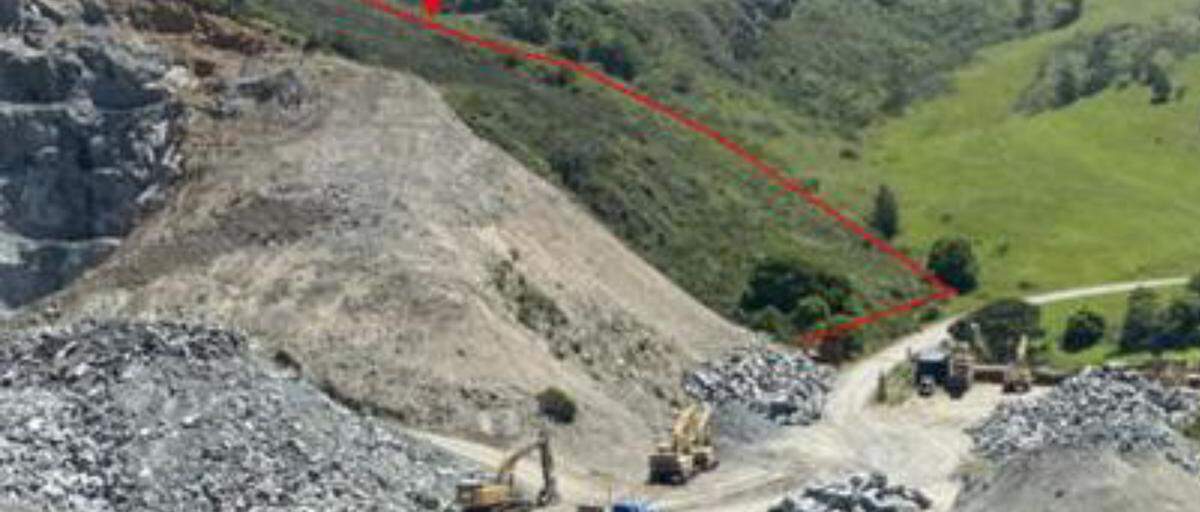
Owner David Crye’s proposal, which has been in the works for years, would expand the 9-acre Cambria Quarry onto an adjacent 7 acres slightly west of Highway 1.
The quarry’s Monte Cristo Place location is just north of the intersection of highways 1 and 46, about three miles south of downtown Cambria. Crye leases the current operation’s ranchland from Green Valley Cattle Company, as he would for the expansion.
The current quarry mine area is running out of chronically essential materials that are critically needed for local projects, Ian McCarville of Kirk Consulting told the North Coast Advisory Council on Jan. 21.
“Caltrans has told us how important the quarry is to them,” McCarville said. The agency has immediate and ongoing needs and “urgent demands, such as for highways 1 and 46,” he said.
Those essentials range from road base to really big rocks.
That’s especially true for road repairs along Highway 1 in Big Sur. Otherwise, the heavy supplies would have to come from much further away.
The quarry-enlargement project, which would run for 28.5 years after it’s approved, would “expand the operation’s boundary, but not the amount of material” removed annually, he said.
Conforming to mining restrictions, Cambria Quarry’s “current permit allows removing of up to 100,000 tons a year, and they’re really close now to running out of materials at the original mine,” McCarville said.
Those materials are crushed from large boulders at the quarry or the job site, Crye told The Tribune by phone Wednesday.
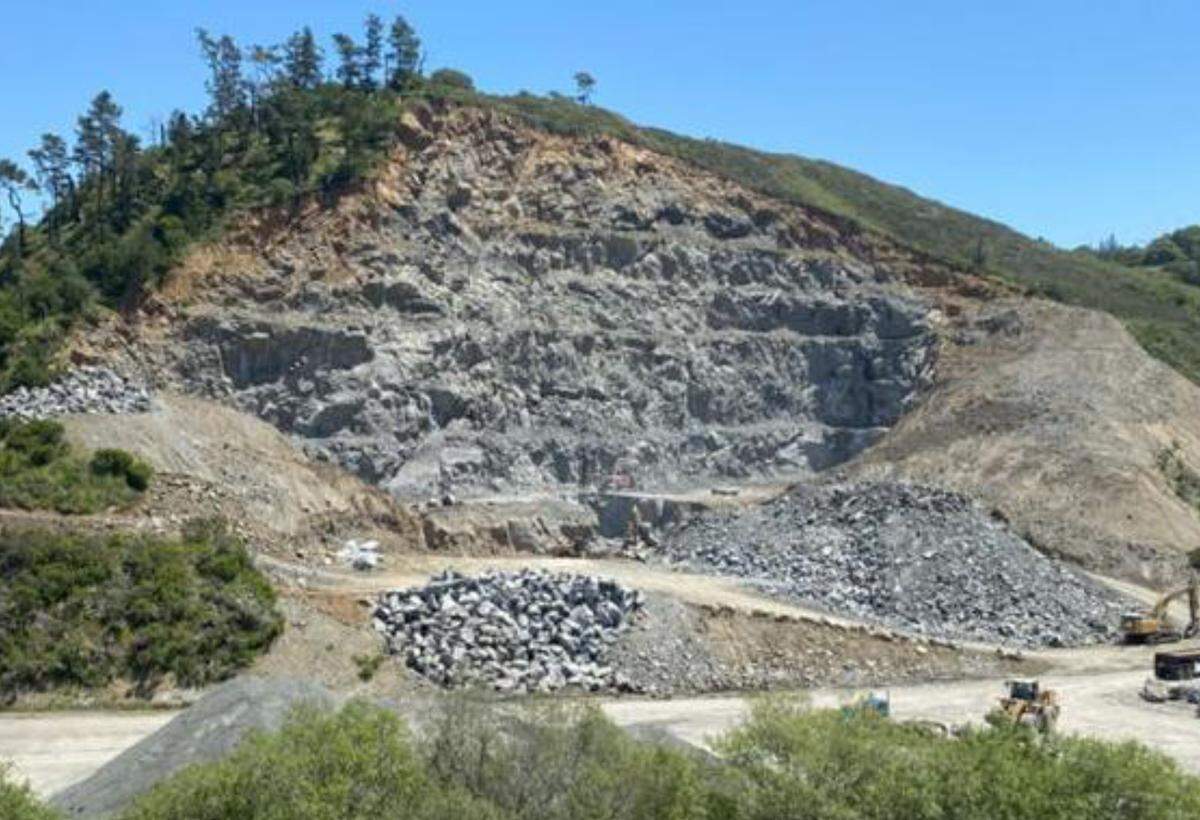
At the quarry, they’re stockpiled according to size. Some of the larger rocks can weigh 35 to 40 tons each, he estimated.
The council voted to recommend approving the quarry proposal, as long as all its concerns and suggestions were included in that recommendation.
Expansion could make mining less visible, quarry reps say
The planner told council members that the quarry operations already can’t be seen easily from the busy highway that runs close to it.
“Northbound, you can’t see it at all,” McCarville told The Tribune on Tuesday.
Heading south, there are only a few fleeting glimpses of the mined-out hilltop. Even then, to spot it, he said, travelers must know what to look for and when.
The new project should improve that view, he said, as mining in the new, adjacent area could lower the hilltop further out of the viewshed.
The boss agreed.
“When it’s all said and done, you’ll see a lot less of it,” Crye said.
What’s next for Cambria Quarry?
County planners are still reviewing the project proposal, which could not be extended further after the 28.5-year period, McCarville said.
The county’s acceptance of the plan would be the next step in the already lengthy process of getting a coastal development permit.
After that, county and California Coastal Commission planners and others would study the expansion project’s potential impacts to the habitat and any rangeland interests.
McCarville and Crye said they’ve been consulting with Coastal Commission planners about the project for some time.
Land use committee and council members already express concerns
Advisory council members, especially those on the Land Use Committee roster, already are raising questions about the proposal, according to NCAC chair Christina Galloway, who is part of that committee.
“Mining is very specifically regulated at the state level, and this is an expansion of an existing use, so it’s not a surprise that it’s moving forward,” she told The Tribune on Feb. 3.
The area’s “pretty remarkable backstory,” includes the current seasonal wetland and drainage system “that was once a broad lagoon that played an important role in groundwater recharge and flood management for the Santa Rosa Creek watershed, before it was intentionally drained in the late 1800s,” she said.
The area is a “working quarry that has been active for generations, operating within a biologically rich landscape,” Galloway wrote in January to committee and council members, plus others in the community.
“The site functions as part of a larger, connected habitat that supports wetlands, riparian areas, native forests, and a wide range of wildlife, prompting questions about what the site’s long-term outcome could look like once mining concludes,” she said.
That could include actions such as “reshaping slopes, planting vegetation and making sure the land is stable, safe and not eroding,” she said.
Some council members backed that up with similar questions at the Jan. 21 meeting, such as possibly doing some reclamation and revegetation before the expansion expires in about 28.5 years.
All comments from the council and the public will be carefully considered and included in their report, McCarville said.
This story was originally published February 20, 2026 at 5:00 AM.