
With no water tax, Paso Basin managers look elsewhere for funding. Here’s where
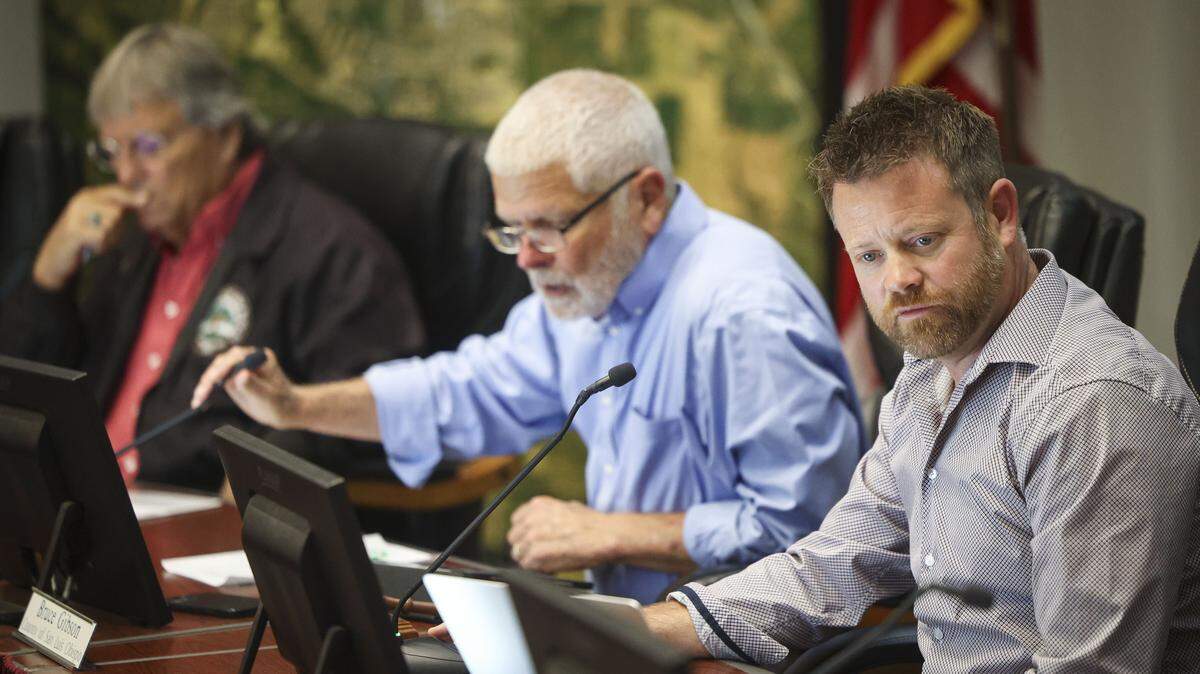
The Paso Robles Area Groundwater Authority needs help funding its operating costs next year.
On Monday, the agency’s Board of Directors approved a budget of $944,952 for fiscal year 2025-26 — with a $300,000 shortfall for costs planned for January to June of next year.
The agency’s Board of Directors was forced to abandon water use fees after a majority of property owners objected to them this year. Now, the agency is looking for other ways to cover its operating costs, from paying consultants to preparing the state-mandated annual report.
Because the basin is considered “critically overdrafted” by the California Department of Water Resources, the Paso Robles Area Groundwater Authority is required to bring the basin into balance by 2040. Part of that process includes submitting an annual report on the health of the basin to the state.
On Monday, the board voted unanimously to ask the four participating Groundwater Sustainability Agencies to contribute a combined total of $300,000 to bridge the funding gap.
Bridging the budget gap
The Paso Robles Area Groundwater Authority faces a $300,000 shortfall for the rest of the fiscal year, agency consultant Taylor Blakslee said.
The board will charge each of the four groundwater sustainability agencies a portion of that $300,000 based on percentages established during the creation of the joint powers authority.
The city of Paso Robles would contribute 16%, or $48,000; the county would contribute 33%, or $99,000; the Estrella-El Pomar-Creston Water District would contribute 30%, or $90,000; and the Shandon-San Juan Water District would contribute 21%, or $63,000, the staff report said.
Each Groundwater Sustainability Agency will decide independently how to respond to the request, Blakslee said.
This isn’t the first time the Groundwater Sustainability Agencies kept the Paso Robles Area Groundwater Authority afloat.
In August, the board asked the Groundwater Sustainability Agencies to cover a $300,000 shortfall for the remainder of 2025, which the agencies provided, Blakslee said.
The board will discuss more sustainable, long-term revenue options at a meeting tentatively planned for late February.