
Tag showed gull hitching ride on garbage truck to CA landfill — for 80 miles
AI-generated summary reviewed by our newsroom.
- USGS-WERC tracks bird and bat movement using 22 Motus stations on CA coast.
- Tagged gulls and seabirds provide location data to inform wildlife management.
- GPS data showed a gull traveled 80 miles to landfill by riding garbage truck.
Electronic tracking equipment is revealing the travels of birds and bats along California’s coast.
The routes they take show wildlife managers where they need to be protected, and make management plans better.
“We are covering gaps that previously existed,” said Laney White, a biologist with the U.S. Geological Survey’s Western Ecological Research Center (WERC) Seabird Studies Team. “We’re getting infrastructure out, and it’s rewarding to see data coming in.”
The maps of that data are open to the public at USGS-WERC Pacific Coastal and Offshore Motus.
“It’s a great public resource,” she said. “It’s helping us understand the diversity and abundance of the natural world we know so little about. As we better understand the ecology of these smaller and more vulnerable species, we can develop more robust management plans.”
White is a member of the team that has established 22 Motus stations along California’s coast, from Santa Cruz through Big Sur down to Southern California and out to the Channel Islands.
The dashboard allows viewers to explore the expansion of the network at motus.org/dashboard.
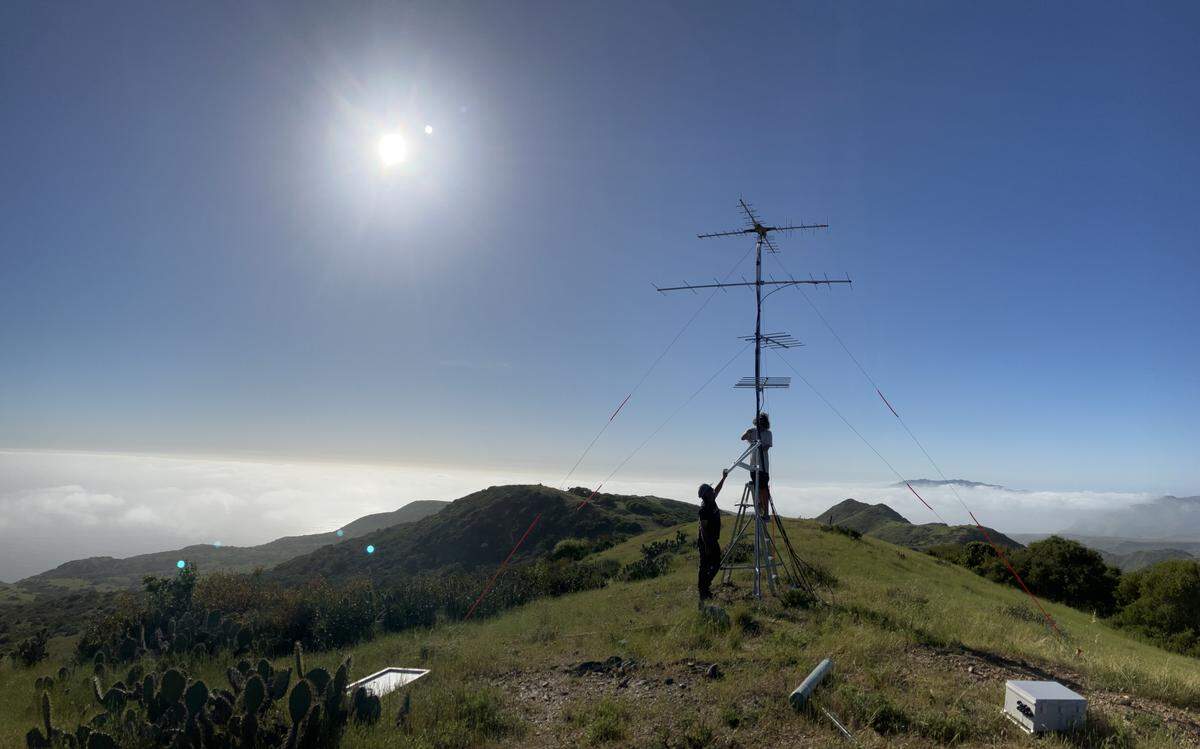
What is Motus?
Motus is an international research community working together to study the movement and behavior of birds, bats and insects.
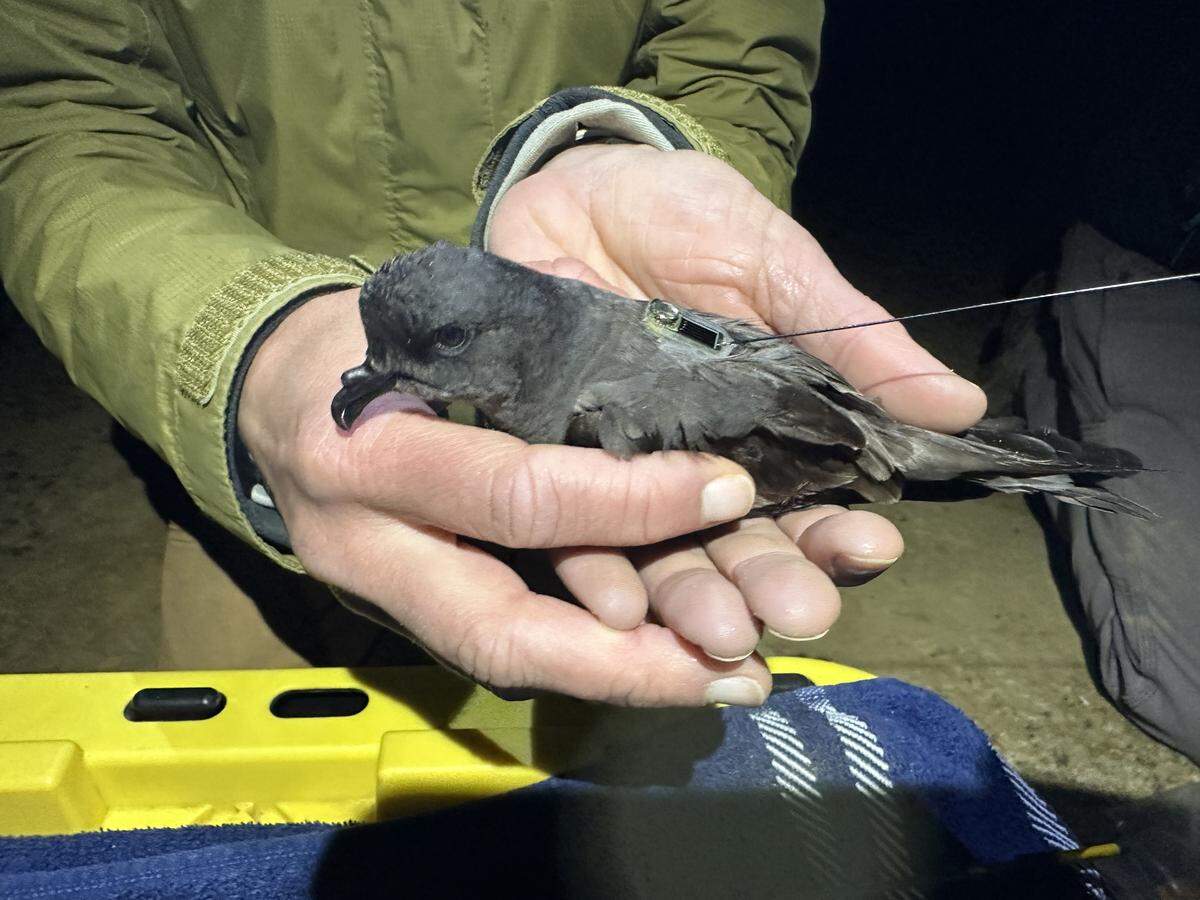
Miniaturized tags attached to individual birds and bats transmit information to Motus stations. The data becomes a tool for conservation of those species, and the ecology and biodiversity of the natural world.
The WERC team tagged a range of seabirds in the Channel Islands: Cassin’s auklets, ashy storm petrels, black storm petrels and western gulls.
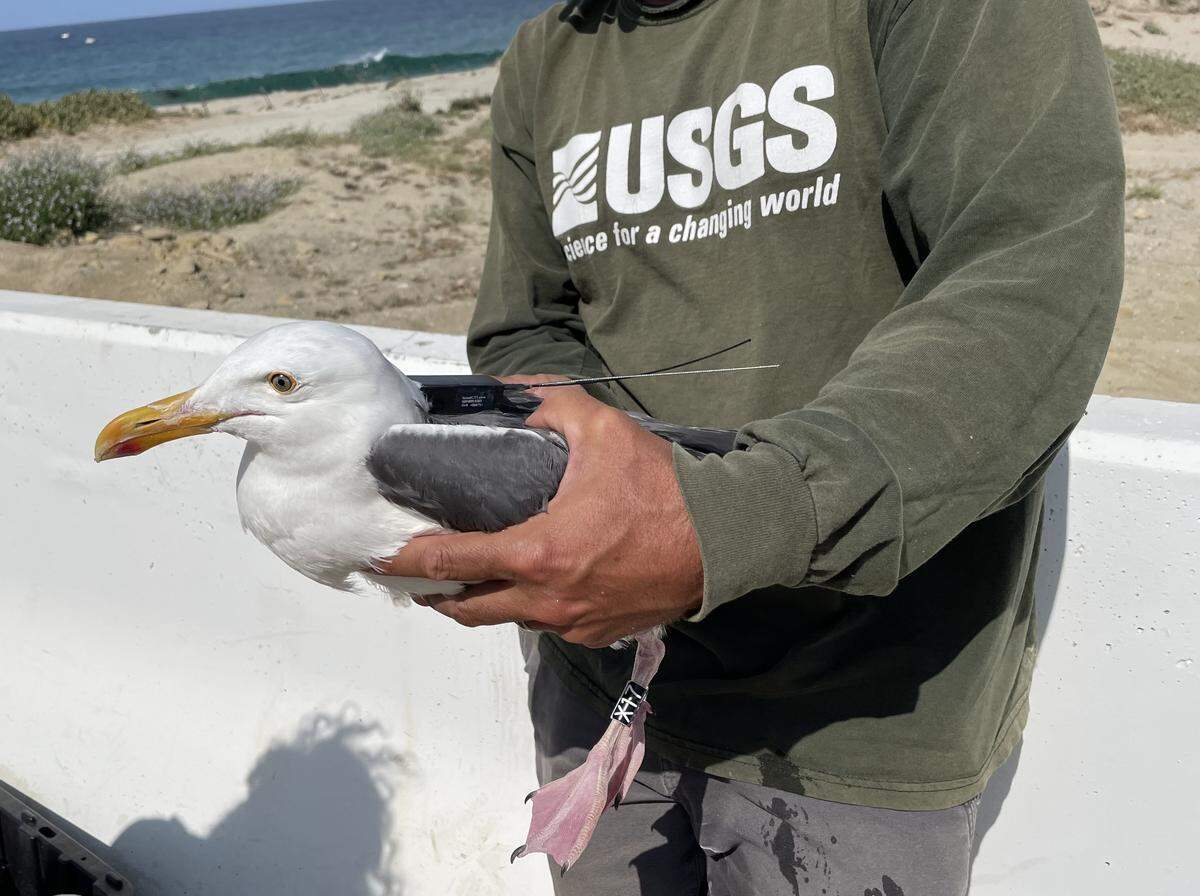
Western gulls also get GPS tags that can detect Motus tags, making them mobile receiving stations and expanding the network’s reach offshore. The GPS tags also provide location data that gives the researchers a better sense of how the Motus stations are working.
Tags can be powered by batteries or solar panels, or can be hybrids. The team worked with the company Cellular Tracking Technologies to develop tags that don’t interfere with the birds but continue to function.
White is evaluating how long the tags last, in the challenging saltwater environment. The tag is encased in an epoxy shell to protect it — and it’s working. On some shorebirds, similar tags have lasted multiple seasons, providing more data over time.
“Waterproofing is often the point of failure,” she said.
Brown pelicans don’t tolerate body tags well, so other researchers have developed a Motus legband that suits them better.
Tag shows gull hitching 80-mile ride on garbage truck to landfill
While western gulls have a reputation for being pests at the landfill, gulls tagged further offshore, at San Nicolas Island, are living fully marine lives at sea. They can use the marine environment, then shift to adapt to life on the mainland.
The data isn’t fully analyzed yet, but shows individuals using different feeding strategies.
Another western gull research project in the Bay Area recently showed a gull riding a garbage truck 80 miles to a landfill.
That gull was tagged near her nest in the Farallones. She picked up the garbage truck at Recology in San Francisco, about 26 miles away.
The researcher following that gull noticed that she was going 60 miles an hour along major freeways, faster than the usual gull flying speed of 20 mph. He speculated that she got trapped in the truck for the first trip.
But she made a second trip the next day.
“Gulls get a bad rap,” White said. “But they are smart and adaptive. They have the ability to adapt to a human-altered landscape. Sometimes I think the species we like the least are the ones that are most like us.”
At sea, western gulls live a fully marine life, but they shift to other feeding strategies when they fly to the mainland.
White will analyze the data further to determine what strategies different individuals use.
Motus research documents bird and bat movements that inform better management plans for these species. They increase our understanding of the natural world around us.
“It’s been an exciting few years, getting the infrastructure out, and rewarding to see data coming in,” White said. “There’s such an abundance of life here. There are massive movements all around us.”
This story was originally published September 9, 2025 at 5:00 AM.