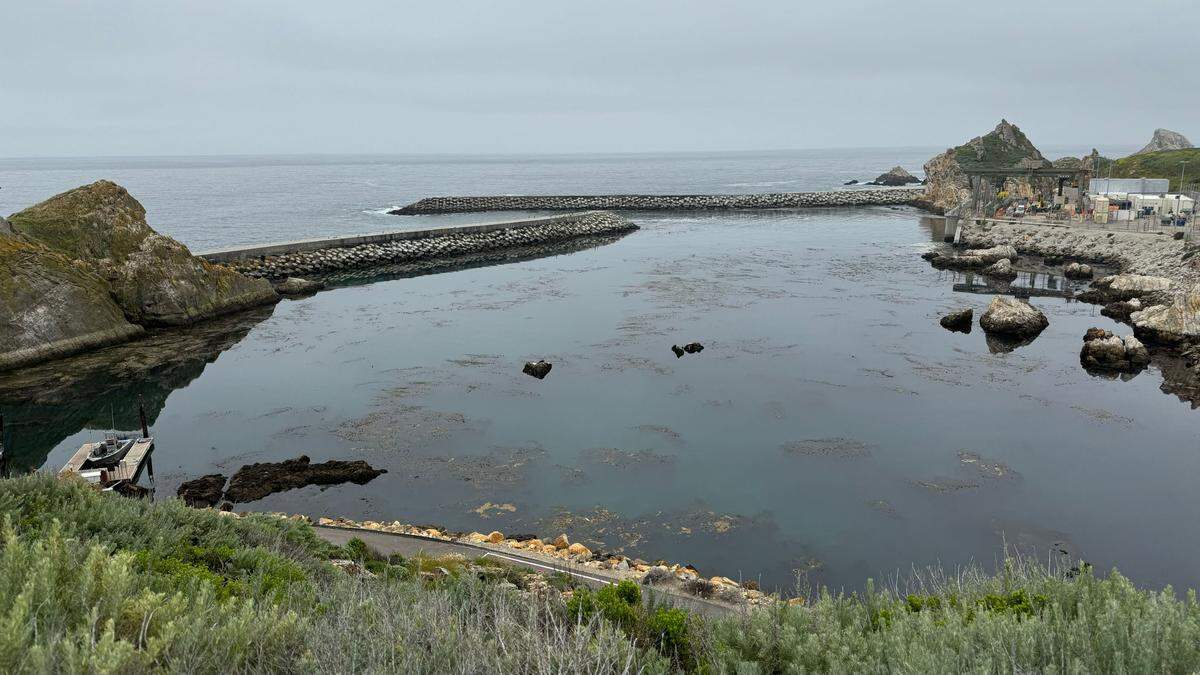
Would keeping Diablo Canyon open another 20 years impact environment? See report
Operating the Diablo Canyon nuclear power plant for another 20 years would have a minor impact on the environment, according to a new report by the Nuclear Regulatory Commission.
In 2023, PG&E applied to the commission for a 20-year license renewal for Units 1 and 2 of the power plant.
On June 23, the commission published its final supplemental environmental impact study that evaluated the affects of continued operation of the power plant — a step on the path toward its decision about the license renewal.
If the power plant acquired the permit, the plant would continue operating as it has since the 1980s — and its environmental impacts will remain consistent, too, the report said.
The NRC said the renewing the operating license for another 20 years “would not be unreasonable,” because the adverse environmental impacts of its operations are minor and would not destabilize surrounding resources like marine ecosystems, fishing and recreation.
“The NRC staff recommends that renewed Diablo Canyon operating licenses be issued,” the report said.
The commission will likely make a decision on the license renewal application later this year.
First, the California Coastal Commission and the Regional Water Board must issue their own approvals for continued operation of the power plant.
What did Diablo Canyon environmental review find?
At the plant, energy is generated by nuclear reactions inside two core reactors that power steam turbines, which then produce electricity.
In a separate system, intake tubes withdraw seawater from Diablo Cove, then send that water through the power plant to cool the steam back into water. The steam and the seawater are isolated from each other and disposed of separately.
When the process is complete, the seawater is spit back into Diablo Cove — warmer than the ocean’s temperature.
The intake system draws water from the ocean at a speed of about 0.8 feet per second, which is faster than the 0.5 feet-per-second speed recommended for fish safety by the Environmental Protection Agency, according to the report.
Some fish, crustaceans and other aquatic organisms can’t outswim the current — and they’re sucked into the intake structure.
Larger, stronger fish can escape the facility through cut-outs installed in the intake structure, but other fish die when they slam into a mesh gate that prevents large items from entering the facility. Other fish get trapped in the gate in a process called impingement, and they die of injury, suffocation or exhaustion.
Meanwhile, “organisms small enough to pass through the traveling screen mesh, such as fish eggs, larvae and other zooplankton,” typically die from heat exposure in the cooling system, the report said.
The most recent study on impingement in Diablo Cove was conducted from April 1985 to March 1986. The study showed that most adult fish could outswim the current and avoid impingement. Fish trapped in the intake system were usually juvenile yellow or olive rockfish, thornback rays and plainfin midshipmen, the report said.
PG&E determined that about 2.5 pounds of fish and shellfish were impinged per day, with a maximum of 1,200 pounds annually — which is the lowest impingement weight of any plant using once-through cooling in California, the report said.
“Impingement is relatively low because the intake structure lies in a relatively confined engineered cove and because the cove is along an exposed section of coastline, which is less biologically productive as compared to protected areas of the coastline,” the report said.
PG&E has also already been told it must stop operating the once-through cooling system by Oct. 31, 2030, per California State Water Resources Control Board policy — so the impacts of impingement will be short-lived, the report said. Until then, PG&E pays annual mitigation fees to the Ocean Protection Council or State Coastal Conservancy for the fish deaths.
Even though the intake system doesn’t have a fish handling and return system as recommended by the Environmental Protection Agency, the “impacts of impingement have neither destabilized nor noticeably altered any important attribute of the aquatic environment during the Diablo Canyon current operating license,” the report said.
As a result, the commission determined that the environmental impact of impingement was “small,” which means “not detectable or are so minor that they will neither destabilize or noticeably alter any important attribute of the resource.”
The commission also evaluated the environmental impact of warm water dumped into Diablo Cove by the once-through cooling system.
When discharged, the heated water mixes with the water of Diablo Cove, which flows into the Pacific Ocean.
The National Pollutant Discharge Elimination System issued the power plant a permit to discharge warm water into Diablo Cove. The permit mandates that the water discharged from the once-through cooling system can’t be more than 22 degrees warmer than the natural ocean temperature.
PG&E is consistently in compliance with the 22-degree rule, the report said.
The permit also says the increased temperature of the ocean water can’t harm beneficial uses like marine habitat, recreation and fishing.
Soon after the plant started operating, the marine environment of Diablo Cove changed.
Research showed that warm tolerant species like leopard sharks, bat rays, round rays and white seabass preferred the cove. Meanwhile, cool water species like greenlings and some rockfishes, were less prevalent in the cove.
The marine environment of nearby areas Fields Cove and Lion Rock Cove were unaffected by the warm water discharged by plant, the research showed.
The National Pollutant Discharge Elimination System determined that the terms of the permit were strict enough to ensure the health of the marine environment of Diablo Cove.
The discharge temperature has remained steady during the power plant’s operating life, and changes to the marine environment have stabilized with “ecologically significant changes are limited to Diablo Cove,” the report said.
As a result, the commission determined that the environmental impact of warm water released from the once-through cooling system was “small,” which means “not detectable or are so minor that they will neither destabilize or noticeably alter any important attribute of the resource.”