Big tech is going nuclear. Could Diablo Canyon be used to power AI in SLO County?
Have you ever asked ChatGPT a question or used the chatbot to help you complete a task? That request used the same amount of energy as keeping a light on in your home for 20 minutes.
As artificial intelligence technologies like ChatGPT and Google’s Gemini have risen to commercial popularity in recent years, the companies that created these tools are struggling to meet their steep energy demands.
According to the most recent statistics from Demandsage, ChatGPT processes over 1 billion queries every day — each one using 10 times the energy as a traditional Google search.
To keep pace with those energy needs, Big Tech companies have turned to nuclear power for a potential solution, investing heavily in the clean-energy industry.
In September, Microsoft signed a 20-year power purchase deal that will reopen one of the nuclear reactors at Three Mile Island in Pennsylvania, the site of the worst nuclear meltdown in American history. Meta — which owns Facebook and Instagram — is reportedly in talks to invest hundreds of billions into land to build AI data centers while it asks for proposals from nuclear energy developers to help meet its “AI innovation and sustainability objectives,” the tech giant announced in December. In October, Amazon and Google both announced nuclear energy agreements with companies that design small modular reactors — including one based in California.
With tech companies striking deals with nuclear energy companies and buying up nuclear energy nationwide, eyes are on San Luis Obispo County as the home to California’s only nuclear power plant.
PG&E’s Diablo Canyon nuclear power plant generates about 2,200 megawatts of energy each year, accounting for 8.5% of the state’s power, according to the California Public Utilities Commission.
Could any of that energy be purchased by a tech company to power an AI data center?
The short answer is no — at least, not under current state regulations.
Diablo Canyon is authorized by the state to sell all of its power across the California power grid through 2030, after which the power plant is set to be decommissioned.
As the AI boom fuels investments into nuclear energy like never before, however, some lawmakers have re-opened the conversation around the controversial clean energy source.
“Thirty-five years now in the nuclear industry, and this has been the biggest momentum for nuclear power — and it’s bipartisan support,” Maureen Zawalick, vice president of nuclear business and technical services at the Diablo Canyon, told The Tribune, noting that the U.S. Department of Energy secretary issued an order to unleash commercial nuclear power. “I’ve not seen that level of bipartisan support and momentum going at this pace. It’s great to see.”
The real energy-suck of AI tools comes from their data centers — the large networks of computer servers that store and deliver data for tech companies.
California has at least 310 data centers for AI and other technologies, and “we need all the help we can get” to power them, Cal Poly Electric Power Institute director Taufik Taufik said.
“California, being a tech hub, we’re expecting to see more and more data centers being built,” he said. “Every single one requires a lot of power, and so it has significantly changed the energy landscape.”
In an effort to meet the state’s increasing energy demand, a number of bills are currently making their way through the state Legislature that would legalize new nuclear energy facilities in California — including small modular reactors and the first-ever fusion reactor.
Supporters see nuclear as the only solution to keep California on track with its ambitious clean-energy goals as tech companies add to the state’s energy load.
But any path toward nuclear expansion would have its hurdles.
Critics argue that building new facilities would threaten the safety of surrounding residents, putting them at risk in the event of a nuclear accident or reactor meltdown, and the ongoing issue of how to deal with the toxic waste produced as a byproduct remains unsolved.
Could Diablo Canyon start selling nuclear energy to a tech company?
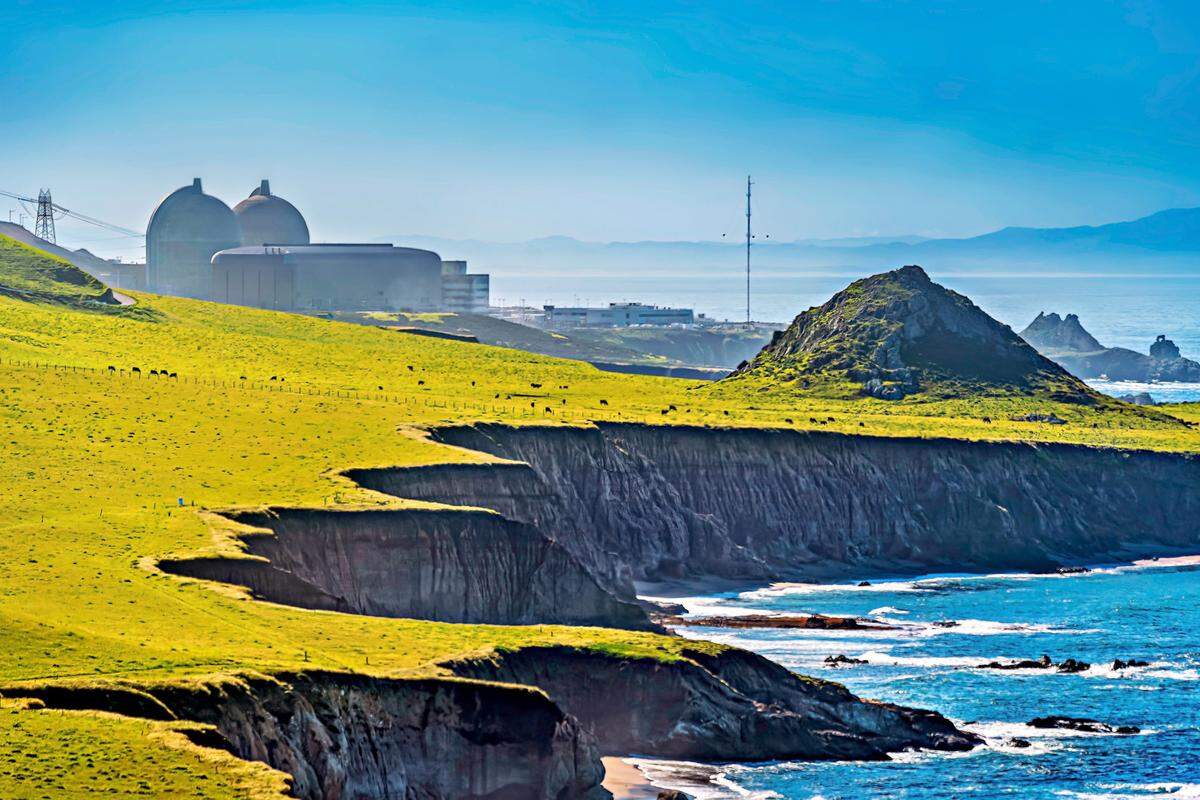
Diablo Canyon nuclear power plant is situated in the middle of 14 miles of picturesque SLO County coastline between Avila Beach and Los Osos, isolated from civilization by seven miles of protected land in either direction.
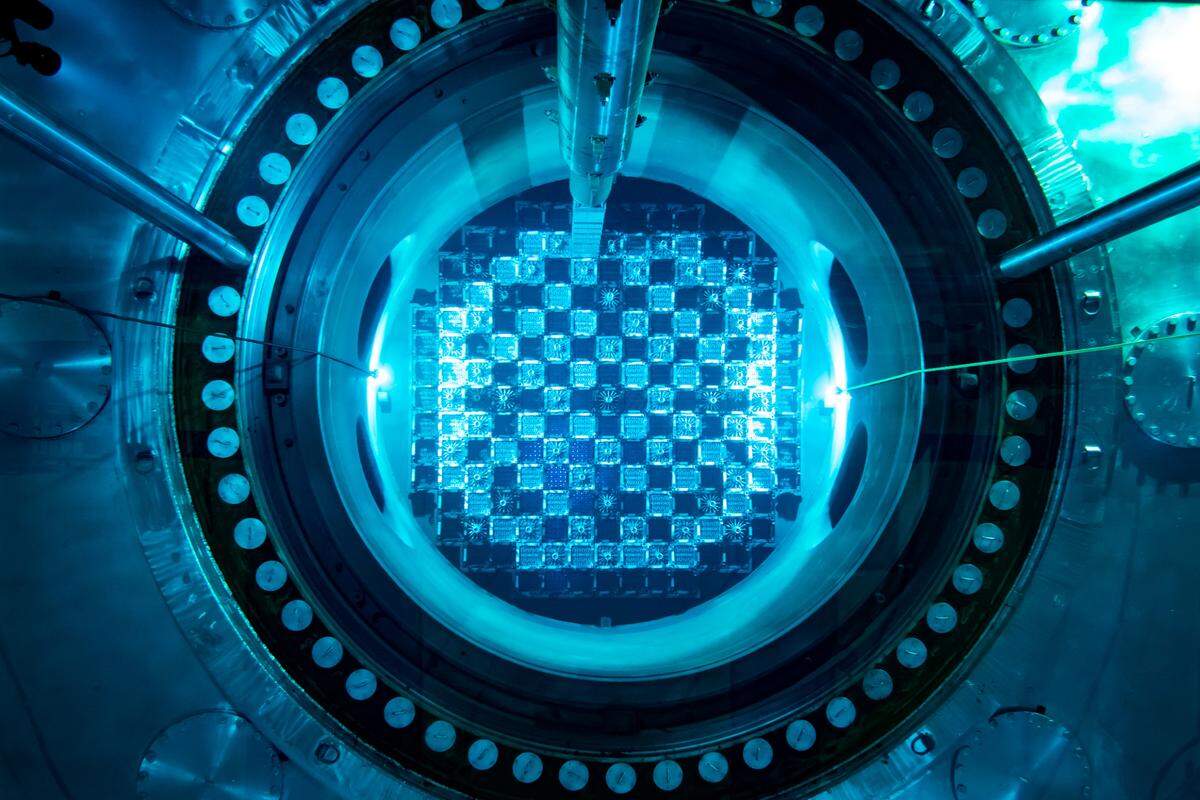
Its energy is generated by nuclear reactions inside two core reactors that power steam turbines, which then produce electricity.
Last year, both units produced about 2,200 megawatts of electricity while running almost 94% of the time, serving more than 3 million Californians. The other 6%, PG&E routinely shuts down one unit at a time for refueling and maintenance, Zawalick said.
“That’s that reliable base load energy that data centers and others do enjoy,” Zawalick said.
In 2018, Senate Bill 100 set California’s goal of going carbon-free by 2045, aiming to complete a full transition to renewable energy sources in less than three decades. According to CalMatters, 54% of California’s in-state electricity generation came from renewable sources in 2023, including hydroelectric power, geothermal energy, wind, solar and nuclear.
The rise of electric vehicles, electrification and AI data centers have further increased the state’s need for reliable energy, and in turn has boosted appreciation for nuclear energy, Zawalick said, as have partnerships between nuclear energy companies and tech giants.
Some even speculated the land next to Diablo Canyon could be the site where Meta attempted to build a new AI data center, which would’ve made it the first company to deploy nuclear-powered AI, according to a Bulletin of the Atomic Scientists article.
But that project was foiled by an endangered bee population, the Bulletin reported, and there are no endangered bees on the Diablo Canyon property, PG&E spokesperson Suzanne Hosn told The Tribune.
“We were not approached by Meta on the project, and to the best of my knowledge, there have been no endangered bees found on Diablo Canyon lands,” Hosn wrote in an email to The Tribune.
As of now, Diablo Canyon’s energy is not for sale, Zawalick said.
“We have not had any formal conversations” with any tech companies, she said.
In December 2023, the California Public Utilities Commission extended Diablo Canyon’s lease from its planned decommissioning dates of 2024 for Unit 1 and 2025 for Unit 2 to 2029 and 2030, respectively.
The U.S. Nuclear Regulatory Commission is in the process of reviewing PG&E’s application to renew Diablo Canyon’s 20-year operational license, which would give the power plant federal approval to operate until 2044 for Unit 1 and 2045 for Unit 2.
The commission is scheduled to make a decision in August.
Even with federal approval, whether Diablo Canyon stays open for state use after 2030 is “up to the state of California and the legislators,” Zawalick said, while adding that “if we get a call to operate longer, we will be ready. We are ready.”
The Legislature has not yet entertained the idea of whether the power generated by Diablo Canyon could ever be sold directly and exclusively to tech companies.
Senate Bill 846, passed in 2022, outlines the purpose of Diablo Canyon’s continued operation as improving the reliability of the state’s electrical grid and reducing greenhouse gas emissions. Fueling a data center would not be within that scope, according to Hosn.
“As a state-regulated utility, PG&E adheres to California energy policies, such as Senate Bill 846,” Hosn said.
While Diablo Canyon won’t fuel an AI data center for the foreseeable future, the power plant did partner with San Luis Obispo-based company Atomic Canyon to use an AI tool to search and retrieve technical documents, PG&E announced in November.
What about new nuclear power sources in California? State Legislature considers paths forward
In 1976, a California law placed a moratorium on new nuclear fission power plants until the federal government devised a solution for the disposal of radioactive waste.
But recently, lawmakers have expressed interest in exploring nuclear energy again.
One such bill supported the development of small modular reactors, which generate up to 300 megawatts of electricity per unit — about a third of the energy generated by traditional reactors, according to the International Atomic Energy Agency.
Small modular reactors — or SMRs — are designed to be easier to assemble and require less fuel than traditional reactors. But this is a developing technology, and none have been built in the United States just yet.
Still, tech companies are turning to small modular reactors as a potential source of energy.
In October, Google announced plans to buy energy from small modular reactors built by Kairos Power, a California-based nuclear energy company. Kairos plans to build a “low-power demonstration reactor” in Tennessee before building any commercial reactors elsewhere, according to the company’s website.
Meanwhile, Amazon said it hired Energy Northwest to build four of these facilities in Washington state, according to the Bulletin of the Atomic Scientists.
Introduced in 2022, Assembly Bill 65 would have exempted small modular reactors from the nuclear moratorium, while requiring the California Public Utilities Commission to “adopt a plan to increase the procurement of electricity generated from nuclear facilities,” the bill said.
That bill failed last year.
“I think that Assembly Bill 65 went a little too far, a little too fast,” said Assemblymember Cottie Petrie-Norris, the chair of the Assembly Utilities and Energy Committee. “We need a couple of things to be in place before we run toward procurement of small modular reactors.”
She thought Assembly Bill 2092, introduced in February 2024, was a better start, calling it “a smart and necessary first step.”
If passed, AB 2092 would have directed the California Public Utilities Commission to do a feasibility study on the benefits and drawbacks of using small modular reactors for energy generation.
To use nuclear power to run AI data banks in California, developers must demonstrate to the members of the Legislature and to the people of California that “this new technology can be implemented cost effectively, and of most importance, that this new technology can be implemented safely,” Petrie-Norris said.
“I think it’s really both appropriate and important for us to understand the possibilities of any new technology, including SMRs, as well as understanding the implications and any potential risks or issues,” she added.
Still, the bill was struck down in May last year.
More nuclear-related legislation was introduced during the current 2025-26 bill cycle.
Assembly Bill 305 seems to recycle AB 65, as it would exempt small modular reactors from the moratorium, and require the California Public Utilities Commission to adopt a plan that would increase the use of electricity sourced from nuclear facilities.
“This state has set some wildly optimistic energy goals with no roadmap on how to achieve them,” Assemblymember Heather Hadwick, who chairs the Assembly Committee on Environmental Safety and Toxic Materials, told The Tribune in a statement. “We must expand nuclear power, not restrict it. Lifting the moratorium isn’t just practical — it’s necessary for energy security, affordability and independence.”
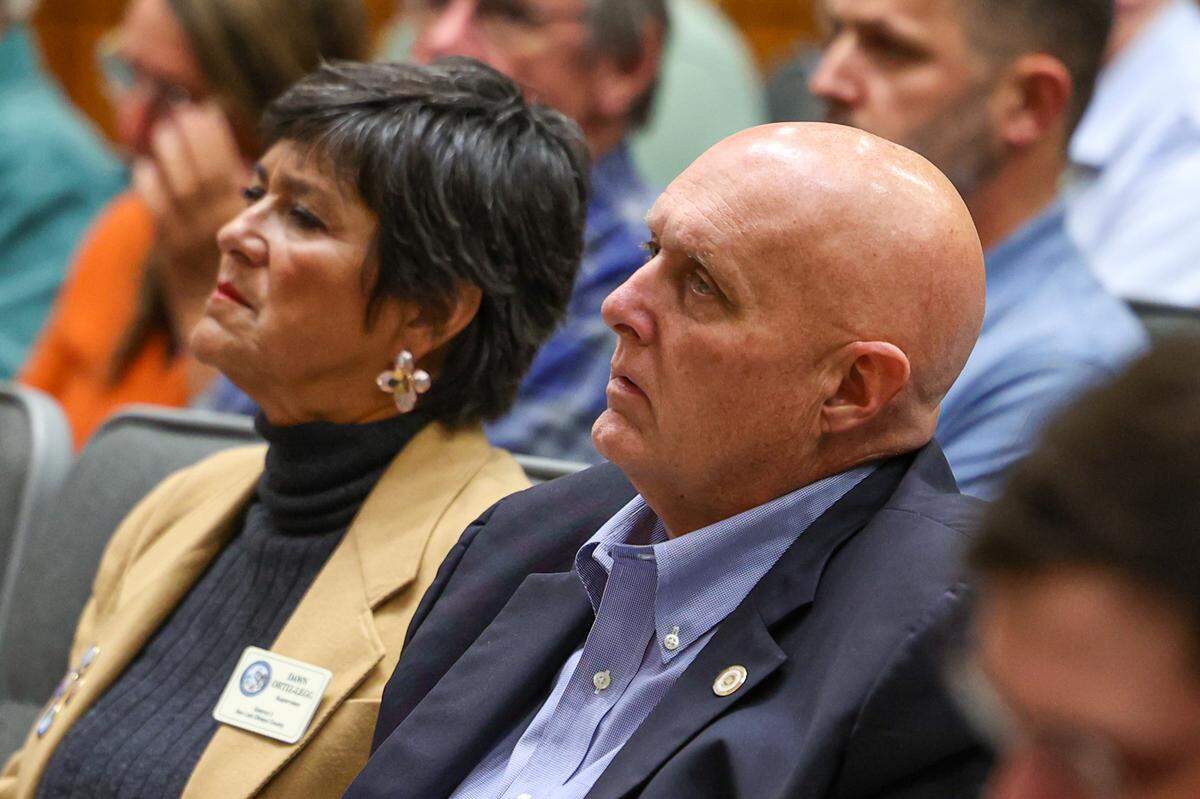
Locally, the San Luis Obispo County Board of Supervisors remained neutral on Assembly Bill 305 during its policy review of current state legislation on April 8, with public commenters and Supervisor Bruce Gibson raising the point that the bill does not address the ongoing issue of how to safely dispose of nuclear waste. He voted to remain neutral.
“That’s a serious question that could fall to the detriment of this county,” Gibson said.
Diablo Canyon’s spent nuclear fuel — which remains radioactive for tens of thousands of years after use — is stored in pools for about seven years to allow the radioactive materials to begin decaying. It is then moved into 20-foot-tall cement-filled steel dry storage casks, which permanently store the waste on site. The storage area is currently at half capacity with 70 dry casks, Hosn said.
PG&E will install a new horizontal storage system between June 2025 and March 2026, The Tribune previously reported.
Supervisor Dawn Ortiz-Legg was the sole supporter of the bill, arguing that the county was falling behind in the state’s energy goals. The bill was ultimately removed for future discussion.
She agreed that a federal plan for nuclear waste disposal is necessary but also argued the county shouldn’t wait idly by while solutions are being considered.
“Our energy situation is not a good situation in this state,” Ortiz-Legg said. “… This idea that … we have to freeze in place while the rest of the country is moving forward is the wrong approach.”
Two other bills would support the development of fusion-based reactors.
Existing nuclear power plants use fission — the splitting of the nucleus in an atom — to produce energy. A fusion-powered facility would produce energy by combining nuclei. The process would, in theory, produce more energy and less radioactive waste.
Senate Bill 80 would create the Fusion Research and Development Innovation Hub Program, which would identify funding and support for the development of “the world’s first fusion pilot plant in the 2030s,” the bill said.
Meanwhile, Senate Concurrent Resolution 25 would proclaim that the state celebrates advancements in nuclear fusion research and supports the goal of siting a fusion plant in California by the 2030s. The resolution would have no force of law but would accompany Senate Bill 80.
Some policymakers and energy experts argue that fusion, which “does not create any long-lived radioactive nuclear waste,” according to the International Atomic Energy Agency, could provide a future solution to the problem of radioactive spent nuclear fuel.
“Our energy future is at a turning point,” Hadwick said. “With rising demand, skyrocketing rates, unreliable renewables and the risk of blackouts, one thing is clear — our grid cannot survive without Diablo Canyon.”
This story was originally published April 18, 2025 at 5:00 AM.