
Some CA condors raise chicks in trios, not pairs. Inside ‘cooperative breeding’
California Condors, among other bird species — woodpeckers, scrub jays, raptors, et al — engage in the noteworthy concept of “cooperative breeding,” when three individuals help to raise a chick in a single nest.
Between 2001 and 2023, of the 52 nesting condor pairs identified in the Central California flock (Big Sur, San Simeon and Pinnacles) five were “trios.”
Four of those trios consisted of two males and a female; one had two females and a male raising a chick. Typically, all three birds share in the incubation of the egg and the feeding and care of the chick prior to the chick fledging, or leaving the nest.
In her research, Ventana Wildlife Society biologist Danae Mouton reports that cooperative breeding is “probably understudied and underreported among raptors” and other species.
That makes condors, who are scavengers and eat only dead animals, ideal candidates for the study of trios.
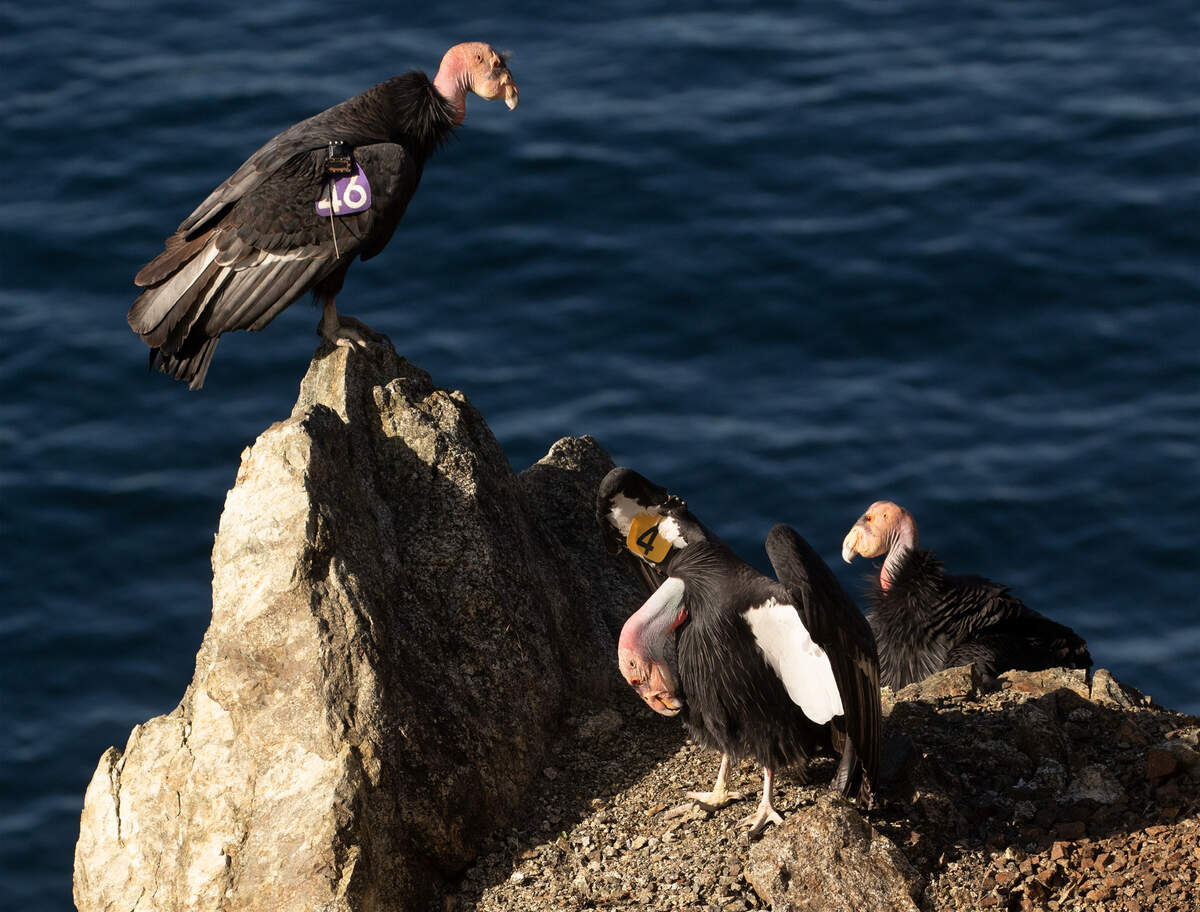
Each condor (with their 9-and-a-half-foot wingspans) have either GPS, or radio telemetry attached to its wing; hence behaviors, movements and nesting dynamics are readily documented.
“We have birds up to 27 years old — and as young as 5 years old – who have engaged in cooperative breeding,” according to Mouton.
Comparing the nesting success rate between pairs of two condors and trios, “the hatching and fledging rates are pretty similar,” she continued.
Also, in her research, trios showed “increased reproductive success and nest territory quality.”
What interested Mouton, she said, was that trios generally remain intact for about two years. And “In 86% of trios that disbanded, the two remaining members stayed together as a pair.”
Data used by Mouton shows that 72% of disbandment cases resulted from the death of a member, from lead poisoning in many cases. Fourteen percent of breakups were due to illness and 14% were due to unknown causes.
Besides their sharing of chick-raising responsibilities, trios “act and behave just like a pair would do,” Mouton said. All three are known to take to the air together in a “pair flight, to reinforce their social bonds and protect their territory against predators.”
Having three adults in the nest frees up one of the birds “to kind of maintain the social status within the social hierarchy of the flock,” Mouton said.
How are bird flu vaccinations going among California condors?
In its monthly online “Condor Chat” for March, Ventana Wildlife Society Biologist Kara Fadden said 70% of the Central California Flock has now been vaccinated against the Highly Pathogenic Avian Influenza (HPAI) with one dose.
And 50% of the flock has received two doses of the vaccine, which was developed specifically for condors following the tragic deaths (from HPAI) of 25 condors in the Utah-Arizona flock.
“We will continue to trap condors, including untagged chicks, for their HPAI vaccinations,” Fadden explained.
However, VWS will not trap and vaccinate “breeding age females during nesting season,” she added.
The total condor population in the Central California flock is now 112 birds. After four deaths in 2024, two confirmed as lead poisoning victims, there has been just a single mortality in 2025 — again, lead poisoning.
Meantime, four condors are missing in the wild, and are not counted as having perished until their mortality is documented.
For more condor information: visit ventanaws.org.
This story was originally published April 5, 2025 at 5:00 AM with the headline "Some CA condors raise chicks in trios, not pairs. Inside ‘cooperative breeding’."