Coastal Commission said 2 men couldn’t build on lots. Now SLO County judge says they can
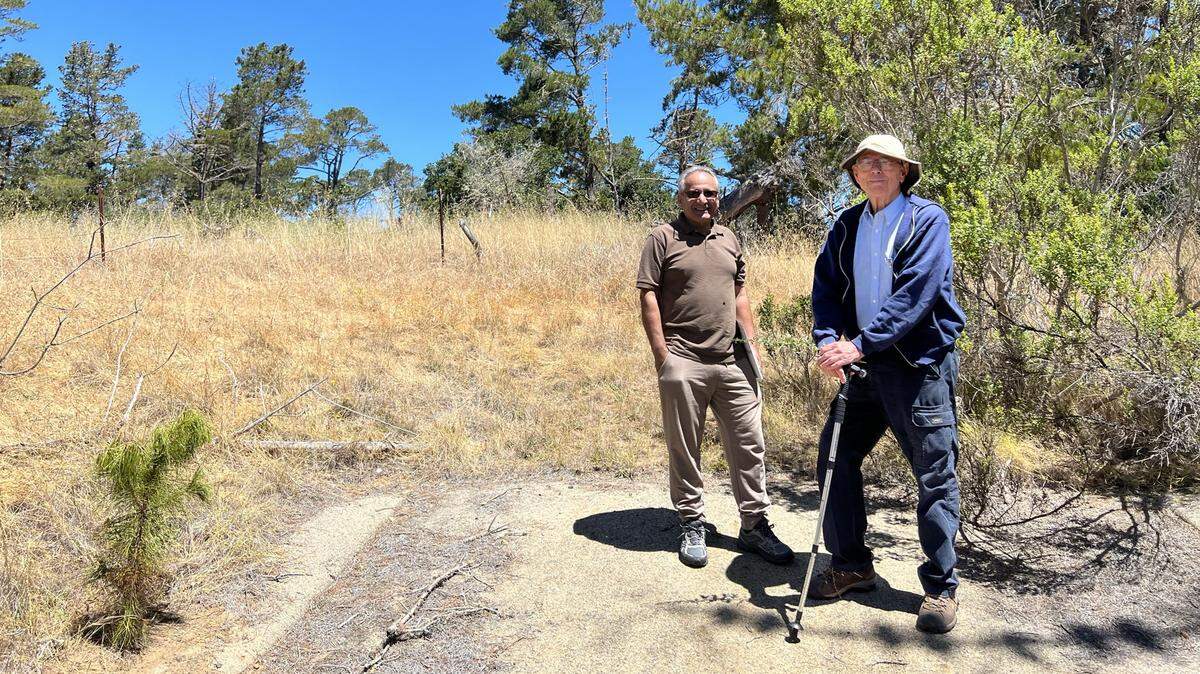
In a 32-page, smackdown ruling, a San Luis Obispo Superior Court judge may have effectively ended in December a two-year battle over building and water rights on two Cambria lots.
Although the California Coastal Commission can appeal the local ruling to a higher court, Judge Michael Kelly’s Dec. 31 decree was a welcome affirmation for determined property owners Alireza “Al” Hadian and Ralph Bookout.
“It couldn’t be a more blessing time than New Year’s Eve,” Hadian told The Tribune on Jan. 14. “The first phase of the lawsuit is finally over.”
In December 2019, the Commission voided permits the county had approved for the men earlier that year. Hadian and Bookout had bought their lots separately more than 20 years ago.
The Commission’s rationale for the decision, according to the staff report, was based on what some might consider the usual reasons when dealing with Cambria applications and appeals: The town’s shortage of water — especially during droughts and dry spells — and protecting the rare, native forest of Monterey pines and its habitat.
The Commission has used those issues frequently in the past when denying or voiding permits people need in order to build on their Cambria properties. It’s also very difficult for most of those lot owners to get the coveted, and now rare, “intent to serve” letters for water from the Cambria Community Services District.
Commission staff reports said the community simply doesn’t have enough water to serve its existing customers, let alone any new ones — ergo, Hadian and Bookout couldn’t build.
That decision was despite the reams of documentation the two lot owners and their lawyers had provided, including paperwork proving their water-supply situations were vastly different than those of most other owners of vacant properties in the northwestern San Luis Obispo County town of about 6,000 residents.
Instead, Hadian, Bookout and 16 other lot owners in a small “envelope development” on Cambria’s northern boundary, have been paying bimonthly for active municipal water service to their properties since meters were installed there in 2001.
This means they didn’t need those rare intent to serve letters and should be allowed to build on their properties, Kelly ruled.
“The Commission’s recent action was based on misinterpretation of the governing legal provisions of the LCP (county’s Local Coastal Program) and must be vacated,” Kelly wrote in his ruling.
The Coastal Commission can appeal Cambria ruling, but will it?
It’s not yet known if the Commission will appeal Kelly’s unusually lengthy legal opinion about the agency’s actions.
“We don’t comment on items that are under litigation,” Sarah Christie, the commission’s legislative director told The Tribune on Jan. 6. “We are still reviewing it. We will be talking to the attorney general and then taking it to the Commission.”
The Tribune reached out to Commission attorneys and the spokesman, but did not receive an answer.
Hadian, Bookout and their pro-bono attorney Jeremy Talcott from Pacific Legal Foundation all said Jan. 14 they don’t believe an appeal will happen.
“If the Commission loses a lawsuit at the Superior Court level, they often do not appeal the decision,” Talcott said.
That’s so the board doesn’t “risk setting a precedent” that would then “be binding on all the judges below in future cases,” he said.
He labeled Kelly’s ruling as “a fairly comprehensive rebuke for the Commission’s actions.”
“The court really firmly rejected attempts by the Commission to ignore fairly clear language, instead choosing to ‘cherry pick’ to achieve a desired result,” the lawyer said.
Hadian was more succinct about how he interprets the odds of an appeal by the Commission.
“I don’t know why they’d appeal,” he said. “They don’t want to suffer another humiliating defeat. I’m sure they see a lot of flaws now in their original case.”
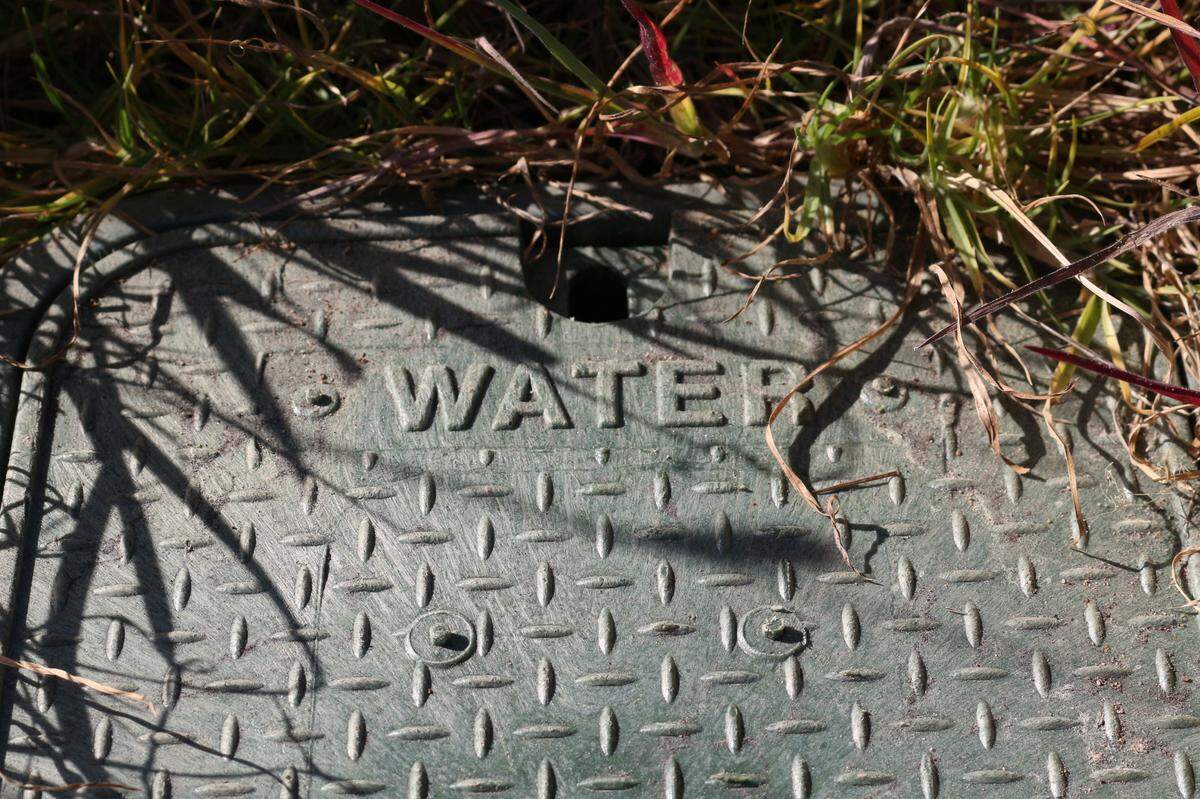
Cambria property owners have had active water meters for decades
At the heart of the lawsuits the two men filed in 2022 is the gnarly dispute about who is entitled to water service in Cambria and the town’s ongoing moratorium on new water connections because of supply shortages.
Getting water service to most of Cambria’s other lots has been on hold for decades, since the Coastal Commission first decreed that the town’s water supply wasn’t sufficient for current residents, let alone anybody else.
Since 2000, the Cambria Community Services District has had a moratorium on issuing water service to parcels that don’t already have it or grandfathered rights to it.
That moratorium is still in place, and the district has labored for years to find other water sources.
Some property owners found ways around the legal restriction — such as by purchasing and demolishing an existing home with water service, retiring that lot from any development possibility and transferring that right to the new parcel on which they wanted to build.
A few also bought “grandfathered meters” or water that, before the moratorium went into effect, the district had committed to providing even though the homes on those lots might not be built for years.
The Commission agreed several times to the grandfathered status of those few properties.
But, as Kelly pointed out repeatedly in his ruling, Hadian and Bookout didn’t need a workaround or the grandfathered status. They not only have legal rights to water service now, they have already had the active meters on their lots for more than 20 years.
In that time, they’ve been using and paying for water that flows through those meters — even for Bookout’s “Monterey pine tree nursery” in which he grows native seedlings that can help replenish the rare, aging native forest.
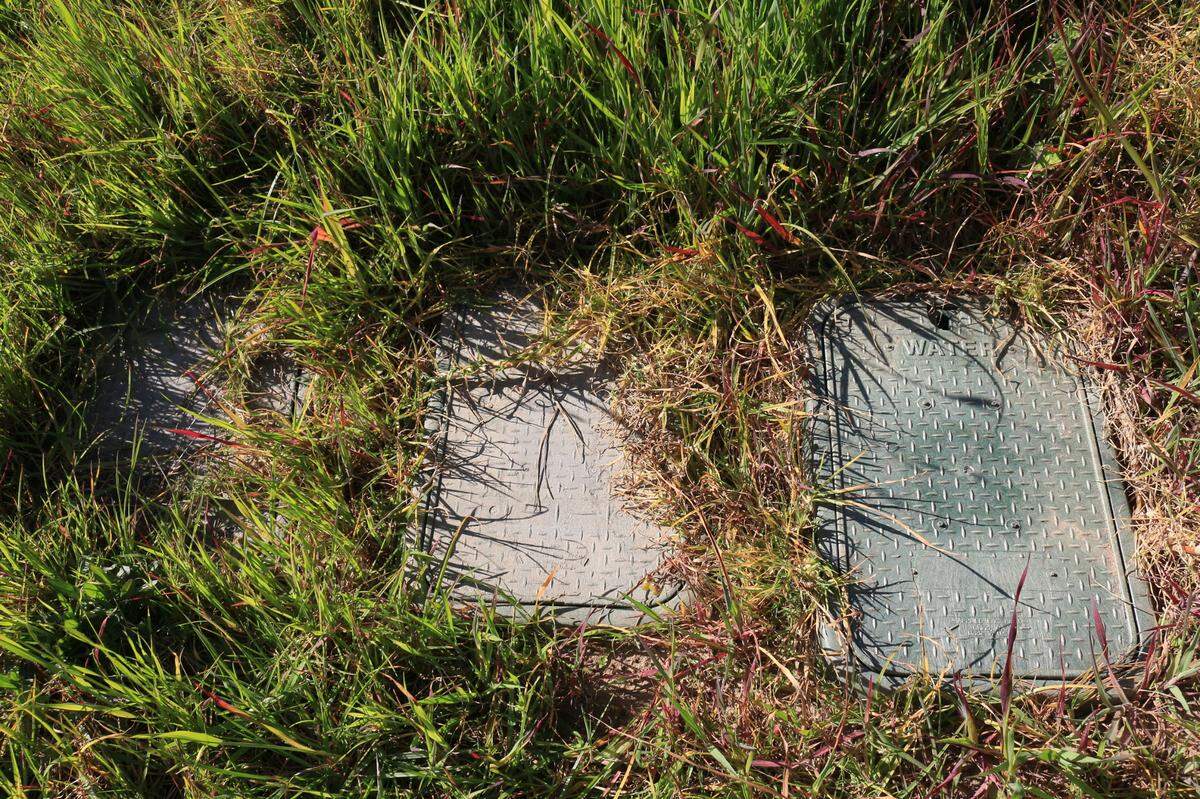
So how did they get those meters?
There’s a 1969 contract between the Cambria Community Services District’s predecessor agency and the former owner of the 18-lot development envelope, who made various concessions so the water would be available sooner to the lots he wanted to create.
Those concessions included dedicating most of the 382-acre property along Highway 1 to open space.
By now, 10 of those lots have homes on them. Hadian and Bookout are among the eight who have not been able to build yet.
The Commission and the county have acknowledged repeatedly the legality of that contract and included its provisions in various land-use documents.
Despite that, commissioners ruled in 2019 that the two men weren’t entitled to the water they’ve been getting and using for 24 years, and revoked the county permits they need to build on their properties.

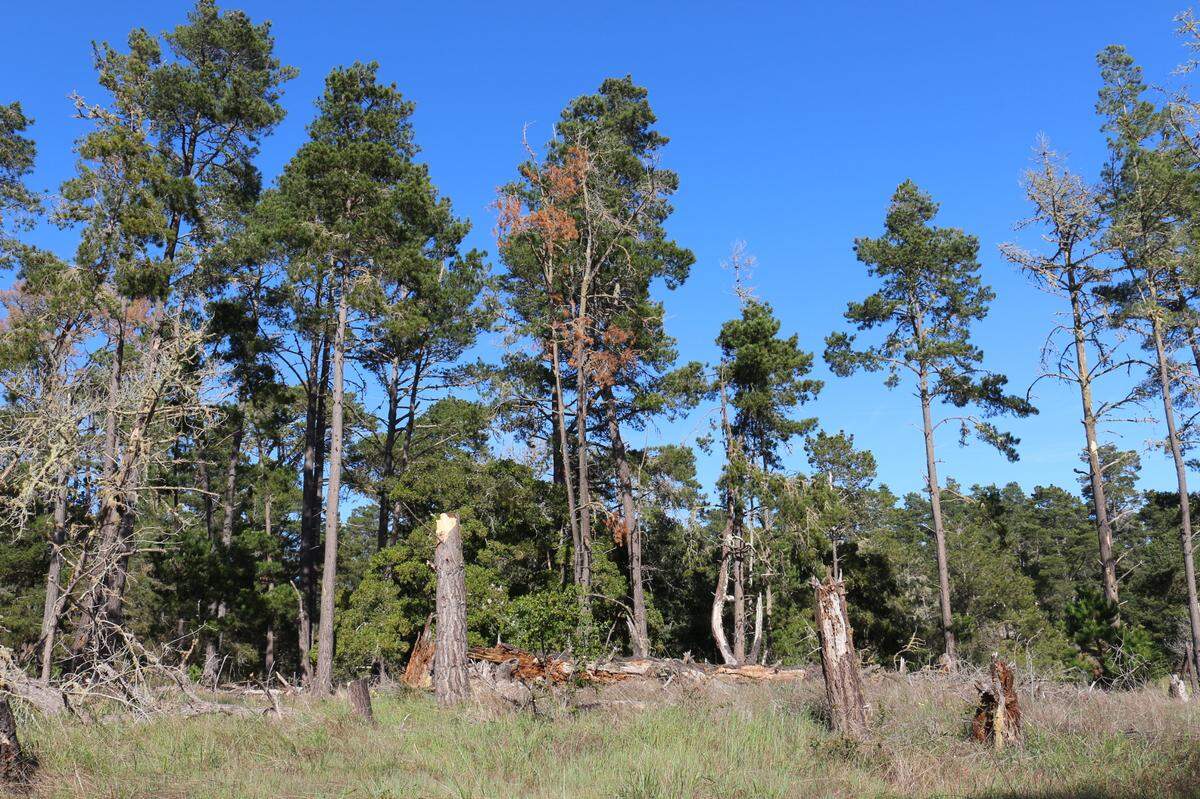
What about Cambria’s Monterey pines?
Kelly, Talcott and his clients also repeatedly challenged the Commission’s late insertion into its arguments that the decision protectedthe town’s rare forest of native Monterey pines, one of only five in the world.
The Commission didn’t include the pines in its filings about the lawsuit until September 2021.
Likewise, none of the five appellants — commissioners Linda Escalante and Katie Rice and Cambria residents Christine Heinrichs, Elizabeth Bettenhausen and Ted Key — included that issue in their initial appeals.
Kelley said those omissions didn’t provide the applicants and their attorney a timely opportunity to respond to the arguments early enough in the process.
The Commission cannot “rely on the alleged impacts on the Monterey pine forest that were not appealed to the Commission,” Kelly wrote in the ruling.
Hadian agreed, saying, “any first-year law student would know you don’t inject something brand new into a contest that’s already underway.”
Bookout — who said he’s been a firm, longtime supporter of the Coastal Act since it went into force — added that when the Commission “tried to invalidate a legal and enforceable document that they had signed off on before, they have overstepped their bounds.”
Hadian has two adjacent parcels; his lot is separated from Bookout’s by one other parcel.
If allowed to build, for every Monterey pine the men remove, they’d have to plan four new ones. Hadian would have to plant at least 200 new trees; Bookout, 280.
What happens next?
A case-management hearing is set for Feb. 24 in the Paso Robles court.
“At that point we’ll have to discuss what happens next” with two other lawsuits Hadian and Bookout filed against the decision, Talcott said. “That will impact when final judgment is entered, which is what starts the clock for the Commission to appeal.
The other lawsuits were about “unconstitutional takings” under the U.S. Constitution’s Fifth Amendment, he said. They allege inverse and direct condemnation, or what happens when a lot owner is illegally deprived of temporary or permanent use or value of their property.
“I suspect we’ll have some discussions this week ... a lot of conversations with the clients, the Commission and everybody else,” Talcott said Monday. “Maybe we’ll all end up reaching a decision soon. ”
Kelly’s ruling gave the two lot owners confidence that they’ll finally be able to build their retirement dream homes, assuming their health and money hold out.
Retired engineer Hadian from Granada Hills is 65 now, and Bookout, a Visalia resident, contractor and real estate broker who used to own a Nissan dealership there, is 85.
Both say they’re healthy, but Hadian especially is concerned about paying to build the retirement home he’s wanted for so long.
Both men estimated that building costs have risen from $250 to about $750 a square foot since their legal process began, and with massive recent disasters, those costs are predicted to increase further.
“I thought I could build it on my own,” Bookout said of when he started his retirement home journey. “I do a lot of tinkering, woodworking, welding and hobby stuff.
“Now, I’m going to need some help.”