Tarantulas are on the move in California. Here’s why you might see more giant spiders
If you’re exploring nature in California this fall, there’s a chance you could be sharing the trail with one of the largest spiders in the world.
Male tarantulas are embracing the cooler weather and departing from their dens in search for love.
Tarantula mating season runs from September through mid-November, according to the National Park Service. It’s the time of year when the massive arachnids are ready to procreate.
The male spiders are most frequently spotted crawling along dusty paths as dusk. They can also be sighted day or night searching for females.
What do tarantulas look like?
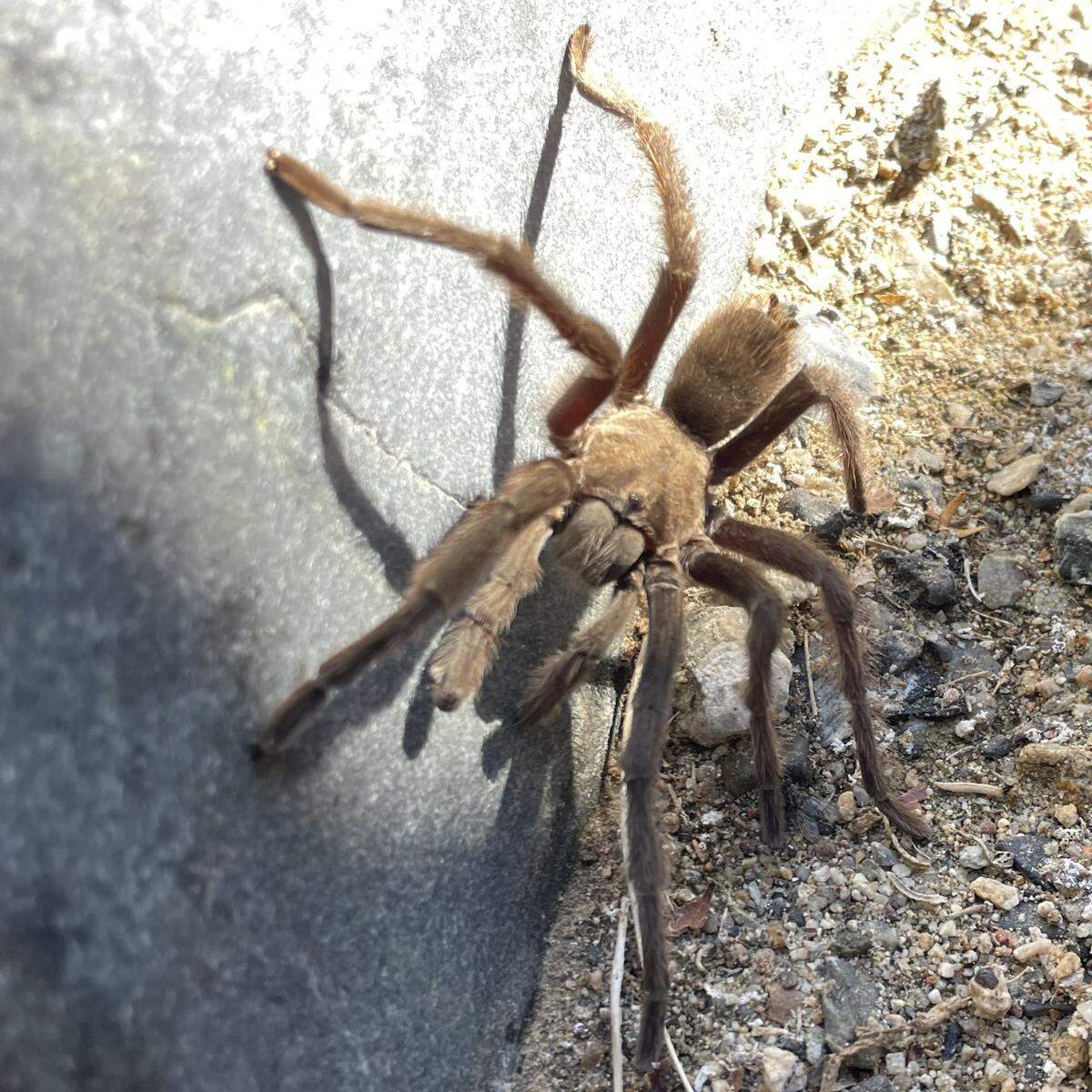
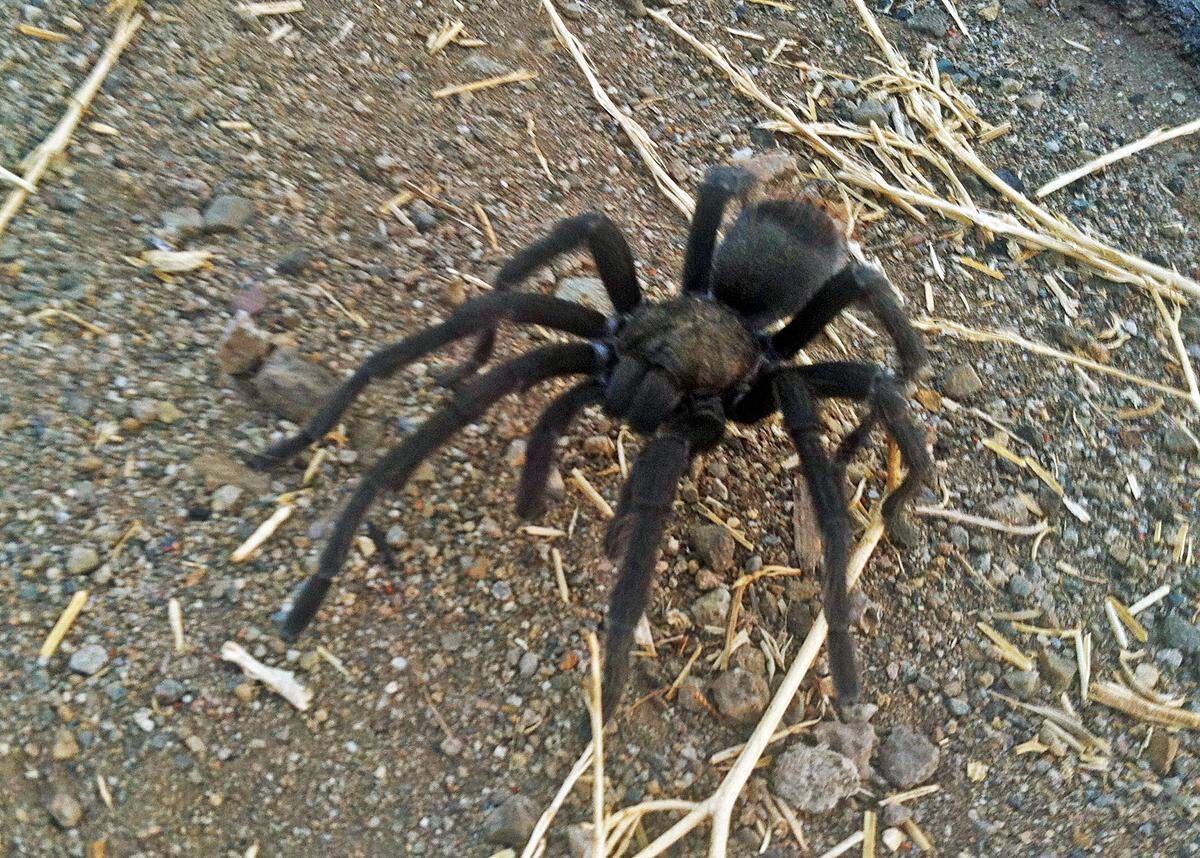
With their eight eyes, eight legs and large hairy bodies, tarantulas are hard to miss, said Ryan Perry, a lecturer in entomology at Cal Poly in San Luis Obispo.
“There really shouldn’t be too much confusion with any other spiders, generally based on their size,” he said.
Adult tarantulas average five inches long but their legs can span up to 11 inches, the National Wildlife Federation said. That’s about the size of a human hand.
The slow-moving spiders are typically dark brown.
Tarantulas can be seen scuttling throughout most of California, Perry said.
The arachnids dig their burrows in areas with lots of brush and sandy dirt and are frequently spotted in the desert, in the mountains and along the Central Coast.
There are 10 distinct species of tarantulas throughout the state, including the Chilean rose tarantula, the California tarantula and the desert blonde tarantula, according to Los Padres ForestWatch, a Santa Barbara-based conservation group.
When are giant spiders most active in California?
Tarantulas are present throughout the year, according to Los Padres ForestWatch.
However, the giant arachnids are most often spotted during breeding season — particularly in October, when the majority of activity occurs, the group said.
Male tarantulas take two to 12 years to mature before they are ready to search for a mate. Once they reach adulthood, they venture out of their dens to find a suitable female hidden in its burrow.
“The tarantulas on the move are this year’s young males looking for the more secretive females to mate with,” said Ron Ruppert, a biology professor at Cuesta College in San Luis Obispo.
Once the male tarantula encounters a female’s burrow, it will spin a web or tap on the outside of her den — the arachnid version of knocking on its door — to see if there’s mutual interest.
If all goes according to plan, the tarantulas will mate.
After that, the spider male will return to its burrow and die within a few weeks or months, Perry said.
Occasionally, cannibalistic females choose to take the male as a meal instead of a mate.
“If the male approaches too quickly or without any warning to the nest, she might get spooked and eat him then,” Perry said. “Even after they’ve mated, if he takes too long to get out of the nest, she might just go ahead and start eating (him).”
Female tarantulas tend to be bigger and more mature than their male counterparts and can live up to 30 years.
After mating with the male, the female tarantula lays fertilized eggs in her burrow. It takes around six to nine weeks for up to a thousand spider eggs to hatch, according to Los Padres Forestwatch.
Are tarantulas harmful to humans?
Even though the large, fuzzy spiders tend to give people the heebie-jeebies, the arachnids are generally harmless and pose no threat to humans, Ruppert said.
Tarantulas have strong jaws with venomous fangs, but their venom is only powerful enough to subdue small insects and creatures, according to Perry.
The spider’s bite has no effect on people beyond some swelling or a slight rash, he said.
Perry advised people to use caution if attempting to touch a tarantula.
The arachnids have barbed bristled on their abdomens, called urticating hairs, that they expel when rattled.
The sharp hairs can lodge in the eyes and bodies of tarantulas’ prey or attackers and can cause pain, itchiness and irritation, he said.
What should I do if I encounter a tarantula?
Docile spiders are unlikely to get close or bite humans if they’re spotted in the wild.
Perry recommended that people give tarantulas a wide berth on trails in order to not disturb them during their mating process.
However, if you did want to snap a couple pictures of the creepy-crawly spiders, you could slowly approach them from the side, he said.
“Generally, as long as you don’t rush up to them, they’ll just kind of do their thing,” Perry advised. “You can come in, take a few photos and then move on.”
This story was originally published October 31, 2024 at 5:00 AM with the headline "Tarantulas are on the move in California. Here’s why you might see more giant spiders."