NOAA reveals official vision for Chumash marine sanctuary on Central Coast. ‘A huge moment’
The National Oceanic and Atmospheric Administration unveiled its official plan for the Chumash Heritage National Marine Sanctuary on Friday.
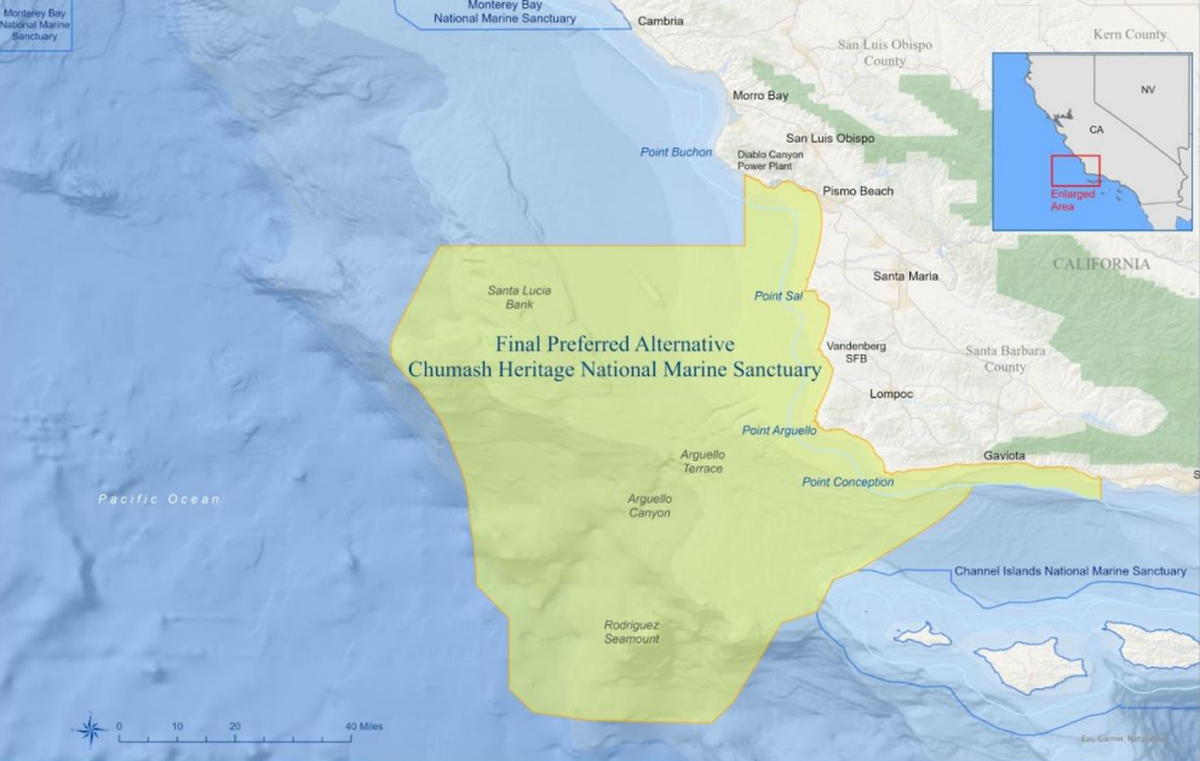
If designated, the sanctuary would protect 4,543 square miles of the Pacific Ocean from the Gaviota Coast in Santa Barbara County to just below the Diablo Canyon nuclear power plant in San Luis Obispo County, according to the final environmental impact report released Friday morning.
The purpose of the sanctuary is to protect marine ecosystems, shipwrecks and underwater Chumash cultural and historic sites off the Central Coast. Offshore oil drilling and certain sea floor disturbances would be prohibited in the sanctuary.
“This historic designation will come not a moment too soon,” Rep. Salud Carbajal said in a news release. “Our oceans and our communities are facing unprecedented challenges from a changing marine environment. This new sanctuary comes at a critical time for our region.
He continued: “I look forward to working with our tribal and local stakeholders and federal partners to finalize these boundaries — which will nearly double the coastline protected along the Central Coast — and build on them to protect every coastal community and ecosystem in our region.”
This is the first national marine sanctuary nominated by a Native American tribe and the first that would include collaborative management with tribes.
While NOAA would be the lead agency managing the sanctuary, the Northern Chumash Tribal Council and other Native American tribes would be included as co-stewards on numerous boards governing the sanctuary.
“This is a huge moment for the Chumash People and all who have tirelessly supported our campaign over the years,” Northern Chumash Tribal Council chairwoman Violet Sage Walker said in a news release. “My father, the late Chief Fred Collins, began the journey to protect these sacred waters many years ago, and we have been so proud to continue his work. I am delighted to celebrate his vision, today’s success, and the future of our People who will always be connected to past, present and future by this special stretch of coastline and the true magic its waters hold.”
NOAA considered 110,000 public comments on the draft environmental impact report while revising the sanctuary boundaries and management plant.
Marine sanctuary leaves room for offshore wind development
The final proposed boundaries for the sanctuary would protect 4,543 square miles of the Pacific Ocean.
If designated, the sanctuary will stretch across 116 miles of shoreline from just south of the Diablo Canyon nuclear power plant in San Luis Obispo County to Naples Reef on the Gaviota Coast in Santa Barbara County.
It spans westward 60 miles to catch geologic features like Rodriguez Seamount, Arguello Canyon and Santa Lucia Bank. The sanctuary reaches a maximum depth of 11,580 feet below sea level.
The proposed boundaries are slightly smaller than what was initially being considered.
In 2015, the Northern Chumash Tribal Council proposed a sanctuary design that started at the Channel Islands National Marine Sanctuary and extended north to meet the Monterey Bay National Marine Sanctuary. The sanctuary would have also stretched 80 miles offshore to include the seabed west of Santa Lucia Bank.
This design would have protected about 7,600-square-miles of the Pacific Ocean and created a contiguous strip of national marine sanctuaries on the California coast.
NOAA, however, shortened the northern boundary to allow for the development of underwater cables that would carry electricity generated by offshore wind turbines in the Morro Bay Wind Energy Area to shore.
The administration decided that the final sanctuary boundaries struck “an acceptable balance between resource use and conservation of sanctuary resources,” the report said.
At the request of the Northern Chumash Tribal Council, offshore wind companies in the Morro Bay Call Area and numerous elected representatives, the final sanctuary management plan will also include a pathway for expanding the sanctuary boundary to meet the Monterey Bay National Marine Sanctuary at Cambria.
That plan would require NOAA to start exploring lengthening the sanctuary boundaries by January 2032 if it wished to pursue a larger sanctuary.
Meanwhile, NOAA extended the southern boundary to the Gaviota Coast to protect beaches, kelp forests and reefs there, as well as area that was previously “home to numerous, large Chumash villages at the time of European first contact,” the report said.
Sanctuary would prohibit oil drilling, hunting
The management plan will prohibit certain activities to protect resources in the sanctuary, the report said.
New oil, gas and mineral exploration, development and production would be prohibited in the sanctuary. Current leaseholders would be allowed to continue their operations, the report said.
Discharges, such as sewage, would not be allowed in the sanctuary.
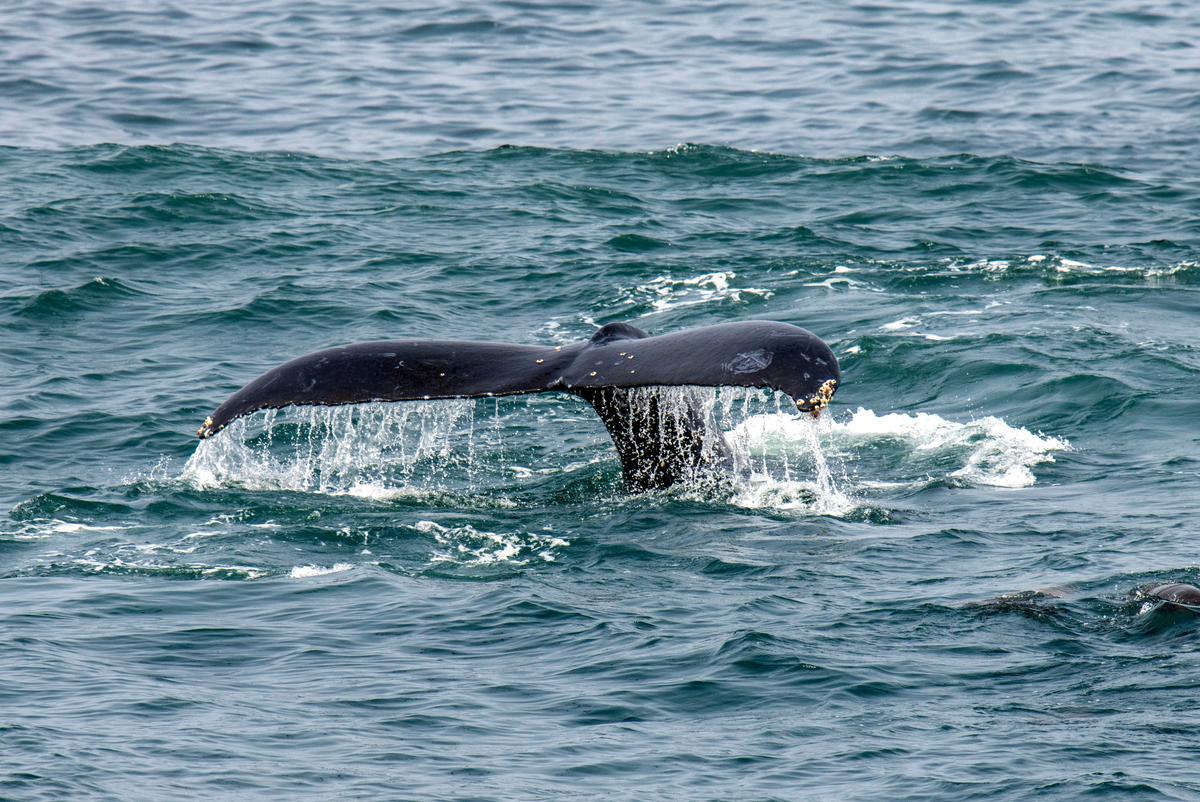
It would also prohibit the harming or taking of a marine mammal, sea turtle or bird from within its boundaries. Releasing non-native species would also be prohibited.
The sanctuary would not allow disturbances to the seabed or historical resources.
NOAA will establish a permit process for otherwise prohibited activities that “will promote or enhance local Native American cultural or ceremonial activities,” research, education and management, the report said.
The management plan will also include regulations for the “beneficial use” of dredged materials from Morro Bay and Port San Luis. Those materials must be used for “habitat protection or restoration purposes,” the report said.
The sanctuary management plan will not regulate vessel speeds or establish new fishing regulations, the report said.
Comments on the draft designation documents urged NOAA to establish a “special treatment area” between Morro Bay and Cambria with regulations that restrict vessel speeds but allow subsea cables.
That is not likely to happen, however.
“Applying a different set of regulations to one spatial area was rejected because NOAA intends to impose the same regulations across the entire sanctuary area to facilitate public understanding of sanctuary regulations and to assist enforcement,” the report said.
Meanwhile, the sanctuary will protect Chumash sacred sites, such as Point Conception, which is considered the place where the soul departs to the afterlife. The sanctuary also protects submerged Chumash villages and other cultural sites.
“Protecting these submerged ancient villages from future industrial encroachment will ensure the resting places of their ancestors remain undisturbed,” Mission Blue founder Dr. Sylvia Earle said in a news release. “The cultural significance of Chumash heritage makes this National Marine Sanctuary the only one of its kind.”
How would marine sanctuary impact the environment?
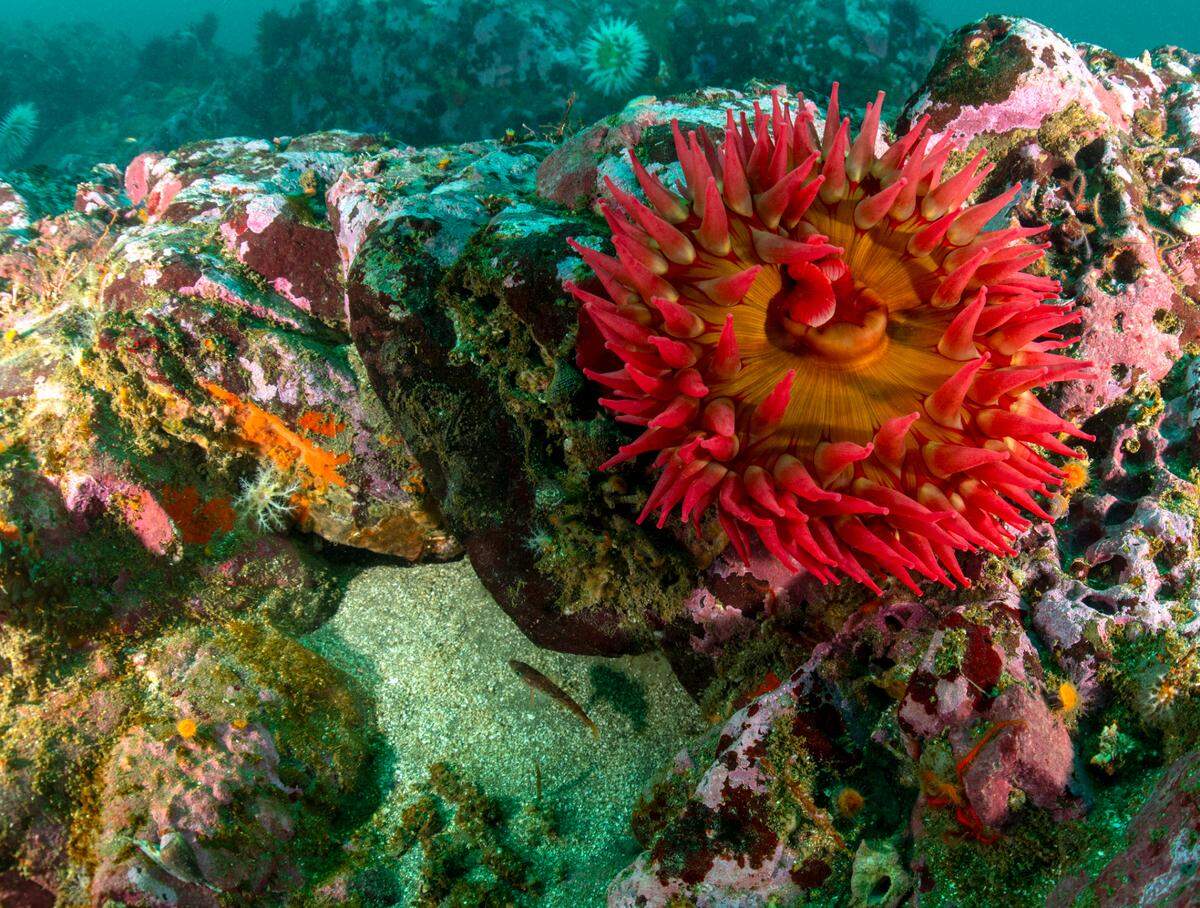
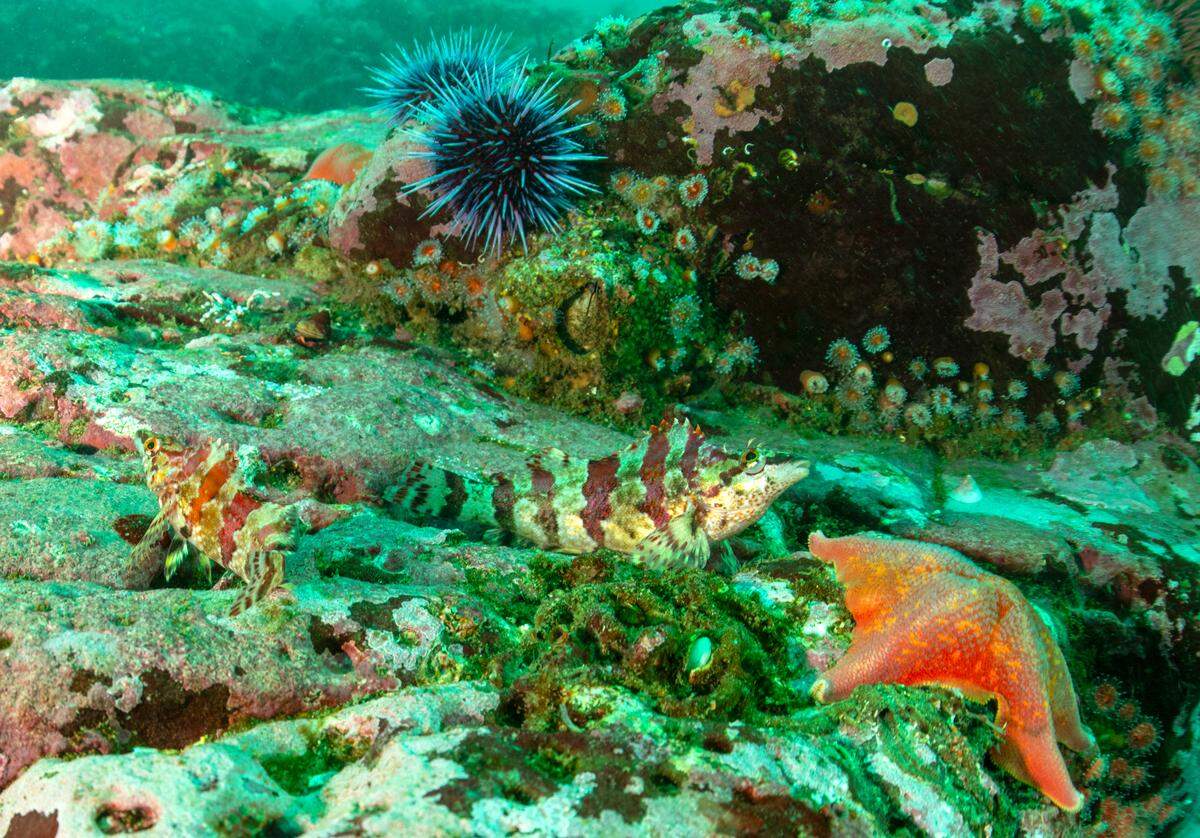
The marine sanctuary would be largely beneficial to marine habitats that support a diversity of ecosystems in the study area, the report said.
Sanctuary vessels, deploying buoys or monitoring equipment and uncrewed underwater systems could have temporary, negligible adverse impacts on the environment — but otherwise, the protections afforded by the sanctuary will have long-term positive impacts on the environment, the report said.
According to a news release from the Northern Chumash Tribal Council, the sanctuary would “support climate solutions by promoting the health of kelp forests and other ocean habitats that serve a host of vital ecosystem functions, including carbon storage.”
“It will protect a globally significant ecological transition zone that is home to a wide variety of wildlife, including many at-risk species such as snowy plovers, southern sea otters, leatherback sea turtles, black abalone and blue whales,” the release said. “The sanctuary will also provide opportunities to advance cultural and environmental education and outreach.”
What happens next?
NOAA must now decide whether or not to designate the sanctuary within 30 days after releasing the draft environmental impact report.
After the 30 days, if NOAA decides to designate the sanctuary, it will release the final boundaries, regulations and management plan, according to its website.
After that, the documents would then need to go to Gov. Gavin Newsom and Congress for final review.
“The release of the final EIR puts us one step away from the final designation,” State Senator John Laird said in a news release Friday. “I am grateful for the leadership and years of advocacy by the Northern Chumash Tribal Council, the Sierra Club and tens of thousands of local residents.
“I am proud to have been part of this effort to sustain the beauty and vitality of the Pacific Ocean along the Central Coast — and look forward to the sanctuary designation and implementation.”