How close are SLO County’s reservoirs to spilling? Here are the latest predictions
The winter storms that have brought several inches of rain to San Luis Obispo County are causing local reservoirs to rise — and some are close to spilling once again.
It may only take a few more inches of rain to cause Lopez Lake, Santa Margarita Lake and Whale Rock Reservoir to overflow their spillways, according to San Luis Obispo County and city officials.
A second year of overflowing reservoirs would be historic: Lopez Lake spilled for the first time in 25 years last March, the same month that Whale Rock spilled for the first time in 18 years.
Santa Margarita Lake spilled last January for the first time since March 2019.
The unusually full lakes are thanks to a particularly rainy December for the region.
Some areas, such as the mountains northeast of Cambria around Rocky Butte and areas north of Paso Robles, got more than twice the normal amount of rainfall typically seen during the month of December. San Luis Obispo and South County areas saw well over 100% of the normal rainfall measured in December, according to the National Oceanic and Atmospheric Administration.
The rest of the rainy season stretches through March, meaning much more rainfall could be — and is predicted to be — on its way, especially given this season has been characterized by a strong El Niño weather pattern.
The Salinas Dam, which created Santa Margarita Lake; Lopez Dam; and Whale Rock Reservoir were each built to provide drinking water. Unlike Lake Nacimiento, the lakes were not built for flood-control purposes.
That means the dam operators are unable to release additional water to prevent the reservoirs from overflowing. Releases from the reservoirs are for environmental purposes, like keeping downstream habitats intact during drought periods.
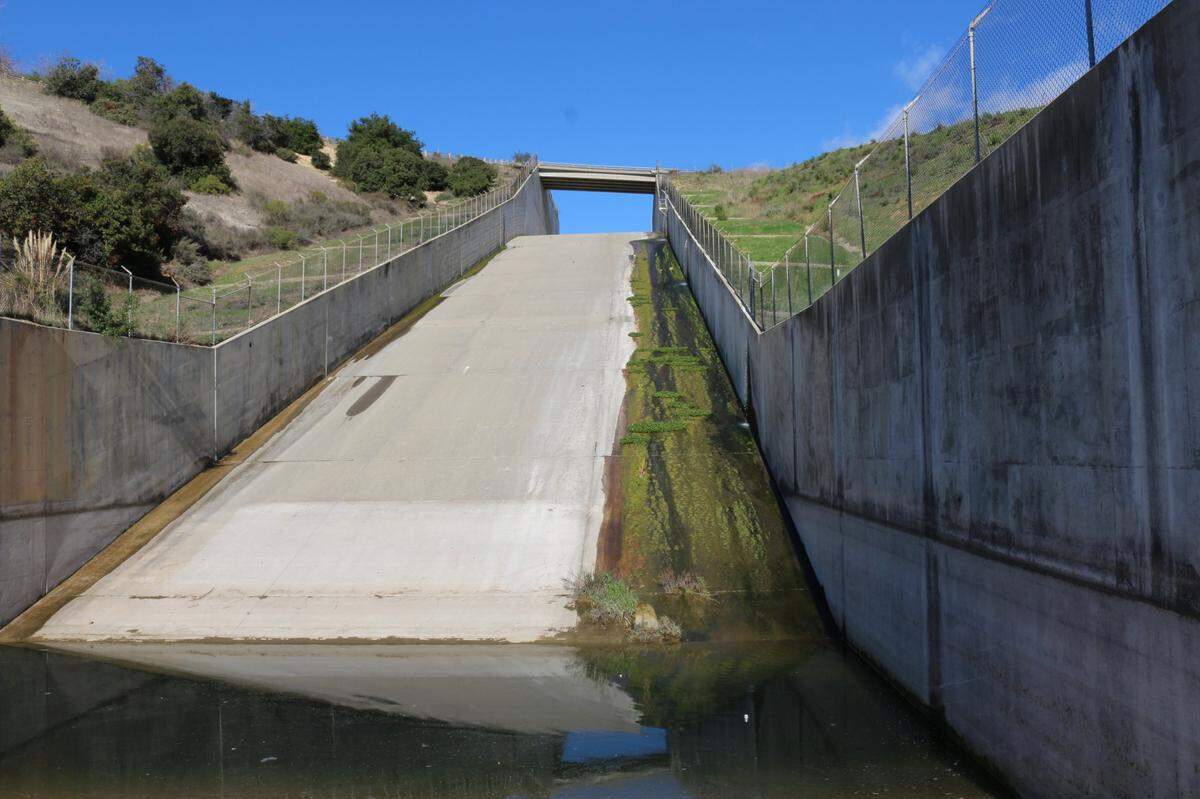
Lopez Lake may spill if SLO County gets more rain
The surface of Lopez Lake sat less than 2 feet below its spillway as of Monday, meaning the lake was about 96% full, according to the San Luis Obispo County Public Works Department.
“I think with the next 5 to 10 inches of rain it’ll spill,” said David Spiegel, an engineer with San Luis Obispo County. “It’ll just depend on how much we get and how fast it comes.”
There’s nothing the county can do to prevent the lake from spilling, Spiegel added.
What it can do, however, is try prevent downstream flooding and help communities prepare for the potential flooding that could come with an overflowing reservoir.
When Lopez Lake spills, the Arroyo Grande Creek’s peak flows increase by about 20% to 40%, according to the county’s water resources division manager Courtney Howard. During last year’s storms, those big flows, coupled with torrential rain, caused the Arroyo Grande Creek levee to breach and flood nearby homes and farmland in Oceano.
SLO County working to prevent flooding downstream of Lopez Lake
The county has since spent millions of dollars to restore the creek and repair the levee in hopes that it’ll survive other big storms. The repairs were designed to leave only a 10% chance that a storm could overtop the south end of the levee, and 5% chance one could spill over the northern portion of the levee, according to Howard.
There are other projects on the county’s mind, too, Howard added.
She and others are looking for funding for a feasibility study to evaluate other flood control measures such as digging bypass channels that could act as secondary containment channels for any Arroyo Grande Creek overflow.
“We’re looking at ways to find a balance between protecting agriculture and protecting the natural environment,” Howard said.
Residents and agriculture operators around Arroyo Grande Creek should be prepared for flooding given how close the reservoir is to spilling, Howard and Spiegel both said.
And they should be ready for years to come, Spiegel added.
It’s likely Lopez Lake could spill every 5 to 10 years, he said. That’s because the storms last year allowed the lake to finally recover from the seismic retrofits in 2001 that lowered the lake’s maximum surface level by 70 feet, Spiegel said.
“It’s sort of reset itself back to how it was before the retrofits,” Spiegel said.
Additionally, water purveyors who use the water from Lopez Lake — including Arroyo Grande, Grover Beach, Pismo Beach and Oceano Community Services District — adopted new rules in 2022 to allow them to essentially save water in the reservoir that goes unused.
Previously, the purveyors had been operating under a “use it or lose it” type of deal, where now there’s incentive to save water in the reservoir for use in future drought years.
Other SLO County reservoirs may overflow with more rain
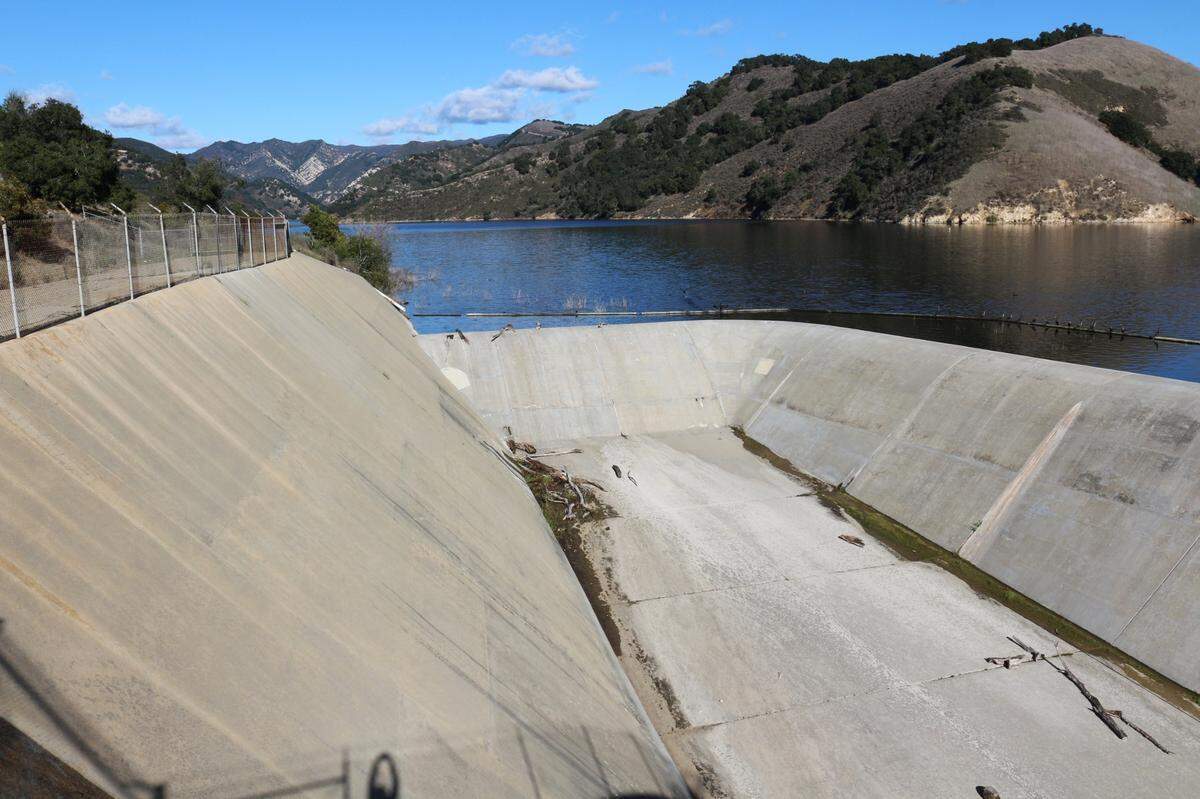
Santa Margarita Lake and Whale Rock Reservoir are also close to spilling.
The top of Santa Margarita Lake was about 90% full and 3 feet from spilling over the Salinas Dam on Monday, according to the San Luis Obispo County Public Works Department.
Spiegel and Howard surmised that the lake could spill around the same time, if not before, Lopez Lake spills. That means the county would need to see another 5 to 10 inches of rain before Santa Margarita Lake could overflow.
Meanwhile, Whale Rock Reservoir was about 92% full, with the surface of its water sitting less than 6 feet below the spillway, city reservoir supervisor Noah Evans wrote in an email to The Tribune on Monday.
“We are fortunate that the reservoir has started 2024 at a high level, providing water to the reservoir owners for future use,” Evans wrote in his email.
The small reservoir located above Cayucos has a much smaller watershed compared to Lopez and Santa Margarita, so “we will need a few significant storm events to provide sufficient inflow and allow the lake to spill this year,” Evans added.
This story was originally published January 9, 2024 at 8:00 AM.