
Elephant seals are returning to SLO County shores for breeding season. Here’s what to expect
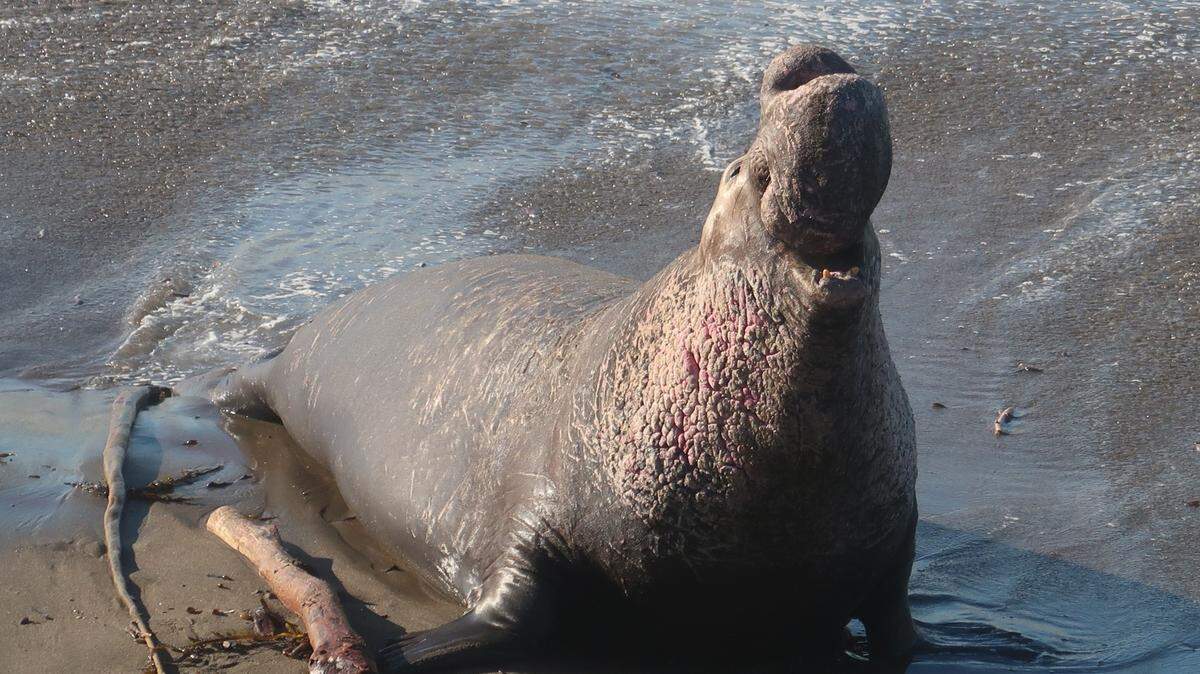
Elephant seal bulls begin arriving around Thanksgiving for the winter breeding season.
They are at their largest physical bulk, after months of feeding along the North American continental shelf. They’ll need it to get through to March without eating.
Look for long noses and big pink chest shields on massive bodies. They surf out onto the sand, their massive weight now subject to gravity instead of supported by water. Welcome to life on land!
Smaller seals are juveniles, still resting on the beach from their Fall Haul Out. They will soon leave on their own migration. They’ll feed and grow bigger, to return next spring.
Seals spend most of their lives at sea.
Bulls stop feeding when they leave their foraging grounds and head south for the breeding beaches.
They’ve been eating fish and squid, gaining as much as 28 pounds a day, since they left the Central Coast in August and September. They need enough blubber to survive 100 days or more, to the end of the breeding season. They are huge now, but will get thin over the coming months.
Every bull on the beach is a survivor in a tough system. As few as 1% of male pups born reach breeding age.
Surviving isn’t enough to guarantee breeding, though. They jockey for dominance and breeding rights. Two-thirds of the bulls — the less dominant ones — don’t get to breed at all.
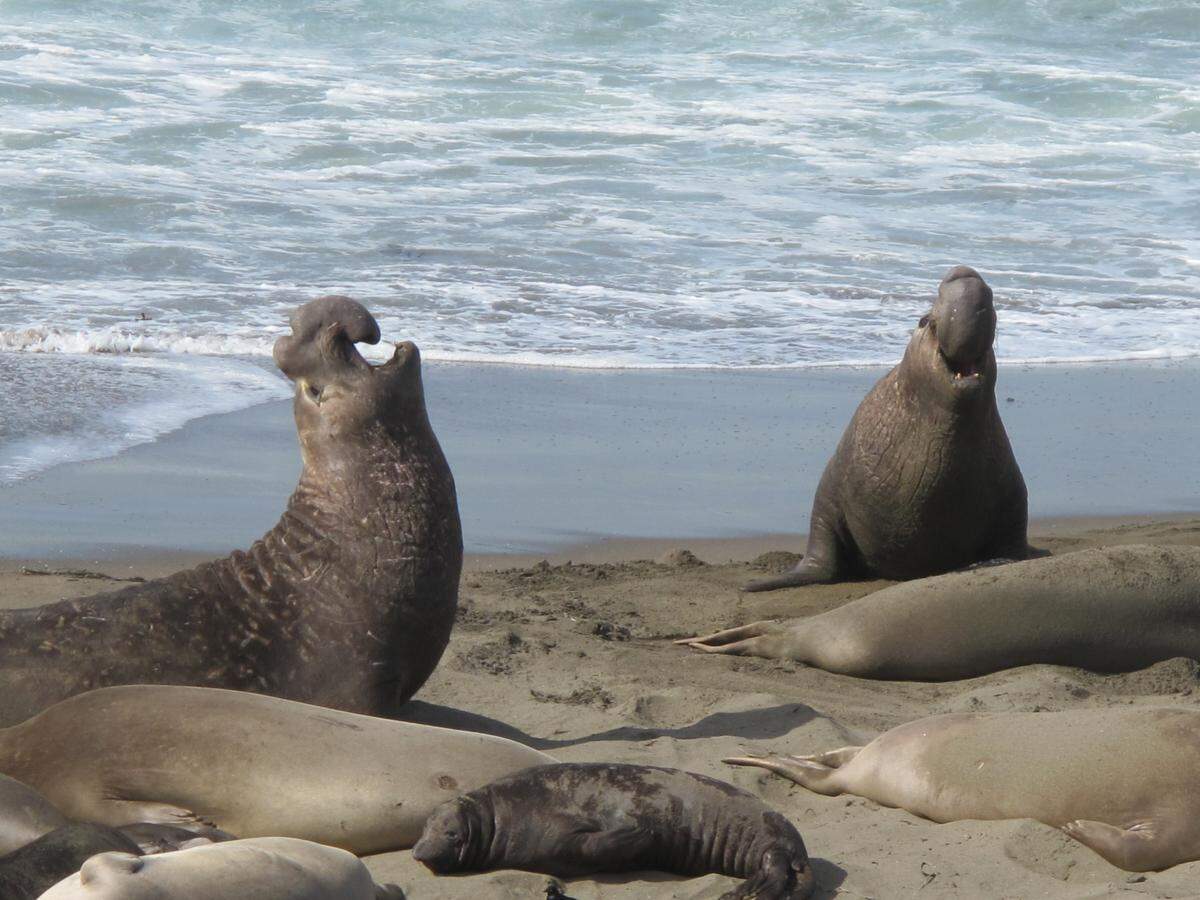
Why do elephant seal bulls fight?
Early arrivals find enough beach to separate them. Some pick fights anyway. You may see seals fighting.
To get breeding rights, males fight for dominance and to defend their harem of females. They arrive looking for a fight, and it only gets worse.
Size is an advantage, but not the only factor. The alpha bull, the beachmaster, is frequently challenged by other bulls. He can lose a battle and be replaced by another tough guy.
Beachmasters are vigilant about chasing other bulls away from the harem, but it’s a constant challenge. All bulls are focused on mating, regardless of their status in the beach social hierarchy. Lower-ranking bulls sneak around the harem and try to mate with females. They sometimes get away with it.
Less dominant bulls who lose battles may leave the beach and take refuge on other, non-breeding beaches. Look for them at San Simeon Cove, along Moonstone Beach, and other quiet, sandy places.
It’s like the old joke: Where does a two-ton seal go? Anywhere he wants.
Females start to arrive in December, with the first pup born around the middle of the month.
More females arrive in January and February, up to around 5,000 at the height of the season. But they aren’t ready to mate until after they’ve nursed that pup for a month or so. They come into estrus, like dogs.
SLO County nonprofit offers Speakers Bureau
If your organization would like to learn more about the seals, Friends of the Elephant Seal offers free speakers.
To arrange a speaker, call the FES office, 805-924-1628 or request a speaker through the website, elephantseal.org/speakers-bureau.
The Speakers Bureau Coordinator will respond and set up a date.