
Elephant seal pups swept away in storms. What does that mean for SLO County rookery?
.jpg "Powerful waves pound the beach at the Piedras Blancas elephant seal rookery north of San Simeon.")
Winter is birth and breeding season for elephant seals on California’s Central Coast.
Weather and king tides always pose risks, but this season’s storms have been particularly damaging.
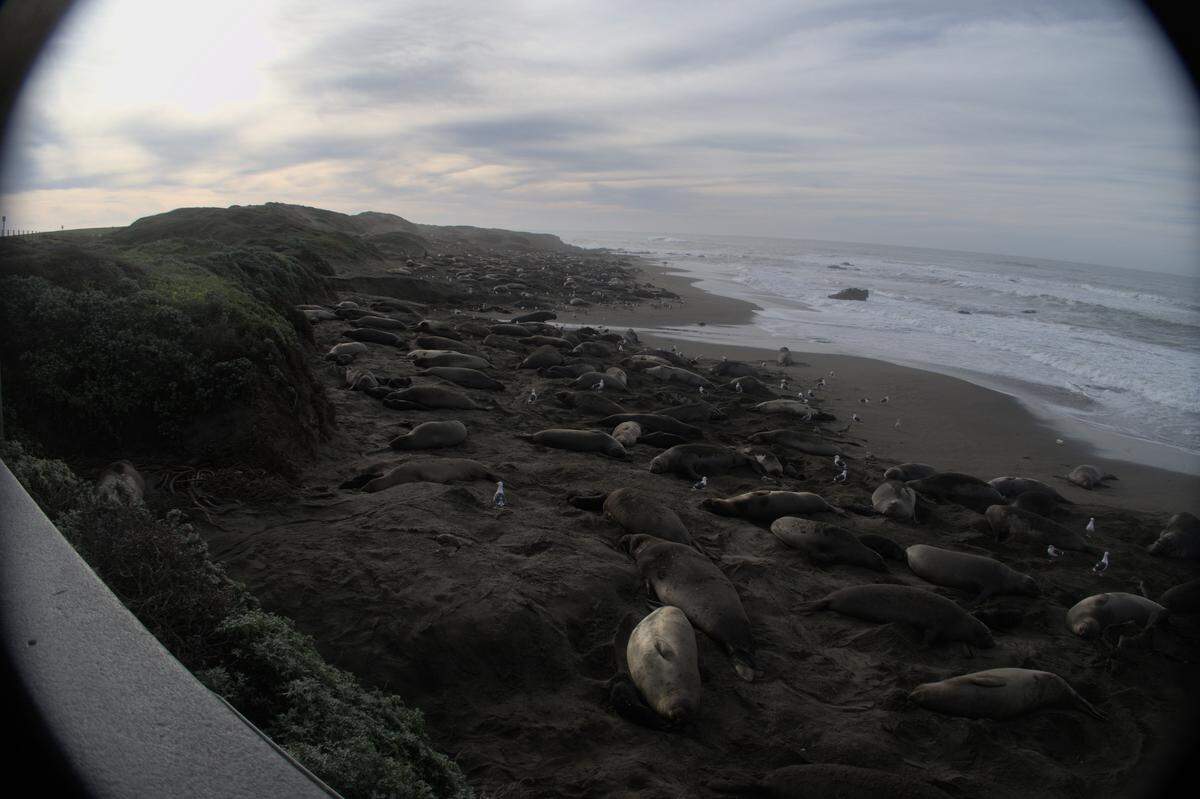
Many seal pups were washed away as waves inundated the entire beach in parts of the Piedras Blancas rookery north of San Simeon.
The elephant seal viewpoint beaches were completely covered by waves during the first set of storms in early January.
Nearly all the pups that had been born on the north beach and many on the south were swept away. Watching them struggle was terrible.
Mothers do their best to help the baby seals, but waves often overtake them.
Jim Mentgen, a Friends of the Elephant Seal docent for four years, watched over the pups for hours over several days.
“I was impressed with how resilient the pups are,” he said. “Even though they were less than a week old, I watched some fight for two or three days against the waves.”
Only two of the seven pups he observed survived, Mentgen said.
Winter is elephant seal birth season
The first week of January is the beginning of the birthing season. A hundred or so seal pups have been born so far at the rookery in northern San Luis Obispo County.
More mothers, eventually more than 5,000, will come to the rookery, from the Piedras Blancas Light Station to a mile south of the viewpoint, to have their pups before the last is born in March.
The waves washed away some of the sand that provided high ground for the seal pups. Less beach is left above high tide line.
At the south end, enough beach is exposed for mothers who have arrived since the first storm to have their pups.
That works until high tides, including king tides, return.
Many mothers have returned to give birth on the beach. They are doing well and their pups are fine. As they nurse and gain weight, they will be better able to overcome high tides later in the month.
Pups need their mothers
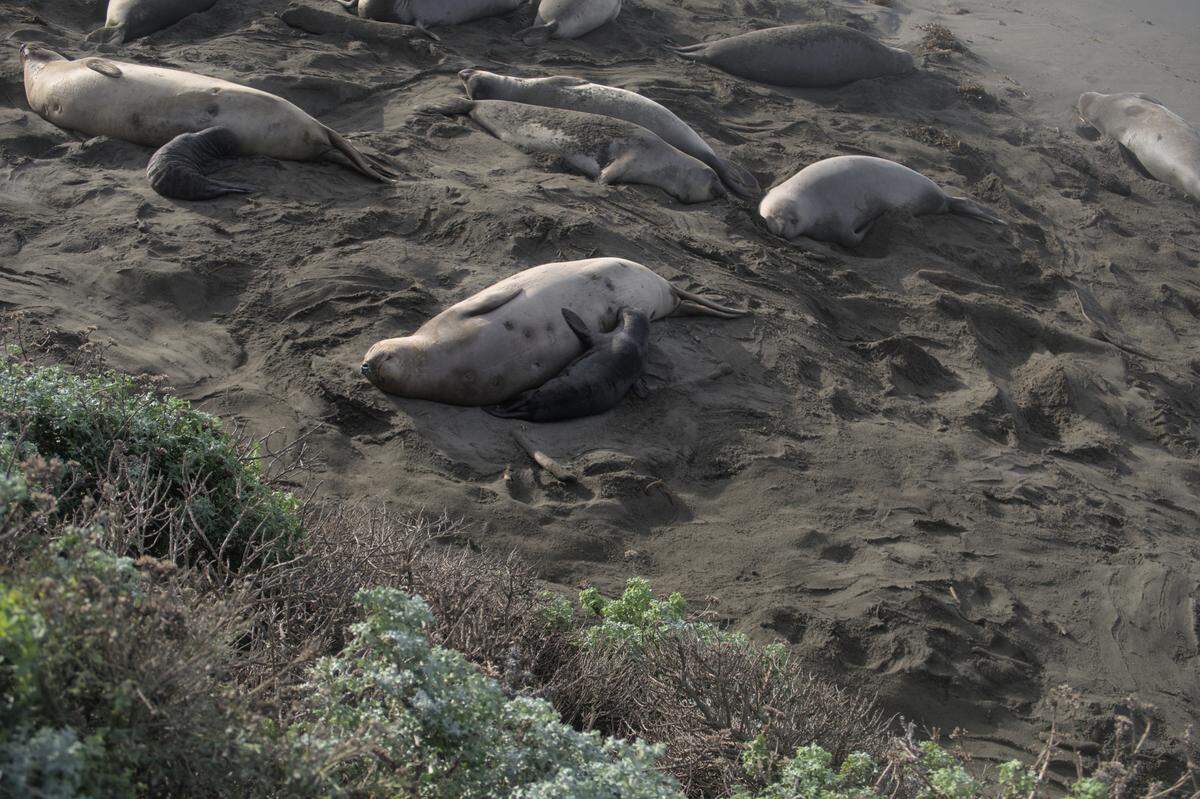
Elephant seal pups have some ability to swim when they are born, but they don’t have enough blubber to stay warm and they aren’t able to feed themselves. They can’t survive in the ocean.
Just being separated from their mothers can be fatal. Maternal pup separation is the most frequent cause of pup death.
However, many mothers tolerate nursing pups other than their own.
More than 80% of pups nurse on mothers other than their own. The mothers who lost their pups may be willing to adopt orphaned pups.
“In my experience, events like these cause a lot of confusion and mixing of mothers and pups,” Patrick Robinson, director of the Ano Nuevo Natural Reserve north of Santa Cruz, wrote in an email.
How will loss of baby seals affect population?
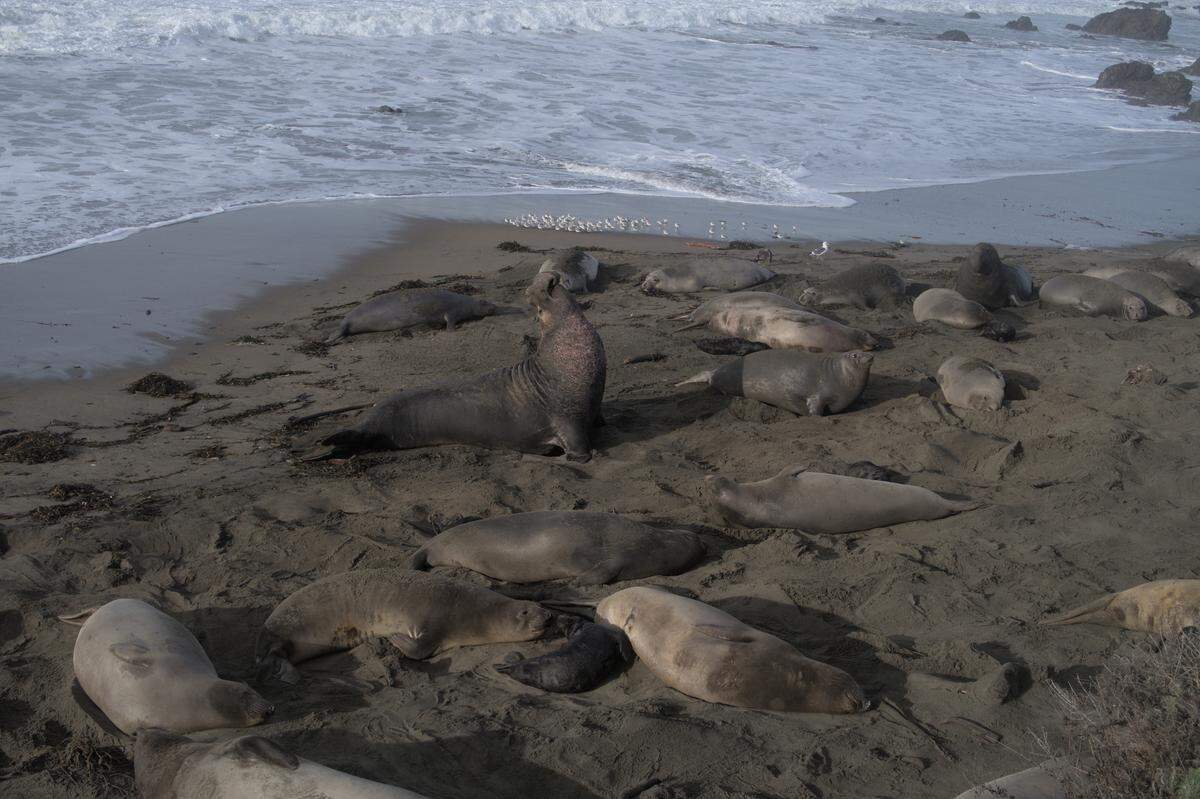
Whether the loss of pups will affect next year’s birth season remains to be seen.
Elephant seal mothers typically come into estrus and mate about a month after their pups are born.
Heather Liwanag, Cal Poly associate professor and principal investigator at the Vertebrate Integrative Physiology lab, expects the bereft mothers to stick around, come into estrus early and mate to get next year’s pups started.
Robinson has observed mothers do that at Ano Nuevo.
“In the past, we have had big swell-tide events with pup loss and the females tend to stay for the duration of the breeding season and mate as usual,” he said.
Liwanag and her Team Ellie survey the seals on the beach regularly and record their data.
“We can estimate losses when we analyze the data at the end of the season,” she said.
Roxanne Beltran, assistant professor of ecology and evolutionary biology at UC Santa Cruz and principal investigator at the Beltran Lab studying the seals, is analyzing data on seal pups’ survival from Ano Nuevo’s history of elephant seals dating back to the 1960s.
“It will take several years to know if this event will cause an appreciable impact on the overall recruitment of the 2023 cohort,” Robinson said.
.jpg "IMG_9276 (1).jpg")
How to watch SLO County elephant seals
You can watch the elephant seals at the Piedras Blancas rookery on the Friends of the Elephant Seal beach cam at elephantseal.org/live-view.
You can also visit the elephant seal viewpoint in person.
Highway 1 is open as far as the viewpoint, but closed past that point due to landslides.