
Young elephant seals are arriving daily at SLO County beaches. Here’s what they’re up to
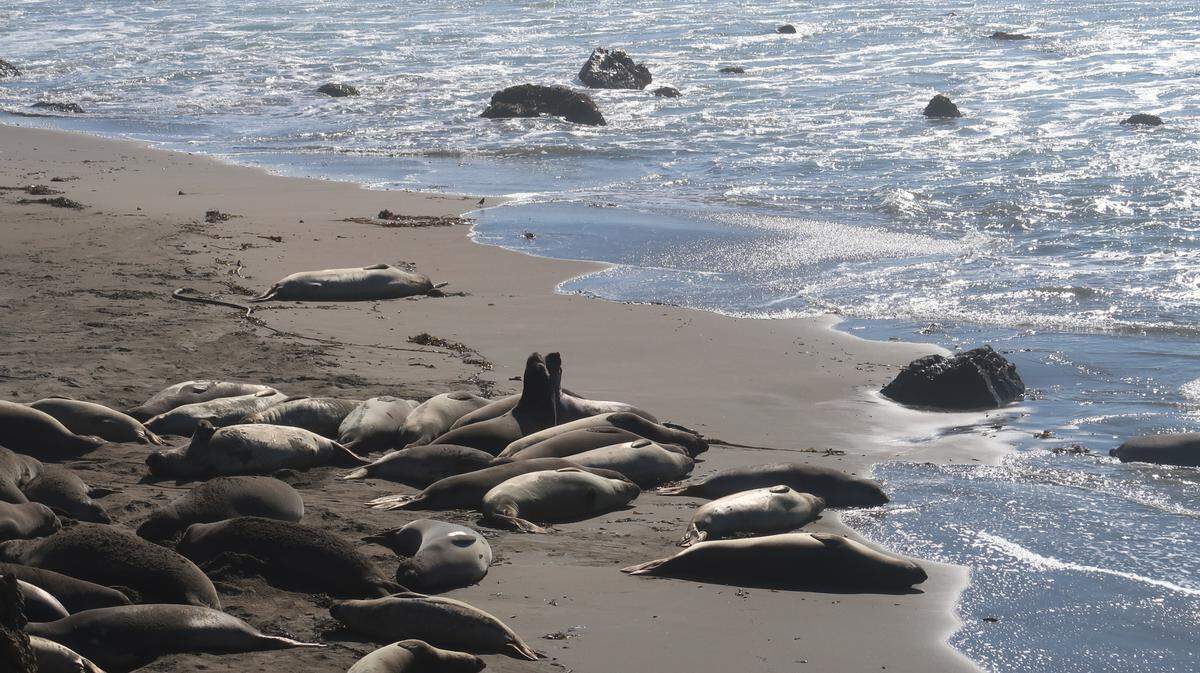
Elephant seals are arriving daily on the beach at the Piedras Blancas rookery north of San Simeon for the fall haul-out.
The seals are young but not yet breeding age.
Most are males. Females mature into breeding age sooner than males, so young females have already joined the adult population.
As quiet as these young seals are at this time of year, their lives aren’t limited to simply resting on the beach. Their modest demeanor conceals their success at surviving the extremes of life.
They are “exceptional, superlative, extremophiles,” researcher Burney Le Boeuf wrote in his book “Elephant Seals: Pushing the Limits on Land and at Sea.”
These seals are resting between their two annual migrations: journeying from April to October, and from November to April.
When they leave San Luis Obispo County beaches in November, they will migrate north and west, feeding and growing. They’ll be back in April, time for their annual molt.
Elephant seals don’t eat during fall retreat
These young seals don’t eat for the four to six weeks they are on the beach during their autumn retreat.
They aren’t starving. Their metabolism switches from converting food into energy and blubber to using that blubber to meet their needs for food and water.
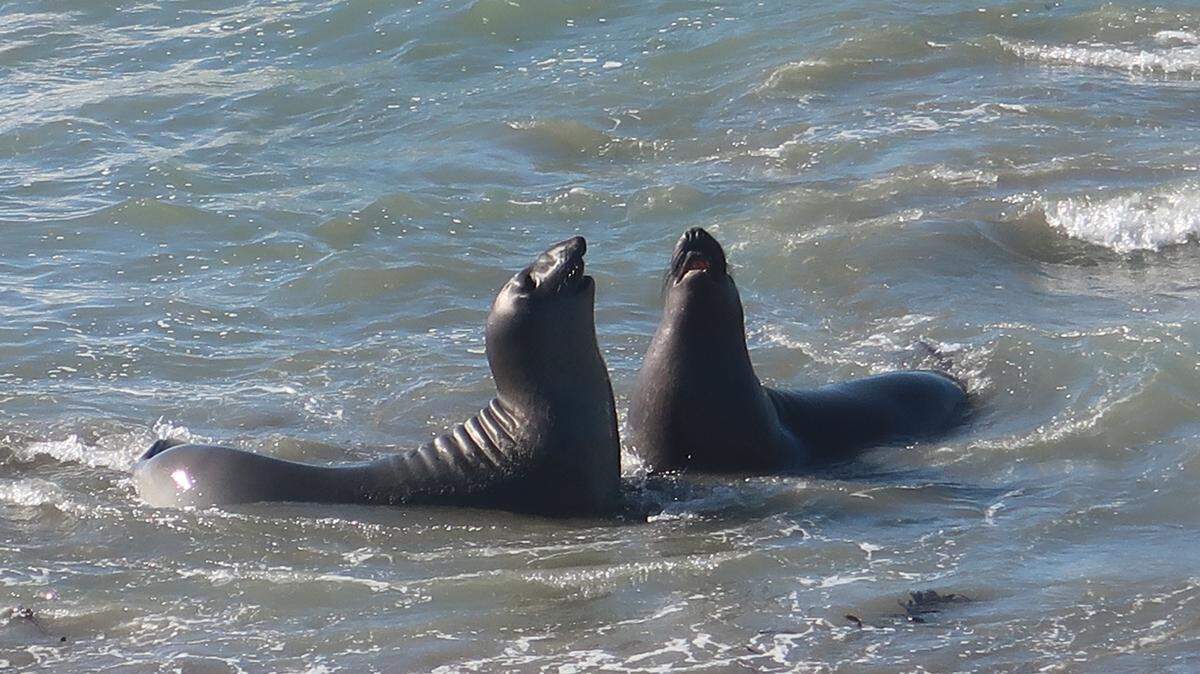
The beach is relatively quiet, stirred occasionally by two young males testing their dominance against each other.
Most of the juveniles will return to the ocean to continue feeding and growing before the adults
take over the beach for breeding season, although some stragglers stay around.
Perhaps the young seals are gaining insight into the adult world they will soon join.
Adult males, known as bulls, begin arriving around Thanksgiving. Pregnant females arrive soon after. The first pups of the season are typically born in mid- to late December.
Juvenile seals are growing into their eventual migration patterns.
Males migrate north along the continental shelf, feeding on the bottom. Females migrate to the open ocean, feeding on small fish in the mesopelagic layer.
Marine mammals spend most of their lives at sea
You may see elephant seals holding their breath even while they are sleeping on land. They are accustomed to holding their breath for 20 to 30 minutes at a time in the ocean.
They spend 90% of their lives at sea, underwater.
When they’re out at sea, they come to the surface only for a minute or two to breathe, then dive down again, plummeting as much as 5,000 feet below the surface.
Truly, these are marine mammal superheroes!
Where to see elephant seals
The best areas for viewing elephant seals are located 90 miles south of Monterey and five miles north of Hearst Castle in San Simeon. They are 1.5 miles south of Point Piedras Blancas.
However, the seals can be seen from other viewpoints.
Walk north along the boardwalk, or park in the north parking lot and walk out along the Boucher Trail. It’s about two miles of easy walk, with several additional places to look down on seals on the beach.
The trail leads to the Piedras Blancas Light Station.
To tour the lighthouse, you have to make a reservation at piedrasblancas.org.
The original light is missing from the top of the lighthouse.
That light and its Fresnel lens are on display in Cambria, next to the Veterans Memorial Hall.
The Lions Club, the U.S. Coast Guard, the U.S. Bureau of Land Management and the Piedras Blancas Light Station Association are working to preserve the lens and its enclosure, which is rusting out and in danger of collapse.
After that is secured, the various groups and agencies will seek a path forward for a better permanent location for the lens.
This story was originally published October 26, 2022 at 5:35 AM.