
Oldest female condor in Central California survives lead poisoning after emergency surgery
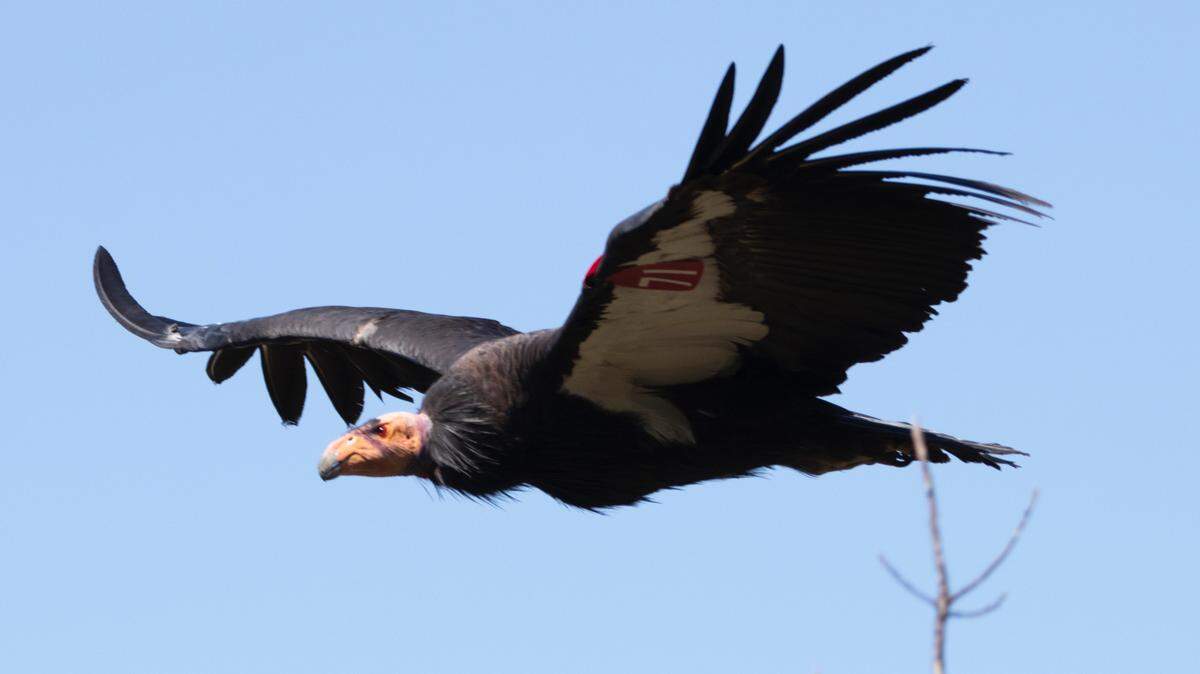
Lead poisoning, the principal threat to the California Condor Recovery program, often results in mortality for these critically endangered birds.
As of Sept. 1, seven condors have perished in the Central California range in 2022.
Necropsy results for two of those deaths show they were due to lead poisoning, as reported by the Ventana Wildlife Society (VWS).
The cause of the other five birds’ deaths is pending, but the number of lead poisoning deaths is expected to increase.
However, some condors, which boast nearly 10-foot wingspans and can soar up to 15,000 feet, have the ability to survive lead poisoning.
Traveler, a 25-year-old Pinnacles National Park bird with 27 biological siblings, is one of the fortunate ones.
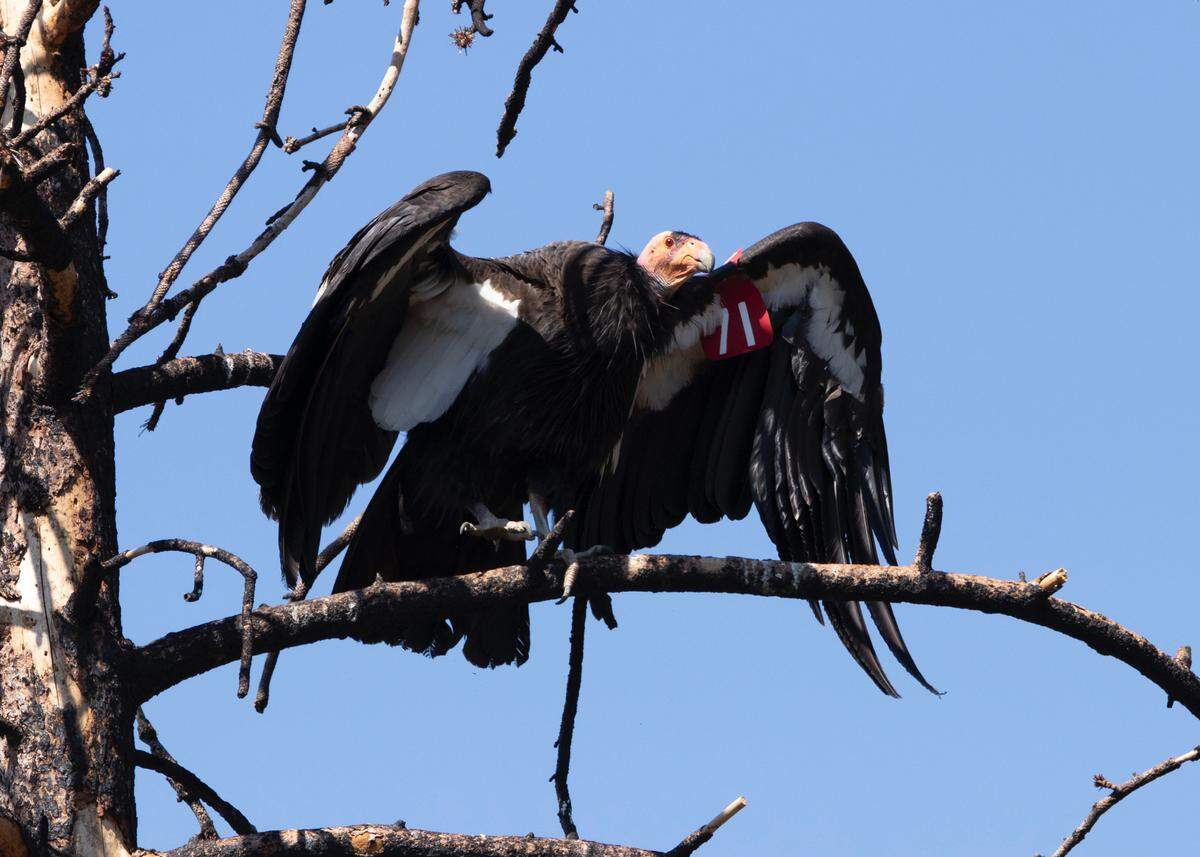
The oldest female in the Central California flock, Traveler has produced chicks with six males.
She ingested lead ammunition fragments while foraging an animal carcass in June.
Condors are scavengers. They feed on carrion for their sustenance.
Traveler was seen “acting irregularly and was captured for an examination,” the VWS said.
Traveler was initially taken to the Oakland Zoo, where it was confirmed that she was suffering from lead poisoning.
She was then flown to the Los Angeles Zoo and underwent emergency surgery to remove lethal fragments from her intestinal tract.
The surgery was successful, and “she made a full recovery,” VWS senior wildlife biologist Joe Burnett said.
After gaining her strength back in July and August, the veterinarians at the zoo gave her clearance to return to the wild.
On Sept. 7, Traveler was released back into the wilderness in Big Sur, near the nesting territory that she shares with her current mate, Shadow (No. 209).
“We are overjoyed to see her return to the wild after such a long bout with lead poisoning,” Burnett explained.
Four juvenile condors arrive in San Simeon
VWS has transported four juvenile condors raised in captivity from the LA Zoo to the large release pen in the rugged mountains above San Simeon.
The newest cohort includes two males (No. 1085 and No. 1087) and two females (No. 1099 and No. 1100).
Each bird is approximately a year and a half old. Condors reach breeding age when they are 6 to 8 years of age.
After spending six to eight weeks in the release pen to acclimate to their new surroundings, the juveniles will be released in November – joining the 88 condors living in the Central California region.
VWS chose the mountains above San Simeon as a release site with the hope that, as these condors mature, they will mate and return to San Luis Obispo County.
Condors do not build nests.
Rather, “they select nest sites in high cavities of redwood trees … or in caves, crevices or ledges on cliff faces or rocky slopes,” the VWS explains on its website.
Those conditions are found in the San Simeon mountains.
To view the four juvenile condors, check out the live San Simeon Condor Cam at ventanaws.org/condor_cam.html.
This story was originally published September 12, 2022 at 5:05 AM.