9 Central Coast mayors send letter to Gov. Newsom about Diablo Canyon power plant’s future
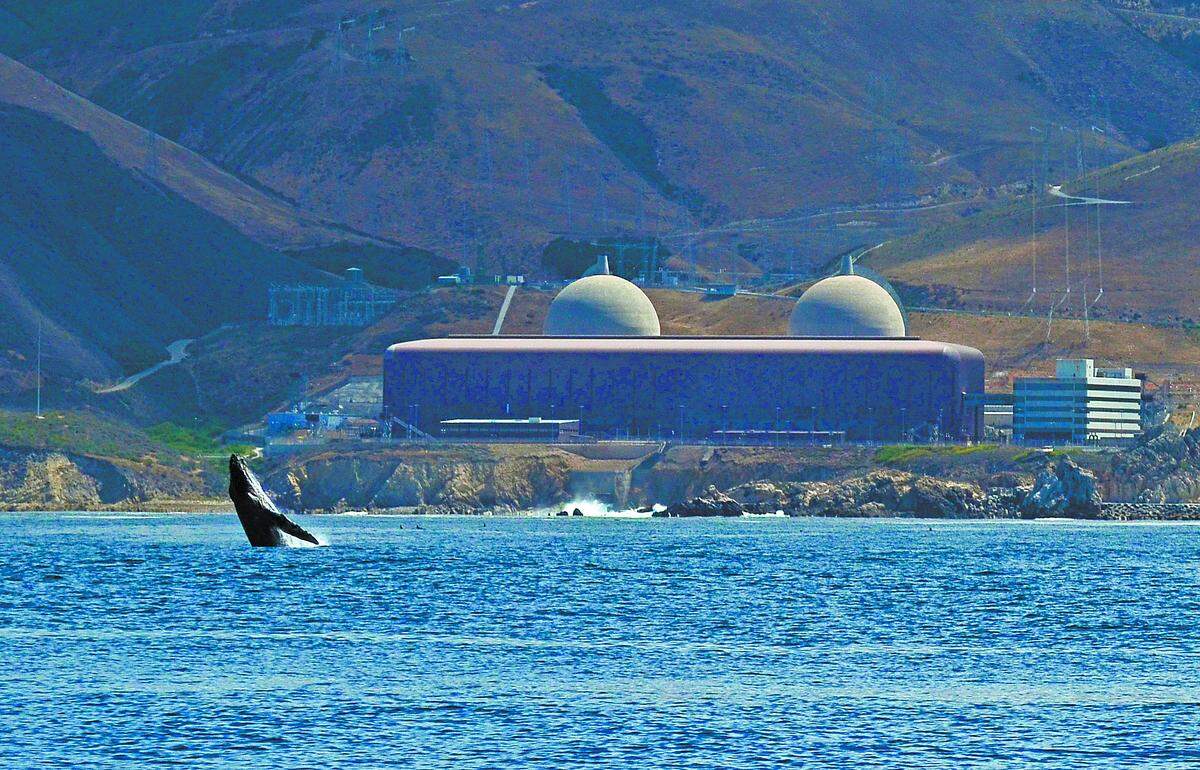
Nine Central Coast city mayors are sharing their priorities and concerns as talks to extend the life of Diablo Canyon nuclear power plant gain momentum.
The mayors — Caren Ray Russom from Arroyo Grande, Heather Moreno from Atascadero, Jeff Lee from Grover Beach, Jenelle Osborne from Lompoc, John Headding from Morro Bay, Ed Waage from Pismo Beach, Steve Martin from Paso Robles, Erica Stewart from San Luis Obispo and Alice Patino from Santa Maria — wrote a letter to California Gov. Gavin Newsom on Monday.
The letter lays out the cities’ requests should the power plant in San Luis Obispo County continue to operate past its closure date.
Diablo Canyon has been slated to shut down its two nuclear reactors in 2024 and 2025 since a 2016 decision by PG&E. That decision resulted in a 2018 settlement of $85 million to the surrounding communities and school districts to offset property tax losses and fund economic development efforts.
But in recent months, that planned closure of the plant, which generates about 8.6% of the state’s total electricity supply, has been thrown up in the air.
Procurement of enough clean, renewable energy to account for the impending 2,200 megawatt loss at Diablo Canyon, plus other retiring power plants and energy sources impacted by climate change, was never fully realized. Now, the state faces potential gaps in the reliability of its electricity grid as Diablo Canyon chugs forward on the decommissioning path.
Gov. Newsom has proposed allocating up to $1.4 billion for a forgivable loan to PG&E to keep Diablo Canyon running another five to 10 years past its scheduled closure date. A subsequent proposal drafted by members of the California State Assembly mulls ideas to close Diablo Canyon by 2025 and instead allocate $1.4 billion in programs and funding to bolster and speed up clean-energy procurement, generation and transmission in the state.
Monday’s letter from the city mayors doesn’t say whether the cities would prefer the plant to close as scheduled or remain operational.
Instead, it lays out nine requests for the state to include in any legislation should a bill to extend the life of Diablo Canyon advance.
First, the letter makes clear that safety is “the number one priority of the cities.” It requests that the entities regulating the safety of the plan continue to operate as long as the plant is running.
The letter continues on to request that any extension of the plant’s life be as short as possible and that renewable energy be procured aggressively to ensure the state has enough electricity without Diablo Canyon.
“It is not in the best interest of the people to extend operations for 5-10 years to then realize that the state needs more time and have to go through this process again,” the letter reads.
The letter also calls for the state to invest in renewable energy on the Central Coast.
“Efforts to extend the life of (Diablo Canyon) should not hinder future investments in renewable energy or other projects in the Central Coast region that could help California and local communities in a post-(Diablo Canyon) future,” the letter states. “These opportunities include our Clean Tech Innovation Park Concept with Cal Poly as well as the development of offshore wind in the Morro Bay Wind Energy Area.”
The letter also notes that the future of “Parcel P,” or the parcel with the power plant, and the 12,000 acres of nearly pristine land surrounding the plant be carefully planned and preserved for the beneficial use of the local communities in alignment with state priorities.
The letter points out that the draft legislation floated by Newsom’s office “is silent on the previous payments made to local governments under the provisions of (Senate bill) 1090,” which laid out the $85 million settlement in 2018.
“While the cities appreciate that the draft language does not contain any claw-back provisions, explicit language stating that the (California Public Utilities Commission) shall not attempt to claw back funds that were sent to local governments as a result of SB 1090 is necessary to offer certainty to the cities moving forward,” the letter states.
It notes that some of those 2018 settlement funds have been spent already in preparation for the 2025 closure date.
“Those funds previously allocated will be insufficient if (Diablo Canyon’s) operations are extended beyond 2025 as the work done planning for a 2025 closure will be obsolete in 2035,” the letter states. “Should (Diablo Canyon) be extended, we would suggest that the issues of compensating cities be reopened to provide the necessary funding for the future.”
The letter also says the state and federal government must find a safe solution for the long-term storage of spent nuclear fuel that is currently being stored at the power plant.
The mayors are careful to note that their letter does not reflect the full “consideration and input” of the cities they represent, nor their city councils.
The legislative session ends on Aug. 31. Should the state wish to extend the operating life of Diablo Canyon, legislation would likely need to be passed before then.
“PG&E is committed to California’s clean energy future, and as a regulated utility, we are required to follow the energy policies of the state,” spokesperson Suzanne Hosn wrote in an emailed statement. “We understand state leaders’ discussions to potentially extend operations at (Diablo Canyon) are progressing. We are proud of the role that (Diablo Canyon) plays in our state, and we stand ready to support should there be a change in state policy, to help ensure grid reliability for our customers and all Californians at the lowest possible cost.”
This story was originally published August 23, 2022 at 11:58 AM.