
It’s a good time to spot bull elephant seals in SLO County. Here’s how to identify them
August is a good time to look closely at elephant seal bulls at the Piedras Blancas rookery north of San Simeon.
They have conveniently placed themselves near the visitor entrance at the north end of the parking lot.
A few juveniles are there for their annual rest before the adults take over the beach for the winter breeding season.
The smallest seals at the San Luis Obispo County beaches are the young of the year, last winter’s pups.
Only about half survive their first migration, so every young seal who is on the beach has already passed a major hurdle on the way to adulthood. They still look perfect, their skin smooth and unscarred.
How to identify a bull elephant seal
Young male and female elephant seals look very much alike. Around age 5, males begin getting bigger than females.
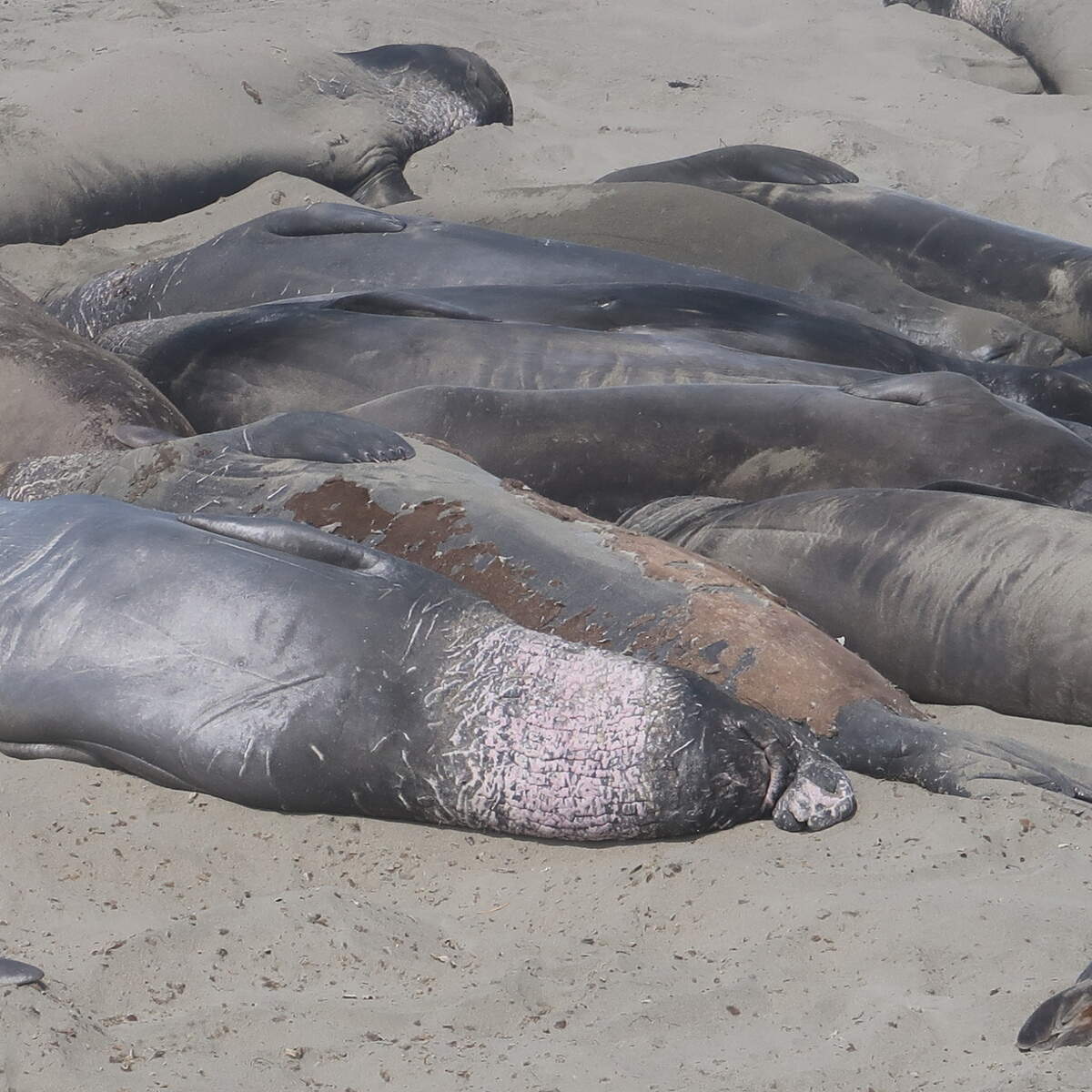
Only male elephant seals grow a trunk-like nose, technically a proboscis. It starts growing when the seal is about 5 years old, and continues to enlarge throughout its life.
Nose size is a relative indicator of age.
The other visible indicator that a seal is male is the chest shield, the pink skin on that blubbery chest. It starts as a roughness or puckering of the skin and grows along with the nose.
Fully mature bulls have a chest shield that is level with their eyes. Now, that’s a beachmaster!
The adult bulls will leave the beach soon, to continue feeding and gaining blubber. They need to be at their physical peak for the breeding season.
They will return in November and December for about 100 days.
What is countershading?
Several visitors to the elephant seal rookery have asked about the light-colored bellies on seals sleeping on their backs.
It’s called countershading, and it’s a common ocean camouflage.
Predators swimming below the seals see the light bellies blending with the bright surface above. Those swimming above the marine mammals see their dark backs blending into the depths of the ocean.
What’s up with elephant seal poop?
Several recent visitors were vitally interested in elephant seal poop.
Seals rarely poop on the beach, thank goodness. The smell would be overwhelming.
As the seals leave their foraging grounds up north to return to the beach, they eat only prey that
happens into their path. They poop out most of what they’ve digested along the way.
What’s left is the remains of red blood cells being recycled during that fast. The result is bright orange liquid poop.
I’ve occasionally observed seals poop out an orange cloud just before they surf out onto the sand.
Young seals arrive ahead of migration
Some of the small seals are juveniles; they are 2 or 3 years old.
They are the early arrivals for the fall haul-out, and will experience six weeks or so of rest before leaving the beach again.
The young seals migrate along the same routes as their elders, although they don’t go as far as the other adults until their third or fourth migration.
They are diving and feeding almost constantly, more than 20 hours a day.
They arrive and depart individually, so young seals will be on the beach through the end of November and perhaps beyond.