Nesting herons, egrets and cormorants are flocking to Morro Bay. Here’s a look
By David Middlecamp
Morro Bay is always a great spot for bird-watching, and now’s as good a time as any.
That’s because five varieties of birds are nesting and raising young in the rookery along the shores of the bay, located north of the Natural History Museum.
The birds include great blue herons, great egrets, double-crested cormorants, snowy egrets and black-crowned night herons, who are building nests, laying eggs and raising their chicks.
“We came to Morro Bay so we could come to this rookery,” said birdwatcher Gary Blasingame of Redding. “Seeing so many at one time is just amazing. Just a ton of these egrets. It’s pretty cool to see them with the young ones in the nest.”
While the city is known for its Winter Bird Festival, May through July are actually the prime bird-watching months.
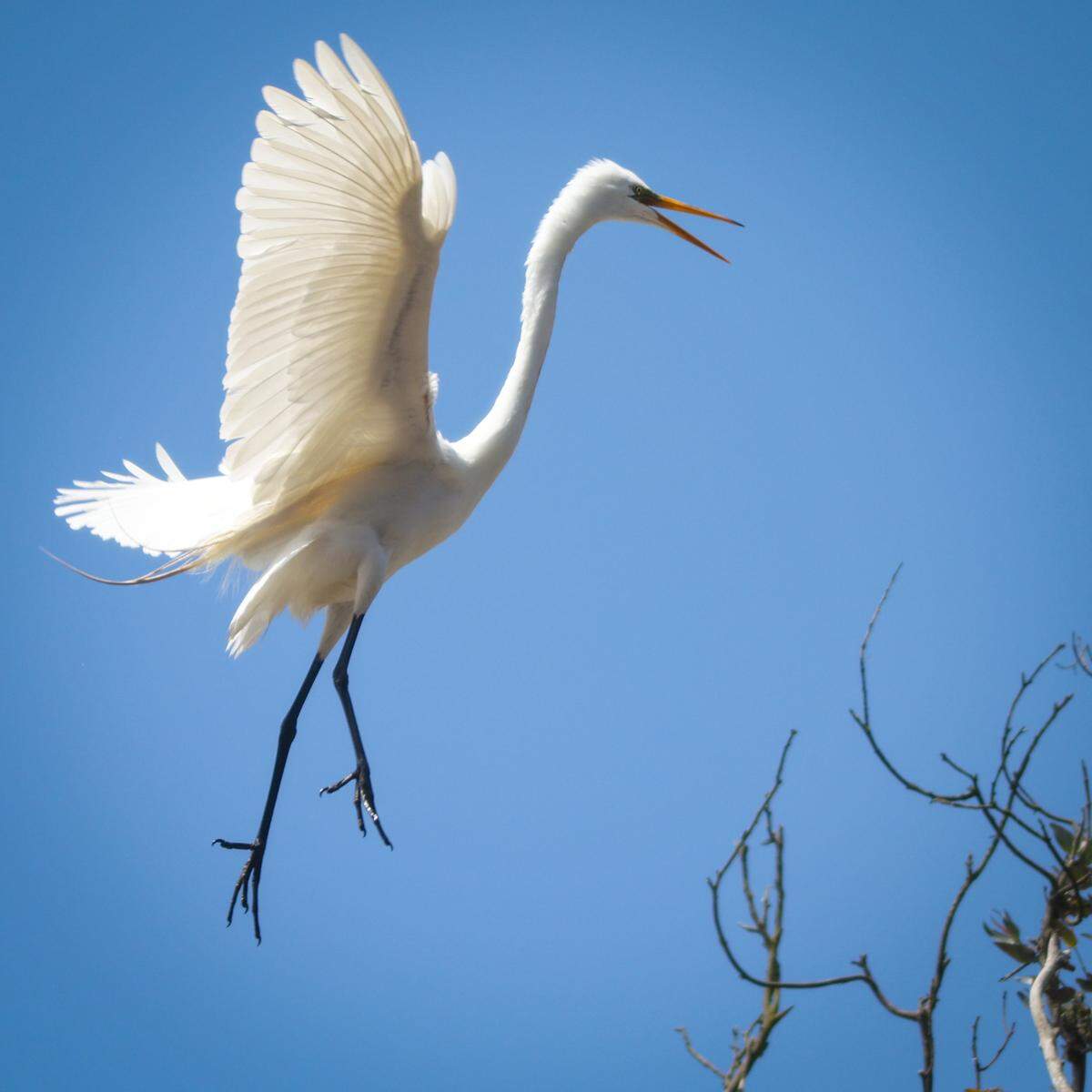
A great egret shows maneuverability as it lands in a treetop on June 15, 2022 in the rookery near the Morro Bay Natural History Museum. Five varieties of birds are nesting in the area, including great blue herons, great egrets, double-crested cormorants, snowy egrets and black-crowned night herons. David Middlecamp dmiddlecamp@thetribunenews.com
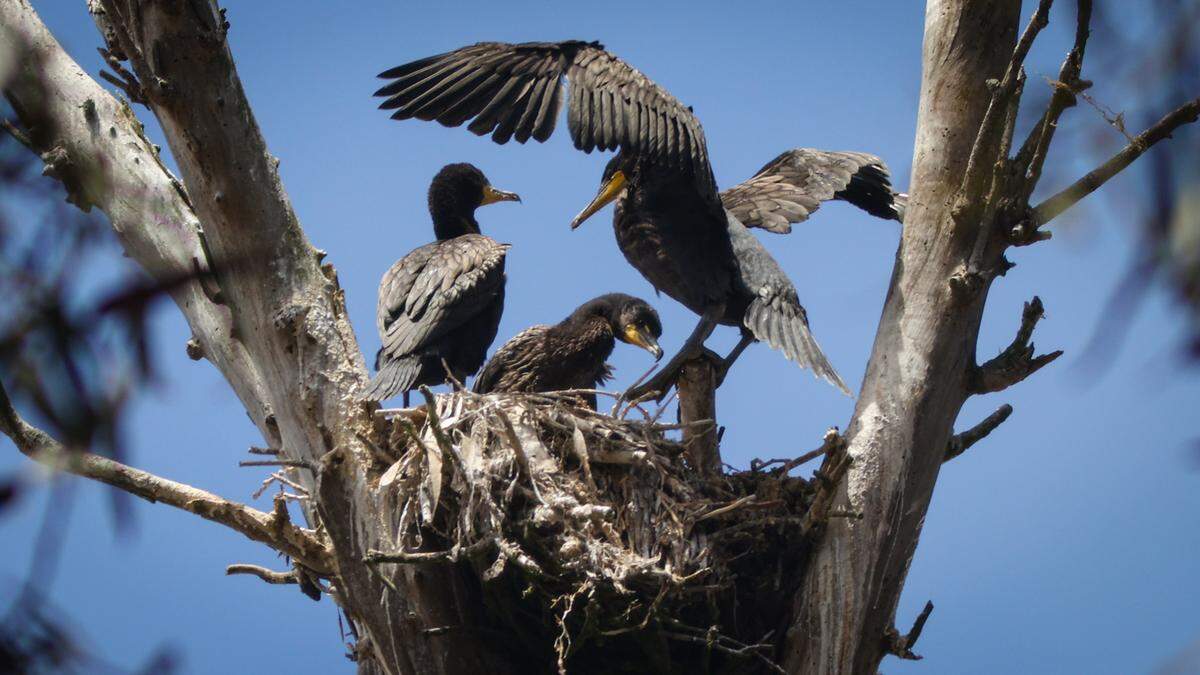
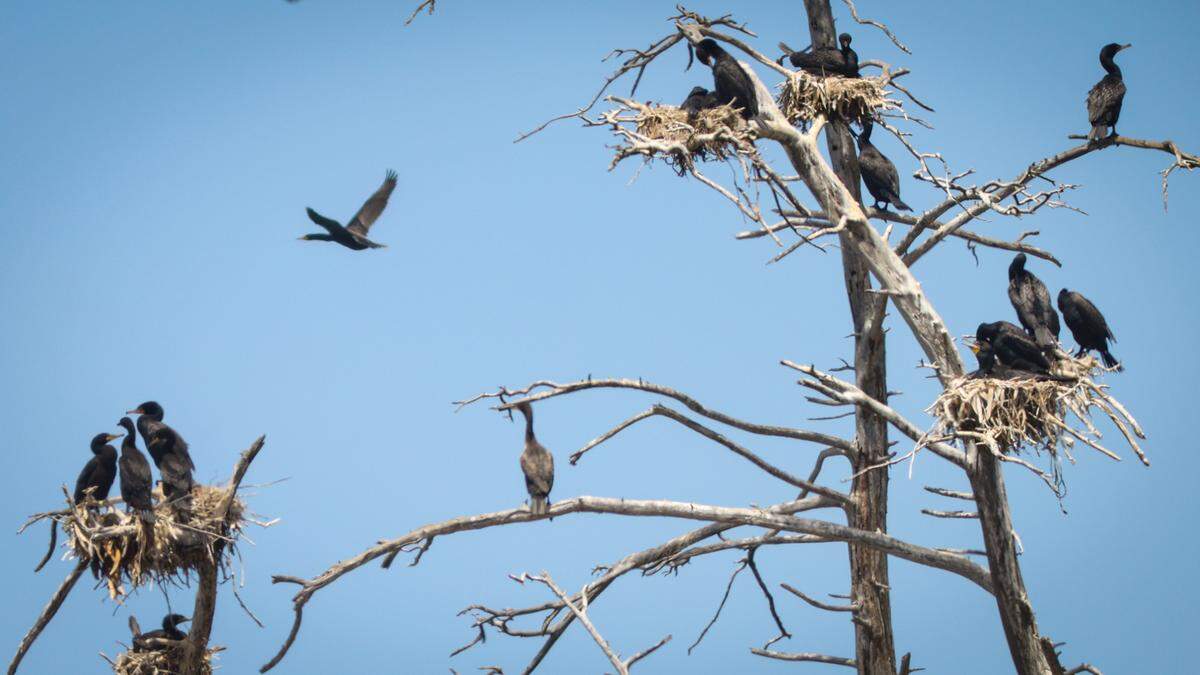
Cormorants nest in a eucalyptus snag on June 15, 2022, in the rookery near the Morro Bay Natural History Museum. Five varieties of birds are nesting in the area, including great blue herons, great egrets, double-crested cormorants, snowy egrets and black-crowned night herons. David Middlecamp dmiddlecamp@thetribunenews.com
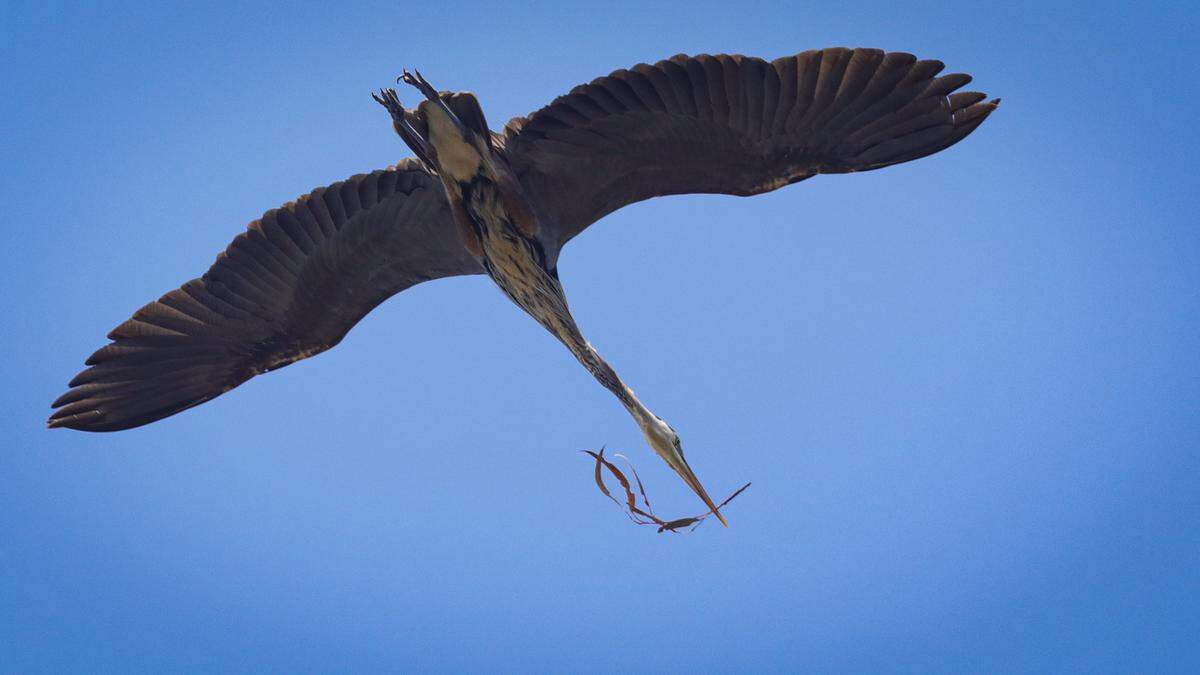
A greatblue eeron brings a nest-building branch home on June 15, 2022, to the rookery near the Morro Bay Natural History Museum. Five varieties of birds are nesting in the area, including great blue herons, great egrets, double-crested cormorants, snowy egrets and black-crowned night herons. David Middlecamp dmiddlecamp@thetribunenews.com
Cormorants nest in eucalyptus snags on June 15, 2022 in the rookery near the Morro Bay Natural History Museum. Five different varieties of birds are nesting and raising young in the area, including great blue herons, great egrets, double-crested cormorants, snowy egrets and black-crowned night herons. David Middlecamp dmiddlecamp@thetribunenews.com