Coastal Commission greenlights surveys for Morro Bay offshore wind energy development
The California Coastal Commission is allowing the proposed Morro Bay wind energy development a path forward.
In a unanimous vote on Wednesday, commissioners accepted a staff report that laid out certain conditions the federal Bureau of Ocean Energy Management (BOEM) must follow as it allows wind energy developers to survey the Morro Bay site for potential construction of floating wind turbines.
This means that the Coastal Commission determined those survey activities are consistent with the California Coastal Act, the law the commission is charged with upholding. The law mandates the protection of coastal resources and “the economic, commercial and recreational importance of fishing activities,” among other things.
Site assessment activities may include the placement of ocean buoys with data collection equipment and an expected 873 boat trips in the wind energy area over three years, according to the Coastal Commission.
The vote signified a major step forward for the offshore wind energy development because the Coastal Commission is one of the only state agencies that has a say in activities that take place in federal waters — which begin three miles from shore and stretch out to 200 miles.
The Coastal Commission’s so-called “consistency determination” approving the site assessment activities to take place in the Morro Bay wind energy area is just one of two formal votes the state agency will take during the offshore wind process.
The agency will also determine if developers’ construction and operations plans for their proposed floating wind farms are consistent with the Coastal Act, although those plans aren’t expected to be submitted until up to a few years after the lease sale happens this fall.
Commissioners unanimously voted on April 7 to approve a similar consistency determination with conditions for site assessment activities in the Humboldt offshore wind energy area near Eureka.
During Wednesday’s meeting, commissioners expressed broad support for the offshore wind energy development proposal.
“California is a leader in the renewable energy field but we’re also a leader in the protection of our coastal resources, including all the life associated with it,” Commission Chair Donne Brownsey said during the meeting. “I really feel like, in this particular instance, because of the deep collaboration between the state partners and our federal partners, we have done a good job of at least identifying the preliminary roadmap for the framework for moving forward with these projects.”
The commissioners raised several concerns with the proposed development — primarily concerning the protection of marine species and important stakeholder engagement and collaboration.
Top of mind were the potential effects the offshore wind energy site assessment and eventual construction of wind turbines could have on wildlife in the area.
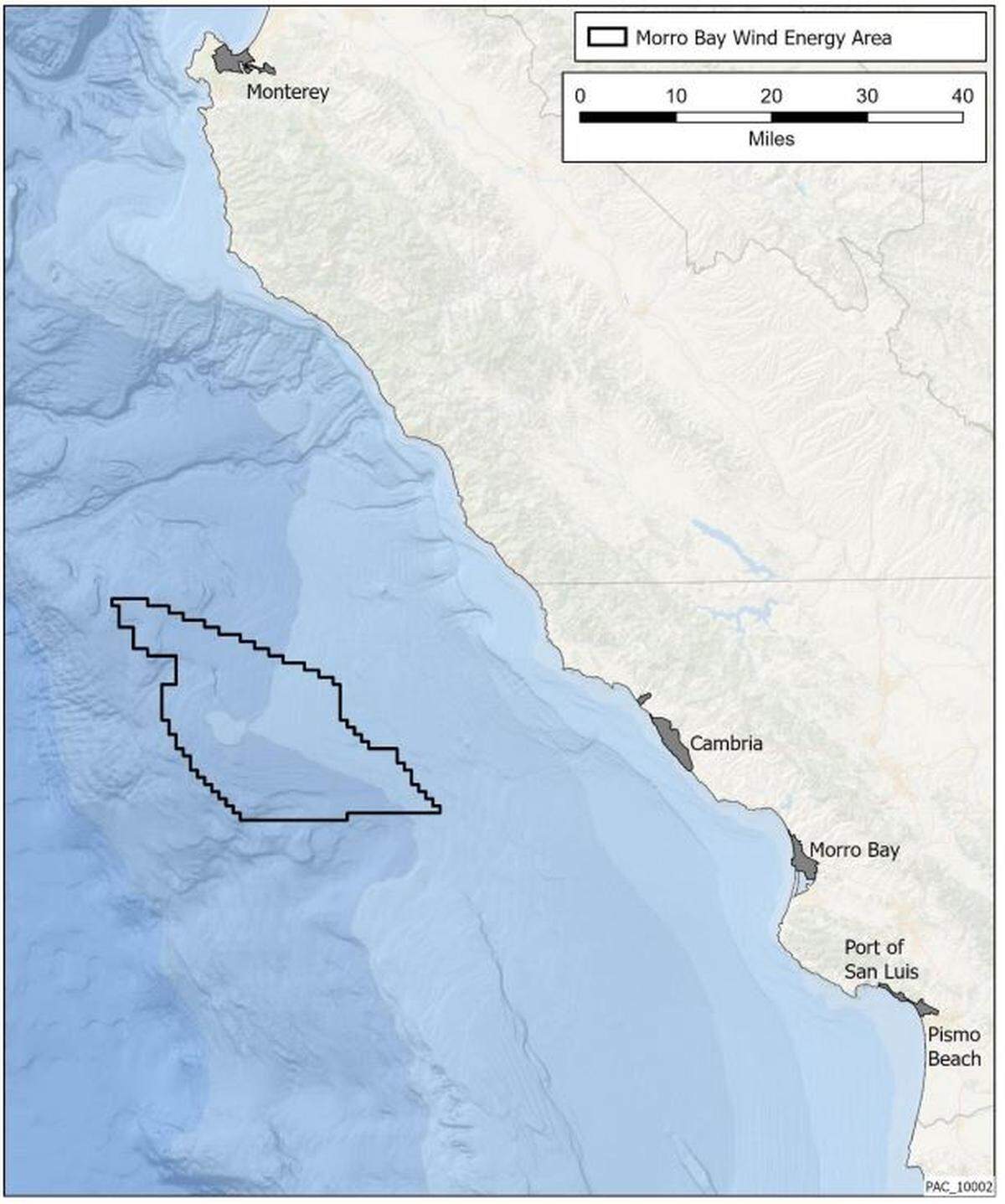
Commission staff noted that the Morro Bay wind energy area sits over important habitats for groundfish, deep-sea corals and sponges, elephant seals, whales, dolphins and leatherback sea turtles. The area also encompasses a section of sea floor that is variable, rocky and potentially sensitive to any contact such as anchors, which the commission staff addressed in their report.
Additionally, there were concerns that BOEM would not take to heart its requirements to engage with local and affected communities.
What are conditions for offshore wind energy development surveys?
To address the various concerns, the Coastal Commission staff’s report — which was adopted in the commission’s Wednesday vote — includes seven conditions that BOEM must adhere to when it allows the site surveys for the offshore wind energy area.
First, BOEM must ensure that any site assessment plans are coordinated with Coastal Commission staff. This first condition essentially guarantees the state will be closely involved with the leasing process to ensure coastal resources are protected.
Secondly, the Coastal Commission requests that no contact with the ocean floor will be allowed during the site assessment activities. Plus, the staff report says that a “buffer” must be included “that fully protects these habitats from bottom contact, including but not limited to anchoring, mooring and sediment sampling.”
In addition, BOEM must require the ocean vessels that will conduct the site assessment activities to travel at speeds of no more than 10 knots to minimize the risk of ships running into marine animals.
The Coastal Commission is also requiring BOEM to work with the U.S. Coast Guard, National Oceanic and Atmospheric Administration and fishing and maritime industries to make sure the companies conducting the site assessments travel safely. This may entail the designation of transit corridors, the Coastal Commission staff’s report notes.
BOEM will require lessees to make “reasonable efforts to conduct outreach with local affected communities,” the staff report says. “This engagement should be coordinated to the maximum extent practicable with other lessees in the region to reduce the burden on communities.”
BOEM must do the same with all federally and non-federally recognized California Native American tribes that could be affected by any future development associated with a lease. The lessees are encouraged to engage with tribes on other “topics of interest,” which may include “the potential to strengthen energy infrastructure on tribal lands and development of tribal economic enterprise related to offshore wind,” according to the staff report.
Finally, BOEM is required to ensure lessees have an independent fisheries liaison to communicate with all their plans and activities. The lessees must submit reports of any fishing-industry-related engagement to BOEM and the Coastal Commission, according to the staff report.
That condition also requires the creation of a “working group consisting of fishing organizations and representatives from different regions/ports of the state, representing different fisheries and gear types, and in both the commercial and recreational sectors,” as well as the lessees, state and federal agencies involved in the offshore wind energy development process.
Site survey conditions reflect concerns about wind energy development
The conditions that the Coastal Commission has laid out for BOEM to follow as it moves toward a lease sale in the fall reflect the specific needs and wants from the state regarding this potential massive ocean development — and how it differs from others conducted around the country.
In offshore wind energy lease sales conducted on the East Coast, BOEM added so-called “bidding credits” for bidders who show they would create workforce training programs or a domestic supply chain for the proposed wind energy development.
In addition to the usual bidding credit, which allows developers to take 20% off of their winning bid prices, the proposed lease sale notice released on May 26 for the Morro Bay and Humboldt wind energy areas allows lessees to take a brand-new 2.5% bidding credit. It encourages lessees to create a “community benefit agreement” that would ensure stakeholder engagement and compensation to those who use the ocean space.
In total, developers could save 22.5% off their winning bids.
The Coastal Commission’s vote makes it clear that stakeholder engagement and protection of ocean resources are key as the federal government pursues the floating offshore wind energy development.
On the point of stakeholder engagement, Commissioner Effie Turnbull-Sanders called for strengthening the language of the conditions that ensure lessees engage with affected communities and tribes.
“We have a history in California of not always doing best by certain communities, communities that have been historically marginalized and have not been given opportunities because of legal restrictions that prevented them from doing business and having opportunities to share in the economic prosperity of the state,” Turnbull-Sanders said.
However, commission staff noted that BOEM would only agree to the language in the consistency determination that requires lessees to make “reasonable efforts” to conduct outreach outlined in those conditions.
Other commissioners spoke about the need to protect marine species while pursuing offshore wind energy development. They noted that the human-caused climate crisis has already been detrimental to many of these species, so development, even clean energy development, in the ocean must be undertaken carefully.
“Yes, it’s important that we move forward in an accelerated way to transition to renewable sources of energy,” Commissioner Kristina Kunkel said. “But ... not at the cost of biodiversity. I very much look forward to seeing more rigorous conditions when it comes to protection (and) conservation of habitats and biodiversity.”
This story was originally published June 9, 2022 at 10:00 AM.