Monarch butterflies enjoy ‘fantastic’ rebound in California. Here’s how many were counted
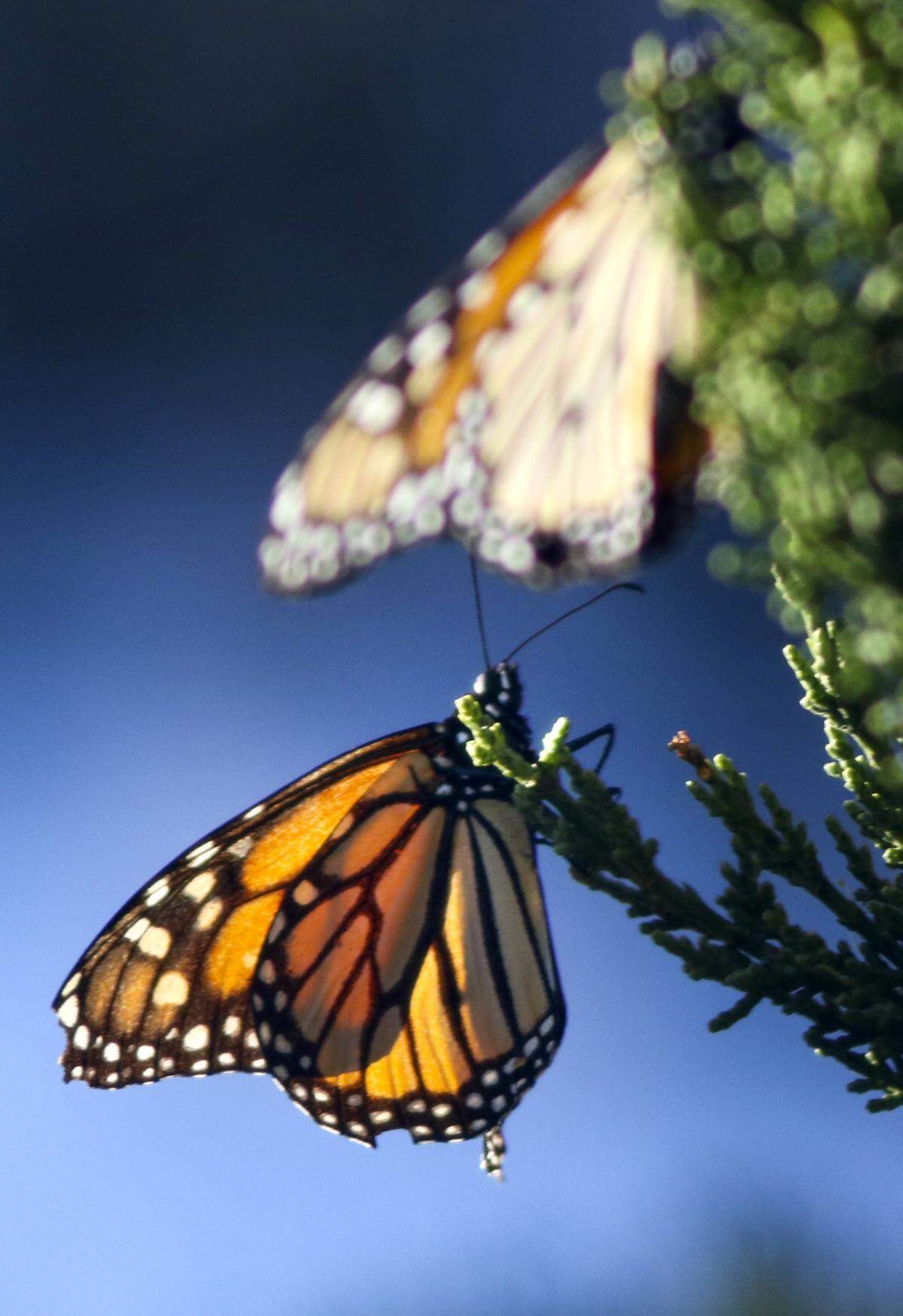
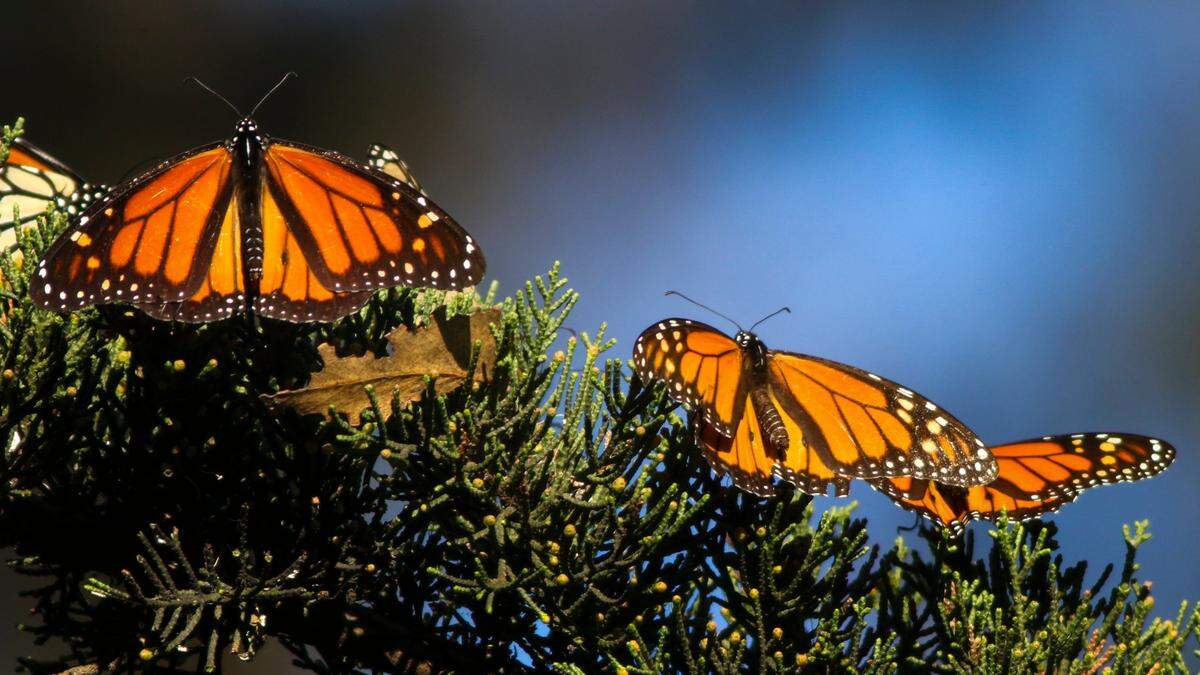
It was a bounce-back year for the famed western monarch butterfly species that spends its winters in groves around California, with volunteers recording a more than 100-fold increase from the dismal tally in 2020.
A total of 247,237 of the black-and-orange-striped insects were counted overwintering by more than 100 volunteers in the state during the Xerces Society for Invertebrate Conservation’s 2021 Thanksgiving count.
That’s a dramatic improvement from the year before, when fewer than 2,000 monarchs were counted in California.
A total of 283 overwintering sites were surveyed during the Thanksgiving count thanks to a record-high volunteer effort. Of those sites, the Pismo Beach Monarch Butterfly Grove was home to the second-largest population in the state.
Santa Barbara County hosted the most butterflies this year at more than 95,000 counted by Xerces volunteers, with more than 25,000 counted at a site on private property.
San Luis Obispo County came in a close second, with more than 90,000 monarchs tallied — 20,871 of which were counted at the Pismo Beach grove.
The massive increase in the overwintering monarch population gives scientists and researchers joy and hope that the important pollinator species may recover from near extinction.
“It’s been really fantastic to see these numbers, especially given the last couple years just feeling really like we were in a crisis,” said Emma Pelton, a senior endangered species conservation biologist for the nonprofit Xerces Society. Pelton was pleased to see them “bounce up to a level that still is not that impressive compared to five years ago — we’re just getting back to a baseline that was already pretty low — but we’re no longer so close to zero.”
Volunteers in the count noted a few interesting shifts in where monarchs were recorded this year. For example, the San Francisco Bay Area typically sees a significant overwintering population, but this year fewer than 600 butterflies were counted at sites from Mendocino to San Mateo counties.
And more monarchs were found starting near Santa Cruz, with more than 1,000 at both Natural Bridges State Park and Moran Lake.
In Monterey County, the city of Pacific Grove saw a massive increase in overwintering monarchs as about 14,000 were counted in a local sanctuary, up from zero the year before.
Ventura County saw nearly 19,500, and Los Angeles County tallied more than 4,000 butterflies at overwintering sites — numbers not seen since the early 2000s.
Tips from the public resulted in the discovery of five new overwintering locations in San Luis Obispo and Los Angeles counties, totaling more than 7,000 butterflies.
“I am super excited to see the numbers are up this year, it just invigorates us,” said Cheryl Schultz of Washington State University. “I’m excited and I hope that we can continue doing conservation work to keep it going in the right direction.”
Monarch butterfly population declined as species denied federal protection
The rise in monarchs counted this year is significant, according to data from the Xerces Society.
During the 2020 annual Thanksgiving tally of the monarchs organized by the Xerces Society, just 1,899 were counted statewide — down from nearly 300,000 counted in 2016.
The concerning total left many to wonder whether the species was tipping into extinction.
“These numbers are so bad that people are just going to give up on saving the species,” Pelton said at the time.
And as the western monarch population plummeted, the U.S. Fish and Wildlife Service announced that the species will have to wait for federal protection under the Endangered Species Act — a move researchers worried would surely doom the insects and make protection far more difficult.
However, when President Joe Biden signed the $1 trillion Infrastructure Investment and Jobs Act into law in mid-November, it established a $2-million-per-fiscal-year federal grant program available to Native American tribes, the federal land management agency and state departments of transportation to carry out pollinator-friendly practices on roadways and highway rights-of-way.
Another bill reintroduced by U.S. Rep. Salud Carbajal, D-Santa Barbara, Rep. Jimmy Panetta, D-Carmel Valley, and Sen. Jeff Merkley, D-Oregon — the Monarch Action, Recovery and Conservation of Habitat (MONARCH) Act — is still being considered in the House.
As it was proposed, the MONARCH Act would set aside $62.5 million to implement a massive western monarch butterfly conservation plan prepared by the Western Association of Fish and Wildlife Agencies in January 2019, and another $62.5 million for any eligible entities that implement a monarch conservation project.
Those pieces of legislation only add to the conservation and habitat restoration work the Xerces Society and many other organizations around the West are funding.
In early November, for example, the Xerces Society distributed tens of thousands of free, pollinator-friendly native and drought-resistant plants to landowners around California. The recipients of the plants used them to restore areas of cropland that were not productive, or bring a barren patch of their property back to life.
“This is something I can make a difference with,” said Lisen Bonnier of Vintage Organics in San Luis Obispo County, who received 170 plants. “I would like to have good pollinator habitat here, and we need to think more about not just ourselves, but the impact on everyone — my neighbors who grow pumpkins and squash and other crops who also need pollinators.”
Jump in monarch butterfly numbers is an unsolved puzzle for researchers
Although the spike in western monarch butterflies overwintering in California is cause for celebration, it still leaves researchers scratching their heads as to the cause.
Monarchs are considered a “bouncy” species. Their population appears to rise and fall dramatically every year.
When the bounces started trending downward each year, scientists generally chalked it up to the effects of climate change, habitat loss and continued use of pesticides.
So what caused the huge increase during the 2021 Thanksgiving count?
“No one really knows,” Pelton said.
Schultz, the Washington State University professor, studies how humans cause the decline and extinction of the world’s biological diversity and said the “bounce back” of the monarchs this year may not be indicative of total recovery of the species.
“There’s a chance we could still see a bounce so low that you can’t recover from it,” she said. “There’s a lot of work to be done still. It takes time to restore habitat as habitat that is as pesticide-free as we can make it. So even if the progress we’ve made in the last couple of years is sufficient, it doesn’t mean we couldn’t have another low bounce.”
And monarchs are not the only important pollinator species that has seen population declines due to habitat loss, climate change and pesticide use, Schultz said.
“To the degree that monarchs are a species we’re familiar with that is disappearing, there are many other species that people are less familiar with that are also disappearing,” she said.
Even so, Schultz reiterated that the habitat restoration measures and other efforts to bring back the monarch butterfly population have a compounding effect and are likely aiding the recovery of other insects.
The Xerces Society has a Western Monarch Call to Action with local, state and federal partners that highlights the importance of planting nectar plants and native milkweed at the appropriate locations, protecting existing overwintering habitat and reducing pesticide use. The call to action can be found on the nonprofit’s website at www.xerces.org/western-monarch-call-to-action.
“Insects can be amazingly resilient if we give them a chance,” Xerces Director Scott Hoffman Black said. “Everyone has a role to play, whether that’s adding pollinator plants and avoiding pesticides in your home garden, or advocating for monarch-friendly policies within our neighborhoods, public lands, and plant nursery and agriculture providers.”
This story was originally published January 25, 2022 at 12:31 PM.