
ExxonMobil oil truck proposal heads to Santa Barbara County board. Why did planners reject it?
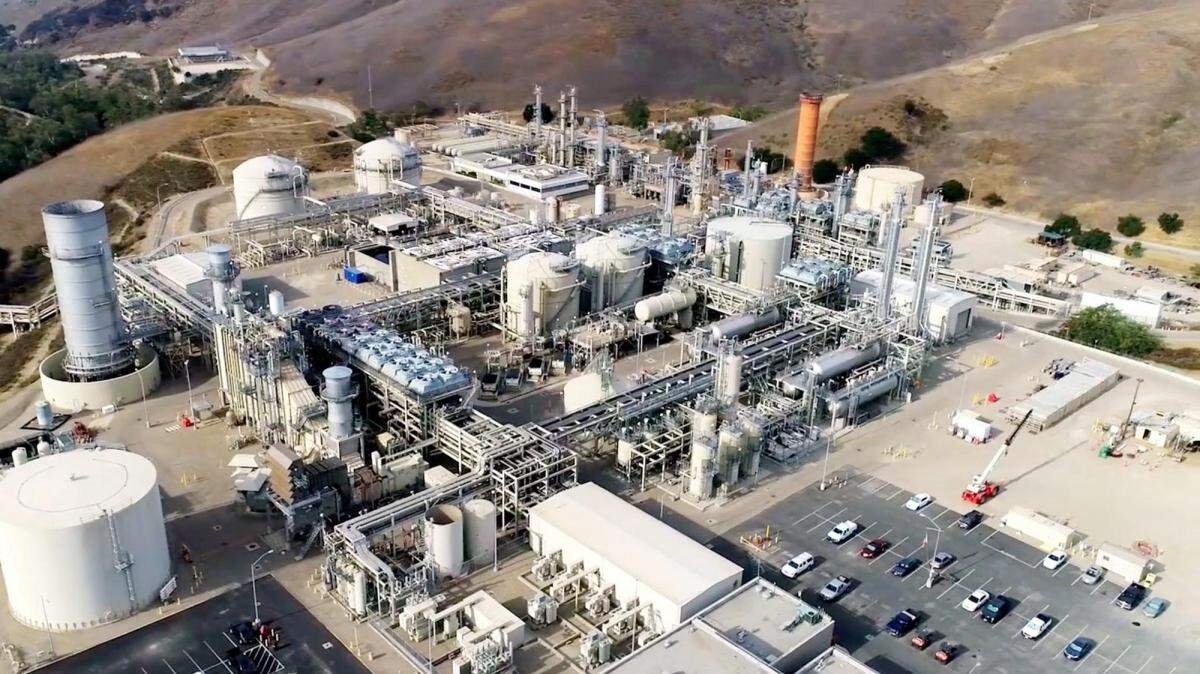
The Santa Barbara County Planning Commission’s majority formally rejected ExxonMobil’s proposal to truck oil on an interim basis from the Gaviota Coast to Santa Maria Valley and Kern County.
Following a daylong hearing five weeks ago when the panel first rejected the plan, the commission voted 3-2 on Wednesday to approve the findings of denial and recommend that the Board of Supervisors reject the ExxonMobil application.
Wednesday’s vote copied the panel’s split after the Sept. 29 hearing, with Commissioners John Parke, C. Michael Cooney and Laura Bridley opposing the trucking plan and supporting the denial recommendation. Chairman Larry Ferini and Commissioner Dan Blough favored the trucking proposal.
Parke noted that the environmental impact report determined that the trucking plan would have “significant and unavoidable impacts,” adding that the law requires denial unless a commission can make a statement of overriding considerations.
“As expressed at great length in a prior hearing, the evidence in support of a statement of overriding considerations was weak and nonexistent,” Parke said.
Blough contended that trucking oil would be “far superior” to bringing crude from overseas.
“You’re not enhancing the environment by not doing the extraction here. I think you actually create more harm,” Blough said.
ExxonMobil has proposed a phased restart of the Santa Ynez Unit — offshore platforms of Hondo, Harmony and Heritage — by first trucking produced crude oil from the Las Flores Canyon facility.
Those platforms have been shut down since the 2015 Refugio oil spill, which was caused by a rupture in the Plains All American transportation pipeline that transports oil from the Santa Barbara County South Coast to refineries.
ExxonMobil proposed trucking oil either to the Santa Maria Pump Station for eventual delivery to the Phillips 66 Santa Maria Refinery in southern San Luis Obispo County or the Pentland Terminal in Kern County.
ExxonMobil’s Bryan Anderson, an asset manager for the firm’s Santa Ynez Unit, urged planning commissioners to recommend that the Board of Supervisors approve the project.
“In summary, the Planning Commission’s determination is not supported by overwhelming evidence and years of analysis,” Anderson said. “Instead, the commission has based its decision on the limited concerns of nonexpert opinions, disregarding and contradicting the conclusions of the SEIR, traffic analysis, county staff, experienced traffic engineers, and the businesses and citizens that support the project.”
The ExxonMobil proposal has attracted strong opinions both in favor and against the project, with one side saying it would bring high-paying jobs and tax revenue while others citing numerous environmental concerns.
Julie Teel Simmonds, an attorney from the Center for Biological Diversity, called the EIR flawed.
“Saying no to ExxonMobil’s plan to add up to 24,800 oil field truck trips a year onto California highways is a big step in the right direction for our environment, climate and public safety,” Simmonds said.
Under ExxonMobil’s proposal, oil would be delivered to the Phillips 66 Santa Maria Pump Station on Battles Road, off Rosemary Road east of Highway 101, or to Kern County via Highway 166.
Trucking would occur for up to seven years and could be followed by a pipeline replacement proposal, which continues to make its way through the application process and soon may see release of the environmental documents.
Meanwhile, ExxonMobil’s oil trucking plan is expected to end up before the Board of Supervisors in early 2022, according to estimates.