
Bull elephant seals, youngsters are sharing SLO County beaches. How long will they stay?
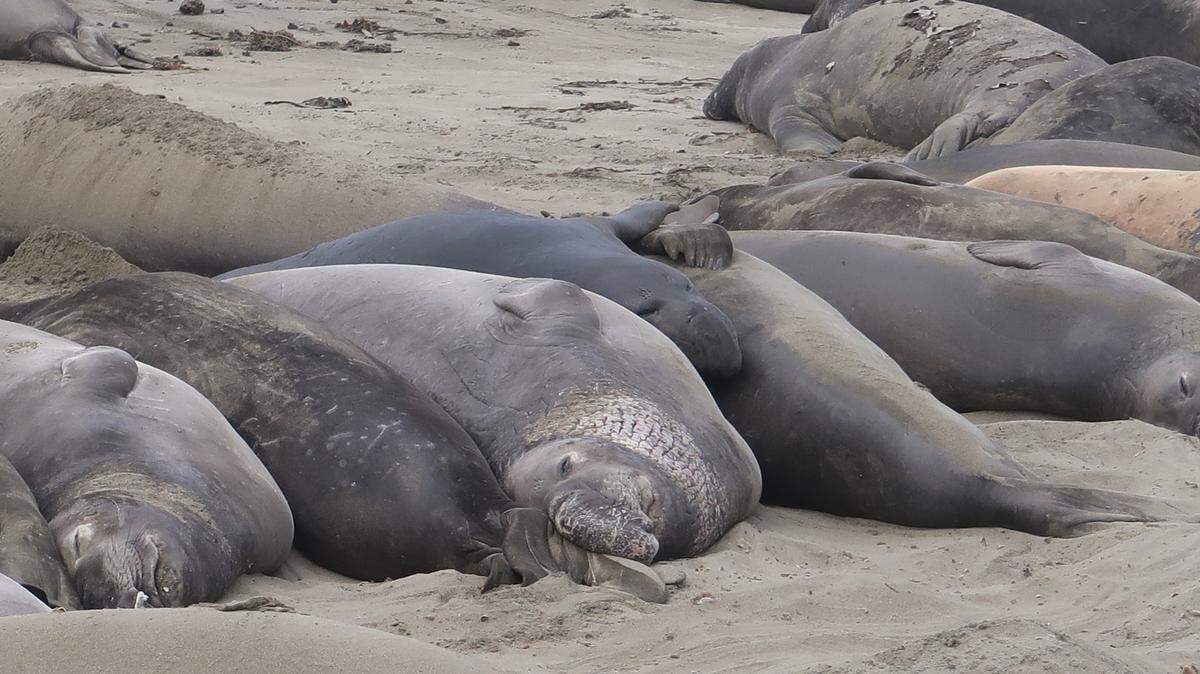
A group of bull elephant seals remains on the beach at Piedras Blancas north of San Simeon, mostly at the north end.
Juvenile seals are arriving in San Luis Obispo County, and their numbers are increasing by the day. The smallest are the last winter’s pups, returning from their first migration.
The bulls are the last of the group of adult males that have been on the beach for two months, for their annual molt.
The youngsters molted in May. They are back for six weeks of rest, the so-called “fall haul-out.”
Active bulls get ready for migration
Bulls don’t necessarily spend all their time resting.
In mid-August, a dozen or so male elephant seals were in the surf, battling each other, to the delight of visitors who came to watch.
The bulls can’t seem to resist a challenge, even when there aren’t breeding females to fight over.
One by one, the bulls will decide they have had enough of fighting and resting, and leave the beach for the second of their annual migrations.
They will swim north to their feeding grounds just off the continental shelf. There, they’ll spend the next three months or so bulking up.
The elephant seals will be at their blubbery best in November and December, when they return to the beach for the breeding season. They will need all the blubber they can pack on, to go as long as 100 days without feeding.
Young seals spotted at San Simeon beach
All the seals on the Piedras Blancas rookery are elephant seals, whether they have that pendulous trunk-like nose or not.
It’s rare for a sea lion or harbor seal to come onto the beach. You can see harbor seals on the nearby rocks, and hear sea lions barking from the doorstop islet farther offshore.
The juvenile elephant seals range from the young of the year to seals that are about 6 years old.
During those growing years, males and females look very much alike. Around age 5, males begin growing their sizable noses, and getting bigger than females.
The smallest seals are the young of the year, the pups that were born during last year’s breeding season.
Every survivor is a winner, a prospective supermom or beachmaster. They have dodged great white sharks and orcas to avoid being eaten, and have caught enough fish and squid to
sustain themselves.
The elephant seals may not be any bigger than when they left the beach in March, but survival is everything at this stage. They can put on weight later.
Their blubber insulates the seals from the wide variations of temperature they confront, from the near-freezing depths at which they forage in the Northern Pacific Ocean to warm, sunny California beaches.
Conserving energy is important, because they aren’t eating anything while they are here on the beach. They are living off their blubber.
Humans need to keep body temperature within narrow limits, but elephant seals’ core temperature can range 12 degrees Fahrenheit around their normal 99 degrees.
Seals in one group that researchers measured varied 18 degrees, from 87 to 105 degrees Fahrenheit. Elephant seals are animals of the extremes.
New web cam
For those days when you can’t get out to the viewpoint, or want to know what’s going on to plan
your next visit, Friends of the Elephant Seal and California State Parks have installed a second live web cam. Check both out at elephantseal.org/live-view.