New tsunami map shows evacuation areas along SLO County coast. Is your home safe?
A new tsunami hazard map for San Luis Obispo County shows that substantial portions of low-lying communities from Cayucos to Oceano could be at risk in the event of a catastrophic, worst-case event hitting the California coast.
The California Geologic Survey (CGS) released the latest tsunami hazard map, as part of a review and update of the state’s tsunami risk assessment.
The maps are a joint effort by the CGS, the California Governor’s Office of Emergency Services (Cal OES) and local agencies.
The previous tsunami hazard maps were finalized in 2009.
“A lot has happened over the last 12 years,” said Rick Wilson, the tsunami unit manager at the survey. “We’ve learned a lot of lessons.”
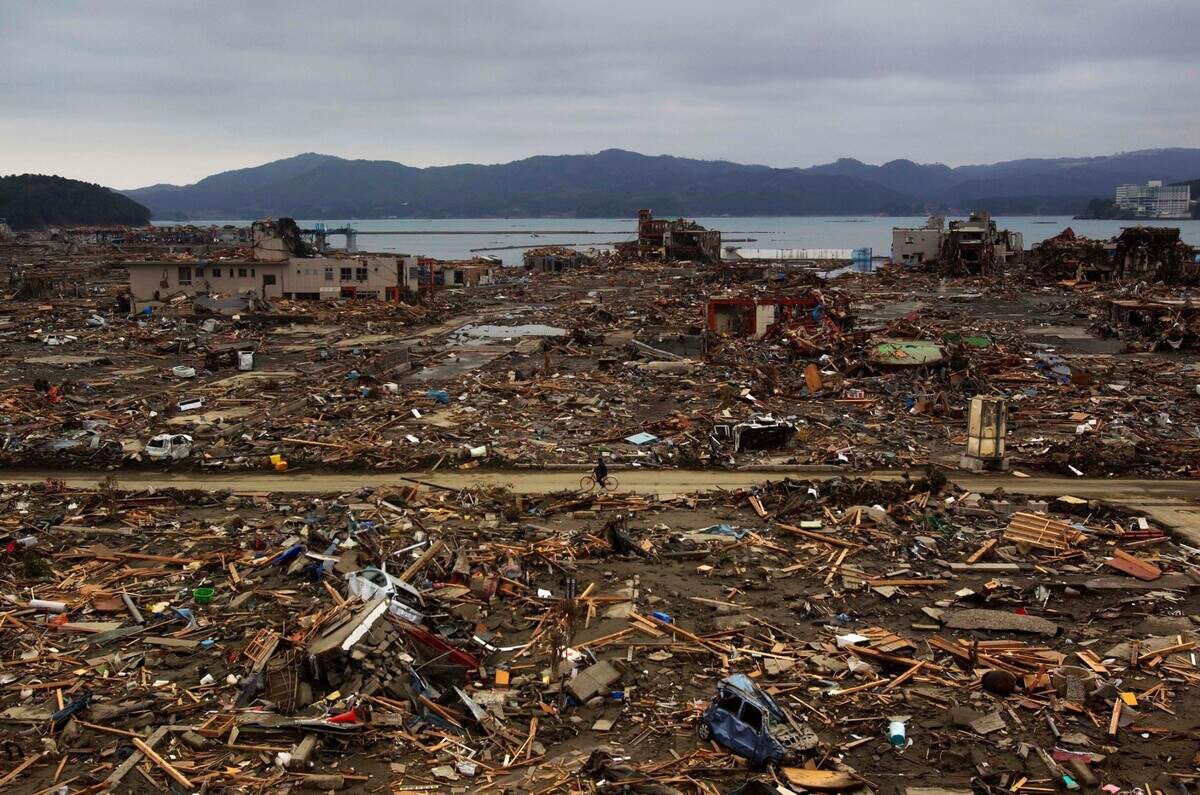
In particular, the 2011 magnitude-9.1 Tohoku earthquake in Japan and the subsequent tsunami had a devastating impact, he said, and was larger than the area had planned for.
Violent shaking, followed by a 30-foot-tall wave of water, destroyed many coastal communities along the country’s northeastern coast and caused the meltdown of three reactors at the Fukushima Daiichi nuclear plant.
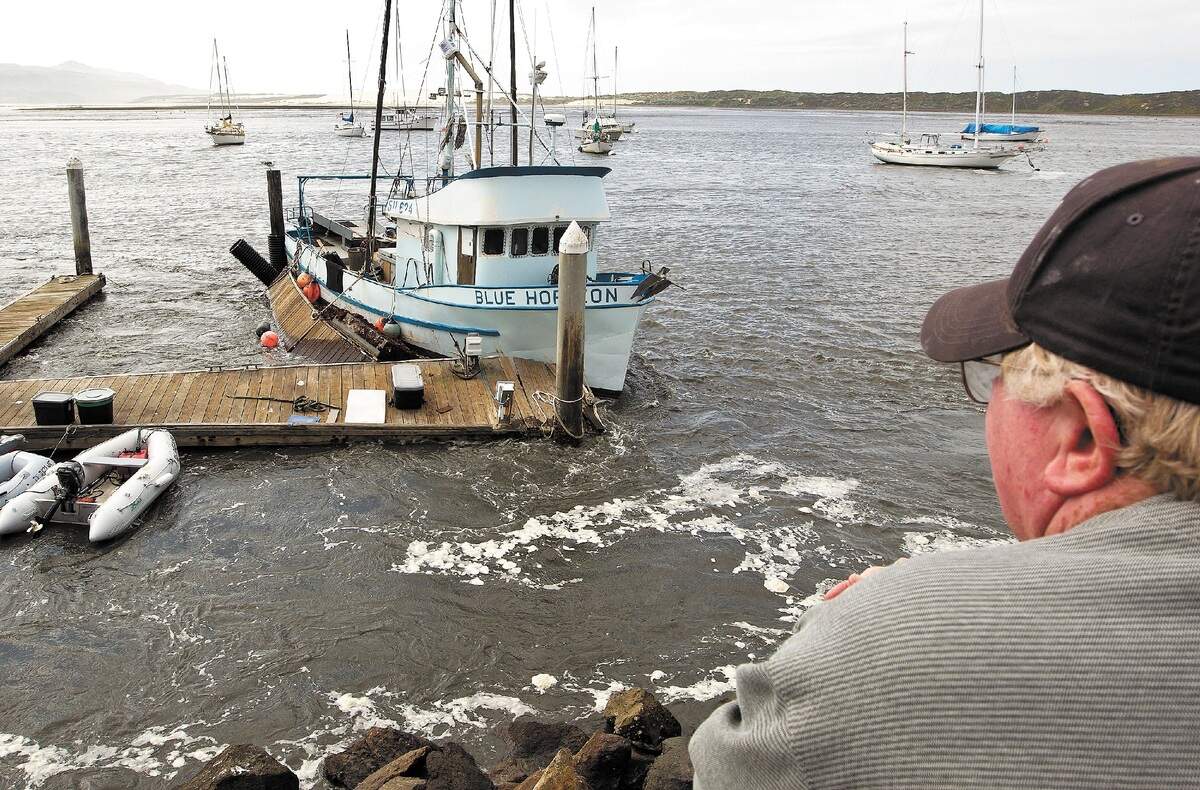
Tsunami waves crossed the Pacific, reaching the shores of California about 10 hours after the quake struck. Large swells caused one death and $100 million in damage to 27 harbors in the state. Repairs to Morro Bay docks, vessels and infrastructure totaled around $500,000.
It was a one-in-a-thousand-year event for Japan, said Wilson, a senior engineering geologist, and it taught scientists how to better plan for similar catastrophes along California’s coast.
Planning for the worse case scenario
In developing this latest edition of the map, scientists were both better informed and more conservative in their approach.
They considered every conceivable major tsunami-generating event that could affect California’s coast, including a once-in-a-millennia earthquake, like the one in Japan.
Using high-resolution elevation data, scientists calculated how far inland tsunami waves could reach in 12 worst-case scenarios for SLO County. The resulting map traces an “inundation line” from one end of the county to the other, indicating the extent that water could flood.
For the most part, the new map is not dramatically different from the earlier version, said Kelly Van Buren, the emergency services coordinator for SLO County, although there are some substantial changes in particular locations.
Cayucos saw the biggest increase in its hazard area. Morro Bay, Los Osos and San Simeon also saw their evacuation zones grow, whereas in Avila Beach and Oceano, the risk areas shrunk.
California Geological Survey scientists and officials with Cal OES verified their data by going out to the coast and surveying the landscape. They focused their efforts on populated, low-lying areas, including Cayucos, Pismo Beach and Morro Bay.
Scientists worked with local emergency managers to extend the inundation line to follow streets and landmarks “to make the maps as simple as possible for people to understand,” Wilson said. The final map shows a jagged line running nearly parallel to the coast. Everything seaward of the line falls within the tsunami evacuation zone.
Low-lying areas are at greatest risk
The biggest change in the local tsunami hazard is in Cayucos, where a tsunami could reach 50 feet above sea level at it’s furthest reach inland — 20 feet higher than the earlier map indicated, according to the CGS.
Nearly half of the buildings in the roughly 2,600-person community fall in the new tsunami hazard area, and waves could inundate the main business district. The hazard extends past the first block of bluff-top homes, as far inland as Ocean Avenue.
This moderate expansion of the hazard area is due to scientists considering a bigger earthquake in their calculations and a more precise map of elevation along the coast, said Wilson.
In Los Osos, the hazard area is limited to the low-lying areas near the estuary, including the majority of Morro Bay State Park.
In the South County, close to two-thirds of Avila Beach is in danger should a large tsunami come ashore. But this is a reduction from the 2009 estimate.
Also within San Luis Obispo Bay, the main tourist district in Pismo Beach and the city’s pier are in the hazard area, as well as beaches and low-elevation streets to the south near Highway 1.
In Oceano, a major tsunami could flood the airport and nearby neighborhoods, along with low-lying farmlands to the south. The hazard area moved seaward from the 2009 map.
Fortunately, Diablo Canyon nuclear power plant sits on a bluff 85 feet above the ocean. The site falls outside the reach of any worst-case tsunami considered in the new map.
Anyone can check whether their home or business falls within the tsunami hazard area by entering their address on the CGS tsunami map website (also found at prepareslo.org/tsunami).
Tsunamis in SLO county
SLO County should be aware of two different types of tsunami threats, Wilson said. The first is an earthquake on a nearby fault that causes landslides off the coast. The moving rock mass could generate a large wave.
Offshore faults such as the San Gregorio Fault and the Hosgri Fault could themselves generate small tsunamis, due to the displacement of water when the fault slips during a quake, he said. Such a local tsunami could reach the shore within minutes.
In these cases, shaking is the first warning to get to higher ground as quickly as possible.
The other type of threat is from far-away earthquakes, like the 2011 Japan quake.
In this category, “the largest hazard is from the Alaska-Aleutians area,” Wilson said. The new maps factor a magnitude-9.3 offshore Alaska earthquake as one of the worse-case scenarios. Such a large quake in that area has a 5% chance of occurring in a 50-year period. That is equivalent to a one-in-a-thousand-year event.
A resulting tsunami would take about five hours to reach SLO County — “basically the speed of a jet plane,” Wilson said.
That much advanced warning would give emergency managers time to evacuate people from low-lying areas.
Wilson notes that “these maps are not meant to really scare anybody. ... (They) are based on something that is unlikely to happen.”
“It’s really very helpful to plan for the worst case and hope for the best,” he said.
County to revise safety plans
SLO County is using the new map to update its tsunami plans.
The County Office of Emergency Services is identifying particularly vulnerable facilities within the tsunami hazard area that may need special attention during an evacuation, such as schools or other recreational facilities, said Van Buren.
All emergency response partners are being updated to ensure everyone is on the same page, she said. Additionally, the county is also working on phased evacuation maps for smaller tsunamis.
The recently launched website, prepareslo.org, contains information about how the public can protect itself from tsunamis.
The most important thing to know is if you feel an earthquake, get to higher ground, Van Buren said.
This story was originally published July 19, 2021 at 10:50 AM.