Where are the best whale watching spots in SLO County? Here are some options
Whale watching season is underway on the Central Coast.
Recent weather conditions have made the massive marine mammals harder to spot. Winds create choppy waves, and stubborn fog can mask everything from the horizon to the shoreline.
But those conditions can change day by day, even hour by hour, according to scientists, whale counters and the tour operators who make their livings taking others out to sea to play “I spy!” with whales.
Kevin Winfield, owner and one of the captains at Sub Sea Tours, Kayaks and Morro Bay Whale Watching, said his crews have been seeing humpback whales nearly every day for more than a month.
That’s “earlier in the season and more often than usual,” he said.
During one whale watching season, the humpbacks showed up April 1 “and we saw them every day, all summer long,” he said.
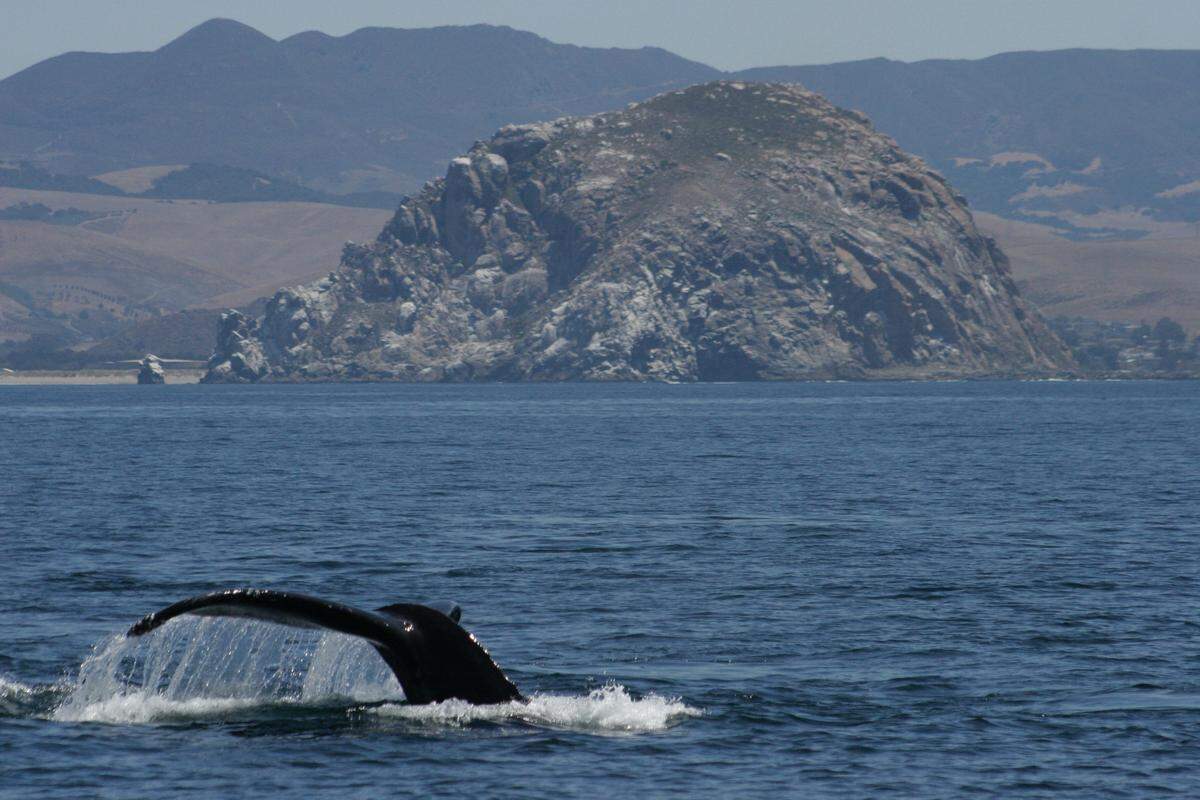
Some humpbacks swam in very close to shore and the piers in Pismo Beach and San Simeon “and right in front of Cheney Avenue in Cayucos,” he recalled.
There’s still time to see gray whales, also known as California grays, according to Winfield and David Weller, leader of the team currently counting gray whales migrating past Piedras Blancas Light Station north of San Simeon.
Pairs of Eastern Pacific gray whale moms and babies are still swimming past the Central Coast as they migrate from Baja California, Mexico, to Alaska and Canada.
The cows and calves often swim in closer to shore than the solitary males who headed north a few months ago. That route helps mother whales protect their young from orcas and other predators.
SLO County boat tours offer whale watching
In San Luis Obispo County, whale watching boat tours and cruises are available out of Morro Bay and Avila Beach.
Even for experienced whale watchers, it’s breathtakingly exciting to see a whale as its back slowly arcs through the surface of the sea. You might watch a whale slap its tail or leap out of the water as it breaches.
Boats for Morro Bay Whale Watching depart at 9 a.m., 12:30 p.m. and 4 p.m. daily from a location near Marina Square at the bottom of Pacific Street in Morro Bay. Tours cost $50 apiece for adults, $45 for seniors and students and $35 for children.
Avila Beach Whale Watching offers two-hour tours for $95 per person, according to the company’s website.
The site notes that May through November is humpback whale season, while January through May is the season to see migrating gray whales.
If you’re in the water while whales are present, the experts advise extreme caution. “You should not approach them,” Weller said. “Stay at least 100 yards away.”
And if you’re at a safe distance but the whale is heading your way? Try hard to maintain that safety gap.
In 2020, two women were kayaking near the Avila Beach shore when they were surrounded by a so-called “bait ball.” That’s the nickname for a large school of small fish, an ideal whale buffet.
Suddenly, a massive humpback whale breached underneath the women’s kayak, dumping them into the water and nearly landing on top of them. Fortunately, nobody was injured.
Where to see whales from land
You can also spot whales from the shore.
Many times, all a shoreside observer can see is the whale’s “spout,” or ocean water being sprayed fountain-style as it’s propelled by the whale’s rapid, forceful exhalation of warm air from its lungs, all at once.
For the best land-based whale watching, Winfield advised “selecting a high point of land that provides a broad view of the ocean. Go at a time when the ocean is calm and the sun is not directly in your eyes.”
“Mornings are usually the best time” to see whales, he added, before the winds pick up.
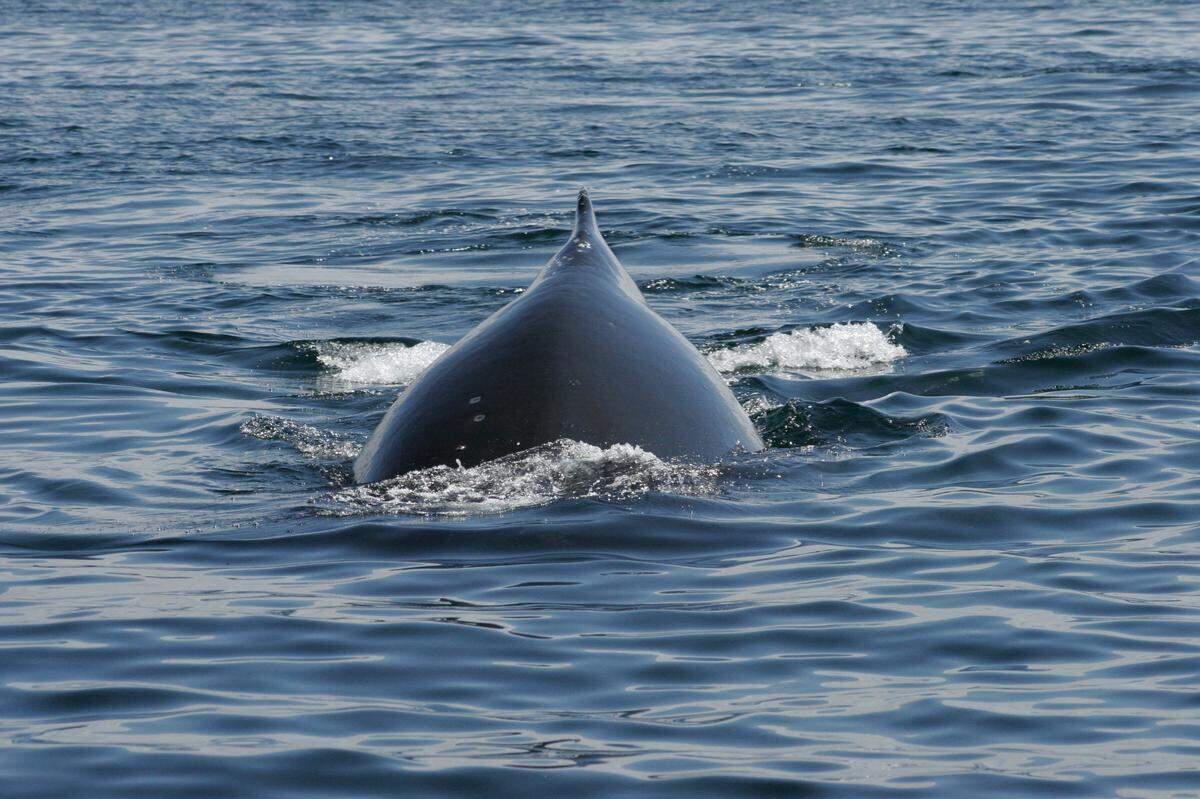
According to the Pacific Whale Foundation, “If you are looking for the best scenic light for photography, choose a sunrise, early morning or sunset whale watch.”
For beautiful blue waters, “the best overhead light is from 11 a.m. to 3 p.m.,” the group said. “The calmest sea conditions tend to be before noon and towards sunset. The whales are active throughout the day and their behavior changes as groups of whales encounter each other.”
Specific whale-watching locations suggested by Winfield included the bluff trail on the Fiscalini Ranch Preserve in Cambria and any of the ocean-facing turnouts on Highway 1 between Cambria and the elephant seal vista points and the upper parking lot at William Randolph Hearst Memorial State Park.
Other possible places to spot whales from shore include oceanfront turnouts along Highway 1 bluffs, piers in Avila Beach, Cayucos, Morro Bay, Pismo Beach and San Simeon and oceanside areas in Shell Beach and Montana de Oro State Park near Los Osos.
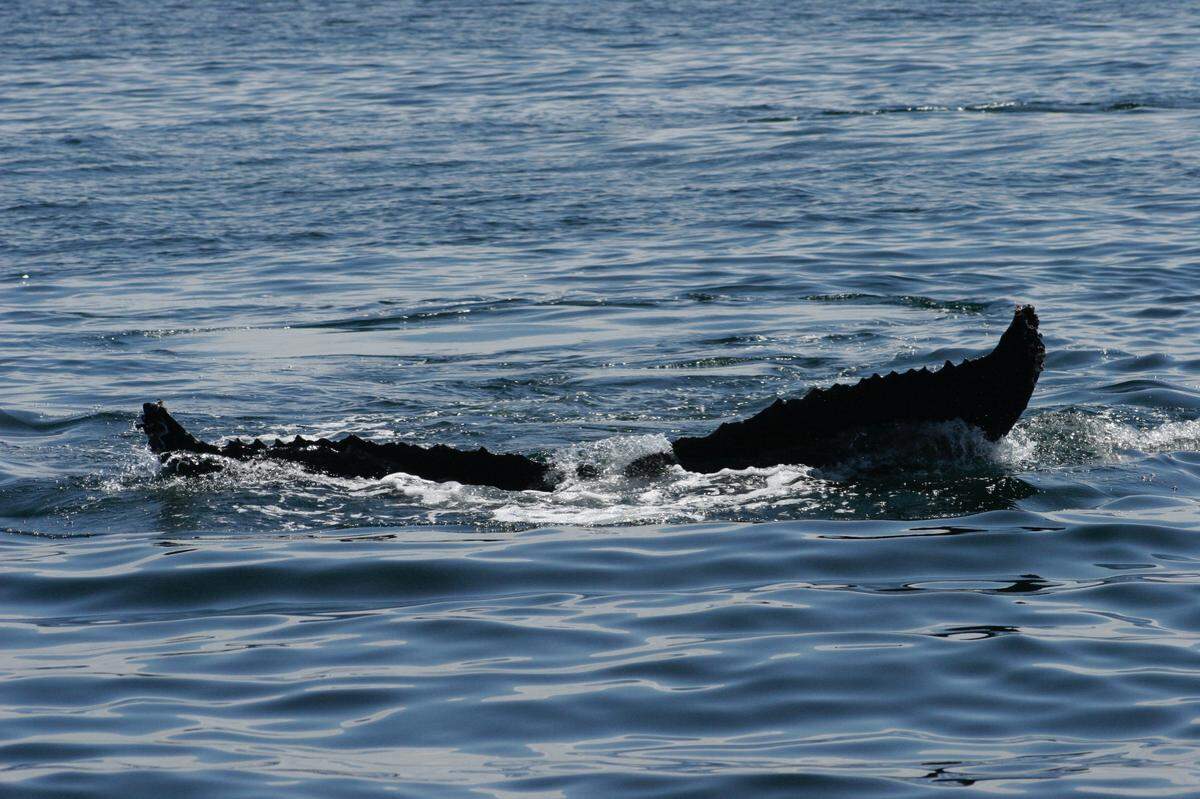
“Scan the ocean’s surface with your eyes about halfway to the horizon, and wait to see a blow or spout,” Winfield said. Some blows can be as high as 30 feet, and can linger in calm air for a few seconds.
Once you’ve located where a whale is, use binoculars to possibly get a closer view of the whale’s back or tail as it heads north and surfaces again.
Mama-and-baby gray whale pairs usually produce two spouts timed and located fairly closely together, with the calf’s blow being considerably shorter and less forceful than its mom’s.
Watching the ocean from San Luis Obispo County shores can also provide occasional sightings of orcas, dolphins, sea lions, harbor seals, sea otters and a wide variety of sea and shore birds, providing oceanfront drama and delight for residents and visitors alike.