
Elephant seal mating season is in full swing at SLO County beaches
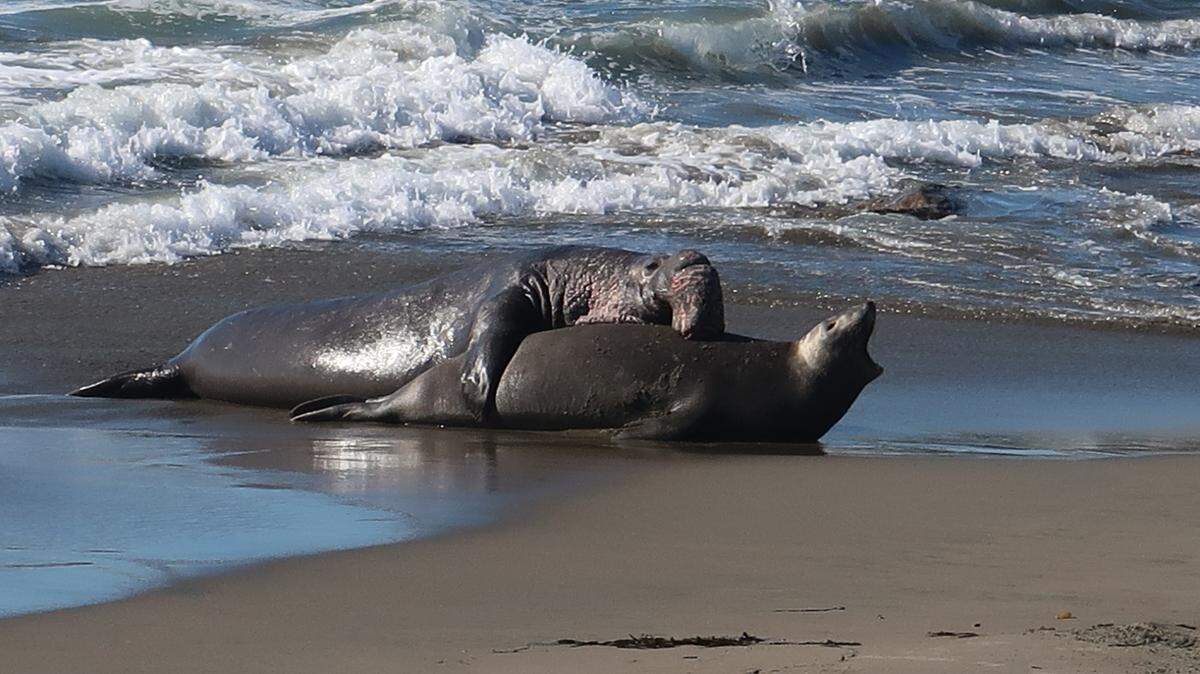
Valentine’s Day has passed, but mating season for elephant seals at Piedras Blancas is in full swing.
Weaned pups stay out of the way, as the adults conclude their winter on the beach north of San Simeon.
Fat weaned pups, now weighing 300 pounds or more, cluster at the edge of the bluff. Younger pups continue to nurse.
Meanwhile, slender mothers are coming into heat, exciting the bulls to mate with them and fight with each other for the privilege.
Watch for a bull to raise his head and approach a female. Other males will raise up and look at the ruckus. They may or may not thunder across the beach to chase him, and he may retreat or stand his ground.
Interactions are always unexpected to visitors, although the seals recognize each other if they have fought in the past.
Big changes for pups
As they are weaned, pups undergo their first molt. They are born black, then shed that skin at
about one month. Their new coat is dark brown on their backs, lighter tan on the underside. Look for black coats compared to the countershaded weaners. The countershading helps camouflage the young seals in the ocean, helping them hide from predators.
The elephant seals’ metabolism changes when they are weaned .
They go from rapidly gaining weight and adding blubber to metabolizing that blubber to build muscle and supply energy. Weaning also starts the elephant seals’ first fast, in a life that will be punctuated by weeks and months of fasting on the beach. They eat only when they are in the ocean.
These weaned pups will leave the beach in March and April, setting out to learn on their own to hunt fish and squid.
Young elephant seals have to learn to swim.
Although they are born with some instinctual ability, they need to polish their swimming, diving and breath holding before they leave the beach on their first migration. Look for fat weaners splashing around in the shallows.
My colleague Charmaine Coimbra used photos she took at Piedras Blancas to illustrate a children’s book about elephant seals, “Isu Learns to Swim.” It’s available through her website, CharmaineCoimbra.com
Recent high tides, high surf and torrential rain took a toll on the pups. Carcasses litter the beach.
Gulls and turkey vultures clean up the remains. California condors released in the mountains near San Simeon may also come to the beach to partake.
The pups are a safe food source for condors, which are threatened by lead poisoning from eating animals shot with lead ammunition.
Ventana Wildlife Society is working to replace lead ammunition, which is now illegal in condor habitat. Read more at ventanaws.org/lead-threat.html.
What to do if you encounter an elephant seal
Subdominant bulls who lose battles on the breeding beaches haul out on quieter ones. Give them space to rest.
Safe viewing guidelines are posted on the Friends of the Elephant Seal website, elephantseal.org/plan-your-visit
Pups may wash up stranded on local beaches. Report stranded pups to The Marine Mammal Center at 805-771-8300.
Don’t go near the elephant seals or touch them. They are wild animals, and even starving pups can bite.
Your report is important and you may be asked to help.
The person reporting the stranded animal is usually allowed to name it. Helping save one of these unusual animals has its rewards.