
Loss of eelgrass in Morro Bay may be causing widespread erosion, Cal Poly study finds
The large-scale loss of eelgrass in Morro Bay may be causing widespread erosion, potentially leading to future shoreline and coastal habitat changes, according to a new Cal Poly study.
Morro Bay’s iconic eelgrass beds provide the estuary’s primarily living habitats, but since 2007 the bay experienced a massive die-off, losing more than 90% of its eelgrass, according to a news release from Cal Poly.
“The loss of eelgrass in the Morro Bay estuary is analogous to the loss of trees in a rainforest,” said Ryan Walter, the study’s lead author and a Cal Poly physics professor. “Not only do you lose the plants, but you also lose all of the services that they provide for the entire ecosystem.”
Globally, sea grasses in the nearshore coastal ecosystem are among the most threatened ecosystems on the planet. They provide many ecosystem services, such as fish nurseries, forage for migratory birds, nutrient cycling, carbon storage and sediment stabilization according to the news release.
Strong roots anchor the underwater eelgrass to sandy or muddy bottoms. This allows the grass to slow down currents and decrease wave forces, helping to stabilize and prevent large spread erosion, according to Walter.
“As predicted with climate change, coastal flooding and sea level rise will increase and cause more erosion,” Walter said. “Eelgrass would help build our defense against what is already happening and what happen in the future, it’s the way we’re building climate resilience.”
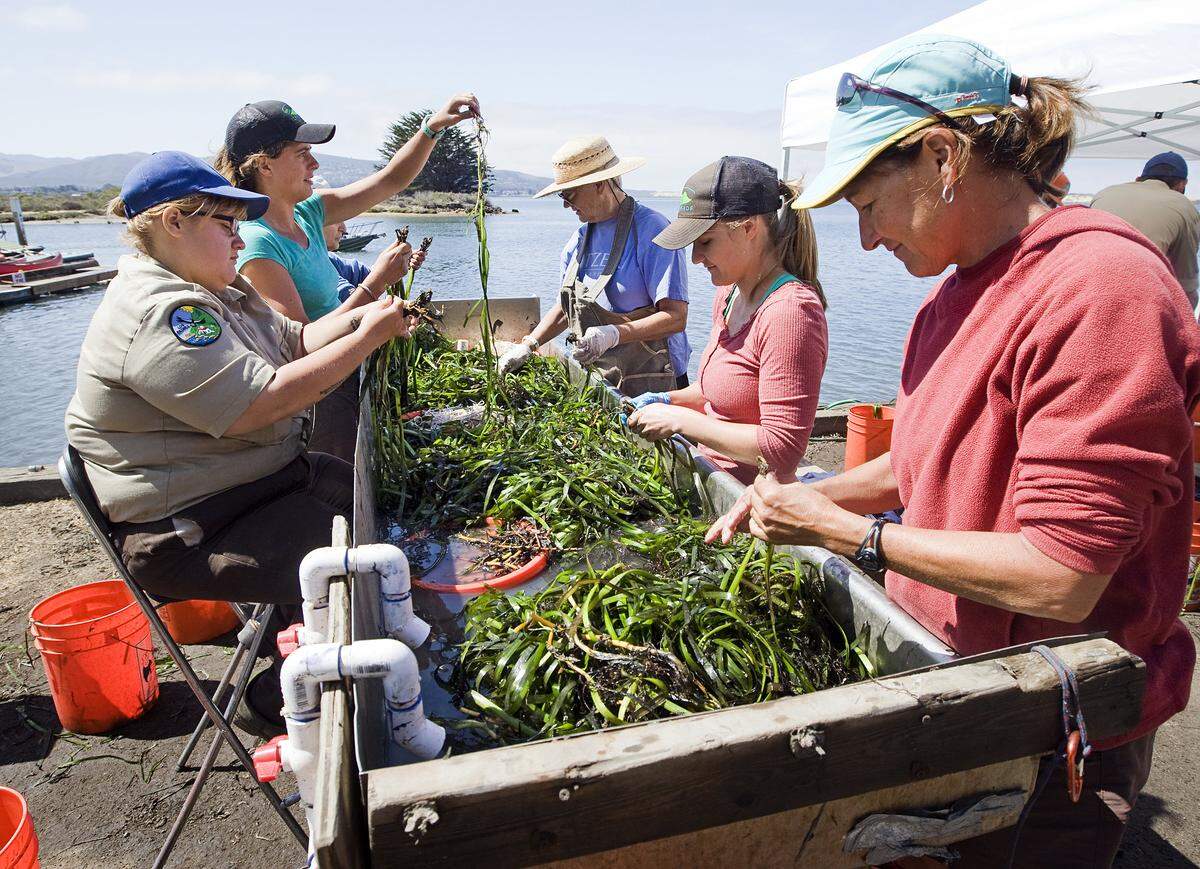
Efforts to restore the eelgrass beds in Morro Bay have had mixed success, and the seagrass is now only found near the harbor mouth and sporadically in other regions of the estuary.
Over the past century, Morry Bay has quickly been building up sediment, and is dredged annually, with the U.S. Army Corps of Engineers doing extensive dredging every five or six years, according to the news release.
While the loss of eelgrass leads to widespread erosion, it could also provide an opportunity for eelgrass to recover by increasing the depth and suitable habitat for eelgrass in certain locations.
“Morro Bay is an estuary of national importance that is under transition with systemwide eelgrass loss, subsequent sediment loss, and now some signs of eelgrass recovery,” Jennifer O’Leary, a former California Sea Grant extension specialist and co-author of this study, said in the news release. “Understanding the dramatic changes in Morro Bay can help identify important factors for management and conservation of eelgrass-dominated systems globally.”
Recent restoration attempts by the Morro Bay National Estuary Program have been successful, and there is evidence of a partial recovery in portions of the bay.
Tracking changes in sediment in places such as Morro Bay will become increasingly important as climate change is expected to drive sea level increases and shoreline change, according to the release.
“The oceans, and the estuary ecosystems, as we know it are going to change with climate change,” Walter said. “While a grass in the ocean may not seem that important, it is the foundational living habitat in many systems, and without it, the physics, biology and chemistry of the entire ecosystem will change.”