
Elephant seal pups are preparing to leave SLO County beaches. How you can see them up close
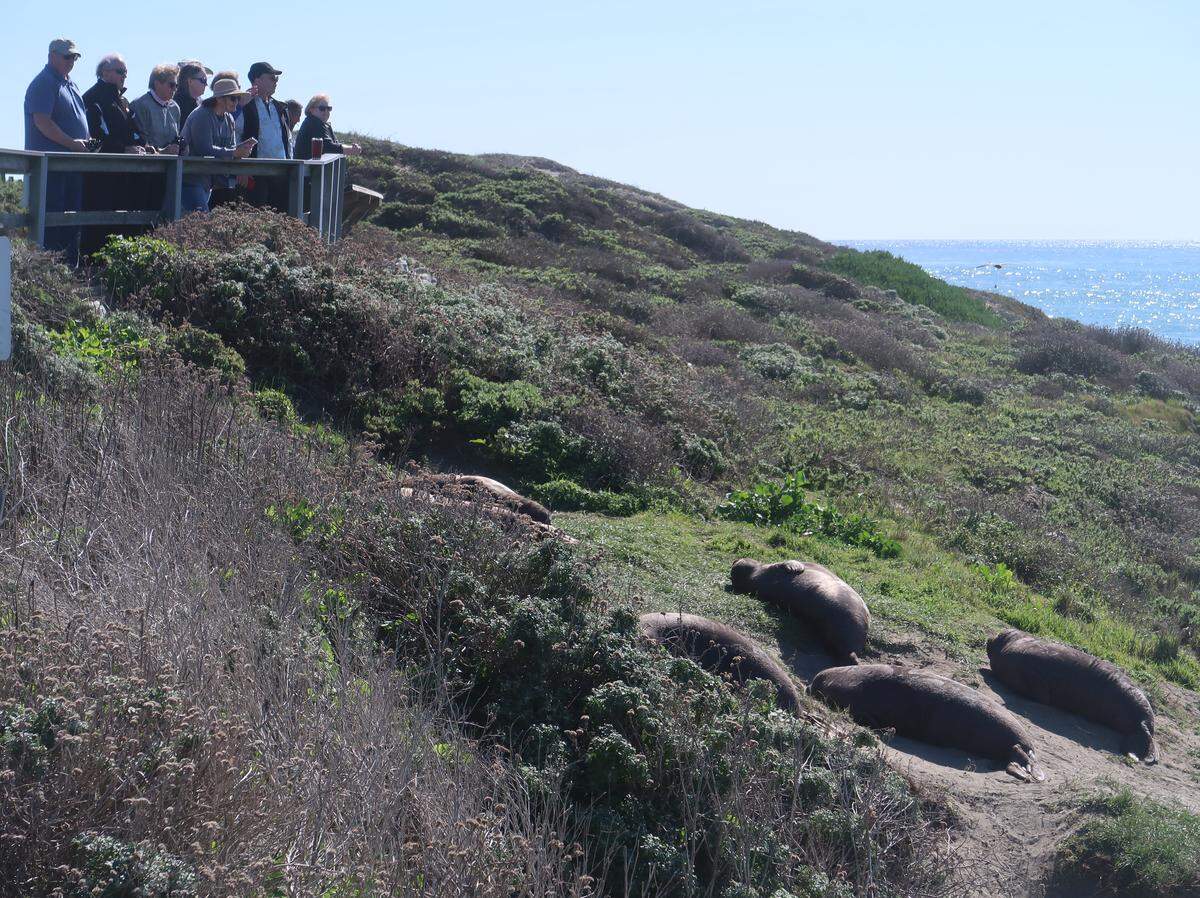
Elephant seal pups born in December and January are now weaned. They huddle close to the bluff’s edge, avoiding the bulls that charge to mate with their mothers.
Some females have left the beach, but some are still giving birth and nursing their pups. Breeding season is winding down.
A few make their way up the dunes, toward the boardwalk where visitors get a close-up view.
Extra fencing keeps the weaners off the path.
Elephant seal pups feast before fasting
Weaners have packed on weight, from their birth weight of about 70 pounds to around 300. Most are rotund, fat and happy, but some have not gained as much.
Being sleek may be better than being fat. Additional blubber may make the young elephant seals more buoyant, making diving more difficult. They have to be able to dive to find their food.
Pups undergo major changes in their metabolism as they are weaned. They go from rapidly gaining weight, adding blubber, to metabolizing that blubber to build muscle and meet their energy needs.
Once their mothers stop nursing them, they won’t have anything to eat until they leave the beach in March and April and start hunting for themselves.
About half of the pups will survive that first migration. They’ll return to land in the fall.
Those that survive may not be much bigger than they are now. Survival is success enough.
Thin mothers mean fat pups
Elephant seal mothers lose about a third of their body weight nursing their pups. Notice how thin the mothers are compared to their fat pups.
They mate before they return to their life at sea. The egg is fertilized, but divides only a few
times before going into a state of suspension.
The mother gets to feed for a couple of months before she returns to the beach, an adaptation called delayed implantation.
In May, adult females come to the beach to molt their skin. That’s when the embryo starts developing, for eight months of gestation until it’s ready to be born in the next breeding season.
What to do if you see a stranded elephant seal pup
When pups first leave the beach, they may get lost. No adult seals help them find their way to their feeding grounds in the north Pacific Ocean.
The pups practice holding their breath and swimming in the surf before they leave, but after that they are on their own. They depart for their first migration.
Those that don’t succeed on the first try end up stranded on local beaches.
If you see a pup stranded on the beach, call The Marine Mammal Center to report it on the rescue line at 805-771-8300. Don’t go near it or touch it.
Elephant seals are wild animals, and even a starving pup has teeth and can bite. Some carry diseases that humans can catch.
Your report is important and you may be asked to help.
The person reporting the stranded animal is usually allowed to name it. Helping save one of these unusual animals is rewarding.
California State Parks guided tours
Here’s your last chance for a close-up walking tour. Breeding season tours will end in March, which the last tour on March 29.
Meet up at 9 a.m., 10:30 a.m. and 12:30 p.m. on Fridays, Saturdays and Sundays at Arroyo Laguna, the ocean side of Highway 1, 2.25 miles north of the Hearst Castle entrance, 35°39’11.04”N, 121°13’18.83”W on your GPS.
The tour includes a 45-minute, easy half-mile guided trail walk, on varied terrain.
The guides will tailor the tour for your interests. Children are welcome. The maximum tour group size is 20 people.
Dress for the weather – seals ignore wind and rain – and bring binoculars.
Tickets are available at the site, first come, first served, and at the Hearst Castle Visitor Services Office on the day of tour only. There are no advance sales.
Tickets cost $13 per person; children under 5 are free. There’s free onsite parking.
For more information, call 805-927-2010 or visit www.parks.ca.gov/?page_id=30298.
Docents wanted
Want more time with the elephant seals? Become a Friends of the Elephant Seal docent.
Spend one morning or afternoon each week greeting visitors at Piedras Blancas and entertaining them with facts about these amazing seals.
Spring one-day training gets you started on Saturday, March 28, in San Simeon. Apply through elephantseal.org or call 895-924-1628.