Will California get another wildflower super bloom? Here’s what the experts predict
A lackluster winter rain season has left much of California on the cusp of a drought — so what does that mean for the state’s much-Instagrammed wildflowers?
Particularly rainy winters yielded super blooms throughout the state in 2017 and 2019, from the Carrizo Plain National Monument in San Luis Obispo County all the way down to Anza-Borrego Desert State Park east of San Diego.
In spring 2019, photo-seeking visitors packed places like Walker Canyon near Lake Elsinore just south of Los Angeles, where a California poppy bloom drew “Disneyland-size crowds.”
Although wildflowers will likely be on display in many places around California this spring, a dry winter will probably result in less-vibrant blooms, plant experts and wildflower watchers say.
About 56% of the state is currently experiencing abnormally dry or moderate drought conditions, according to recent U.S. Drought Monitor data.
The San Luis Obispo County Regional Airport has received just 5% of its normal rainfall for January and February, according to the National Weather Service.
With spring just around the corner, here’s an update on wildflower blooms around the state.
Carrizo Plain National Monument, San Luis Obispo County
Heavy winter rains in late 2018 and early 2019 made the Carrizo Plain’s gold and purple wildflowers burst into bloom.
This year, the national monument likely won’t put on such a show, said David Keil, a Cal Poly emeritus botany professor.
“Without a big influx of rain, I doubt we would have much of a super bloom,” he said.
A combination of colder weather and not much rain has not helped plant development, and only a handful of flowers are starting to appear, Keil said.
“It’s been so chilly that things have not grown very much,” he said.
San Luis Obispo County will need to get a good amount of rain between mid-February and the end of March to produce even a decent bloom, Keil said.
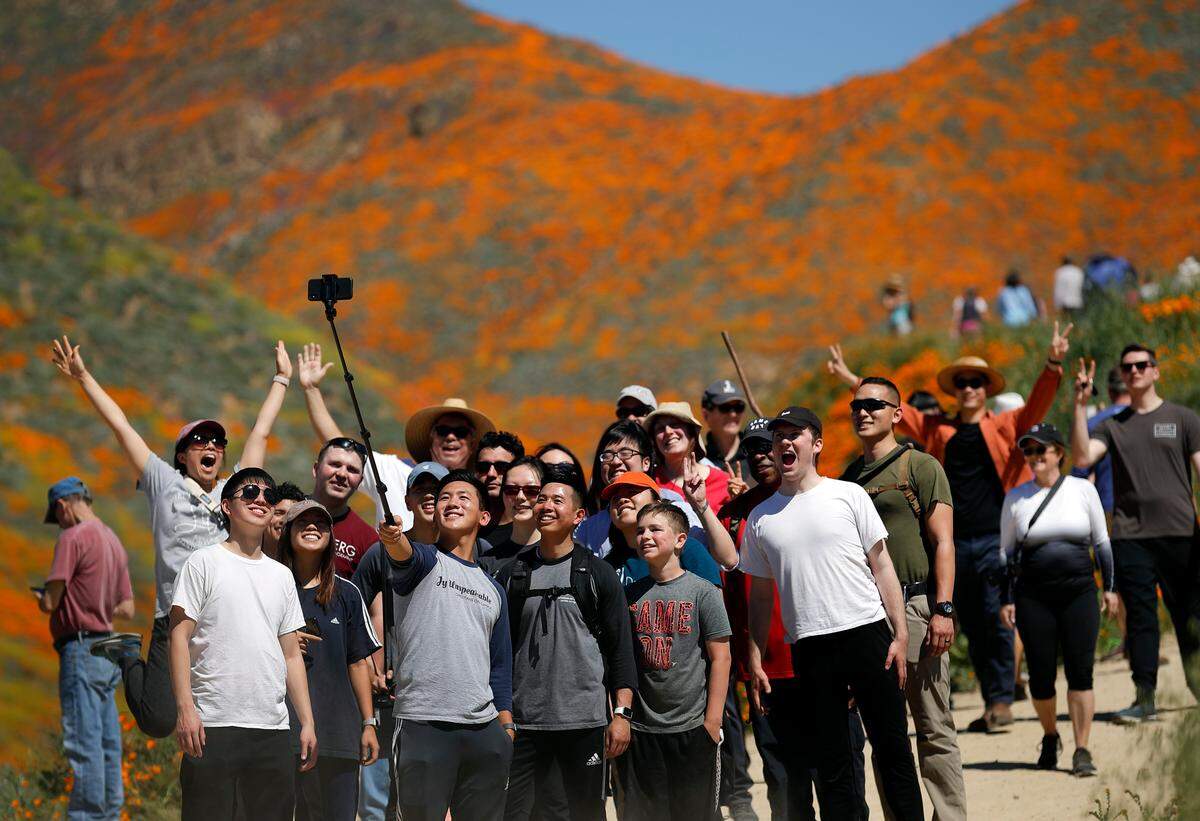
Walker Canyon, Riverside County
Walker Canyon in Riverside County was ablaze with California poppies in 2019, creating one of the most popular spots to view the super bloom.
The wildflowers drew large crowds that snarled traffic for residents of nearby Lake Elsinore and created a public safety crisis, with local leaders dubbing it “the Poppy Apocalypse.”
This year, the city is likely breathing a sigh of relief, as botanists predict this spring’s bloom will not match that of the previous year, according to the Lake Elsinore city website.
“We are starting to see some poppies blooming in this area,” the website reads. “According to Riverside County, poppies are germinating in the Walker Canyon area. However, without substantially more rain in the next couple of months, botanists do not currently believe it will be a super bloom similar to what was experienced last year. The city and county continue to monitor the area regularly.”
Antelope Valley California Poppy Reserve, Los Angeles County
The orange bloom in Antelope Valley, known for its brilliant California poppy display, could be seen from space last year.
Poppies actually need cold weather, so the 5 inches of snow the area has received this winter will help spur flower growth, Chris Hon, a senior environmental scientist, told the Los Angeles Times in late January.
“We have received cold weather as expected for a possible super bloom or whatever you want to call it,” Hon told the Times. “If we have sustained rains to keep the poppies growing, we will likely have some type of super bloom.”
Anza-Borrego Desert State Park, San Diego County
The park east of San Diego was awash with pink, purple, yellow and red blooms during spring 2019.
The desert landscape will likely produce some flowers, but no super bloom in 2020, according to the Anza-Borrego Desert Natural History Association.
Borrego Springs received 3.5 inches of rain in November and December, but the precipitation didn’t continue into January, the nonprofit wrote on its Borrego Blooms site.
“February is yet to unfold,” the site reads. “But the best guess to this year’s flower season is that there will be flowers but not to expect any kind of ‘super bloom’ as was experienced in recent years. Individual flower reports will be important this year for visitors to direct themselves to the best areas.”
This story was originally published February 17, 2020 at 5:15 AM.