
Pismo Beach could have legal clamming next year — if Valley visitors stop taking them
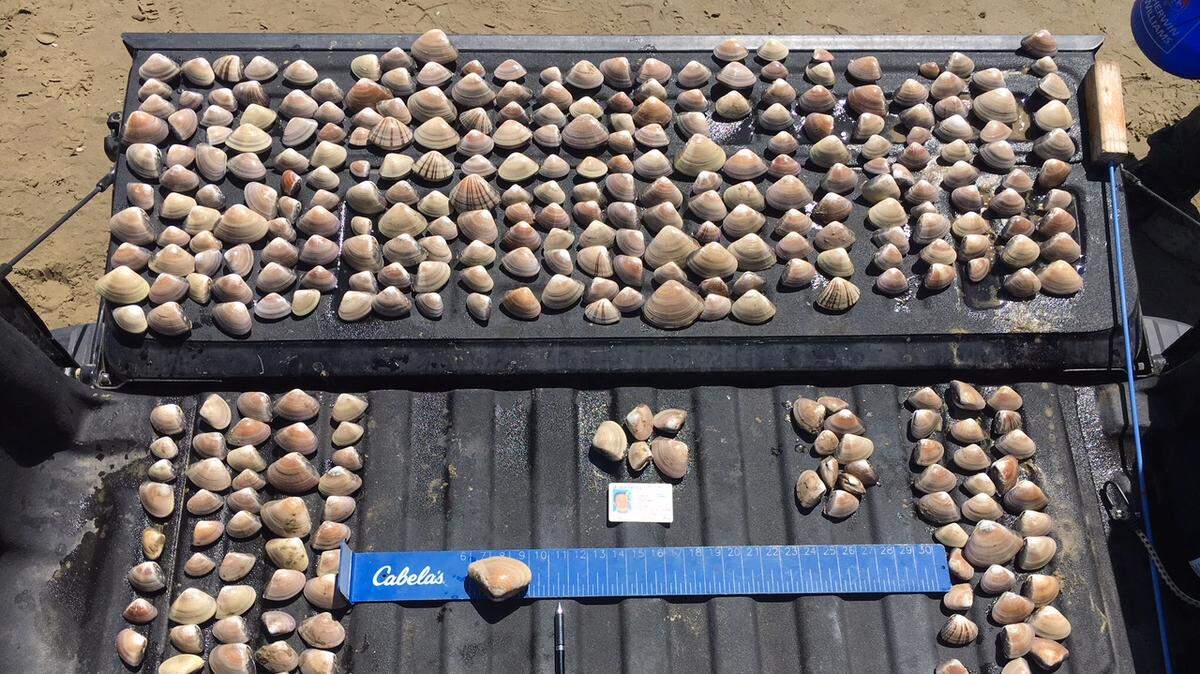
Pismo Beach clams are on the verge of a comeback — but only if people stop taking them from beaches now.
For the first time in more than 20 years, Pismo Beach clams are close to being legally harvestable again, according to Capt. Todd Tognazzini with the California Department of Fish and Wildlife.
More and larger clams have shown up on the beaches in the past two years, he said, noting that recently, the largest clams are just under 4 inches. (The minimum size to harvest is 4.5 inches.)
“The clams are bigger,” he said. “They are almost to consumable size. So people are taking them.”
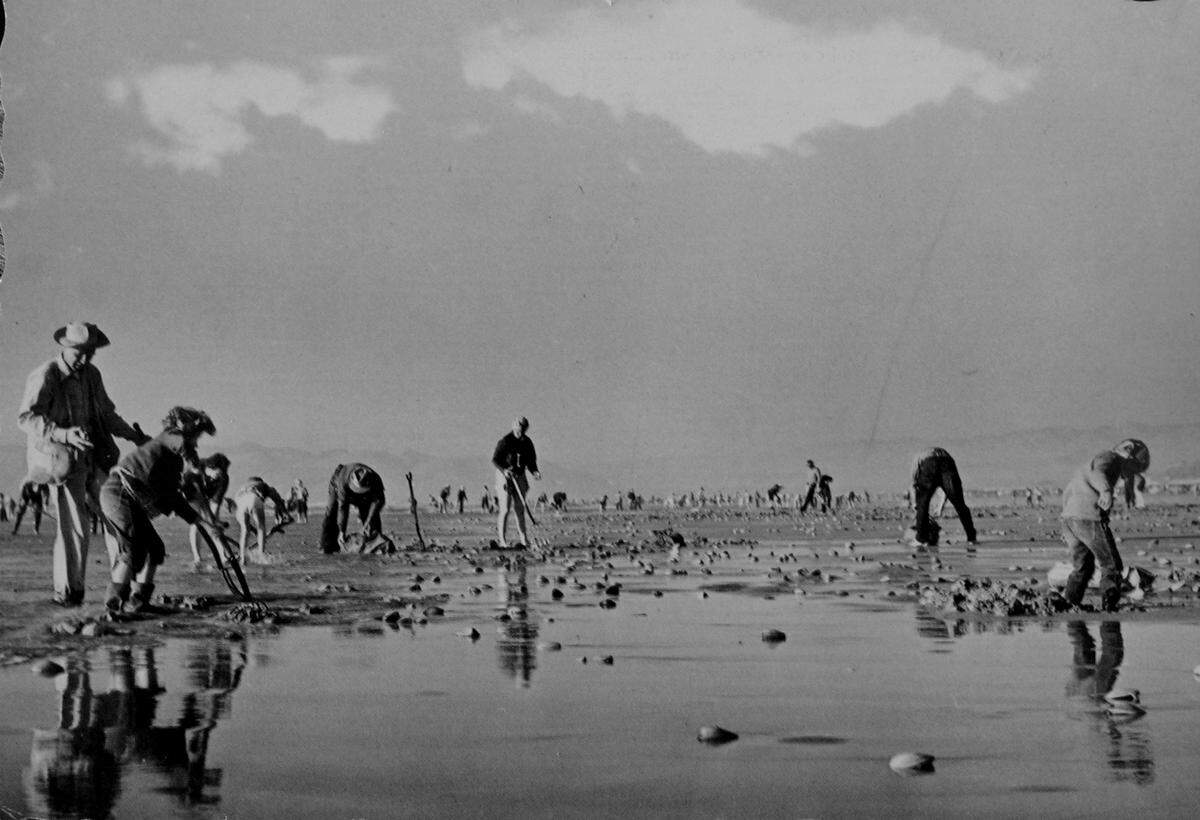
In the mid-1900s, clams were once so prolific in Pismo Beach that as many as 5,000 people a day would turn out to harvest them, until overconsumption devastated the population and forced the fishery to be closed.
They were last legally harvestable in the early 1990s.
So far this year, Tognazzini said Fish and Wildlife officers have issued more than 130 citations to people taking the still-too-small bivalves from the sand. They’ve seized more than 3,000 undersize clams. The officers make offenders rebury the clams when possible or do it themselves.
Besides the size limits, clammers are required to get a fishing license from the state before harvesting them. Fines for illegally harvesting clams are $20 per clam, plus court costs and penalties.
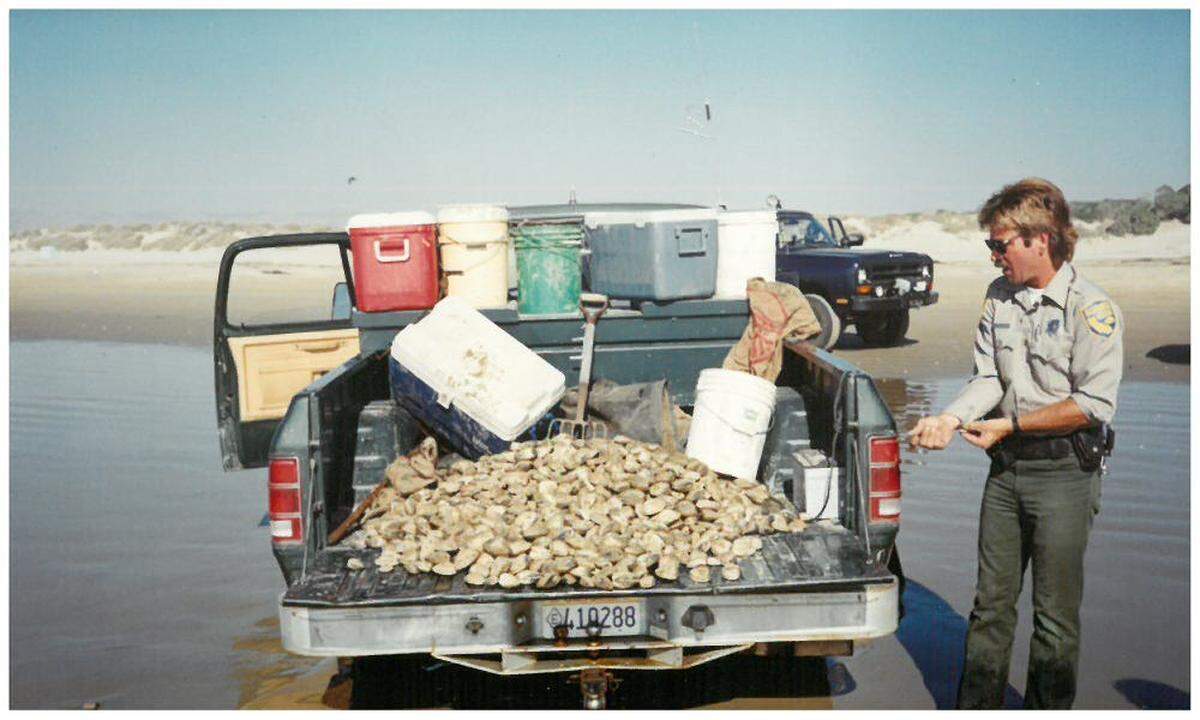
In most cases, people are taking the clams to eat themselves, Tognazzini said, though some have been caught taking huge numbers — the largest seizure was 335 at one time — potentially with the intent to sell them.
Wardens even seized 130 clams from someone in Cayucos recently, the first time they’ve ever issued a citation for clamming in that area, he said. Most of the other citations are clustered in the Pismo Beach area, especially around the pier.
Tognazzini said the department has noticed that increases in the number of tourists — particularly those from the San Joaquin Valley — seem to correlate with increases in the number of clamming citations.
“It seems to be related to the number of people coming in,” he said. “It’s happening in June and July, when the weather is warmest, and people are coming over. A high percentage of violators are from the San Joaquin Valley.”
If left alone, the clams could grow to harvestable size and become a sustainable population by as soon as next year, Tognazzini said.
“We would absolutely have a legal fishery by next year, by 2019, if we could get people to leave them alone,” he said.
This story was originally published August 15, 2018 at 11:55 AM.