
Cal Poly fraternities repeatedly violated SLO policy during recruitment, city found
Fraternities and sororities in San Luis Obispo violated city code at least 60 times in three weeks during fall recruitment by holding rush events in neighborhoods without proper permits, according to a series of city reports sent to the university in December and obtained by The Tribune.
The reports, submitted to the Office of Student Rights and Responsibilities by SLO Code Enforcement supervisor John Mezzapesa on Dec. 11, detailed a “comprehensive inspection campaign” conducted by code enforcement over a three-week period during fall 2025 recruitment.
The effort was intended to identify recruitment events hosted by Greek Life organizations within city limits, Mezzapesa wrote.
During the campaign, officers not only witnessed repeat policy violations, but also reportedly encountered members of Greek Life who lied about events and refused to disclose information to city officials.
“Twelve of the 16 fraternities found in violation refused to confirm or outright denied that an event took place at one or more locations that staff had already confirmed as event sites,” the email said.
Mezzapesa requested that the university launch investigations into the violators identified by code enforcement.
“As a result of the documented municipal code violations, the intentional withholding of information, and the refusal to confirm the occurrence of events, we are asking the Office of Student Rights and Responsibilities to investigate whether the Recognized Student Organizations violated Cal Poly’s Recognized Student Organization Code of Conduct,” Mezzapesa wrote.
The campaign came after months of community complaints about noisy parties and neighborhood disturbances associated with Greek Life organizations, in addition to a Grand Jury investigation that found the city was falling short in its enforcement efforts, which the city largely denied.
Neighbors have accused fraternities of hosting raucous parties at satellite houses in the residential neighborhoods near Cal Poly without the proper permitting, and repeat violations for several organizations have resulted in all but one of the university’s previously permitted fraternities losing their conditional use permits, meaning they can no longer host fraternal events on site.
A second non-traditional fraternity CUP is also held within the city, but that permit dates back to the 1950s and is treated differently than other permits, and several sorority permits are still held, according to community development director Timmy Tway.
Which organizations were accused of violating city code?
According to the documents obtained by The Tribune, more than 20 Greek Life organizations were accused of hosting events in conflict with city policy between Sept. 26 and Oct. 4, 2025 — with some members receiving citations and reportedly lying to city officials.
Code enforcement’s fall recruitment campaign began when officials visited the Interfraternity Council’s “Kick-Off BBQ” held on O’Neil Lawn near Spanos Stadium on Sept. 25 to speak with fraternity members about city code.
Mezzapesa wrote in one of the reports that officials visited the event after Cal Poly refused to disclose the locations of registered fraternity and sorority events to code enforcement — an issue that the university is currently facing litigation over.
SLO resident Kathie Walker sued the university in March over its failure to provide the addresses of some event locations through a public records act request, citing privacy concerns.
“The refusal to disclose the locations in which events have taken place to another government agency has required the code enforcement team to perform independent investigations to obtain this information,” Mezzapesa said, leading the team to show up at the kick-off barbecue.
While there, officers attempted to obtain a rush card detailing the locations of the scheduled recruitment events for each fraternity, but quickly ran into a roadblock, the report indicated.
“Of the 18 fraternal members of the IFC, six provided a card to our staff,” Mezzapesa wrote. “In fact, as City staff began visiting each booth at the BBQ, the president of the IFC made it a point to quickly visit each booth and advise each organization not to share information related to upcoming RUSH events.”
That left code enforcement officers to investigate and cross-check event locations using social media posts, citation information and the rush cards they were able to obtain to determine which organizations were out of compliance with code.
“After roughly 100+ hours of dedicated research and inspection time over the span of three weeks, staff confirmed that fraternal and sororal organizations held 64 events across 45 locations in violation of the San Luis Obispo Municipal Code,” Mezzapesa wrote.
As a follow to his initial email, Mezzapesa sent a series of reports to the university detailing the allegations waged against each organization.
The list of alleged violators included both fraternities and sororities and spanned locations both with and without conditional use permits.
Several organizations with approved conditional use permits were accused of violating their conditions by hosting events with visitors after 10 p.m., or having too many people at their events without securing permission from the community development director, the report said.
Such organizations included Alpha Chi Omega, Alpha Omicron Pi, Chi Omega, Delta Chi, Delta Gamma, Kappa Alpha Theta and Lambda Chi Alpha.
Other organizations were accused of hosting events at satellite houses without conditional use permits at all.
Those organizations included Alpha Sigma Phi, Beta Theta Pi, Delta Upsilon, Kappa Kappa Gamma, Kappa Sigma, Lambda Chi Alpha, Lambda Theta Phi ,Phi Gamma Delta, Phi Kappa Psi, Phi Sigma Kappa, Pi Kappa Phi, Sigma Nu, Sigma Phi Epsilon, Sigma Pi, Theta Chi and Zeta Beta Tau.
Additionally, Mezzapesa expressed suspicion that Phi Delta Theta had violated city code since it was at the IFC rush event and does not hold any conditional use permits in the city — but the organization refused to provide a rush card to code enforcement, and no specific street addresses were reported, according to the documents.
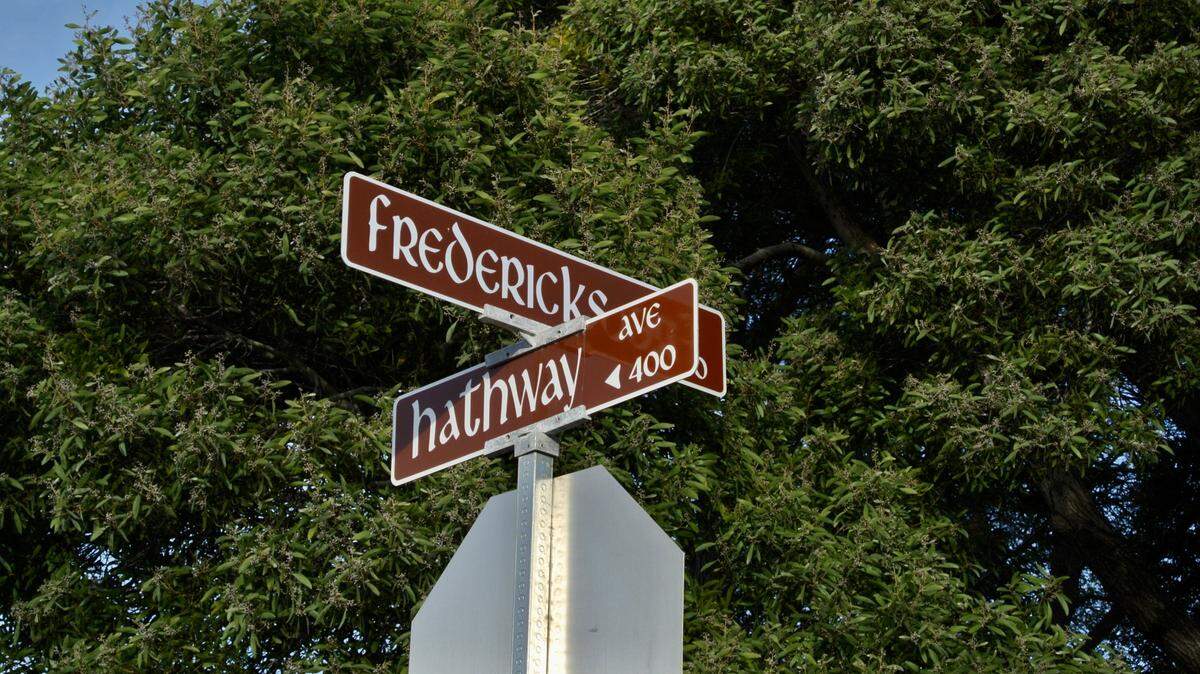
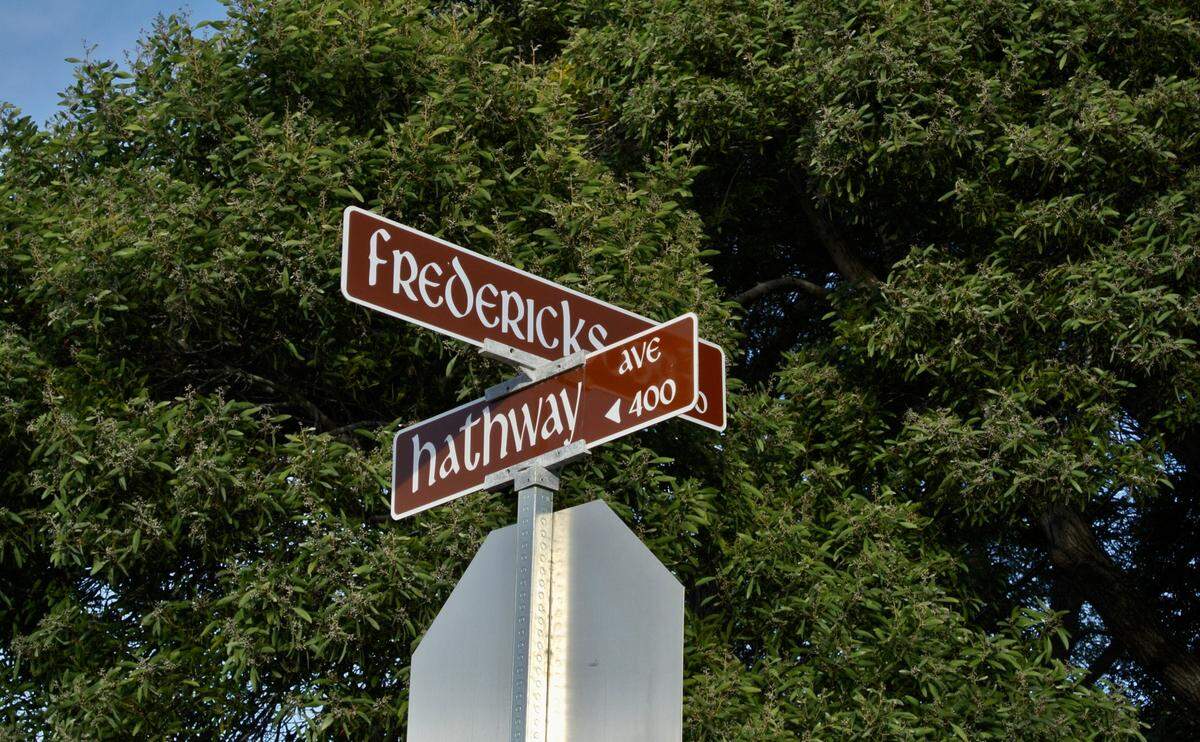
Most of the locations identified by code enforcement were located in the neighborhoods surrounding campus. Eight locations on Foothill Boulevard were identified, in addition to three on Stenner Street, three on Fredericks Street and three on Hathway Avenue.
Others were scattered on other nearby streets, including Bond Street, McCollum Street, Grand Avenue, Monte Vista Place, California Boulevard, Crandall Way, Loomis Street, Henderson Avenue, Kentucky Street, Chaplin Lane, Albert Drive, Orange Drive, Hays Street, Slack Street, Hope Street and Graves Avenue.
One additional unpermitted residence was located farther west of campus on Oceanaire Drive near Laguna Lake, the report said.
Some organizations were issued Notices of Violations for violating land use policy, and/or administrative citations from code enforcement, the report said.
Other organizations also received police citations for noise violations or for hosting unruly gatherings.
Additionally, code enforcement followed up with several locations after the rush events, asking residents to confirm if they were members of Greek Life and whether a sanctioned fraternity event had been held at the location.
Officers received a variety of responses, with some members of Greek Life confirming their identities and the rush events that occurred, while others denied that any fraternity-related events were held onsite, the report said.
Some respondents also reportedly refused to confirm if they were a member of Greek Life.
The reports submitted by code enforcement included screenshots of social media showing rush events at various locations in the city, as well as the rush cards that officials were able to obtain, and apparent photos from city officials driving past unsanctioned events as they were happening.
All of the locations mentioned in the report were reported to Cal Poly’s Office of Student Rights and Responsibilities for potential investigation.
“Although previous reports of similar conduct were deemed insufficient to establish a nexus with the Recognized Student Organization Code of Conduct for adjudication, we respectfully urge your office to initiate an investigation into each organization named,” Mezzapesa wrote.
He said in his email that each incident was also reported individually via the incident report form on the Cal Poly department’s website to “formally initiate investigations.”
“We also request confirmation of the decision regarding whether to move forward with adjudication, as well as copies of all determinations after adjudication is complete,” he wrote.
It remains unclear exactly what, if any, consequences were faced by the fraternities and sororities alleged to have violated city code.
According to Tway, Mezzapesa received a response from the university after submitting the reports.
“The university stated that they appreciate the time and effort that city staff put into documenting the concerns, and noted that the Office of Student Rights and Responsibilities does not initiate investigations at the direction of external entities or for the purpose of supporting external enforcement processes,” Tway wrote in an email.
The university told Mezzapesa that it would review the information provided to determine if the allegations met the threshold for a university-led investigation, Tway said.
“They did not provide any further information about whether there was initiation of disciplinary proceedings or any determinations of further action,” she added.
Meanwhile, university spokesperson Matt Lazier told The Tribune on Thursday that Cal Poly “reviewed each of the reports you reference and took appropriate educational action in response.”
Tway said the city will investigate reports of unpermitted fraternities and enforce city regulations.
“Community Development will continue to provide Cal Poly with information about organizations that are violating the municipal code,” she said. “... The city will continue to work to ensure neighborhoods are livable for all residents and work with Cal Poly to address issues related to neighborhood compatibility and Greek housing.”
.JPG)