
Cal Poly grad makes history with space distance record. ‘We love you, from the moon’
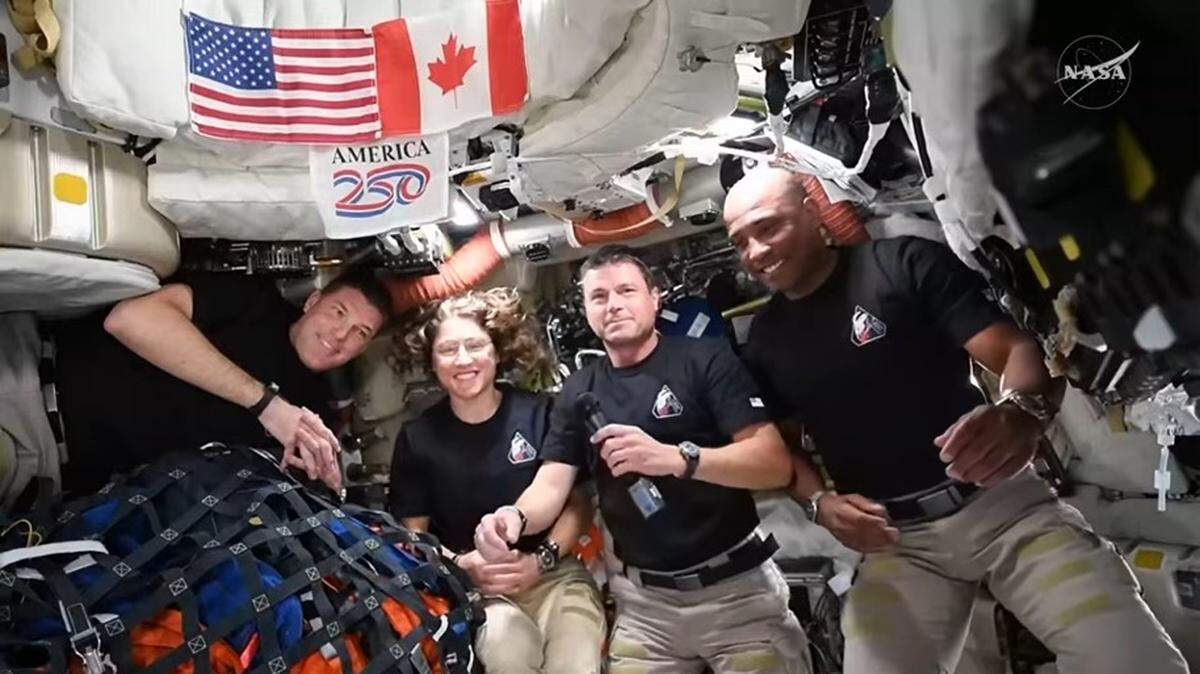
A Cal Poly graduate has joined the exclusive club of astronauts who have seen the moon up close as the crew of the Artemis II completed a historic flyby Monday.
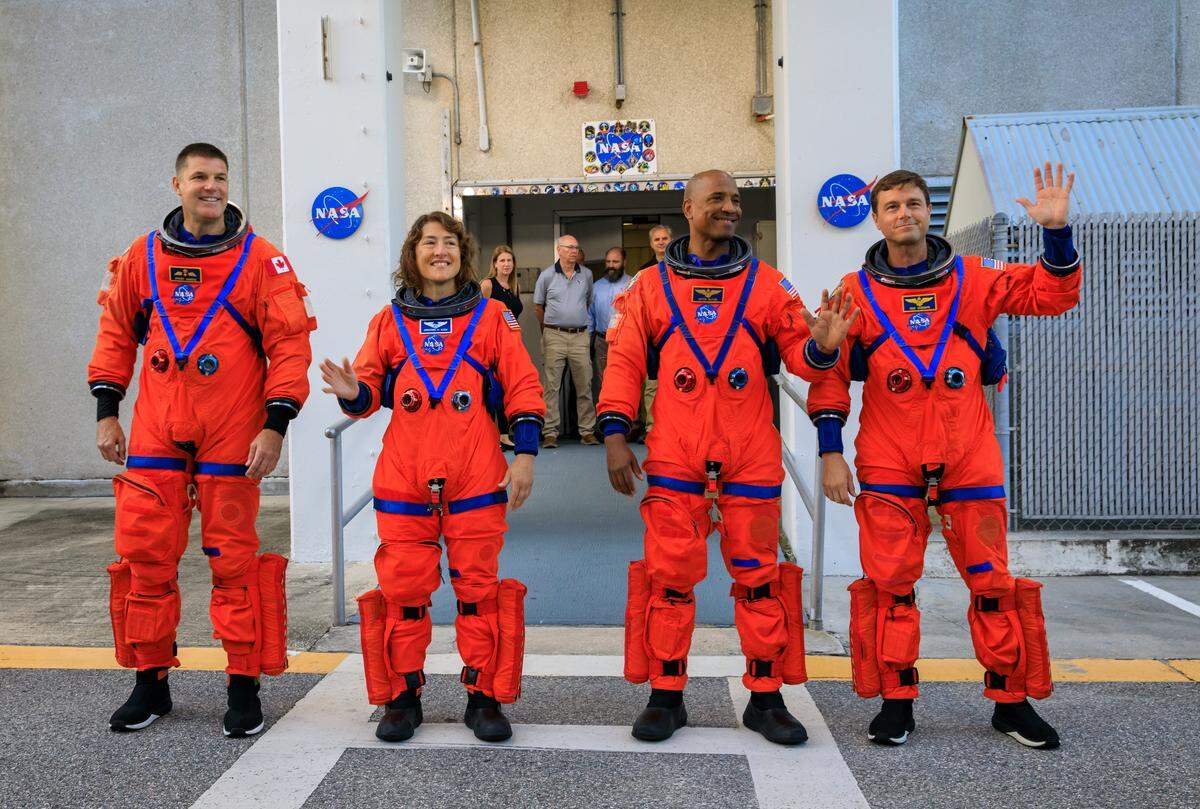
Aboard the Orion spacecraft, Cal Poly alumnus Victor Glover — alongside fellow crewmembers Reid Wiseman, Christina Koch and Jeremy Hansen — conducted the first lunar flyby since Apollo 17’s in 1972.
The moon view isn’t the only historic thing that happened that day.
At approximately 10:56 a.m. PDT, the crew officially broke the record for the farthest distance ever traveled from Earth by any human, according to NASA.
The spacecraft reached its maximum distance at 4:07 p.m., when it hit 252,760 miles away from Earth.
The crew celebrated the achievement by proposing two names for a pair of new craters observed on the moon in recent days: one called the Integrity, the name of the spacecraft they traveled on, and another named after mission commander Reid Wiseman’s late wife, Carroll, who died of cancer in 2020.
What happened during lunar flyby?
The lunar observation began at 11:45 a.m.
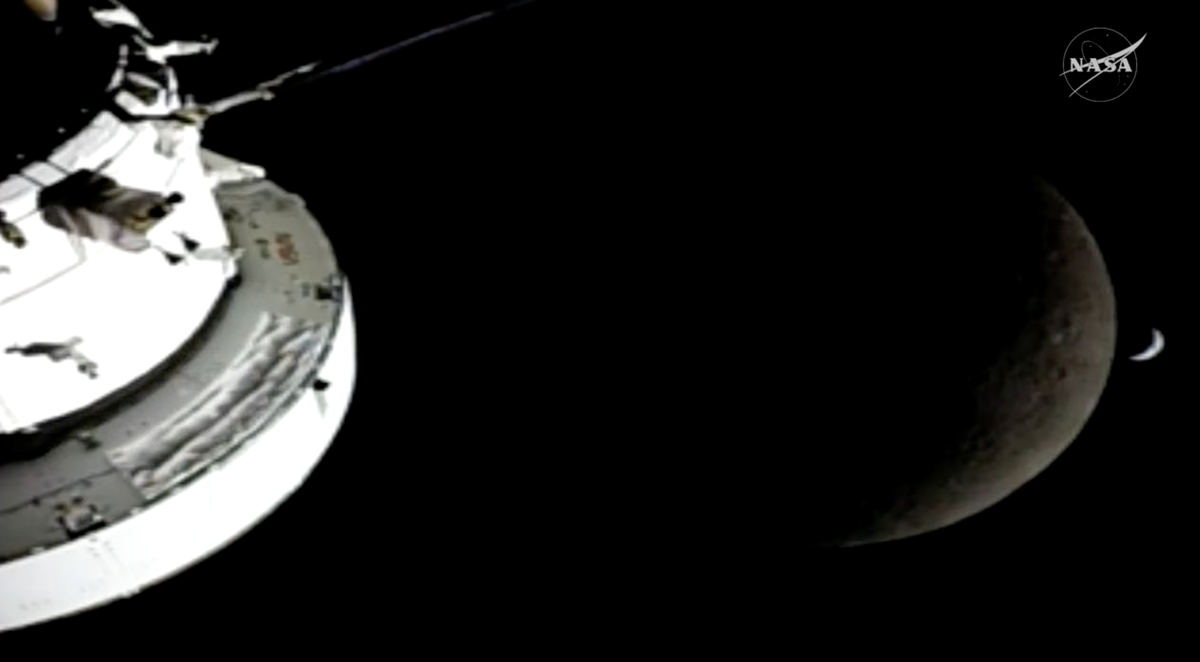
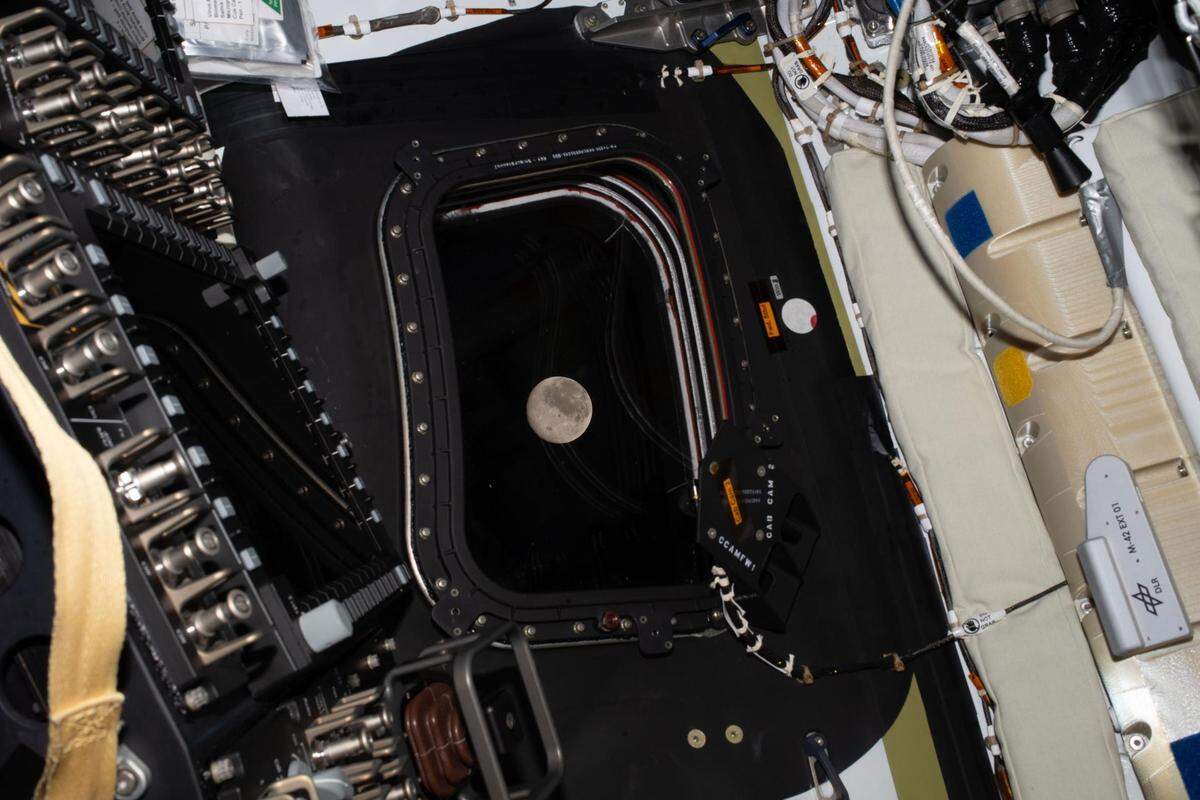
During the roughly seven-hour journey, the spacecraft was “close enough to the moon for the crew to make detailed observations of geologic features on the lunar surface,” according to NASA.
At approximately 3:44 p.m., the mission entered a planned communications blackout for about 40 minutes as the moon blocked radio signals needed to maintain contact. That was the point when the spacecraft will actually be closest to the moon, a mere 4,070 miles above its surface.
“As we prepare to go out of radio communication, we’re still going to feel your love from Earth,” Glover said from the spacecraft. “And to all of you down there on Earth and around Earth, we love you, from the Moon. We will see you on the other side.”
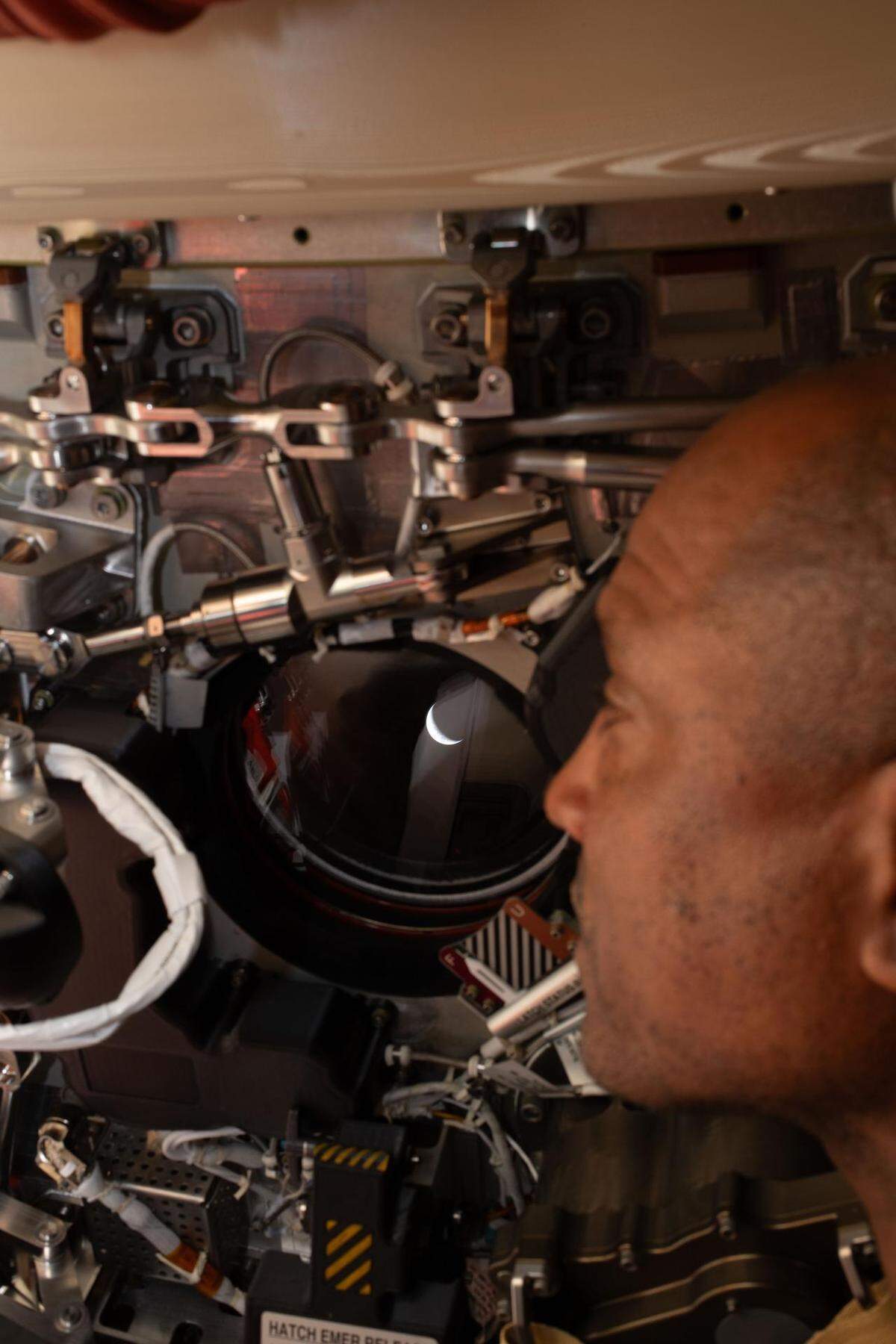
Around 5:35 p.m., the crew also witnessed a solar eclipse as the spacecraft, moon and sun all aligned.
Throughout the flyby, Glover offered detailed descriptions of what the crew were seeing. As the moon blocked out the sun so that only its corona was visible, Glover noted the beauty of a sight so rarely seen by human eyes.
“It is amazing the brightness where the sunset is still bright, and you still have a distinct Earth shine,” he said.
Cal Poly calls grad’s historic flight a ‘powerful reminder’
As the Artemis II mission continued its historic orbit of the moon Monday with Glover as its pilot, Cal Poly President Jeffrey Armstrong had a simple message for the campus community: “Mustangs are making their mark.”
“In my 15 years at Cal Poly, I have had countless moments of pride — but some events stop you in your tracks and remind you, unmistakably, why this university exists,” he said in an email to campus. “This past week has been one of those times.”
As a 1999 engineering graduate, Armstrong said Glover demonstrates the university’s Learn by Doing philosophy can take students “literally around the moon and back.”
“Victor and his fellow astronauts are a testament to what’s possible when curiosity meets opportunity, when hands‑on learning fuels ambition, and when determination is paired with service,” Armstrong wrote. “From our classrooms and labs to the farthest reaches of human endeavor, his path reminds us that what starts here can truly change — and reach — the world. We have our tremendously dedicated faculty and staff to thank for contributing to his success, and to the success of all Cal Poly students.”
He continued:
“This week reminds us that at Cal Poly, we don’t just imagine what’s possible — we prepare people to achieve it. From San Luis Obispo and Solano to the far side of the moon, Mustangs are making their mark. This is a historic week. This is a powerful reminder of who we are. And this is an extraordinary time to be a part of this university.”
This story was originally published April 6, 2026 at 10:44 AM.
%20Cropped.jpg)