
Cal Poly professor’s test flight soars into the stratosphere as students watch
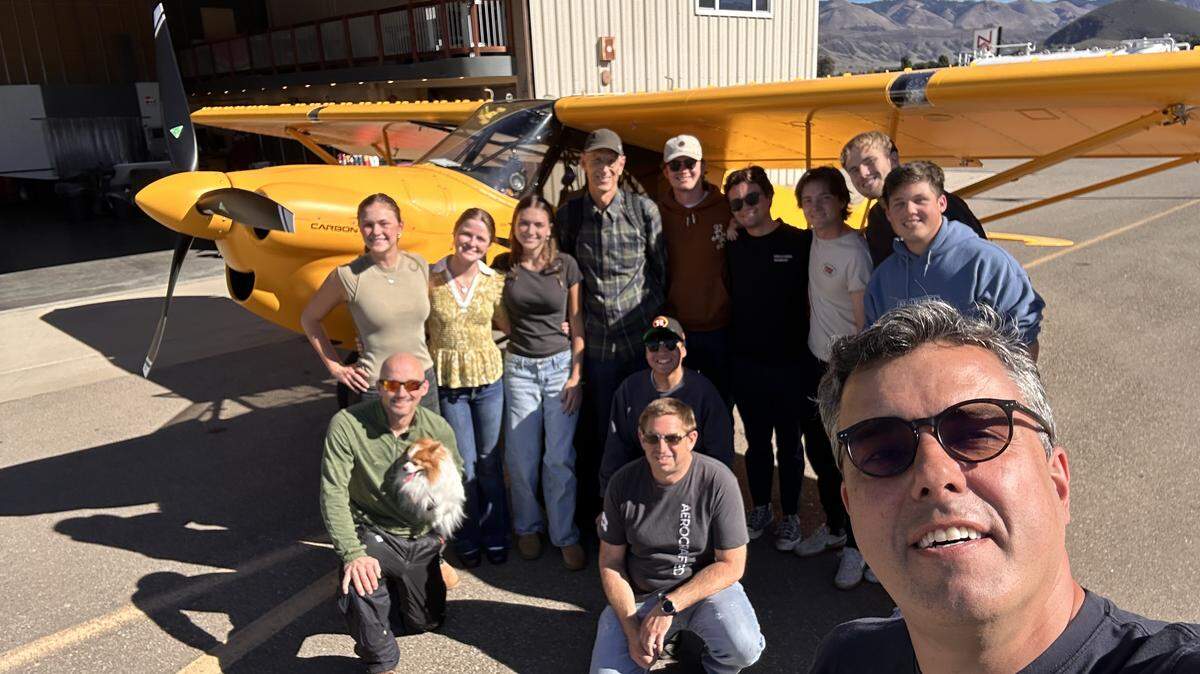
A bush plane soared to record heights above the Central Coast last week, under the direction of a Cal Poly professor and with a class of students listening in live from the ground more than seven miles below.
Aerospace engineering Professor Paulo Iscold directed the flight, which departed from San Luis Obispo County Regional Airport at 9:55 a.m. on Oct. 28 with Jon Kotwicki in the pilot’s seat, according to a news release from the university.
After about an hour of climbing, the Carbon Cub UL plane, which was outfitted with a turbocharged Rotax 916 iS engine, reached a record-breaking 37,609 feet — exceeding a record previously set for Cub-style planes in 1951, the university said.
The propeller plane flew to stratospheric heights where temperatures reached near -50 degrees Fahrenheit, surprising other pilots in the air at the same time.
The flight was not filed as an official Fédération Aéronautique Internationale record attempt, the release said, but it passed the 30,203-foot altitude set in 1951 by aviator Caro Bayley in a Piper Super Cub, as well as the official ultralight mark of 35,062 feet set in 1996.
Plus, Iscold directed the flight live in front of a class of Cal Poly students.
“Teaching by doing, together, is what we want them to experience,” Iscold said in the release. “These were airline pilots on the frequency, and students listened to all of it, live.”
Iscold said this was his 17th flight record, and he described it as “one of the most fun to go after.”
“In test flying, we plan for everything to go wrong,” Iscold said. “When everything goes right, that’s the flight you wanted. That’s the flight we got.”
According to the release, the pilot said the plane remained controllable even at such a high altitude, and the flight drew attention from other air traffic shocked to hear the single engine bush plane was flying at 37,000 feet.
Interim College of Engineering Dean Robert Crockett commended Iscold’s “Learn by Doing” approach to the lesson.
“What Paulo did here is take world-class flight test work and put students right alongside it,” Crockett said in the release. “They heard the planning, the procedures, the coordination with air traffic control, and they saw how careful engineering makes something like this possible. That’s exactly the kind of experience that prepares our students for aerospace careers.”
.JPG)