St. Fratty’s cost SLO, Cal Poly nearly $500,000 total — and the number will rise
The San Luis Obispo Police Department and Cal Poly together spent at least $495,000 to respond to St. Fratty’s Day revelry.
For this year’s St. Fratty’s Day, both the city and Cal Poly decided to be proactive in keeping students out of the streets, with the city doubling fines and increasing police presence and the university hosting an early morning music festival to give students a place to celebrate safely on campus.
More than $120,000 of that went to the Police Department’s St. Fratty’s Day enforcement — while Cal Poly spent $375,000 on booking musical acts alone for its music festival.
Cal Poly is not yet done with compiling the total expenses, Cal Poly public records officer Kevin Cushing told The Tribune, adding that the list should be compiled by May 1.
The stricter enforcement comes a year after more than 6,000 students assembled in an illegal block party near California and Foothill Boulevards in 2024. The party ended with thousands of dollars in property damage to homes and Cal Poly dorms.
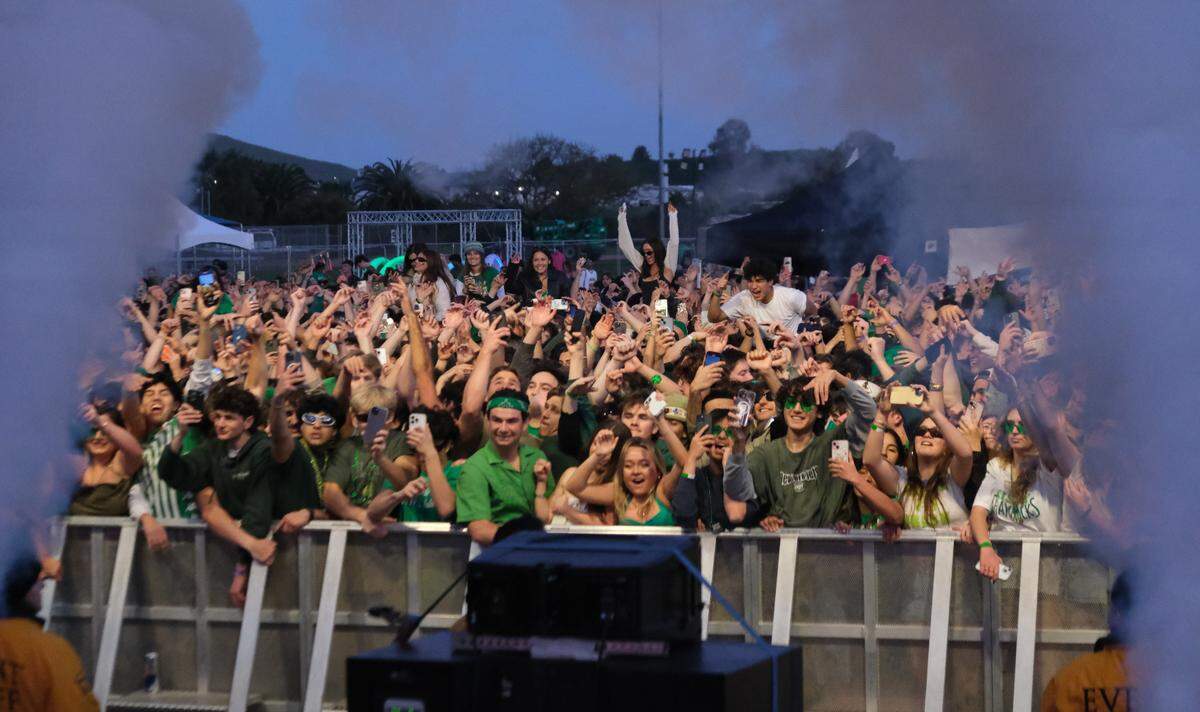
The efforts appeared to work, with 6,000 students attending Cal Poly’s “Morning on the Green” music festival and no illegal street parties occurring in the neighborhoods.
Arrests and citations also fell sharply from the year before, with 45 citations and 25 arrests, the Police Department said. In comparison, St. Fratty’s Day 2024 saw 159 citations and 35 arrests.
So, how much money went into preventing the party? Here’s what The Tribune knows so far.
St. Fratty’s Day enforcement cost more than $120,000, city says
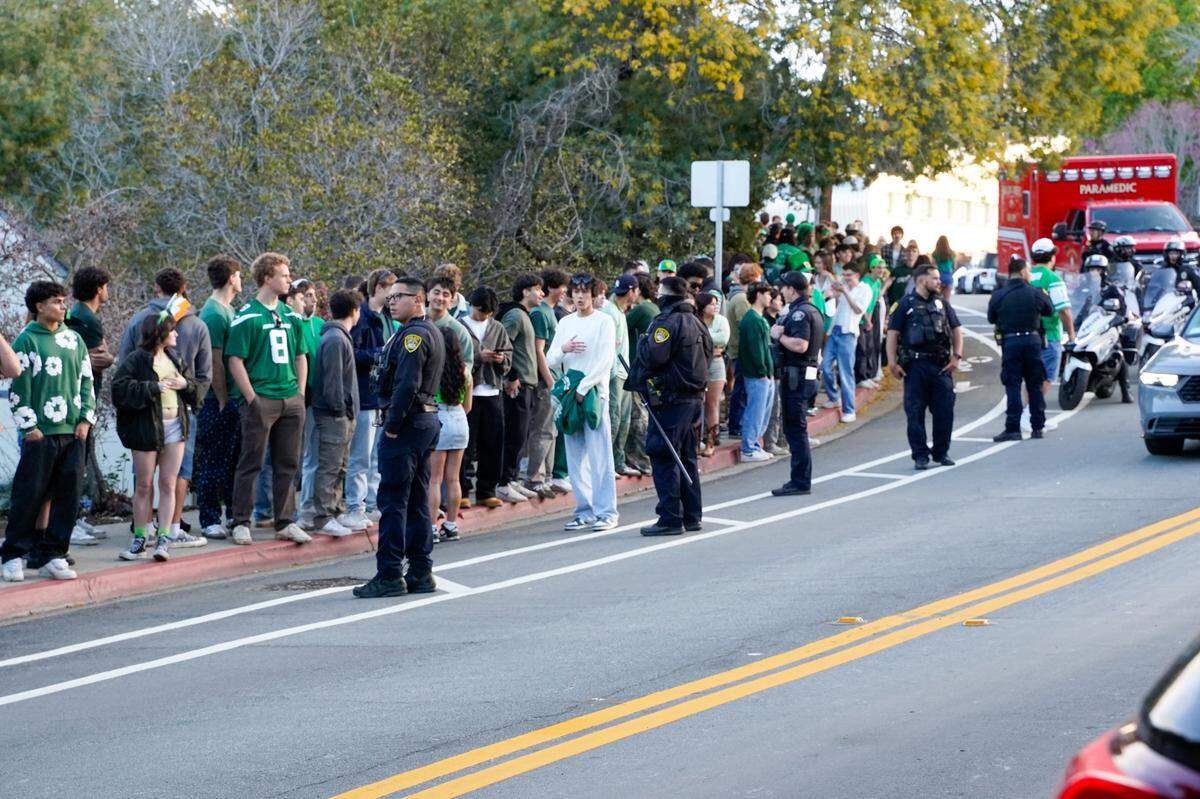
The Police Department spent a total of $123,649 on St. Fratty’s Day enforcement.
The majority of that went to police officer overtime, which totaled to $94,143 across the two weekends of the safety enhancement zone, which doubled fines and increased police enforcement the weekend before and the weekend of St. Fratty’s Day.
On March 15 — the day of the celebration — San Luis Obispo police officers were paid a total of $48,650 in overtime wages, data shows. March 14, the day before, cost $14,472 in overtime, while March 16, the day after, cost $788 in overtime. March 17, St. Patrick’s Day, cost $22,220 in overtime wages.
The first weekend of the safety enhancement zone, March 7-9, cost $8,011 in overtime wages, according to city data.
A total of 69 San Luis Obispo Police Department personnel worked 1,024 hours of overtime between the two weekends, the city’s data said.
A total of $29,506 went to other St. Fratty’s Day expenses, the data showed. About $18,189 went to logistics, $6,259 went to equipment rental, $4,574 to messaging and $484 went to IT supplies.
Of the $18,189 that went to logistics, $4,418 went to lodging costs for San Francisco Police Department’s nine officers, Shafter Police Department’s three officers, some of the Oxnard Police Department’s 11 officers, and some national guard tech support personnel, Melissa Ellsworth, senior administrative analyst for the Police Department, told The Tribune in an email.
Another $1,907 went to per diem and mileage for the San Francisco Police Department, which the city agreed to in a memorandum of understanding between the two departments. The San Francisco Police Department was the only agency with a memorandum of understanding, Ellsworth said.
No other agencies received payments from the city, she said. Outside personnel wages and costs were covered by their own agencies, Ellsworth added. The event was not a state mutual aid event, she said.
Cal Poly has not yet compiled a list of all expenses it has accumulated related to St. Fratty’s Day, but it told The Tribune it spent $375,000 alone booking the acts for the music festival.
Galantis, who drew a crowd of 6,000 people around 6:30 a.m., cost $125,000 to book, while Zhu, whose crowd dwindled to around 1,000 before he ended his set early around 9 a.m., cost $250,000.
How many law enforcement officers responded to St. Fratty’s Day?
In addition to San Luis Obispo Police Department’s 43 officers on duty on March 15, 224 officers from 25 other law enforcement agencies helped with the response, according to the city. The city also had 13 non-sworn personnel working March 15 for the event.
Central Coast sheriff’s offices sent the most personnel, with Santa Barbara County sending 27 deputies, Ventura County sending 26 deputies and San Luis Obispo County sending 16 deputies.
City police departments in San Luis Obispo County sent a total of 31 officers. Arroyo Grande sent eight, Paso Robles seven, Grover Beach six, Morro Bay and Atascadero four and Pismo Beach two.
Other San Luis Obispo county agencies included the California Highway Patrol, which sent 24 officers; the Atascadero State Hospital Police Department, which sent seven officers; the San Luis Obispo County Probation Department, which sent six officers; and the California Men’s Colony, which sent eight officers.
The Santa Maria Police Department sent 13 officers, the Lompoc Police Department sent 10 officers, the Kings County Sheriff’s Office sent seven deputies, and the Santa Barbara Police Department sent six officers.
California agencies who assisted with the enforcement included the California Department of Alcohol Beverage Control, which sent 10 officers; California State Parks, which sent four rangers; California Department of Fish and Wildlife, which sent three rangers; and the California Office of Emergency Services, which sent one officer.
On Cal Poly’s campus, six Cal Poly Police Department officers were on duty and 13 officers from other California State University System schools and University of Santa Barbara, Cal Poly spokesperson Matt Lazier told The Tribune in an email. He added that California State University also had an additional 34 officers with its critical response unit on hand to be deployed in the event of a critical incident, but the officers ultimately did not need to be deployed.
This story was originally published April 18, 2025 at 2:29 PM.
CORRECTION: A previous version of this story misstated how outside law enforcement personnel were compensated. Outside personnel were compensated by their own agencies.