Cal Poly Rose Parade entry wins innovation award as it celebrates 75 years of making floats
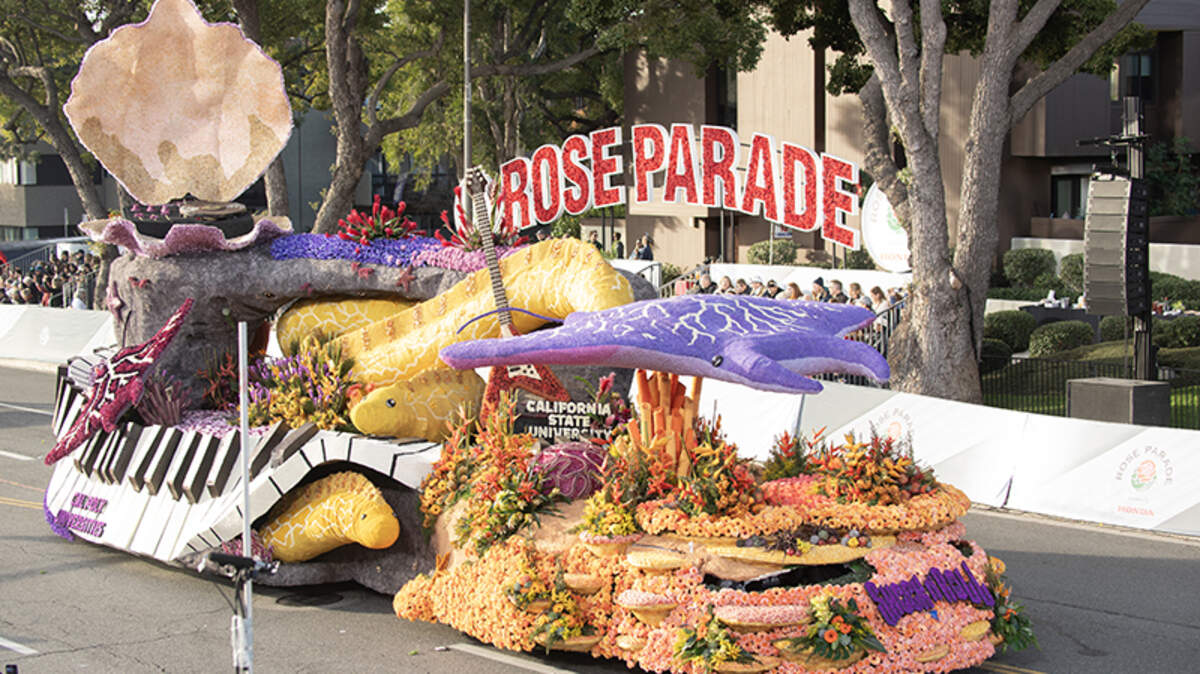
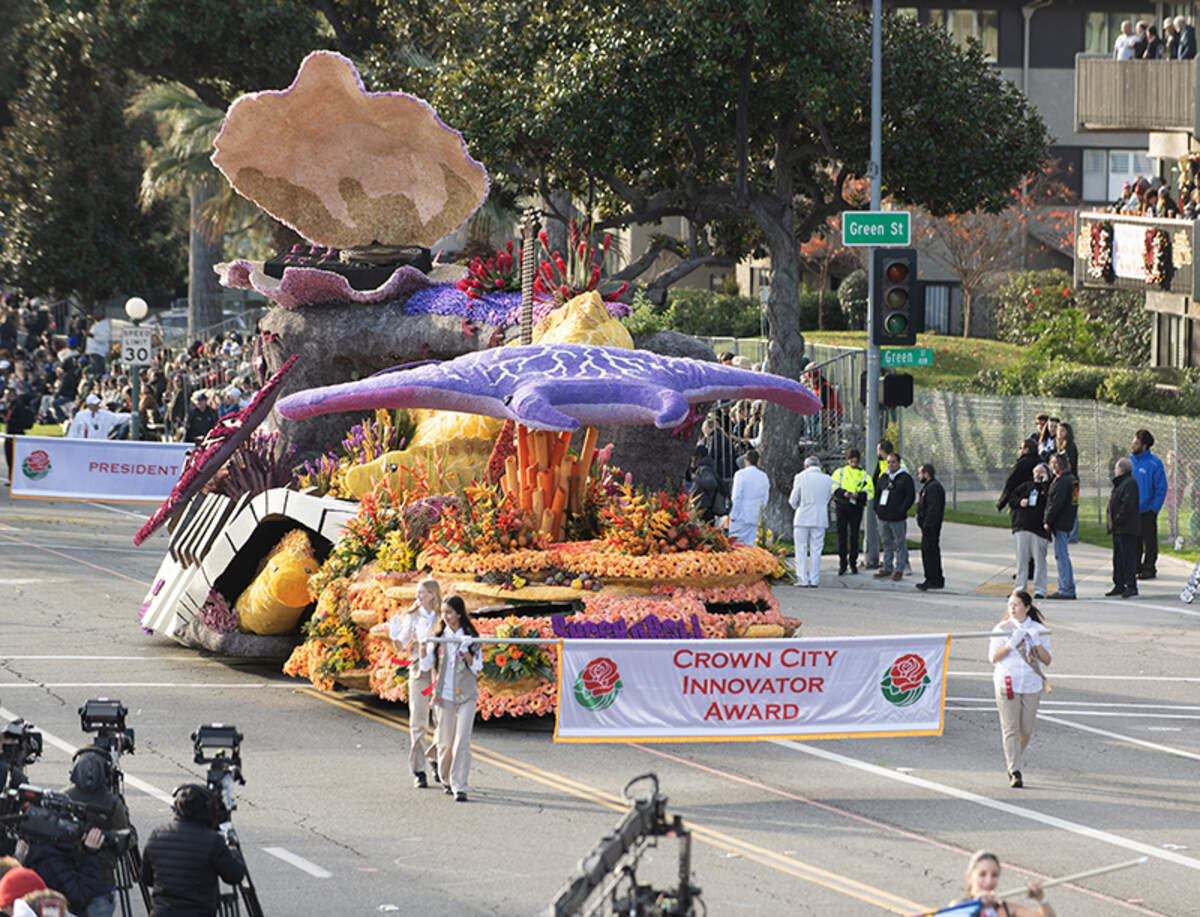
Cal Poly’s float won the Crown City Innovator award on Monday at the 135th annual Rose Parade in Pasadena, for its “rockin’ swim party” theme featuring sea creatures playing instruments.
The award is given to the float with the “most outstanding use of imagination, innovation and technology,” according to a Facebook post by the Cal Poly Rose Float team.
“I feel like it’s really fitting for this year,” Quinn Akemon, Cal Poly Rose Parade Float president, said in a Cal Poly San Luis Obispo news release. “I mean, we really pushed ourselves this year go bigger, go better and to literally innovate.”
The float, called “Shock n’ Roll: Powering the Musical Current,” depicts “a universe in which animals and instruments evolved alongside each other in an underwater environment,” Akemon said in a news release in September.
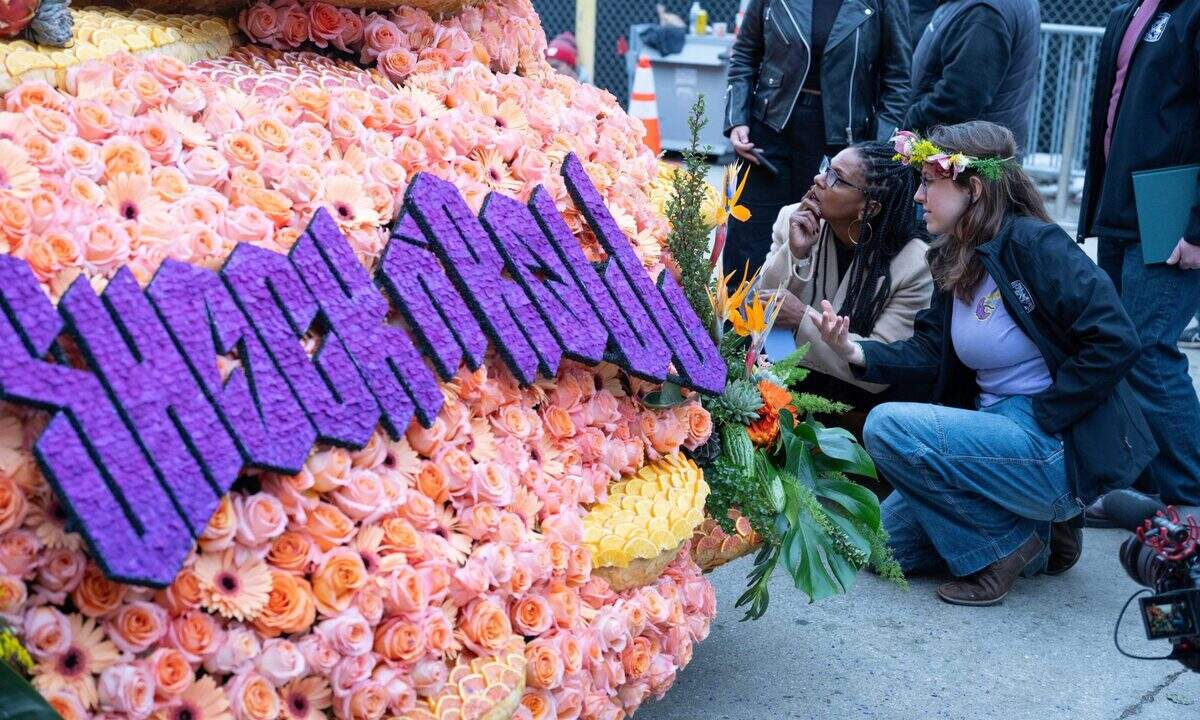
The project aligns with the 2024 Rose Parade’s theme of “Celebrating the World of Music.”
This is the second time Cal Poly won the Crown City Innovator Award. The first time was in 2014 for the Bedtime Buccaneers float that used “1,800 individual vials for flowers at the front corners of the float to create the illusion of rippling waves,” the news release said.
The float is about 55 feet long, 23 feet high and 20 feet wide, according to Cal Poly.
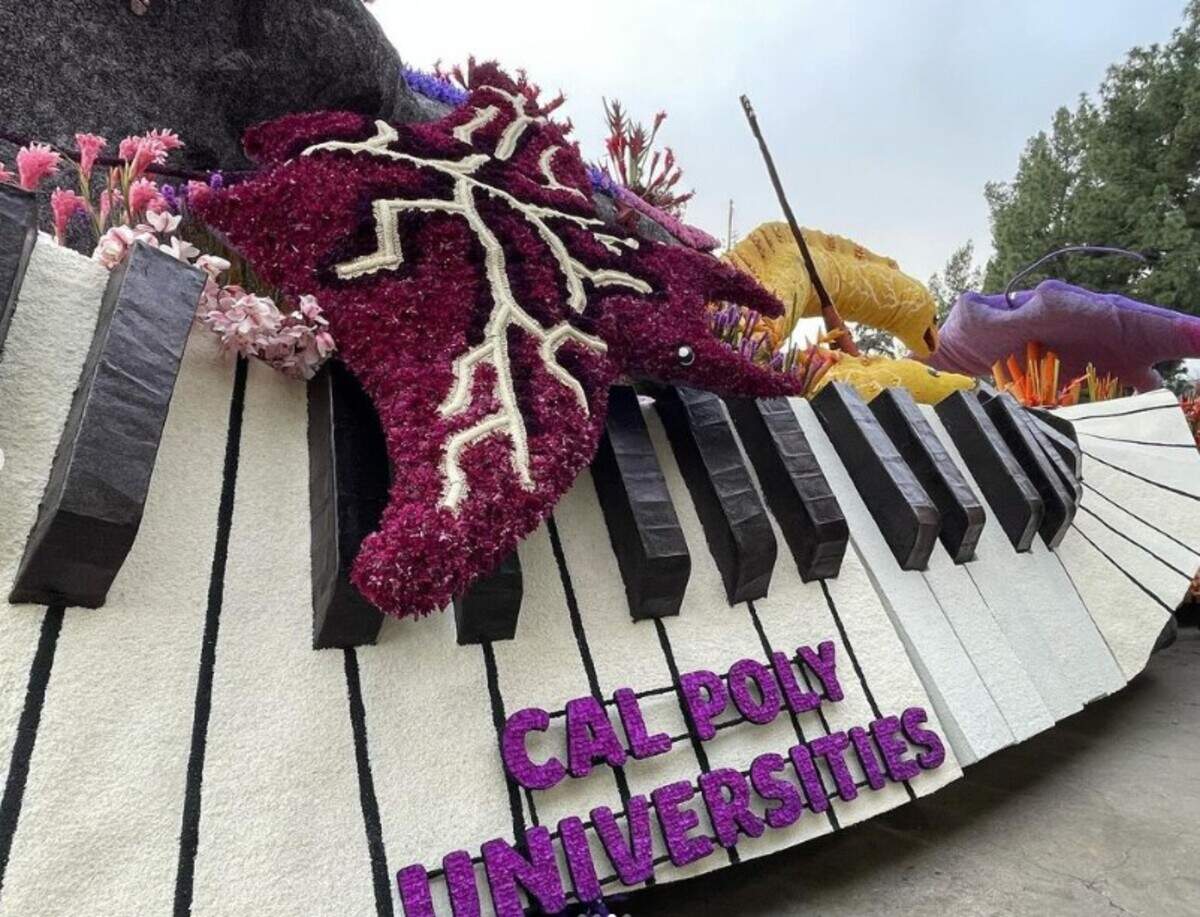
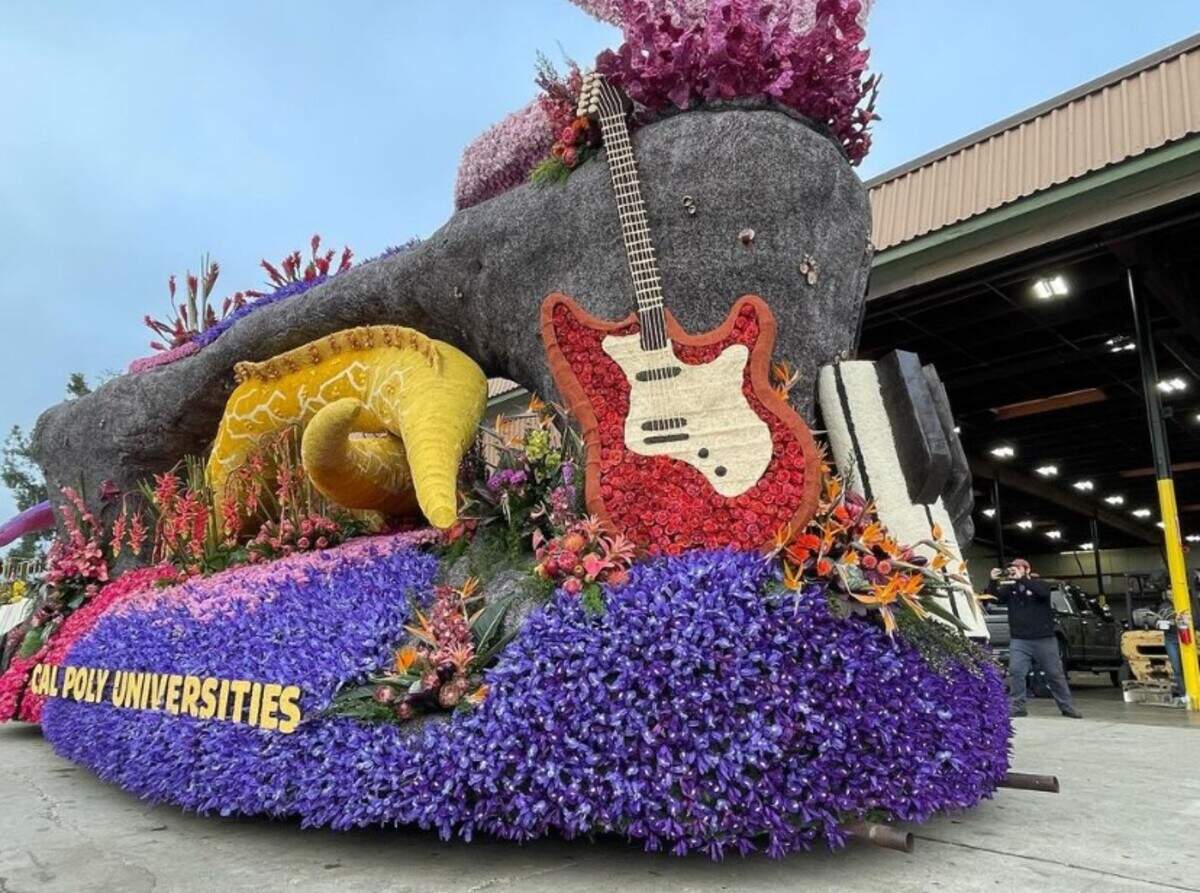
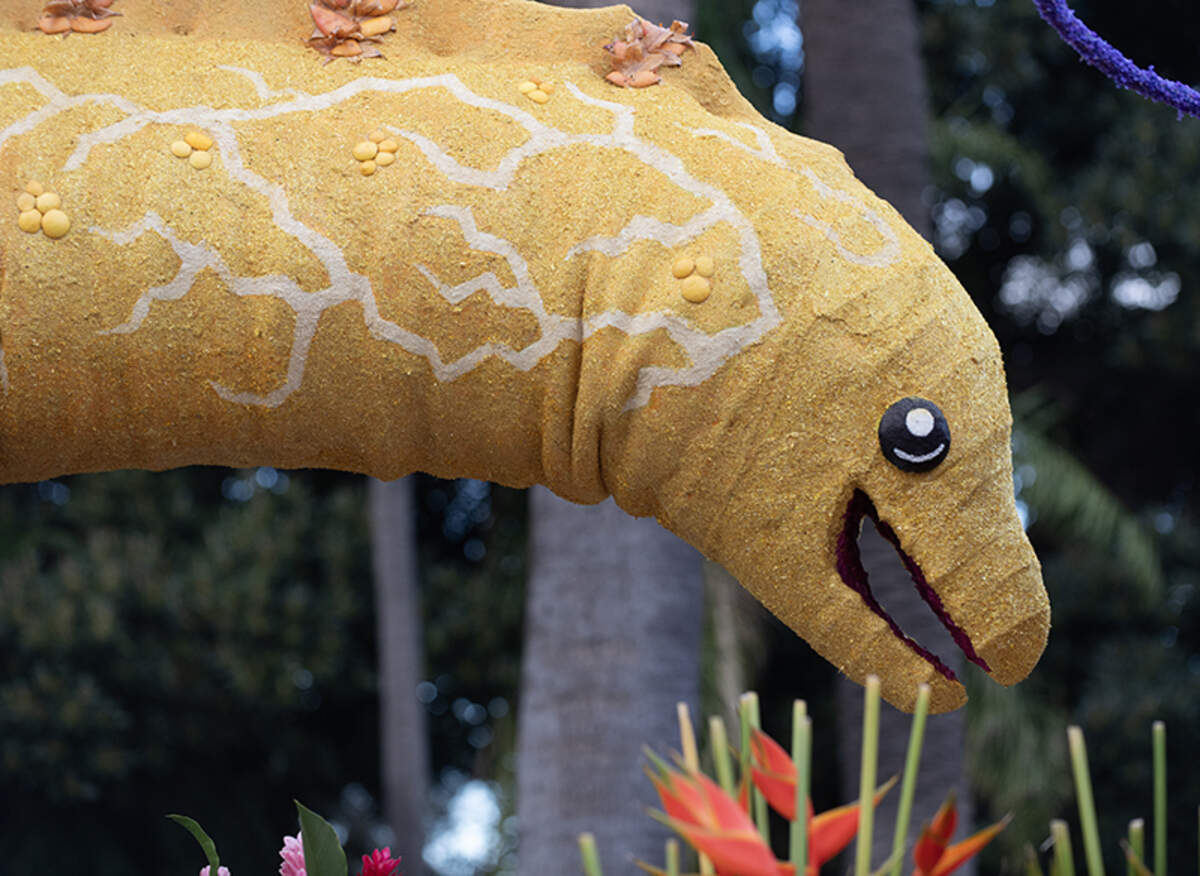
The design includes a 16-foot purple manta ray swimming above a scene of other sea creatures jamming out to music on a coral reef. Additionally, three yellow eels power the instruments with their electric current, the news release said.
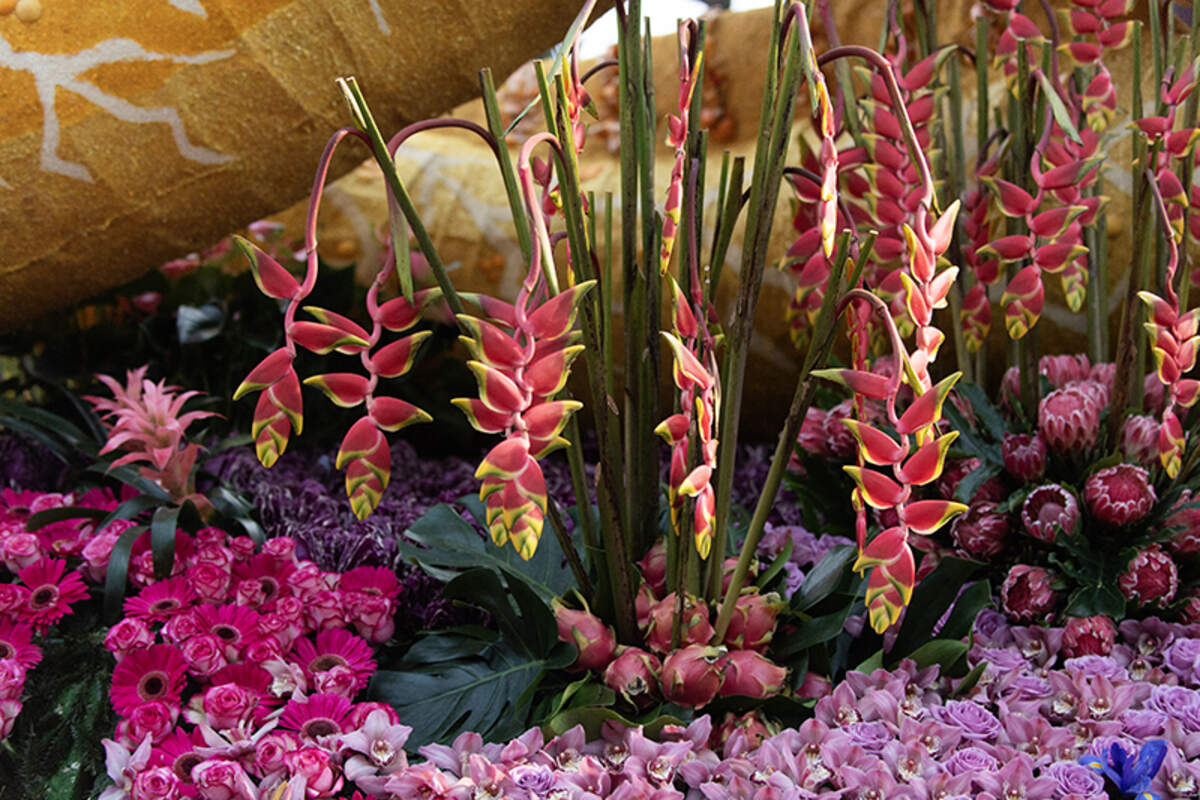
Fruit, vegetables and about 20,000 flowers decorate the float, including dragon fruit, cabbage and ornamental kale fashioned into coral and purple carrots made into sea urchins, Cal Poly said.
“The lead manta is covered with statice, also called sea lavender, a staple as a supporting player in mixed floral bouquets — purply petals carefully dried and processed on the two campuses,” the release said. “On the float stern, the turntable clam echoes the royal shade in a cloak of purple chrysanthemums, while the inner shell shines with pearlescent lunaria.”
The students built a new animation system to control movement on the float, which includes hydraulic animation, pneumatic animation and electric animation, according to the news release.
“We definitely shot for the moon with animations,” Quinn said. “Our massive manta ray, on the front, tilts forward and upwards while also having the wings flapping, so it looks like it’s diving and swimming through the air. All three eels have animations as well. One of the eels has two, the head moves, but it also has a thin ripple like a wave along the length of the dorsal fin, which is pretty cool.”
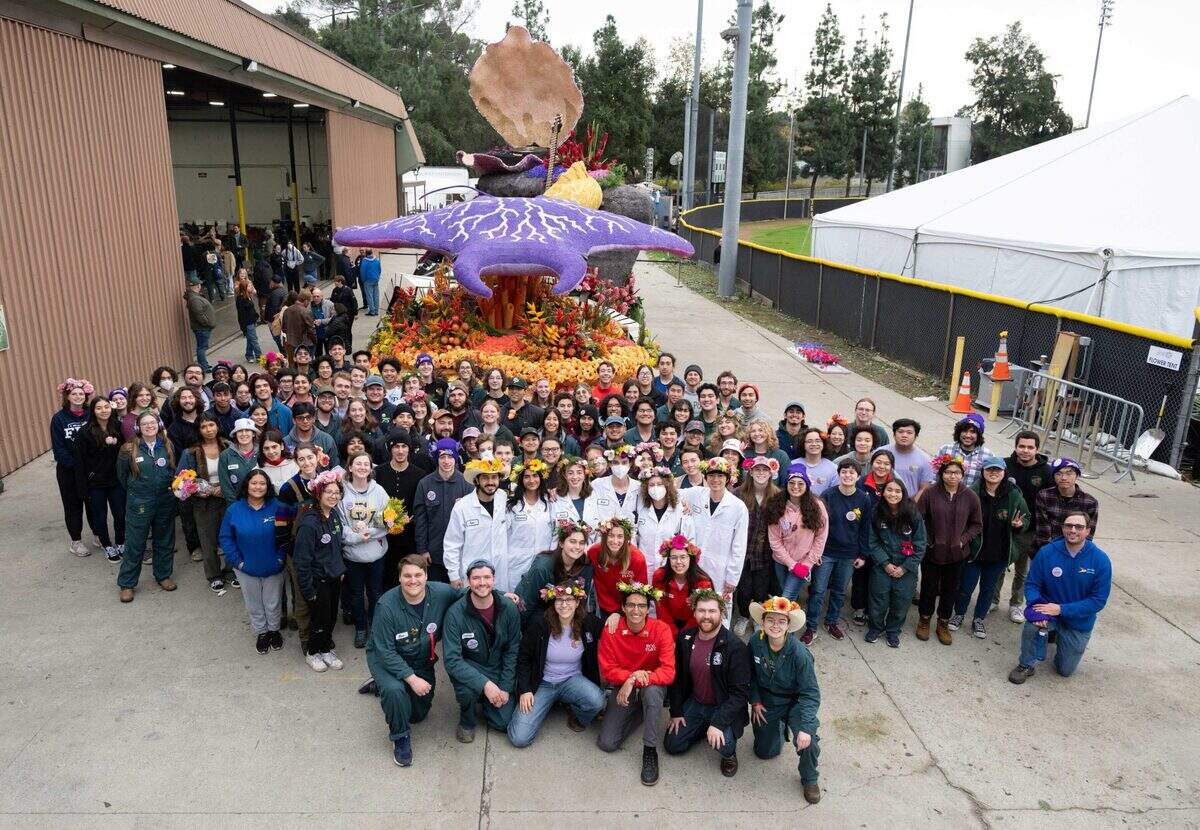
The Cal Poly campuses in San Luis Obispo and Pomona each have teams of about 30 students who collaborate to design and build the float. Traditionally, Cal Poly Pomona builds the front half of the base of the float, while San Luis Obispo students build the back half.
In the fall, the teams met in Pomona to unite the two pieces.
“Since the late 1940s, Cal Poly universities have produced the only student-built float in the Pasadena classic,” the release said.
The united Cal Poly team has now won 62 awards since the two universities submitted their first combined float in 1949.
In 2023, Cal Poly won the Extraordinaire Trophy for its “Road to Reclamation” float.

This story was originally published January 1, 2024 at 10:08 AM.