Cal Poly faculty, coaches could strike for the first time in 12 years. This is why
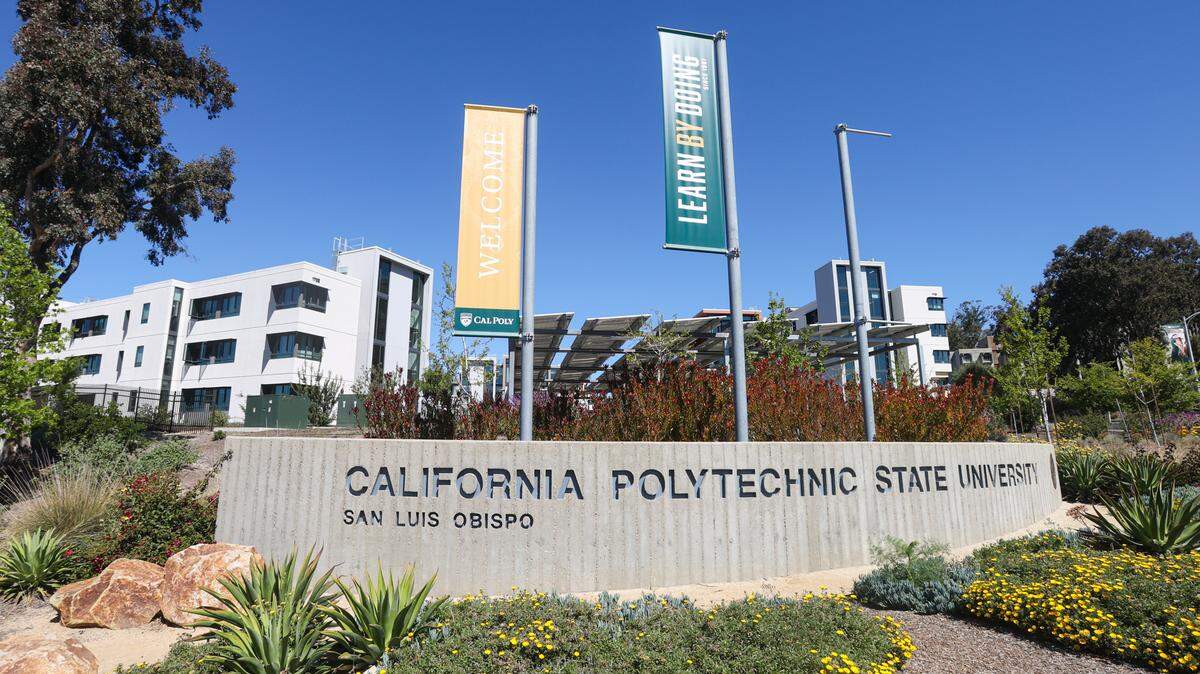
Faculty at Cal Poly in San Luis Obispo could go on strike after contract negotiations with the California State University system management hit an impasse.
The California Faculty Association represents lecturers, librarians, counselors, coaches and tenured and non-tenured faculty at the CSU’s 23 campuses.
The union is asking for a 12% annual salary raise for its members along with equity adjustments for the lowest-paid members.
CSU faculty last received salary raises in July 2022, when annual pay increased by 3%, according to the university system.
Additionally, the CFA is requesting at least one counselor per 1,000 to 1,500 students at every campus, as well as caps on workload and class size; gender-inclusive restrooms in every building on each campus; one full semester or two quarters of parental leave and no increases in parking fees.
CSU management countered by generally rejecting the CFA’s proposals and instead offering a 5% raise for all faculty.
“If you’re underpaying your workers, 12% will never be enough,” said Lisa Kawamura, the CFA chapter president at Cal Poly.
Union demands higher pay for CSU faculty
The lowest paid members in the CFA are paid about $54,360 to $62,016 a year, while the highest paid receive $178,716 to $205,524 per year, according to the union’s salary schedules.
CSU management receive substantially higher pay.
Adela de la Torre, president of San Diego State University, was the highest paid CSU administrator in 2022 with annual earnings of $713,523, up from $606,126 the year before, according to online salary database Transparent California.
Cal Poly President Jeffrey Armstrong earned $683,029 in 2022, an increase from $562,264 in 2021, according to Transparent California.
“How do you not have the money to give your faculty raises when management is padding their pockets?” Kawamura asked.
In an August press release, the CSU said that a 12% salary raise “in this fiscal year would force the CSU to make difficult and painful decisions about how to reallocate its already limited financial resources.”
“CFA’s salary and benefit demands for just the current fiscal year total approximately $380 million,” the release said. “To put that amount in perspective, this demand exceeds by more than $150 million the total amount of increased ongoing funding available to the CSU in the recently passed state budget ($227 million), and it is higher than the entire operating budgets of 15 of our 23 universities.”
An independent fact finder is now reviewing the demands of the CFA and the offer by the CSU. The fact finder’s report will include suggestions on a resolution to the impasse.
Should the CFA accept the suggestions and CSU management agree, then no strike will happen.
However, should neither party budge, a strike is possible.
“The CSU respects CFA’s right and decision to hold a strike authorization vote as part of the collective bargaining process,” CSU spokesperson Amy Bentley-Smith wrote in an email to The Tribune.
From Oct. 21-27, CFA has opened a vote with union members to authorize a strike.
If members overwhelmingly vote “yes,” and the CSU does not offer what the CFA has demanded, a strike could happen.
Kawamura said she hopes the union members in the CSU system do not need to strike.
Such an action could mean the union’s roughly 29,000 members would stop working, she said, throwing the CSU into disarray and leaving students unable to attend classes, access counseling services or attend sport practices.
“I think it would be foolish for management to allow the nation’s largest university system to fail,” Kawamura said.
When did California Faculty Association last strike?
The last time the CFA conducted a strike was in 2011, its first ever since the union was formed in 1983. At the time, the union called a rolling strike, so only members at Cal State Dominguez Hills and Cal State East Bay stopped working for one day in November 2011.
During the 2011 strike, CFA threatened to spread the strike to other CSU campuses if management did not budge on their demands.
At that time, the union was requesting pay raises that had been withheld from the 2008-09 and 2009-10 years after CSU management claimed state budget cuts made such raises unaffordable.
After that one-day strike, CSU management agreed to the union’s bargaining goals.
The timeline on whether a strike will occur for the current contract negotiations is muddy as it’s unclear when the fact finding report will be complete.
“We could still avoid a strike,” Kawamura said.
This story was originally published October 24, 2023 at 8:00 AM.