
Program gives students a chance at hands-on field research. Now it’s expanding in SLO County
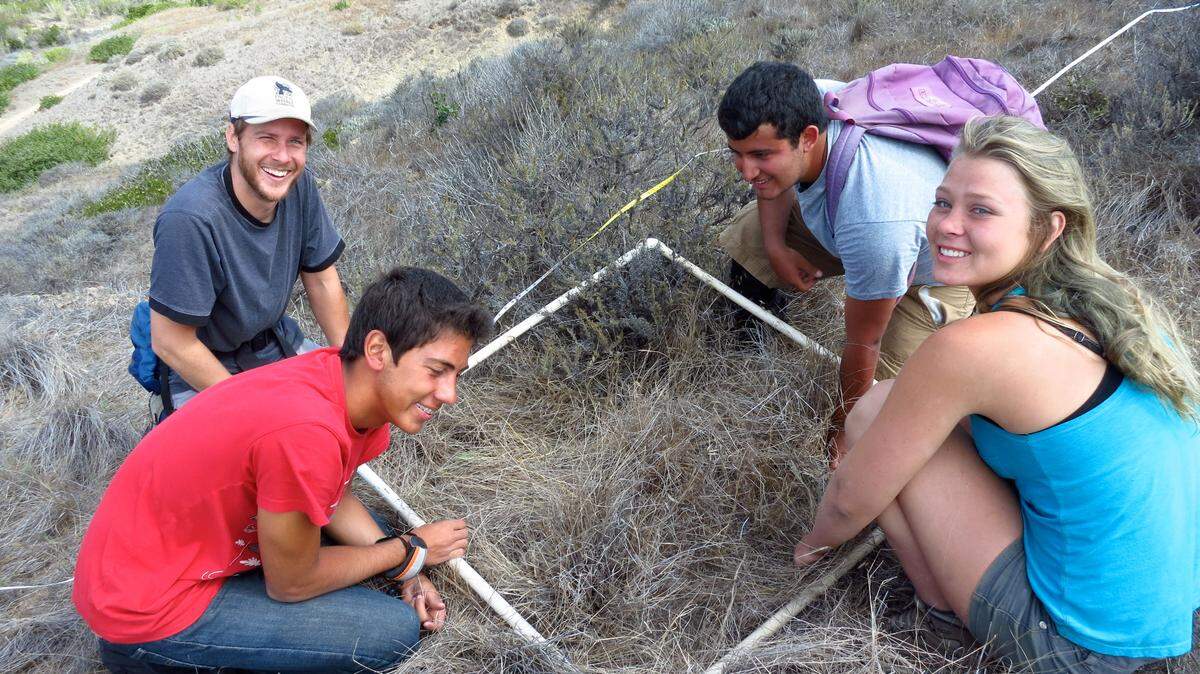
A few times a year, Paso Robles High School students hop on a bus destined for one of California’s many natural wonders, sleeping bags and notebooks in tow.
For a few days, their classroom is the great outdoors. They observe and explore the environment around them, collecting data that is ultimately used to forward real, scientific research. Some student research has even been published in scientific journals.
The program is known as the Field Studies Collaborative.
It got its start in 1991 when former Paso Robles teachers Mark DiMaggio and Ken Ward escorted the first group of students to Santa Cruz Island to study the growth of purple needlegrass.
After seeing the impacts that hands-on research could have on students, the district cemented the collaborative into its curriculum in 2017.
Since then, the program has blossomed into several opportunities, including trips to Joshua Tree National Park, the Mount Wilson Observatory and overnight research trips to study tides on the Central Coast. Students have partnered with big-name organizations like the National Park Service and the National Oceanic and Atmospheric Administration to conduct meaningful scientific research.
And efforts are now underway to expand the Field Studies Collaborative countywide, in hopes that every student in San Luis Obispo County will have the chance to get real-world research experience before they graduate high school.
“We all recognized the immense value these experiences had for our students,” DiMaggio told The Tribune. “To be able to travel to an incredibly beautiful place, accompanied by a group of people (students, professional scientists, and teachers alike) who are passionate about understanding and conserving the natural world, and to be able to do meaningful work to advance that premise, is, it turns out, absolutely transformative for students.”
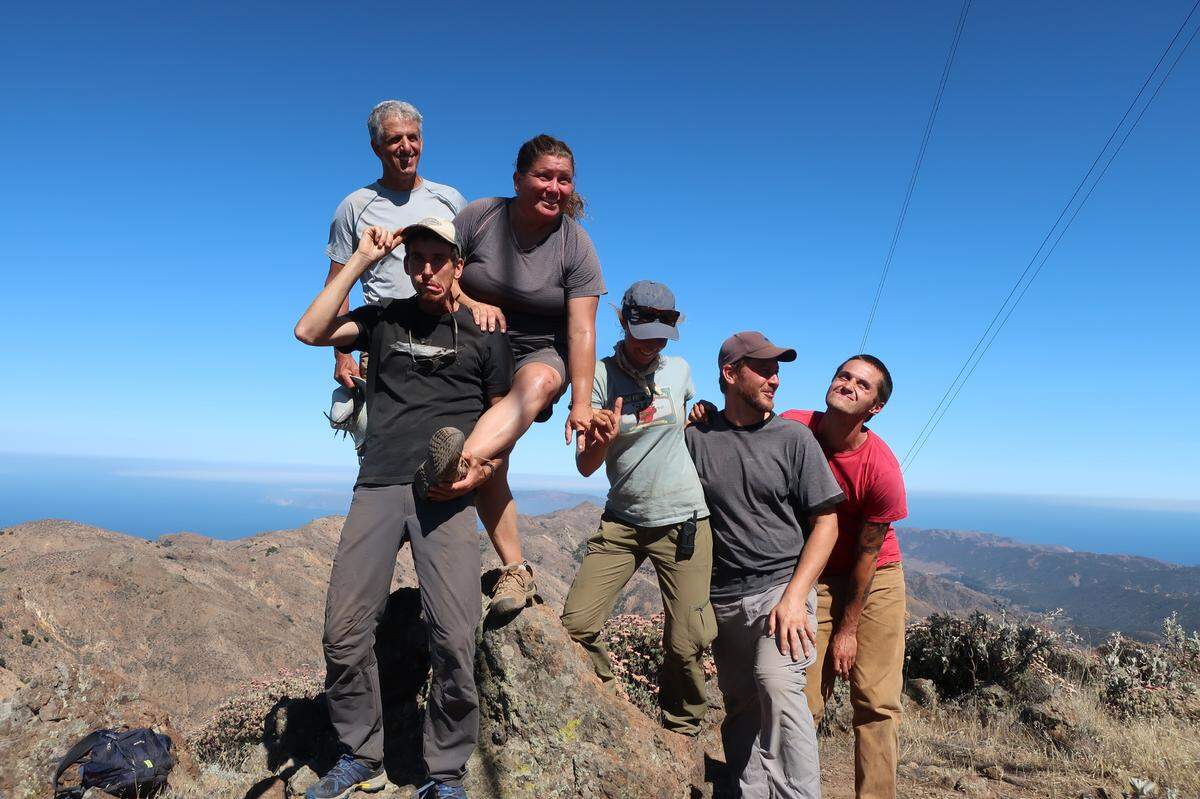
Collaborative program gives students a new look at STEM education
Former Paso Robles students say the hands-on research program changed the way they viewed STEM education and taught them skills they’ve continued to use through college and into the workforce.
Gavin Hughes, now a conservation technician in Olympia, Washington, went on at least four trips with the Field Studies Collaborative during his time at Paso Robles High School, including his first trip to Santa Cruz Island.
“On that trip, I was like, ‘Oh, my God, you can do stuff outside for work,’” Hughes said. “These collaborative projects were really empowering, personally for me, to feel like I have a really strong impact on … global issues of conservation ecology and conservation biology. And that just really spoke pretty deeply to me.”
Hughes joined the Santa Cruz Island trip again as an assistant, and then went on a trip to Joshua Tree in which students collected data for a NASA study on the impacts of climate change.
He told The Tribune that these high school field research experiences helped him decide on a career path and allowed him to “hit the ground running” in college.
“That’s such an incredible piece of experience to have on your resume,” Hughes said. “It’s absolutely respected and lauded in academic spaces … they’re blown away that you could have that kind of field experience heading into your undergrad.”
To this day, Hughes continues to utilize the knowledge from his field experiences in his work as a conservation technician – and he’s considering a career in education because of the impact of teachers like DiMaggio.
“I think every student who has walked through this program and had the opportunity to spend time in the field with FSC — it’s been one of the strongest and most memorable learning experiences of their high school career,” Hughes said. “Simply just because it was so different and so out of the box compared to all of the other types of learning.”
Former Paso Robles student Nicole Rogers went on her first trip with Field Studies Collaborative in 2023. Prior to that, she had never been camping before.
But after she attended her first trip, she said she “couldn’t stop.” She went on two additional trips before leaving for college.
The thing Rogers loved most about the program was the connection she was able to make with other students, she said.
“Everybody’s connecting with each other and having real face-to-face conversations, which is kind of rare nowadays — everybody’s stuck on their phone,” Rogers told The Tribune. “I think that it’s a way to get away from the real world and feel like you’re actually making an impact on the world around you. I think that’s why I kept going on the trips.”
Although the program didn’t influence Rogers to pursue a career in science, she told The Tribune she gained a new passion for the outdoors, which encouraged her to try to be a good steward of the natural world.
“Hearing how Mr. DiMaggio talks about the environment and the whole program and seeing how passionate he is about it — it makes you want to do the same and follow his path and make the world a better place,” Rogers said.
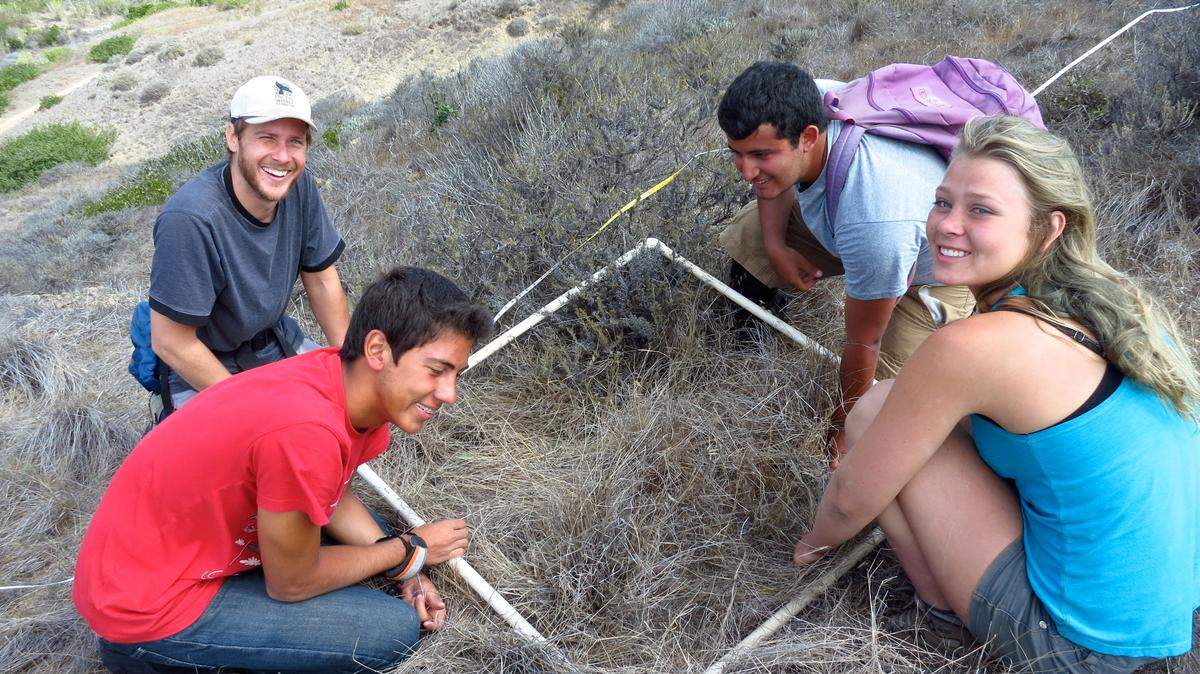
Efforts underway to expand the program to other districts
The success of the Field Studies Collaborative in Paso Robles has led to its expansion across SLO County.
In 2023, Morro Bay and Coast Union high schools led a joint research trip to Santa Cruz Island, bringing together students from two schools and giving them the chance to put their skills to the test outside of the classroom.
And efforts are now underway within the San Luis Obispo County Office of Education to expand the program even further — with the goal of having at least 10 programs running across the county.
In the fall, DiMaggio, former Paso teacher Geoff Land and former student Camryn Curren worked with Office of Education to find schools that were interested in the program.
DiMaggio told The Tribune in November that the program is likely to expand to Arroyo Grande High School, Templeton High School and San Luis Obispo Classical Academy — and he hopes more schools will choose to join in.
SLOCOE has also been working to expand the program’s partnerships, adding the Rancho Marino Reserve, Angelo Coast Reserve and Coastal San Luis Resource Conservation District to its roster of collaborators.
New field studies programs include a long-term project monitoring clams in Pismo and the ecosystem of the Oceano Dunes, small mammal trapping and surveying at Ford Ord, botanical surveys of pine trees on Santa Rosa Island, and reptile and amphibian monitoring in the Arizona desert, according to DiMaggio.
Each of these projects includes a professional partner and will be led by local high school teachers.
The county office has set aside $50,000 to match funding provided by districts or school sites interested in starting their own programs. The money set aside by Office of Education comes from foundations and technical assistance funds.
Assistant superintendent of educational support services Joe Koski told The Tribune the county looks forward to the future of the Field Studies Collaborative.
“Something amazing happens when students see what they’re learning applied in real life,” Koski said. “This lightbulb moment is amplified when the learning occurs outside the classroom in natural settings.”
Koski encouraged anyone interested in supporting or learning more about the collaborative to contact him at the Office of Education.
“Having experienced similar things when I was in the classroom, I can guarantee that students and staff who participate will be talking about the power of this experience for years,” Koski said. “The county office is thrilled to be part of an effort that would bring this type of hands-on, problem-based learning to many more students across the county.”