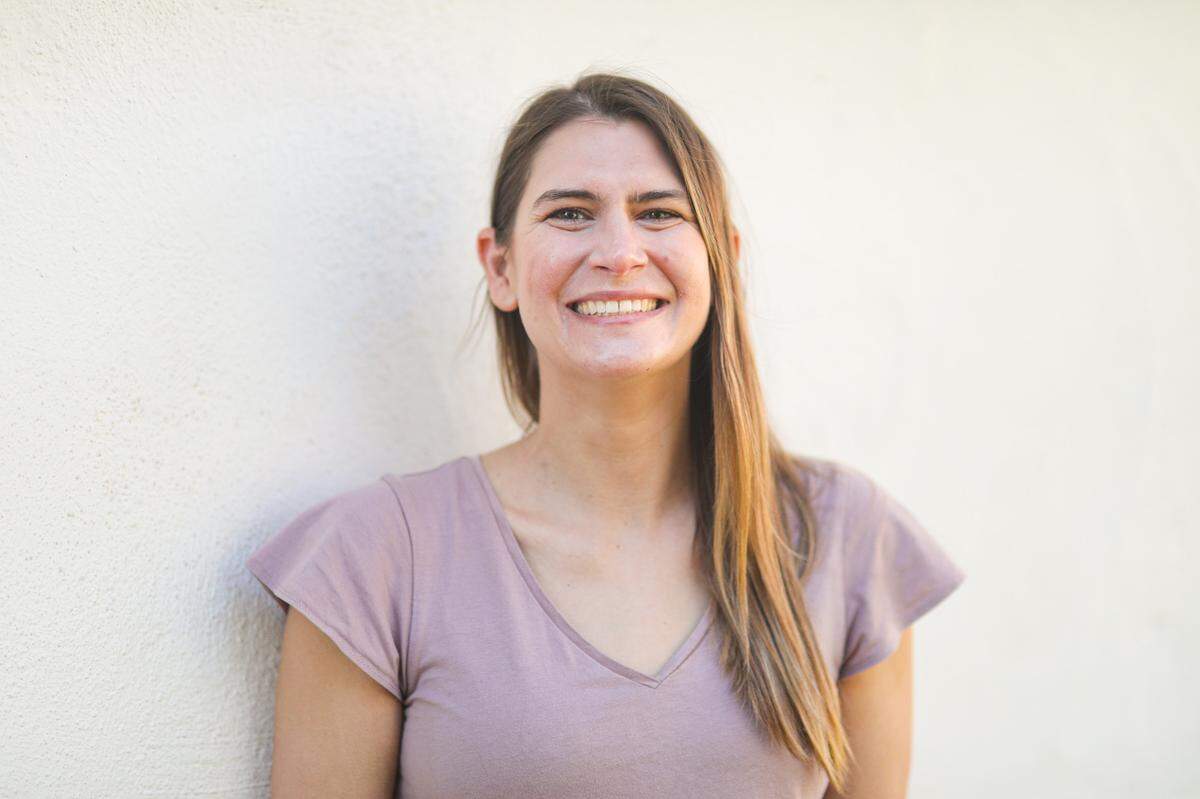
Paso Robles High grad came out as gay at a school assembly. Here’s what happened next
Editor’s Note: Paso Robles High School graduate and San Francisco State University student Ava Hughes contributed to this reporting as part of The Tribune’s Diversity Storytelling Project — where we tell stories in partnership with leaders of underrepresented communities in SLO County.
In her senior year at Paso Robles High School, the now-graduated Ava Hughes worked alongside her fellow LGBTQ students to fight for greater protections and representation on campus after a number of high-profile incidents created a hostile environment for queer and gender-nonconforming youth on campus.
In August, the conservative-leaning Paso Robles Joint Unified School District Board of Trustees proposed rolling back some of the LGBTQ-specific protections against bullying, harrassment and discrimination that were first established to help the district comply with state and federal requirements.
The discussion about eliminating protections for LGBTQ students comes after a number of targeted incidents last year against the queer community.
In fall 2021, a group of students stole a 3-by-5-foot Pride flag from science teacher Evan Holtz’s classroom, defecated on it and flushed it down the toilet. The students shared a video of the theft and vandalism on social media.
A few weeks later, the Tribune reported on a second homophobic incident at the Paso High campus when an LGBTQ face mask was destroyed.
These incidents and other, less visible examples of on-campus discrimination and bullying frightened students who identified as LGBTQIA+ — an umbrella term that encapsulates lesbian, gay, bisexual, transgender, queer, intersex and asexual orientations and identities — many of whom were already trying to fly under the radar on campus, Hughes said.
The queer students realized they could no longer be silent about the hostilities they encountered on campus, Hughes said.
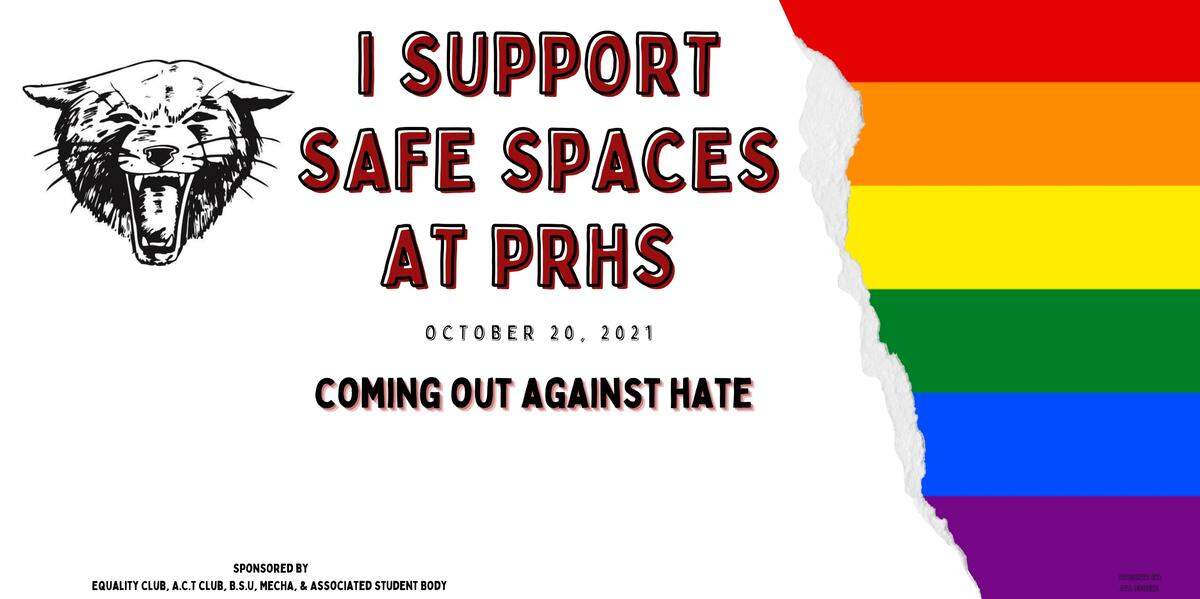
The bias-motivated incidents sparked a grassroots movement at Paso Robles High School that saw students push administrators and teachers to be more accountable for creating a safe school environment for kids that are part of minority groups.
After the destruction of the Pride flag, students organized a “Coming Out Against Hate” forum in October, at which Hughes delivered a speech where she came out publicly as a lesbian in front of nearly 300 people, including her teachers, peers and family.
It’s an experience that changed her life forever, Hughes said.
“I’ve been having so many incredible opportunities that came from that absolutely terrible thing that happened,” Hughes said.
The Tribune covered the incidents at Paso Robles High School, student-led advocacy and activities of the school board extensively. But we also recognized this was not the only example of discrimination that queer-identifying students like Hughes experienced on campus or in the broader San Luis Obispo County community.
That inspired the Diversity Storytelling Project, which aims to raise the voices of underrepresented members of our community by having them share their daily experiences in their own words.
Hughes is our first storyteller, and we hope there will be several more.
BEHIND THE STORY
MOREThe Tribune's Diversity Storytelling Project
This story is the one in a series elevating the voices of underrepresented members of the San Luis Obispo County community. Here’s how the project works.
Why did we report this story?
The Tribune recognized that San Luis Obispo County is home to countless people who identify as part of diverse communities, but the voices of these communities are not always amplified effectively by the news media. The goal of the Diversity Storytelling Project is to partner with leaders from these communities to tell stories from their daily life so that Tribune readers understand what its like to live here for people who identify as part of minority groups.
How did we report this story?
After partnering with a participant, we ask them to commit to a period of journaling for four weeks in which they reflect on moments of both inclusion and discrimination in their daily life by documenting these instances in a manner best suited to them. Some may choose to use a notepad, the Notes app on their phone, voice memos or a combination of art and journaling. Each week, the participant meets with a Tribune reporter to review their notes and reflect on the process. Together, the journalist and storyteller craft an article that they feel best represents their lived experience.
Interested in being our next storyteller?
We need more storytellers? Would you like to be one? Reach out to Tribune reporters Stephanie Zappelli (szappelli@thetribunenews.com) or Kaytlyn Leslie (kleslie@thetribunenews.com) to volunteer or nominate someone you know. Individual storytellers are given a $100 Amazon gift card in recognition of their contributions to this project.
Between mid-May and June 2022, Hughes kept a notebook that she shared with the Tribune where she reflected on the progress and pitfalls of the student-led activism on Paso Robles High School’s campus throughout the 2021-22 school year and chronicled incidents of discrimination that may not capture headlines, but shape the Bearcat community all the same.
Some of her entries tackled topics like the weight of homophobic slurs, what lesbianism means to her, homophobic incidents surrounding the school’s first Pride month celebration and the joy that followed her first time attending San Luis Obispo’s Pride festival as an out lesbian.
She also reflected on her feelings about life as a gay teen in San Luis Obispo County and why she decided to leave for college in San Francisco instead of staying to continue her studies locally.
Some of her reporting and reflections are included in this article. She worked with The Tribune to tell this story.
Paso Robles High School administration ‘allows rainbows, but within reason’
The initial response from the school administration to the fall hate crimes was tepid. The district released a statement announcing that no flag larger than 2 feet by 2 feet and no alteration of the American flag could be displayed in classrooms, The Tribune reported.
“They never condemned what happened,” Hughes said.
District Superintendent Curt Dubost released a statement saying that bullying would not be tolerated, however the decision to curtail rainbow flags was seen by some students as misdirected — an effort to stifle queer identities, rather than condemn homophobia.
In an interview with the Tribune at the time, Dubost said of the flag policy, “... we continue to believe that this is a very reasonable compromise solution that allows rainbows, but within reason.”
Hughes said many students and teachers seemed unfazed by the incidents that happened last fall. She felt campus decision-makers focused more on the theft of the flag than on the message the destruction of a Pride flag on campus represented to LGBTQIA+ students.
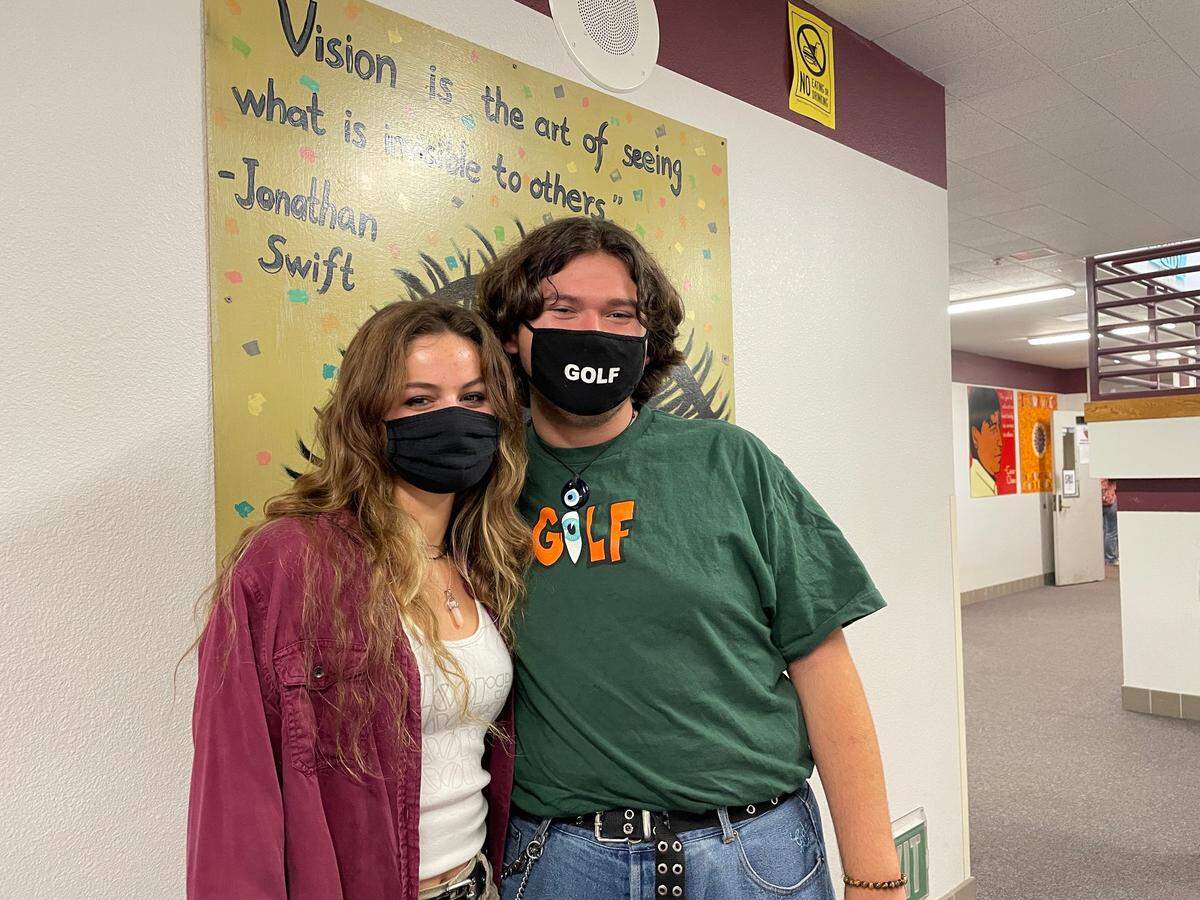
The fall incidents were a watershed moment for the queer student community at Paso Robles High School. Hughes said they were done with feeling afraid at school and realized they needed to get vocal about on-campus discrimination.
“I was scared to come out publicly and be involved in it,” Hughes said. “And I didn’t want to at first, but when it comes to a certain point, you know you can’t really stay silent because it just makes everything worse.”
In an October event scheduled around National Coming Out Day, a small group of LGBTQIA+ students led a forum that demanded greater accountability from their peers and school administrators.
“Everything changed this year at our school, and it wouldn’t have happened if a hate crime didn’t happen,” she said.
What will it take to make Paso Robles High School a safe space for LGBTQ students?
Since taking up the microphone at the forum, Hughes said she dedicated her senior year to creating a safer environment for other LGBTQIA+ kids at Paso Robles High School.
But it hasn’t been easy.
“Growing up in Paso, it’s like, you are in the norm or you’re completely ostracized,” she said. “So I’ve been trying to examine that personally and be like ‘What can I change here?’ But it’s a pretty big task.”
Even before the forum, Hughes was heavily involved in student life at the high school.
Hughes participated in student groups and activities, such as participating in three years of leadership, serving as class representative her junior and senior years, serving as captain of the varsity women’s swim team and competing as a varsity water polo player, and acting as social media officer of the activist club, among other things.
After the forum, Hughes expanded her involvement in the Bearcat community. As a senior, she sat on the superintendent’s LGBTQIA+ task force, which formed in the aftermath of the flag incident and forum.
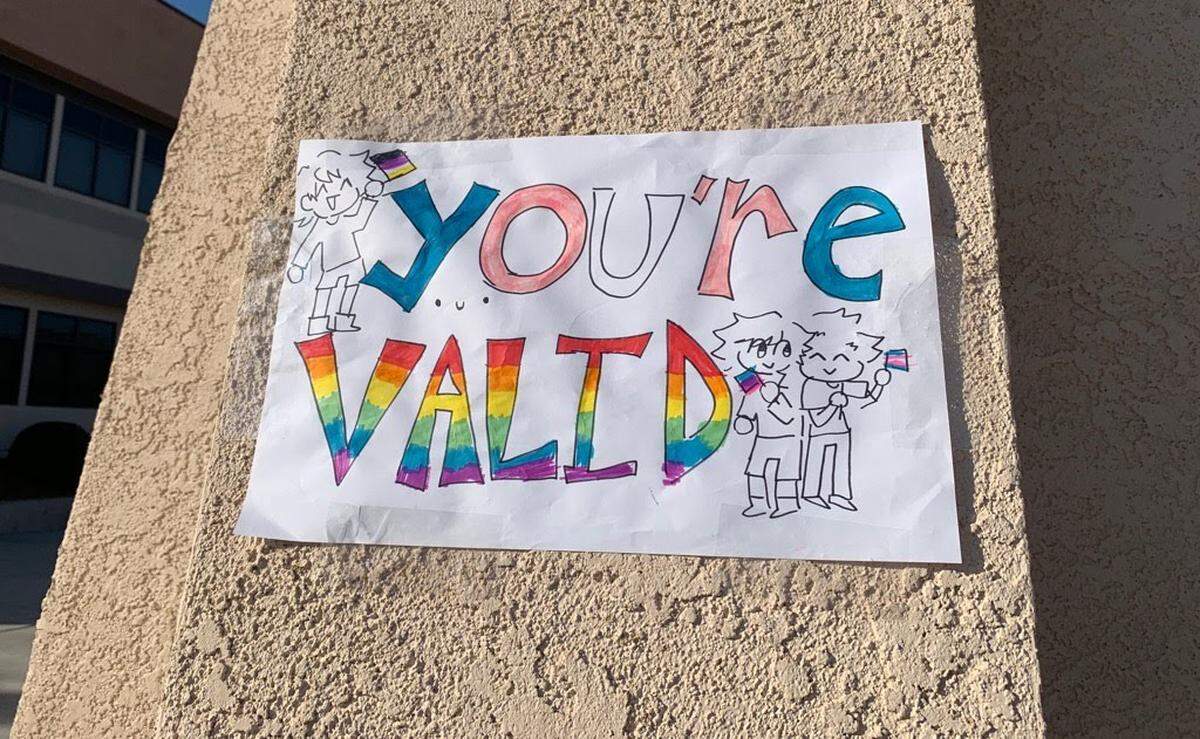
The outcome of student efforts to build a more inclusive school community has been mixed, she said.
For the first time in Paso Robles High School history, there was no Prom King or Prom Queen at the springtime dance, but rather a gender-neutral prom court, she said. Although the outcome was the nomination of a two cisgender male and female students — meaning their gender identity aligns with their sex assigned a birth — the change leaves room for more diverse representation in the future.
Hughes said the decision to label it “prom royalty” instead of prom king and queen helped her feel comfortable enough to bring a girl as her date to the dance for the first time.
“My date and I got an overwhelming amount of compliments from school staff and our peers, like, ‘Oh you guys are so cute’,” Hughes said. There were a few other queer couples that attended the dance together as well.
But around the same time at a different school event, Hughes said she overheard some male athletes tossing around a homophobic slur.
Noting this is one of the many ways the public school system has failed its students, Hughes said: “People don’t know the history behind words.”
Hughes told The Tribune she asked the athletes to stop using the word, explaining it’s derogatory and doesn’t reflect well on the school.
Instead of an apology, they doubled down. They called her over-sensitive and tried to excuse the use of the slur, telling her a fellow gay-identifying male student said it was OK for them to use that word, both in general and in reference to him.
“I’m at the point that I feel ashamed for trying to defend myself and my community. It’s exhausting. I can’t help but think if I was a man or if I was straight that they would listen to me,” she wrote in her notebook.
Upon deeper reflection, she said it’s because her peers see her differently since she came out as gay. Instead of being seen as a student athlete and leader, someone who sets standards and breaks records, she’s seen as not just a young woman, but as a young, gay woman — someone society deems less worthy of respect than a man or a gay man, Hughes said.
“Because I don’t center men in my life, they don’t respect me,” she said.
She said that it’s likely in part because lesbian relationships are fetishized in pornography.
“That’s why guys my age don’t respect me, because they see me as an object,” she said.
In her notebook, she sketched out a simplified pyramid that illustrated the way she thinks a white, male-dominated society prioritizes people based on sexual orientation, gender identity and race.
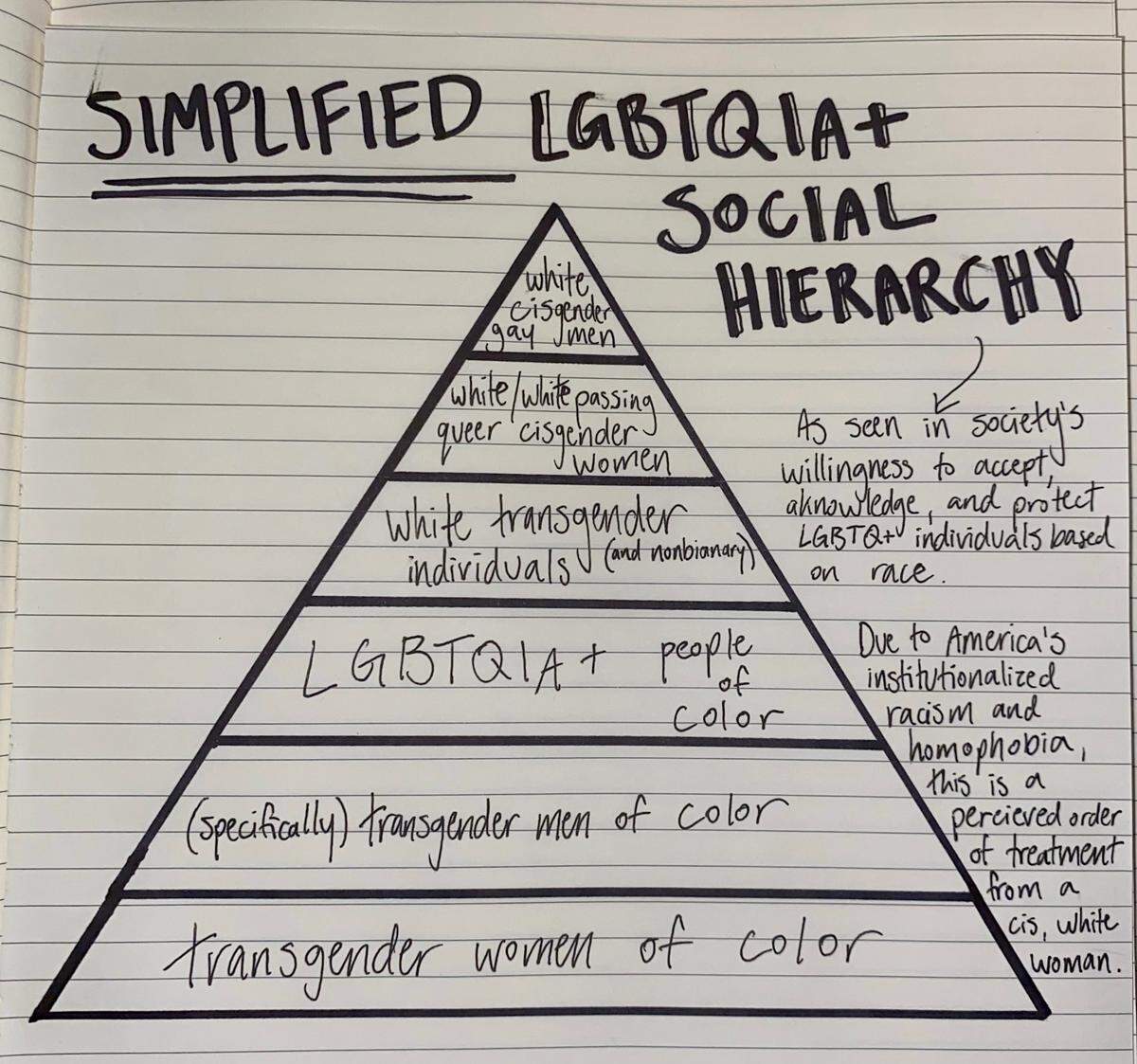
“It’s so hard to watch your peers fail you, but it’s even harder to reflect on why they did what they did,” Hughes wrote in her notebook, referencing a separate incident that happened in November 2022 where a racial slur was scrawled on campus.
“It’s almost always a lack of the school system doing the hard work,” she wrote.
LGBTQ students struggle to hold the Paso Robles School District accountable
After the forum, Hughes and other student activists formed the LGBTQIA+ task force, where they met with Dubost to make suggestions on how to make the school a safer, more inclusive place for queer students.
The club had a laundry list of requests for the school, most of which went unfulfilled, but the one Hughes said she feels is most vital is to teach queer history.
The soonest that might happen is in 2025-26, the year in which California public high school students must offer an ethnic studies course, according to California State Assembly Bill 101. The class of 2029-30 must complete one semester of the course to graduate under the new bill.
The ethnic studies model curriculum includes some mention of LGBTQIA+ history, though it is not currently its own unit, according to a sample curriculum offered by the California Department of Education.
Paso Robles High School already has a pilot ethnic studies class taught by social sciences instructor Geoffrey Land, Hughes said.
The first version of the curriculum included a unit on LGBTQIA+ history, but the Paso Robles Joint Unified School District Board of Trustees, which leans heavily conservative, asked that it be removed, she said.
“If you’re not going to include us correctly in sex ed, let us talk about our history in ethnic studies, even if its for like a day,” Hughes said, adding that homosexual relationships are usually only mentioned in the context of sexually transmitted diseases.
“Hopefully that changes, but I honestly don’t have very high hopes about them letting us talk about it,” she said.
One of the successes that came out of the student forum was the opportunity to collaborate with the school librarian to bring more teen literature with queer characters and themes to campus.
“One of the first things brought up by both administrators and students was, ‘How are we going to make sure that it doesn’t get destroyed?’” Hughes said. “It’s really difficult, but that was the first thing that everybody had to think of — ‘Wow, we’re so excited that this is happening. What do we do when someone doesn’t like it?’”
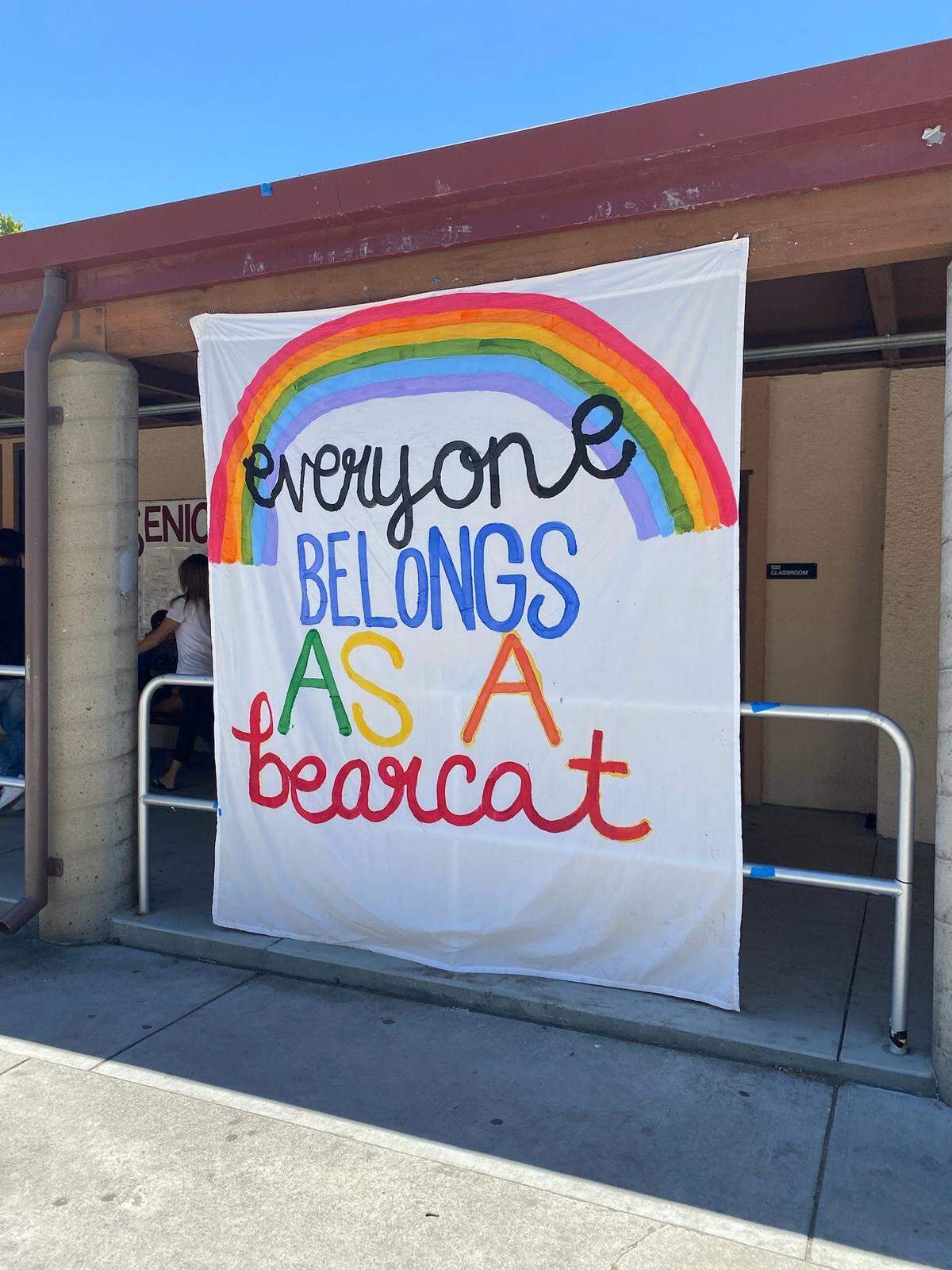
At the end of May, the Paso Robles High School Equity Club put on its first Gay Pride event on campus, where each day of the week it offered different activities that ranged from face painting and bracelet-making to a letter-writing campaign asking for queer representation in English classes and conversations about key figures in the movement’s history, according to an Instagram post from the PRHS equity club.
“It’s something we need, definitely,” Hughes wrote in reference to the school’s first official Pride Week. “Not everyone is going to accept it, and not everyone is going to be happy with the fact that LGBTQIA+ people are going to be talked about/celebrated at the school that used to tolerate hate crimes against us.
“I feel like I should be only excited about all of it or the celebrations behind it, but I’m really just worried,” Hughes said.
Hughes said the Pride Week at school felt a bit understated — that the Equity Club opted for student safety over making a big splash on campus in its first year.
While walking on campus the Monday before Pride Week was scheduled, she noticed that many of the PRHS Pride posters on campus were ripped down. “I’m generally just worried about what will be said or done next week,” she wrote in her journal.
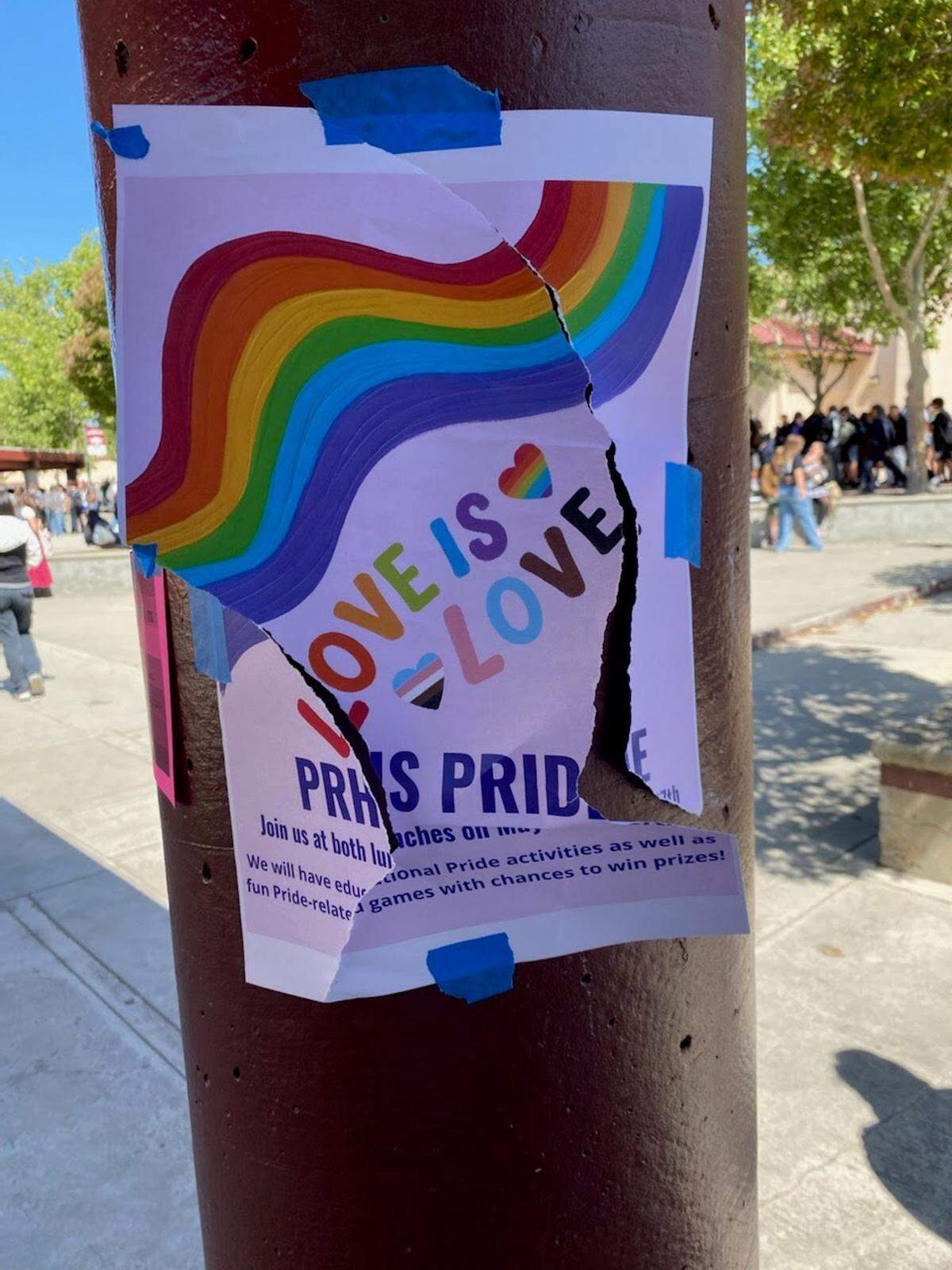
Besides the torn posters, Hughes said she wasn’t aware of any bias-motivated incidents that happened during Pride Week.
At the end of May, Hughes attended PrideFest in San Luis Obispo — her first time at a Pride event openly out as a lesbian. In her notebook, she described feeling safe, at ease and “genuinely proud of my community.”
“I don’t normally feel this way,” Hughes wrote. “How could this feeling be continued past the novelty of Pride Month? Can our community be more than a fun thing for a little bit, and a constant safe space?”
Paso Robles High graduate: ‘I spent a lot of time hiding who I was’
Growing up in Paso Robles as a member of a sexual, religious or racial minority requires daily consideration and decisions about what is considered acceptable, Hughes said. Being too loud or too proud presents safety risks.
“This county just scares me. I feel like it’s not worth my fears to be happy or to be myself,” Hughes wrote in her notebook. “I’d rather just not exist authentically, and all I can think of is that there’s probably so many other queer people (young and old) that feel this way.”
Hughes said before coming out, she tried her best to fit into the established social norms of SLO County, which she described as more conservative, more religious, more heteronormative. But after a while, she found it suffocating to deny her true identity as a lesbian and an ally to Black people, people of color and other marginalized minority groups.
“I tried really hard to fit in with what was expected of me here,” she said. “You continue on that path until you leave SLO County or you realize that you have to become ostracized in this community to fully be yourself because you are not fitting into the mold they want for you.”
While Hughes was packing up her car in preparation for her move from Paso Robles to San Francisco for college, The Tribune learned that the Paso Robles school board had proposed eliminating a 2020 policy that introduced added protections against bullying and discrimination for LGBTQIA+ students.
“That’s horrible. It doesn’t even feel real, wow,” Hughes wrote in a text message in response to the news. “That’s what happens when we aren’t constantly holding them accountable, I guess.”
After a heated meeting, the board opted to table the discussions.
“I think this is an issue that has to simmer a little while in the community,” Board President Chris Arend said at the meeting.
At the next meeting, the school board passed a resolution to protect gender-specific titles, such as Mr. and Mrs., husband and wife, mother and father — despite the fact that there is no government mandate prohibiting the use of titles that fall along the gender binary.
While the school board dismantles many of the hard-fought protections for LGBTQ students, Hughes left Paso Robles in her rear-view mirror for San Francisco State University, where she plans to study anthropology. Though she’s completed her participation in this project, Hughes said she discovered a newfound love for journalism.
“... Although I no longer live in SLO County, I keep it in mind, and I still want to improve it,” Hughes wrote in a reflection on this project. “I still owe that to the queer community there, and I hope that someday, I am truly proud of where I came from.”
Read Ava’s reflection on how participating in the Diversity Storytelling Project helped here learn more about herself and her community — in her own words.
The Tribune is looking for people who are part of underrepresented communities to help us take a closer look at life in San Luis Obispo County. If you or someone you know might be interested in partnering with The Tribune in the Diversity Storytelling Project, please contact reporters Sara Kassabian (skassabian@thetribunenews.com) or Kaytlyn Leslie (kleslie@thetribunenews.com).
This story was originally published September 14, 2022 at 5:30 AM.